
 Nana Wu
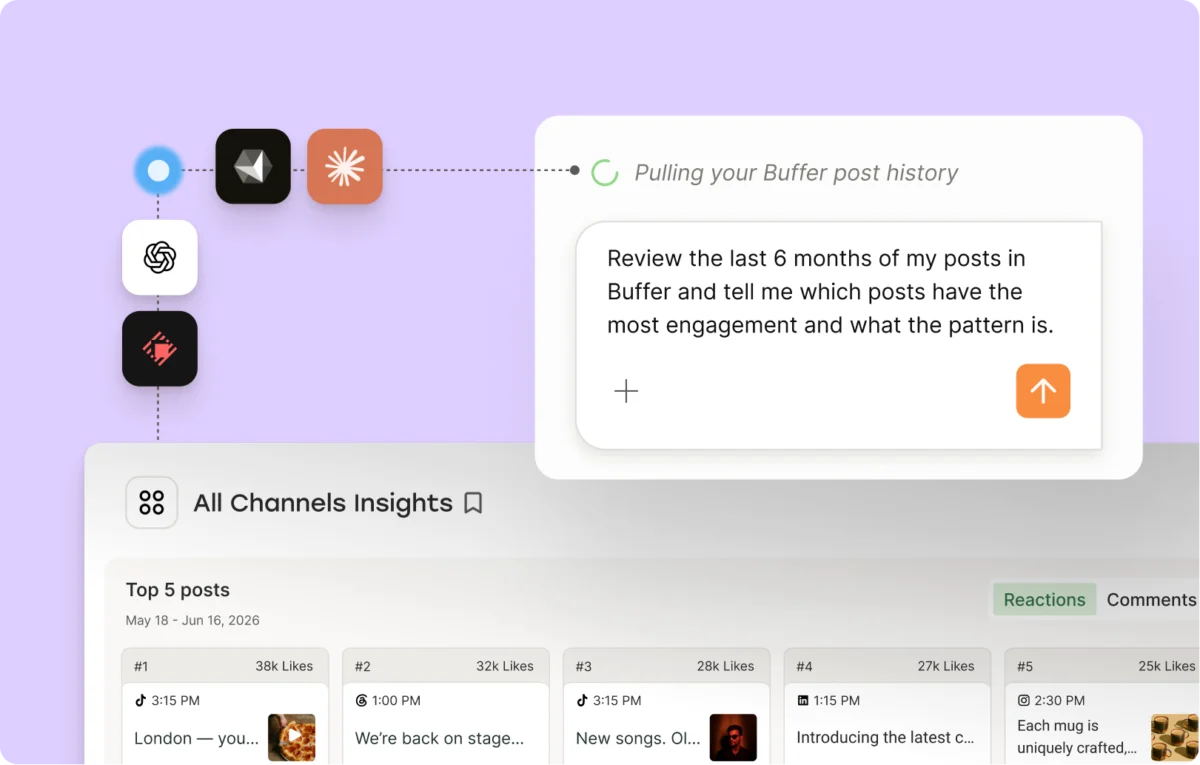
In the rapidly evolving landscape of digital marketing, the ability to translate raw data into actionable content strategy is the defining characteristic of a successful brand. For over 12 years, marketers have relied on Buffer to streamline their posting schedules, but today, the company is shifting the goalposts. With the launch of Buffer Insights, the platform is moving beyond simple scheduling to provide a comprehensive, cross-platform analytics powerhouse designed to demystify the modern social media ecosystem.
Buffer Insights provides a unified view of performance metrics—including follower growth, engagement rates, and impression counts—across an exhaustive list of channels: Instagram, Facebook, X (formerly Twitter), LinkedIn, TikTok, Pinterest, Threads, Substack Notes, Bluesky, YouTube, and Mastodon. By integrating these disparate data streams, the platform allows users to compare performance across diverse timeframes, content types, and individual channels, all while offering flexible export options including PNG, PDF, CSV, and Markdown.
The Strategic Shift: Data-Driven Content Architecture
To understand the practical implications of this new suite, it is essential to look at how veteran marketers are integrating these tools into their daily workflows. Moving beyond the "post-and-pray" mentality, power users are now leveraging Buffer’s latest features to automate the cognitive load of social media management.
1. The Claude Connector: Redefining Content Planning
The most significant leap in Buffer’s recent update is its integration with advanced Large Language Models (LLMs) like Claude and ChatGPT via the Model Context Protocol (MCP). Rather than using AI to generate low-quality, generic posts, marketers are using it as a high-level strategic advisor.
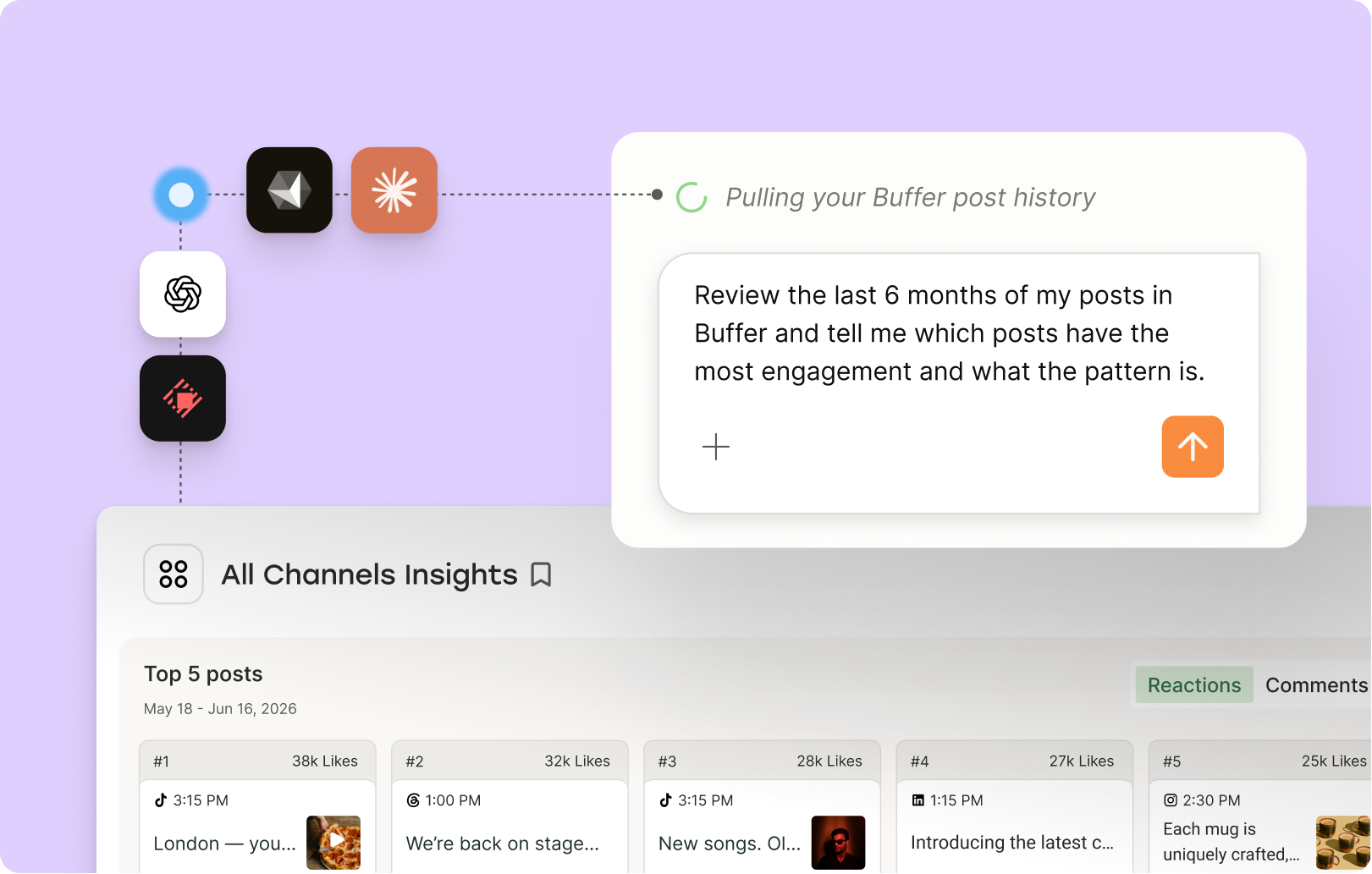
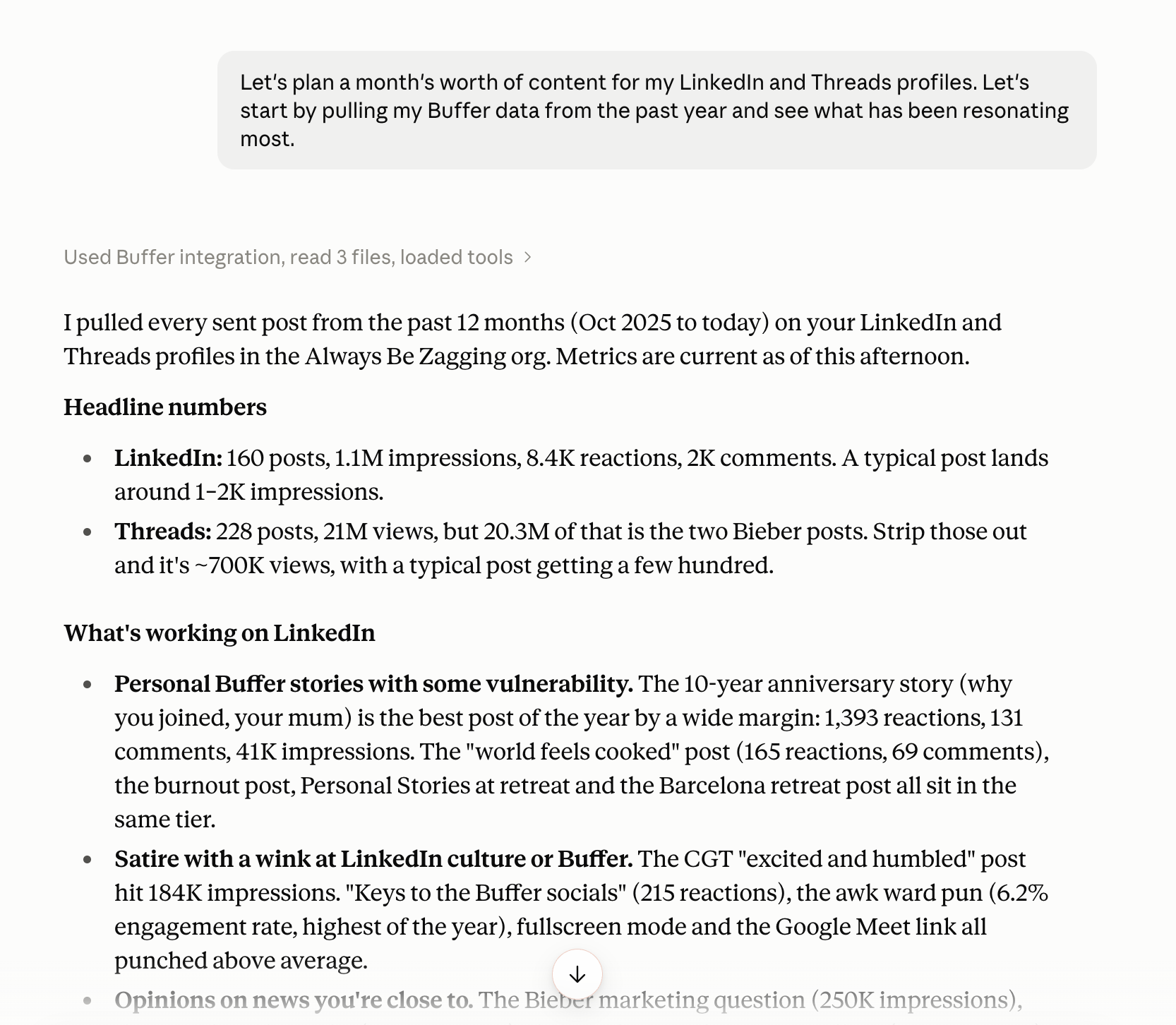
By connecting their historical social data to Claude, users can move from intuition-based planning to data-backed content mapping. A typical workflow involves prompting the AI: "Plan a month’s worth of content for my LinkedIn and Threads profiles. Start by pulling my Buffer data from the past year and tell me what’s resonating the most."
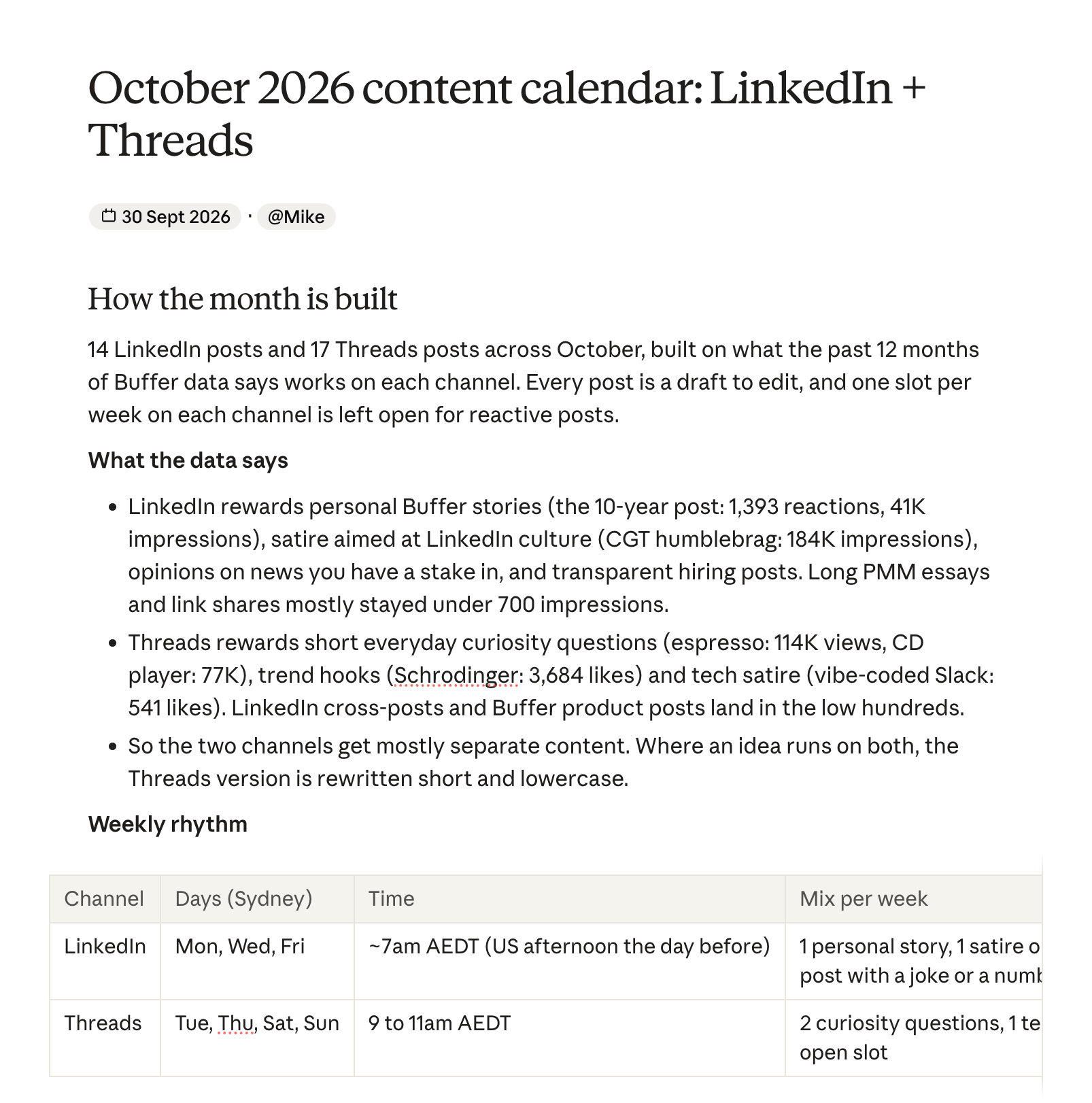
This allows the AI to synthesize performance data—identifying which themes, post formats, and tones have historically driven the highest engagement—and translate those findings into a structured content calendar. This reduces the time spent on "blank page syndrome" and ensures that every piece of content is aligned with proven audience preferences.
2. The Weekly Pulse: Agility in a Volatile Market
While long-term planning provides structure, the social media environment remains inherently unpredictable. Trends emerge overnight, and industry news can render a planned calendar obsolete in hours. This is where the Weekly Pulse feature becomes indispensable.
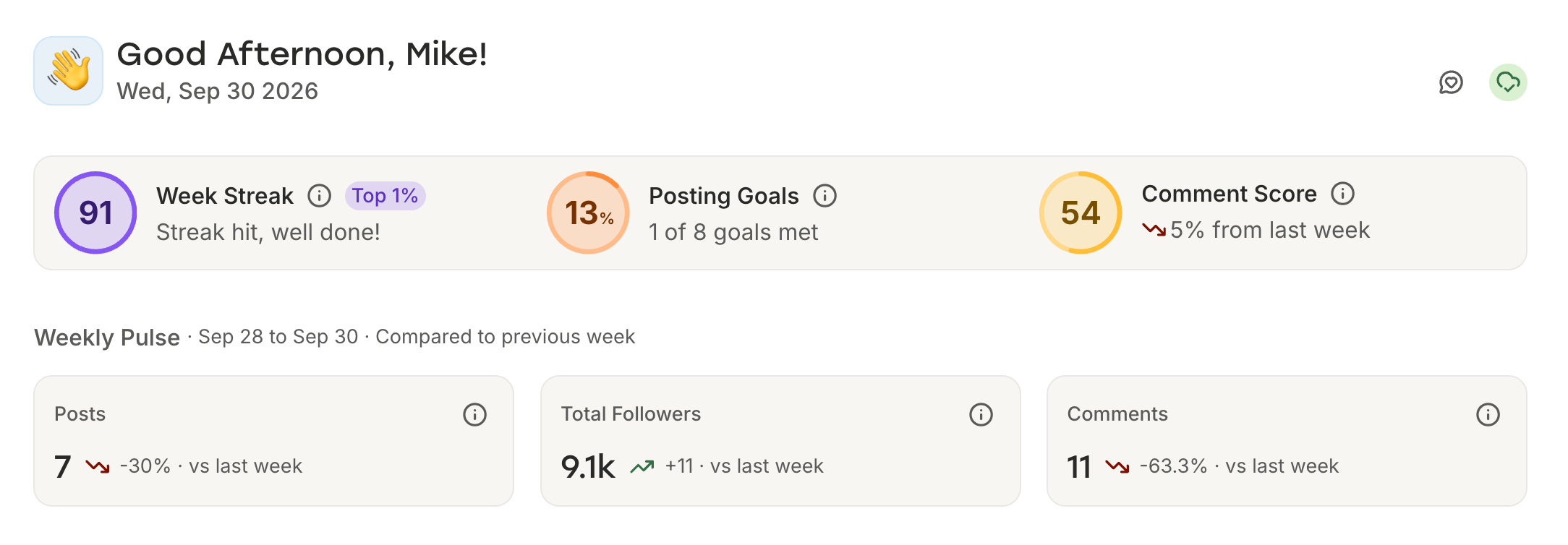
The Weekly Pulse serves as a high-level dashboard, offering a snapshot of current performance metrics: post frequency, follower velocity, and real-time engagement trends. This allows managers to make tactical pivots mid-week. For example, if a specific topic is suddenly gaining traction, the Pulse enables the user to see the data in real-time, justifying a quick pivot to capitalize on the trend without sacrificing the integrity of the overall campaign strategy.
Furthermore, this tool places a heavy emphasis on community management. As data confirms that proactive engagement—specifically replying to comments—directly correlates with boosted post visibility, the Pulse encourages users to track and improve their "comment score." This creates a feedback loop where the act of engaging with an audience is not just a community service, but a measurable performance metric.
3. Granular Analysis via Custom Tagging
One of the most persistent challenges for social media managers is isolating the performance of specific initiatives within a sea of daily content. Buffer’s enhanced tagging system addresses this by allowing users to categorize posts during the scheduling phase and filter them later within the Insights suite.
The utility of this feature is best illustrated through product launches. For instance, when launching a new feature—such as Buffer’s integration with Substack Notes—marketing teams can assign a specific tag to all related posts. By filtering for that tag, the manager can view the performance of the entire campaign in one unified dashboard. In the case of the Substack launch, a focused campaign of six posts yielded 254 engagements and 17,000 impressions.
This level of granularity allows teams to compare the efficacy of different launch strategies, determining which messaging, creative styles, or call-to-actions drive the most conversions. It transforms "vanity metrics" into comparative data that helps define the ROI of a launch.
4. Reporting: The Language of Leadership
Data is only as valuable as the stakeholder’s ability to understand it. In many organizations, the social media team struggles to communicate their value to leadership, who often speak the language of growth and efficiency rather than "likes" and "shares."
Buffer’s Reporting suite bridges this communication gap. By offering exportable formats—ranging from high-fidelity PDFs for formal presentations to simple, visual PNG snapshots for Slack updates—the platform ensures that marketing wins are visible across the organization. For many, the ability to provide a visual, data-rich summary of a campaign’s success to the product or leadership team is the final, crucial step in the content lifecycle.
Chronology of Development: From Scheduler to Insight Engine
The trajectory of Buffer’s platform mirrors the maturation of social media marketing itself.
- 2010–2015 (The Scheduling Era): Buffer established itself as the premier tool for managing posting queues, solving the problem of time-zone management and consistent content delivery.
- 2016–2020 (The Engagement Era): As algorithms became more complex, Buffer introduced basic analytics to help users understand when their audience was most active.
- 2021–2025 (The Integration Era): With the rise of short-form video (TikTok, Reels) and decentralized platforms (Bluesky, Mastodon), the social landscape became fragmented.
- 2026 (The Insights Era): Buffer transitioned into an "Insight Engine," focusing on synthesizing cross-platform data through AI and advanced filtering, moving away from purely administrative scheduling toward strategic content intelligence.
Supporting Data: Why Cross-Platform Tracking Matters
Current market research indicates that the average brand now manages between four and seven social media channels. However, most analytics tools remain siloed, forcing marketers to manually aggregate data in spreadsheets—a process prone to human error and significant time loss.
According to internal usage metrics from the Buffer beta launch:
- Time Efficiency: Users leveraging the Claude Connector reported an average reduction of 3–5 hours per week in content planning and ideation.
- Engagement Velocity: Accounts that utilized the "Weekly Pulse" to monitor and respond to comments saw, on average, a 14% increase in organic reach within the first 30 days.
- Campaign Visibility: The use of tagging to track product launches resulted in a 22% improvement in "post-mortem" reporting efficiency, as teams no longer needed to manually pull data from individual platform APIs.
Official Perspective and Implications
The philosophy behind the new suite, as expressed by the team at Buffer, is one of "radical simplicity." By providing the same level of analytical power to a user on a free plan as a large agency, Buffer is effectively democratizing data science for content creators.
Implications for the Industry
- The Death of the "Guesstimate": With AI-powered connectors like the one offered by Buffer, the barrier to entry for data-driven content strategy is lower than ever. The expectation for marketers to provide a "reason" for their content choices is becoming the new industry standard.
- Platform Neutrality: As new platforms emerge, the difficulty for marketers is keeping up. By building a tool that integrates everything from Bluesky to YouTube, Buffer is positioning itself as a platform-agnostic layer that protects users from the volatility of individual platform algorithm changes.
- The Rise of the "Strategic Producer": The role of the social media manager is shifting. With scheduling and basic reporting being automated, the professional of the future will spend less time "pushing buttons" and more time interpreting insights and refining brand voice.
Conclusion
Buffer Insights represents a pivotal moment for the company and its users. By creating a hub that not only collects data but helps interpret it via AI, Buffer is helping marketers move from a state of constant, reactive posting to one of intentional, data-backed growth. As social media continues to fragment, the need for a single "source of truth" for performance metrics will only become more acute, positioning this new suite as a cornerstone of the modern marketing stack.
For those interested in optimizing their own social presence, the message is clear: the data is there, and it is finally becoming accessible. The next step is to integrate it into the workflow, iterate on the results, and continue the cycle of refinement that defines successful modern marketing.


 Azzam Bilal Chamdy
 Nila Kartika Wati

 Ammar Sabilarrohman

 Asep Darmawan

 Asro

 Layla Zulfa


 Muslim
