
 Evan Lee Salim
As generative AI matures, the industry is witnessing a seismic shift from simple conversational chatbots to sophisticated, agentic systems capable of reasoning, planning, and executing complex tasks. While a Proof-of-Concept (PoC) can be spun up in an afternoon, transitioning an agentic system into a production-ready enterprise workflow demands a rigorous engineering approach. Success no longer relies solely on the power of the Large Language Model (LLM) "brain"; it depends on scalability, responsiveness, cost-effectiveness, and the mastery of architectural design.
The Evolution of Agentic Systems: Why Agents Matter
Conversational insight—simply asking an LLM a question—is often insufficient for the nuanced demands of the modern enterprise. Agents represent the logical evolution of LLMs by enabling them to act as autonomous units that use tools, interact with external APIs, correct their own mistakes, and collaborate with one another.
The complexity of these systems lies in high-frequency decision-making: choosing the next logical step, delegating tasks, selecting the appropriate tool, and determining if the current context is sufficient for a high-quality response. A pivotal evolution in this space is the emergence of low-cost, calibrated decision models—such as TypeSafe’s JEV—which offload deterministic routing tasks from the LLM. By shifting the workload, we allow the LLM to focus exclusively on its core competency: deep reasoning and synthesis.
Core Components: The Four Pillars of AI Agents
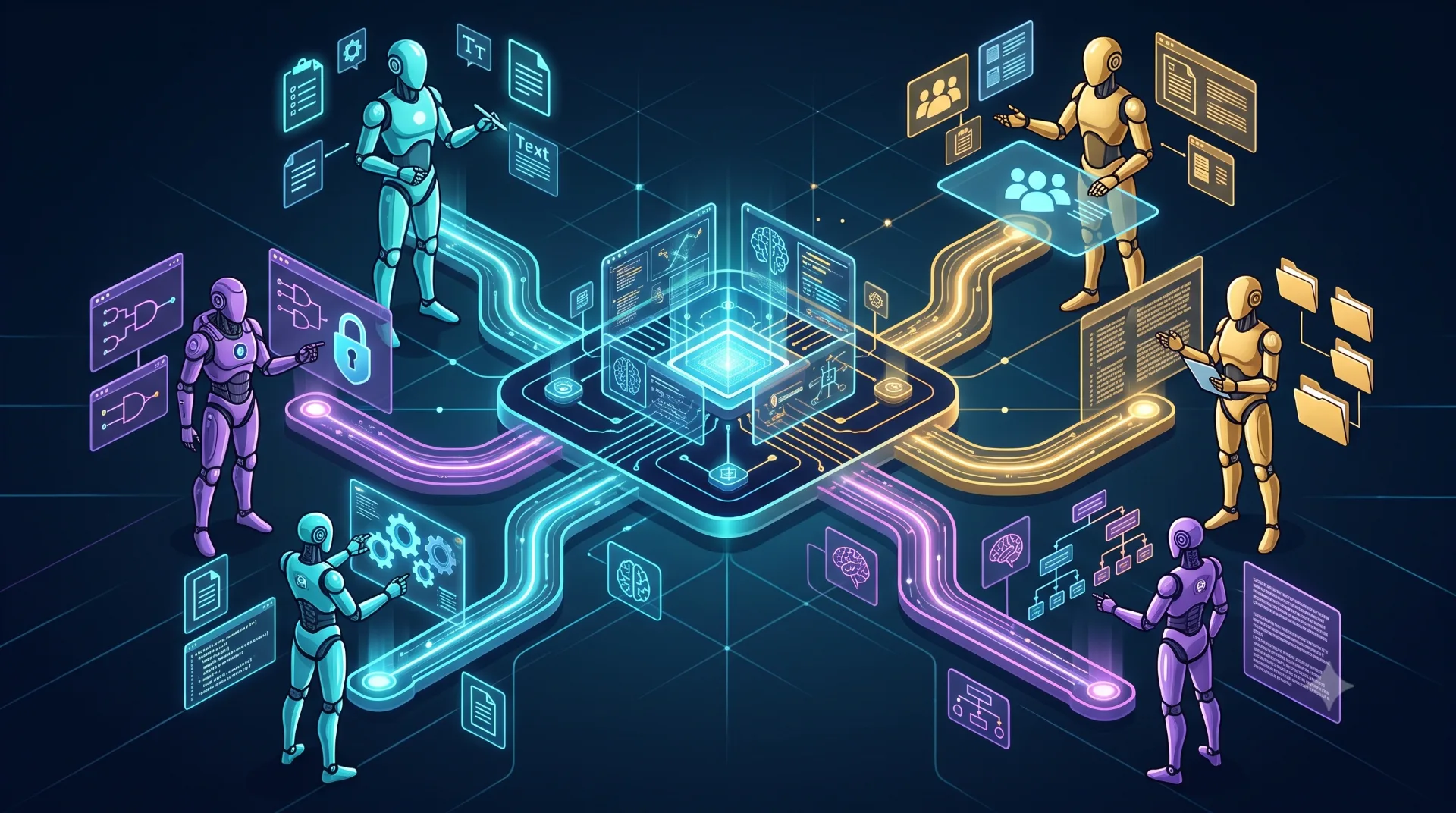
Before deploying, one must master the four foundational pillars that constitute an AI agent:
- The Brain (Reasoning Engine): The underlying LLM responsible for interpretation and logic.
- The Tools (Action Layer): External interfaces, APIs, and databases the agent can manipulate.
- The Planning Module: The ability to decompose complex requests into actionable sub-tasks.
- The Memory (Context Engineering): The vital mechanism for managing information flow and preventing context bloat.
The Hidden Success Criterion: Context Engineering
In production environments, Context Engineering is the primary differentiator between a failing prototype and a stable system. Unlike static prompts, an agent’s context is highly dynamic, accumulating observations and errors in real-time. If every intermediate step is appended to the prompt, the context window will quickly reach its limit, resulting in skyrocketing latency, exorbitant costs, and the "Lost in the Middle" phenomenon, where the LLM ignores granular details buried in large blocks of text.
Effective Context Engineering employs several techniques:

- Observation Truncation: Summarizing or stripping unnecessary metadata from tool outputs before they reach the agent.
- State Projection: Passing only the required data to specific agents, ensuring they remain focused on their specialized tasks.
- Prompt Compression: Using meta-data and few-shot examples rather than exhaustive instructions.
Architectural Patterns: A Deep Dive
The landscape is shifting away from naive "single agent loops" toward heavily engineered, deterministic topologies. Below are the six core patterns for modern agentic systems.
1. The Standard ReAct (Reason + Act) Loop
The ReAct pattern is the fundamental building block. It forces the agent to alternate between "Thinking" (logic), "Acting" (tool usage), and "Observing" (analyzing results).
- When to use: Ideal for open-ended, research-oriented tasks. It is generally not recommended for high-latency, user-facing applications.
- Pro/Con: Highly flexible, but computationally expensive and prone to infinite loops if not constrained.
2. The Sequential Multi-Agent Workflow
This pattern mimics a factory assembly line. Instead of a single "super agent," tasks are broken into a series of specialized nodes.

- Mechanism: The output of one agent serves as the structured input for the next.
- Data Flow: Uses State Projection to ensure agents only see what they need, drastically reducing token consumption and improving focus.
- When to use: Standardized pipelines such as content generation, ETL tasks, or document processing.
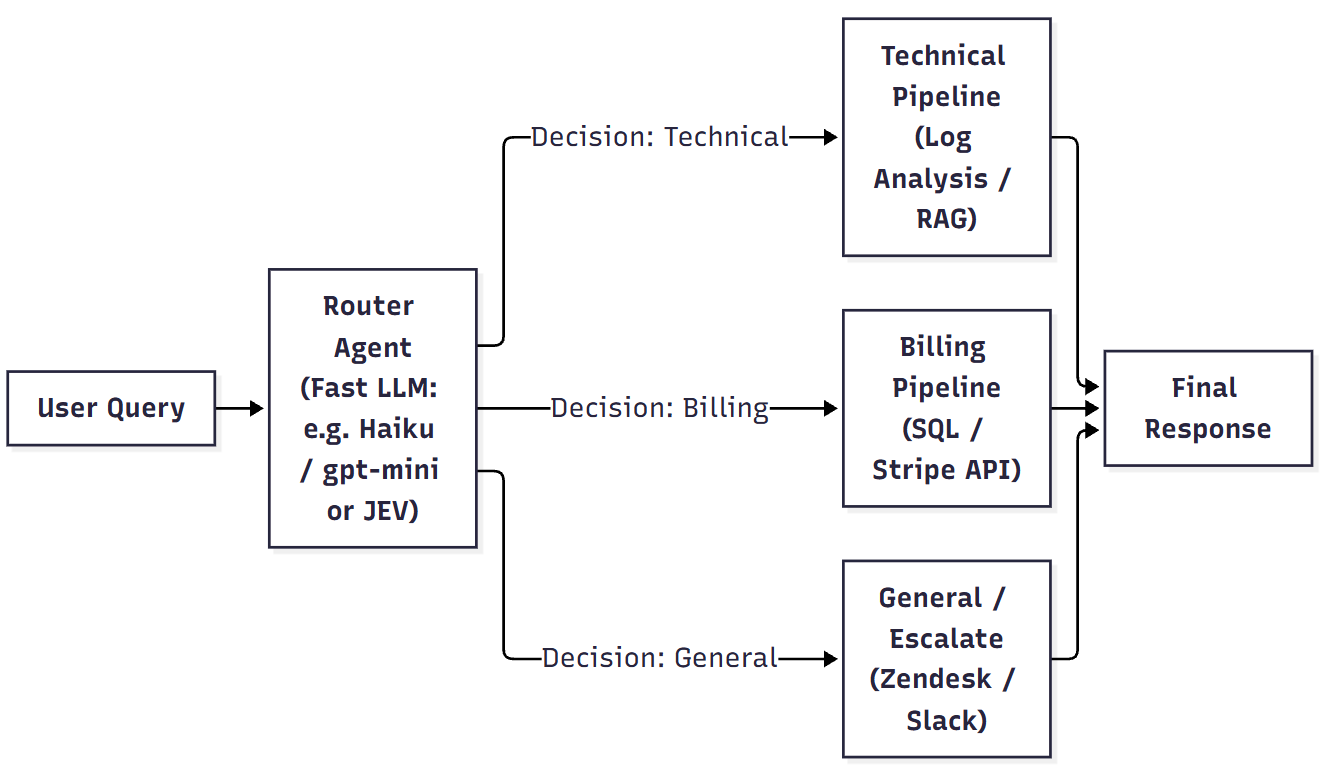
3. The Adaptive Router Agent
The Router acts as an intelligent triage system. It analyzes user intent and routes the query to the most efficient sub-pipeline.
- Mechanism: Uses a fast, small model (like Claude Haiku or a JEV model) to classify intent before handing it off to more complex, specialized workflows.
- When to use: Enterprise multi-tenant chatbots where different departments (Billing, Support, HR) require different specialized tools.
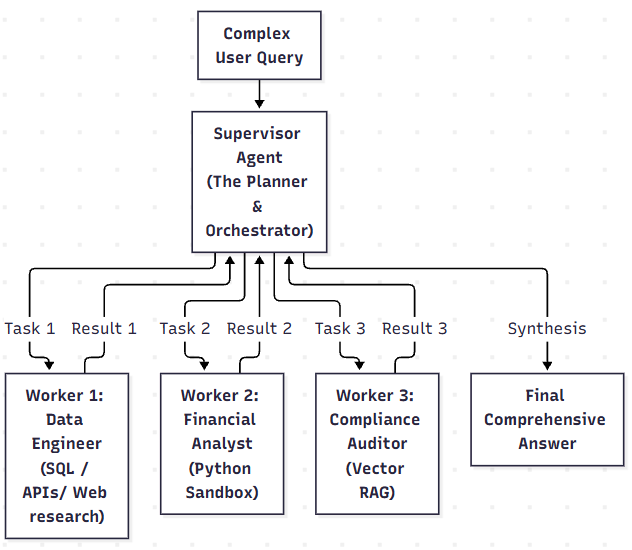
4. The Supervisor-Worker (Hierarchical) Architecture
This is a dynamic tree structure. A "Manager" agent plans the workflow and delegates sub-tasks to workers in parallel.
- Context Management: The Supervisor maintains a "Global Context" (the master plan), while workers operate in "Local Context."
- Best Practice: Utilizing a Task Ledger ensures the Supervisor keeps track of progress without overwhelming workers with irrelevant history.
5. The Reflection and Self-Correction Loop
LLMs are probabilistic and prone to hallucinations. The Reflection pattern introduces a "Critic" agent or an automated test suite to evaluate outputs before they reach the user.
- Data Flow: The Generator creates a draft; the Critic identifies flaws; the Generator revises.
- Context Pruning: To prevent the prompt from becoming bloated with failed drafts, use Diffing to pass only the original task, the latest draft, and the specific critique.
6. The Autonomous Swarm (Decentralized Network)
The most experimental pattern, where multiple specialized agents exist in a shared environment, negotiating and executing tasks without a central hierarchy.
- Mechanism: Agents use topic-based Pub/Sub communication to avoid flooding the shared context.
- When to use: Creative sandboxes or complex simulation environments. For enterprise use, the rigidity of the Supervisor or Sequential pattern is usually preferred.
Human-in-the-Loop (HITL) and Risk Mitigation
Enterprise applications cannot rely on autonomous agents for high-stakes actions like authorizing payments or dropping SQL tables. Human-in-the-Loop (HITL) is a mandatory control flow. In a State Graph (e.g., LangGraph), the agent pauses, serializes its state to a database, and waits for human verification before resuming execution. This provides the necessary guardrails for real-world deployment.
Evaluating Agentic Systems: Trajectory Analysis
In traditional RAG, we evaluate the final answer. In agentic systems, we must evaluate the journey. We use Trajectory Analysis to log every thought, action, and observation. By utilizing observability platforms like LangSmith or Arize Phoenix, engineers can trace exactly where a failure occurred—whether in tool selection, argument hallucination, or final synthesis.
Implications for Enterprise Architecture
The transition to agentic systems is not merely a change in code, but a change in philosophy. We are moving away from writing explicit, step-by-step instructions toward orchestrating networks of probabilistic entities.
Challenges and Best Practices:
- Deterministic Foundations: Always use code-based routers for simple tasks to reduce latency.
- Context Hygiene: Implement strict pruning and summarization to maintain low costs.
- Observability: If you cannot track the trajectory, you cannot debug the agent.
- Iterative Design: Start with a Sequential workflow; only move to more complex patterns like Swarms if the complexity of the task genuinely demands it.
Conclusion
The secret sauce of the modern AI enterprise is not just the foundational model, but the orchestration and management of context. By choosing the correct architectural pattern—whether it is the reliability of the Adaptive Router or the depth of the Supervisor-Worker hierarchy—and enforcing rigorous context engineering, organizations can build systems that don’t just mimic intelligence, but reliably solve problems in the real world. As we continue to refine these workflows, the gap between "experimental prototype" and "production-grade engine" will close, marking the next great era of software engineering.


 Basiran
 Siti Muinah

 Neng Nana
 Nana Muazin
 Jia Lissa
 Laily UPN
 Asep Darmawan