
 Layla Zulfa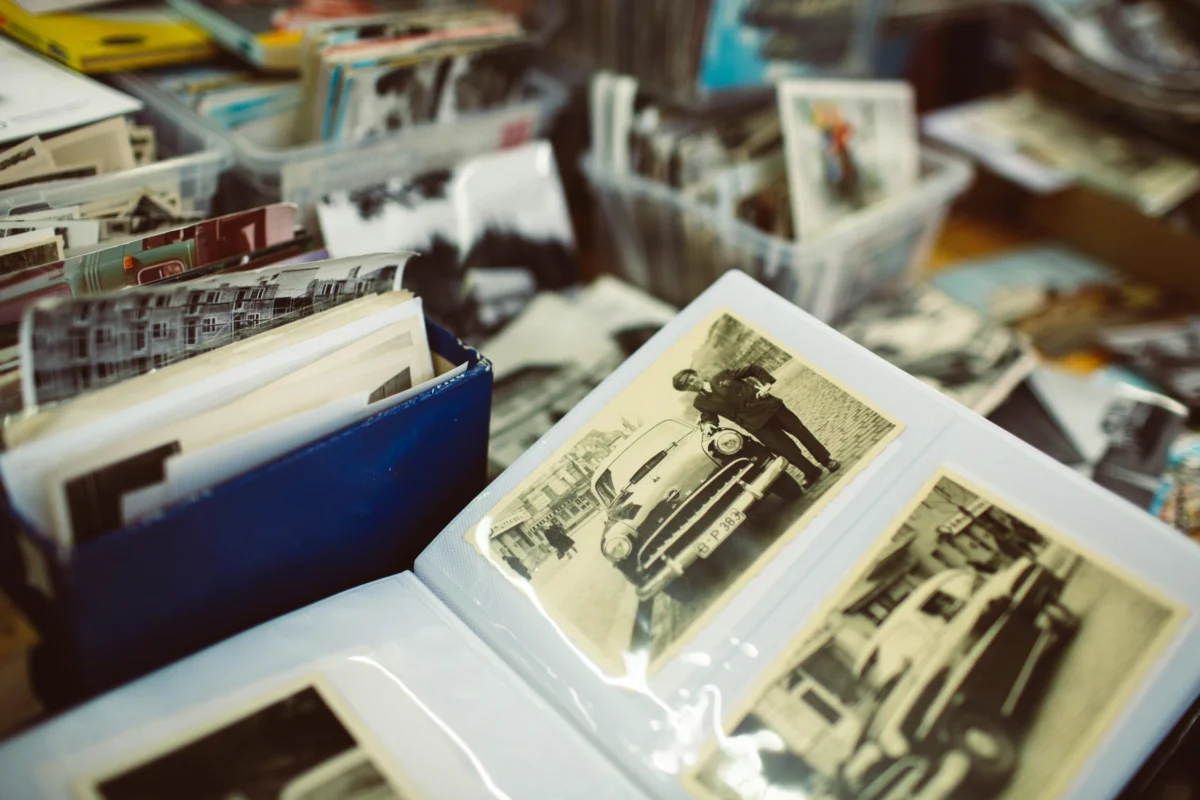
In the rapidly evolving landscape of personal computing, the "AI PC" has become the industry’s mandatory marketing badge. Every major manufacturer—from Apple and Intel to Qualcomm and AMD—is touting the integration of Neural Processing Units (NPUs) into their latest silicon. Yet, for many users, the practical utility of this specialized hardware remains opaque. Beyond the novelty of running small-scale Large Language Models (LLMs) or generating quick chatbot responses, a more profound shift is occurring: the migration of heavy-duty computational workloads from the hyperscale cloud to the edge.
A recent real-world test case highlights this transformation. By leveraging the idle NPU in a modern laptop to process over 100 gigabytes of family photos, users can now perform complex semantic deduplication three times faster than a traditional CPU, all while maintaining total data privacy and significantly reducing power consumption. This shift is not merely a convenience; it is a necessary response to the growing constraints of our digital infrastructure.
The Physical Bottleneck: Data Gravity and Grid Constraints
The prevailing architecture of the current "AI Boom" relies heavily on centralized cloud APIs. When a user needs to process media, the default path is to upload that data to a remote server, wait for the inference to finish, and download the results. For most household archives—often spanning terabytes of legacy photos and high-definition video—this "data gravity" creates a bandwidth and latency nightmare.
However, the problem extends far beyond individual user experience. The physical limits of the electrical grid are beginning to clash with the exponential growth of data center demand. Recent projections indicate that by 2030, the United States will face a shortfall of over 100 gigawatts in utility capacity needed to sustain hyperscale expansion.
The consequences are already manifesting in legislative action. In September 2026, Virginia—home to the world’s highest concentration of data centers—enacted Executive Order 22. This mandate places strict limitations on state assistance for new hyperscale projects exceeding 25 megawatts, citing acute regional constraints on both electricity and water resources. As the physical "room" for cloud expansion hits a wall, the necessity for decentralized, local compute has never been more pressing.
Chronology of a Local AI Pipeline
To address the challenge of organizing a massive, disorganized photo library, the transition to local AI processing required a methodical approach. The goal was to build a pipeline capable of semantic deduplication—identifying images that share the same subject even if they aren’t exact binary matches—without relying on external servers.
Phase 1: The Foundation (March 2021)
The project relies on the Contrastive Language-Image Pre-training (CLIP) architecture, introduced by OpenAI in 2021. CLIP revolutionized computer vision by training on 400 million image-text pairs, allowing models to learn generalized visual concepts rather than relying on rigid, pre-defined categories.
Phase 2: Implementation and Stack Selection
For the local pipeline, the choice of model was critical. The OpenCLIP implementation of the ViT-B-32-quickgelu model was selected for its ideal balance between sophistication and resource efficiency. It is lightweight enough to reside in NPU memory without thrashing system resources, yet powerful enough to discern subtle variations in image angles and lighting.
Phase 3: The Optimization Cycle
The development cycle involved three distinct steps:
- Host-side baseline: Running the model on the CPU resulted in high utilization (nearly 100%), significant fan noise, and a power draw of 47W.
- Naive NPU integration: Exporting the model to OpenVINO’s Intermediate Representation (IR) format and running it on the NPU via Intel’s Level-Zero driver yielded a 2x improvement in power efficiency, though the speedup was limited by dispatch overhead.
- Batching and Throughput: By restructuring the script to process images in batches of 16, the system achieved optimal utilization of the NPU’s tensor cores, resulting in a 3x speedup compared to the CPU, with power consumption dropping to a mere 22W.
Supporting Data: CPU vs. NPU Performance
The performance metrics collected during this project illustrate the stark efficiency gains of moving AI inference to dedicated hardware.
| Metric | CPU Baseline | NPU (Naive) | NPU (Batched 16) |
|---|---|---|---|
| Inference Time (per image) | ~35 ms | ~25 ms | ~13 ms |
| Throughput (images/sec) | 28 img/s | 65 img/s | 92 img/s |
| Power Consumption | 47W | 27W | 22W |
The data demonstrates that the NPU does not just act as a "faster" engine; it acts as a more "surgical" one. By allowing the machine to perform complex matrix math at lower voltages and higher efficiency, the NPU enables background tasks that were previously too taxing for a laptop running on battery power.
The Technical Workflow: Semantic Deduplication
The pipeline functions by generating 512-dimensional "embeddings"—high-dimensional mathematical representations of the photos. Once these embeddings are generated, the process moves to a comparison phase using cosine similarity.
By normalizing the vectors to unit length, the complex task of finding duplicates is reduced to a simple dot-product calculation. If two photos share a high degree of similarity (defined here by a threshold of 0.92), they are automatically grouped into clusters. This method is transitive; if a series of five photos are all slightly different but mathematically linked through their embeddings, the system recognizes them as a single group. The result is a clean, organized archive managed entirely by the local silicon, ensuring that sensitive family memories never leave the device.
Broader Implications for the Future of Computing
The transition toward edge-based AI has significant implications for both consumer technology and global sustainability.
1. Privacy by Design
By moving compute to the data, the necessity of uploading private media to a cloud provider is eliminated. This "privacy by design" approach is likely to become a primary selling point for future consumer hardware, as users become increasingly wary of the data mining practices inherent in cloud-based AI services.
2. The Decentralization of Intelligence
As demonstrated by the use of Python 3.14, PyTorch, and OpenVINO, the open-source ecosystem is rapidly maturing to support heterogeneous compute. Developers no longer need to be specialized chip architects to harness the power of an NPU. As libraries like OpenCLIP continue to evolve, we can expect to see a wave of "local-first" applications that tackle everything from local video editing to personalized medical data analysis.
3. Sustainability and Power
The energy efficiency observed in this project—cutting power draw by more than half while tripling throughput—serves as a template for greener computing. If millions of personal computers could handle routine tasks locally rather than offloading them to power-hungry data centers, the cumulative reduction in energy demand would be substantial.
4. Regulatory and Physical Reality
The case of Virginia’s Executive Order 22 serves as a canary in the coal mine for the tech industry. The "infinite cloud" is a myth; it is constrained by the same physical laws as any other infrastructure. Future software development must account for the reality that compute will increasingly need to be portable, efficient, and localized.
Conclusion
The "AI PC" is no longer a marketing gimmick; it is a structural necessity. By harnessing the idle NPU, users can transform their laptops from passive consumption devices into powerful, efficient, and private computational engines. While the task of deduplicating a photo library may seem mundane, the architectural shift it represents is anything but. We are entering an era where the most sophisticated AI operations will occur not in a distant, gargantuan data center, but in the palm of our hands, powered by the silicon sitting quietly on our desks. As we look toward more complex models and more intensive workloads, the ability to utilize local hardware effectively will define the next decade of personal computing.


 Siti Muinah

 Ali Ikhwan
 Raul Delapena Setiawan
 Nana
Nana
 Muslim
 Asep Darmawan
 Neng Nana