
 Iffa Jayyana
In the quiet months of the past summer, a quiet revolution took place at Louisiana State University. President Wade Rousse announced that the institution would eliminate 25 administrative positions—including several high-ranking officials—to redirect capital toward faculty recruitment and core academic research. Rousse framed the move as "transformational change," a deliberate effort to streamline operations and return the university’s focus to its primary mission: teaching.
While the move initially garnered little attention outside of Baton Rouge, it serves as a harbinger of a national trend. After decades of relentless expansion in noninstructional staff, American colleges and universities appear to have reached a tipping point. New data suggests that the era of "administrative bloat" may finally be reversing, as institutions across the country grapple with the harsh realities of declining enrollment, budgetary constraints, and a growing public mandate for fiscal accountability.
The End of the Administrative Expansion Era
For years, the rise of the non-faculty professional—those who coordinate, manage, and facilitate the campus experience without ever stepping into a lecture hall—has been a hallmark of modern higher education. Critics have long decried this growth as "administrative bloat," a phenomenon where the number of staff members outpaces the number of students or faculty.
However, the tide is turning. Data from the College and University Professional Association for Human Resources (CUPA-HR) indicates that the number of noninstructional employees at U.S. universities fell last year by a margin not seen in over a decade. While these figures represent a snapshot through the end of 2025, anecdotal evidence from campuses across the nation suggests that the trend of contraction has only accelerated since then.
The federal government’s labor outlook confirms this shift. The Bureau of Labor Statistics now projects only "limited employment growth" for postsecondary administrators, noting that the sector will likely see slower hiring than almost any other professional occupation.
Chronology of a Correction: From Growth to Contraction
To understand the current layoffs, one must look at the decades of preceding growth. From the early 1990s through the late 2010s, the number of administrators per 100 students at doctoral-granting universities exploded. A widely cited 2010 report by the Goldwater Institute found that administrative staffing increased by 39% between 1993 and 2007—a rate of growth that far outstripped the expansion of the student body or the faculty.
Even after the 2008 financial crisis, when many institutions promised to "do more with less," administrative ranks continued to swell. Institutions justified this growth as a necessary response to complex federal regulations, the need for enhanced student services, and the competitive "amenities race" to attract students. Colleges expanded their portfolios to include everything from mental health counseling and disability support to sustainability offices and robust fundraising departments.
However, the post-pandemic landscape changed the equation. The confluence of demographic decline (the "enrollment cliff"), the expiration of pandemic-era federal relief, and a sharp drop in international student numbers has left many universities in a precarious financial position. Today, we are seeing the direct fallout:
- 2025 (Mid-Year): Universities begin announcing major restructuring plans. The University of Southern California moves to lay off academic advisers, while the University of California, Los Angeles cuts 27 information technology positions.
- Late 2025: The University of Utah announces a staggering plan to eliminate up to 855 noninstructional positions over the coming year.
- Early 2026: Johns Hopkins University implements a hiring freeze and terminates 110 workers. Simultaneously, private institutions like The New School and Baker University report significant job losses and administrative salary cuts.
- Mid-2026: The University of Maryland and the University of Minnesota join the ranks of institutions implementing layoffs, with Maryland cutting 84 staff members and Minnesota shedding 230 positions through a combination of attrition and involuntary separation. Even the ivory tower of Harvard University makes headlines for eliminating 165 noninstructional roles.
The Drivers Behind the Downsizing
Why now? Experts point to a perfect storm of economic and social pressures. Kevin McClure, professor of higher education at the University of North Carolina Wilmington, notes that the current environment is fundamentally different from previous downturns.
"Institutions are shrinking. Some are closing. Some simply have fewer students, so are having to contract," McClure explains. He notes that because tenure and faculty contracts make it difficult—and often legally expensive—to cut teaching staff, the "administrative layer" has become the primary target for cost-saving measures.

Beyond the immediate financial pressure, there is a mounting crisis of confidence. Gallup surveys show that public trust in higher education has plummeted, falling from nearly 60% in 2015 to fewer than 4 in 10 Americans today. According to Armand Alacbay of the American Council of Trustees and Alumni (ACTA), the cost of the "higher education product" has simply reached an unsustainable level. "That’s what’s really animating this whole discussion of administrative bloat: the price of the product reaching an unsustainable level," Alacbay notes.
Official Responses and the Search for Efficiency
The discourse surrounding these cuts has become increasingly polarized. Supporters of the trend, such as Peter Wood, president of the National Association of Scholars, view the layoffs as a necessary pruning of a bloated bureaucracy. "Colleges began to see themselves as providing this very broad suite of services, all of which were personnel-intensive," Wood says, arguing that these expansions often occurred at the expense of academic rigor.
However, the reaction from within academia is more cautious. While many faculty members have long complained about administrative creep, there is genuine concern that the cuts are being made without a strategic vision.
At Yale University, a faculty committee tasked with investigating the decline in public trust identified administrative bloat as a major culprit. The report noted that it was "remarkably difficult" to even determine how many administrators the university employed, a finding that in itself signaled a lack of transparency and management. The committee’s final report urged the institution to answer a fundamental question: What percentage of resources is devoted to core academic functions, and what percentage is not?
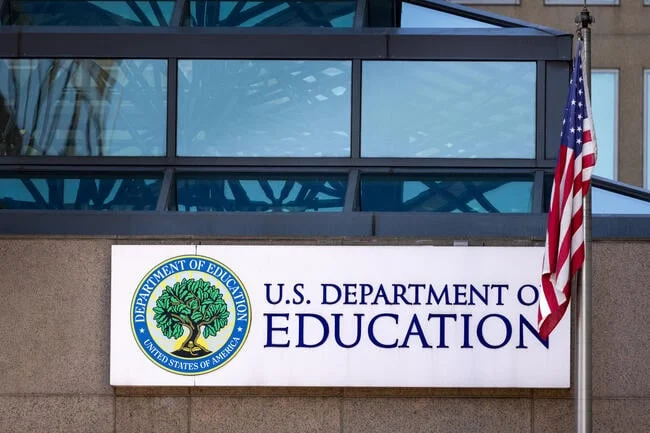
Government officials are also chiming in. During a White House roundtable last year, U.S. Under Secretary of Education Nicholas Kent criticized the "layers of bloated administration" that students and taxpayers are forced to subsidize, noting that many institutional expenditures now have little to do with the actual process of learning.
Implications for the Future of Higher Ed
As universities navigate this "stark correction," the long-term implications remain unclear. There is a tangible risk that in their haste to cut costs, institutions may strip away essential services. The elimination of academic advisors, IT support, and mental health counselors could negatively impact student success, retention, and the overall campus experience.
Professor McClure warns against the "broad brush strokes" currently being used to discuss these cuts. He argues that the conversation needs to move from simple headcount reduction to a more nuanced analysis of necessity. "What positions are we actually talking about that we need or don’t need?" he asks. "We should have that conversation."
For students and their families, the immediate benefit may be a slowing of tuition hikes, but the long-term impact on the quality of education depends on how universities reinvest the savings. If the redirected funds effectively bolster faculty hiring and classroom resources, the current period of austerity may lead to a more resilient and focused higher education system. If, however, the cuts are merely a reactive measure to stave off insolvency without addressing the structural inefficiencies of the modern university, the sector may find itself in a cycle of decline.
As we move through 2026, the data suggests that the "administrative bloat" era is not just pausing—it is fundamentally shifting. Whether this results in a "leaner, meaner" academic engine or a hollowed-out shell remains the defining question for the next generation of higher education leaders. For now, the ivory tower is undergoing a long-overdue renovation, and for the first time in decades, the administrators are the ones being asked to clear the floor.

 Sagoh
Sagoh
 Nila Kartika Wati
 Basiran
 Neng Nana
 Nana Muazin
 Jia Lissa
 Laily UPN
 Asep Darmawan