
 Dwi Wanna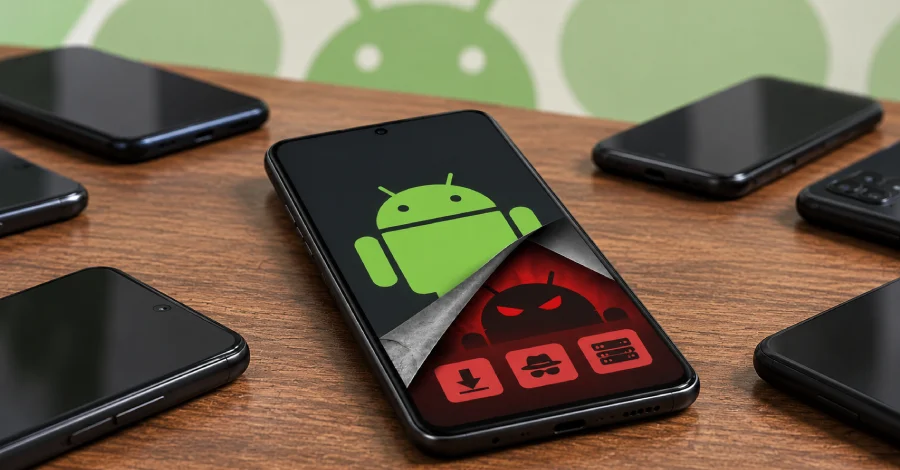
In an era where the smartphone has become the primary gateway to the digital world, a disturbing new threat has emerged from the most unexpected of places: the supply chain itself. Cybersecurity researchers at Bitdefender have unveiled a sophisticated, persistent malware campaign dubbed "Midnight Mimosa." This campaign targets low-cost Android smartphones, embedding malicious code directly into the device firmware before the products ever reach the hands of consumers.
The discovery highlights a harrowing reality for budget-conscious users: the very devices they purchase to stay connected are being weaponized against them from the moment they are powered on.
The Anatomy of the Threat: How Midnight Mimosa Operates
At the core of the Midnight Mimosa campaign is a malicious component identified as com.android.system.lite. Unlike traditional malware that a user might inadvertently download through a phishing link or a rogue app, this threat arrives pre-installed within the system partition.
System-Level Privileges and Stealth
Because the malware resides at the firmware level, it operates with system-level privileges. This grants the attackers near-total control over the device. The malware is capable of:
- Arbitrary Code Execution: Downloading and executing remote payloads on command.
- App Lifecycle Management: Silently installing or uninstalling a rotating carousel of at least 32 distinct, disguised applications.
- Permission Hijacking: Granting itself elevated access to sensitive Android features, including Accessibility Services, SMS, and notification listeners.
By manipulating the Accessibility Service, the malware can effectively "read" the screen and interact with other applications, creating a layer of control that is invisible to the average user.
Chronology: A Two-Year Global Campaign
The reach of Midnight Mimosa is staggering. According to Bitdefender’s telemetry, the campaign has been active for approximately two years, infecting thousands of unique devices across more than 150 countries.

- Initial Discovery: Bitdefender researchers identified a pattern of suspicious activity originating from devices on MediaTek platforms.
- The Global Footprint: While the infection is global, the highest concentration of impacted devices is found in Mexico, followed by France, Italy, the United States, Germany, Brazil, Spain, the United Kingdom, Canada, Romania, Poland, and Thailand.
- Supply Chain Infiltration: The investigation revealed that many of the infected units are low-cost, white-label, or counterfeit devices. Some of these phones brazenly mimic the branding of premium devices, such as Samsung Galaxy models or even Apple iPhones, targeting consumers looking for high-end aesthetics at a fraction of the market price.
- The "Phantom" Connection: The campaign appears to share infrastructure and operational tactics with Android.Phantom, a previously documented threat that bundled malicious code into modded games to facilitate click fraud. This suggests a coordinated ecosystem of threat actors leveraging similar supply chain vulnerabilities.
Supporting Data: Monetization and the "Zombie" Network
The ultimate goal of Midnight Mimosa is financial gain through a multifaceted approach to exploitation. Bitdefender characterizes the operation as a sophisticated revenue-generation scheme.
The Mechanism of Ad Fraud
Interestingly, the primary malware does not perform the ad fraud itself. Instead, it acts as a "dropper." It fetches remote configurations to install secondary utility apps—such as weather checkers or QR code scanners—that appear legitimate. These apps house genuine advertising software development kits (SDKs). Once active, they load invisible windows over legitimate applications, registering "views" or "clicks" on ads without the user ever seeing them.
Residential Proxy Relays
Perhaps most concerning is the conversion of infected devices into "residential proxy nodes." By turning these phones into part of a massive, distributed botnet, the operators can route their traffic through the user’s home network. This obscures the origin of malicious activities, making the devices "zombies" that serve the interests of the botnet operators, effectively using the user’s data and IP address to conduct further cyber-attacks or bypass geo-fencing restrictions.
Bypassing Google Play Protect
The malware demonstrates a high degree of technical sophistication regarding defense evasion. Before installing a new payload, it briefly disables the Google Play Store app. By temporarily neutralizing the official store, it circumvents Google’s Play Protect safeguards. Once the payload is installed, it re-enables the store, leaving the user none the wiser.
Manufacturer Complicity and Supply Chain Vulnerabilities
The most contentious aspect of this discovery is the presence of firmware signed with certificates linked to Shenzhen Zediel Co., Ltd, a Chinese manufacturer.
While it remains unclear whether the certificate owners are the primary architects of the malware or victims of a third-party supply chain compromise, the implications are severe. The fact that the code is signed by a recognized manufacturer suggests that the infection point is deep within the factory-flashing process. Whether through negligence, intentional backdooring, or a breach of the manufacturing facility’s security, the result is the same: the product is "poisoned" at the source.

Bitdefender’s investigation noted that other company names appeared during their analysis, suggesting that Midnight Mimosa is not a singular instance of corruption but rather a systemic issue within the lower-tier Android manufacturing market.
Implications: The Death of User Agency
The presence of pre-installed malware fundamentally breaks the "trust model" of modern computing. As Bitdefender poignantly noted, traditional security measures are rendered obsolete when the threat is baked into the operating system.
The Limits of Remediation
For a standard user, the "uninstall" button is the primary tool for defense. With Midnight Mimosa, this tool is useless. Because the malicious files reside in the protected system partition, they cannot be removed through standard user-interface actions.
Remediation requires advanced technical intervention, such as using Android Debug Bridge (ADB) commands to disable specific packages or, in more extreme cases, performing a complete firmware re-flash. These actions are beyond the reach of the vast majority of consumers who purchase these low-cost devices, effectively turning the phone into a permanent, compromised asset.
The Burden on the Ecosystem
This campaign puts significant pressure on Google and device vendors. While Google continues to refine Play Protect, it is effectively powerless against a system-level process that it cannot reach. The burden of responsibility, therefore, shifts to the OEMs and the marketplace retailers.
If consumers cannot trust that a new phone is clean, the market for affordable hardware could face a crisis of confidence. The industry is now tasked with implementing stricter supply-chain auditing and firmware verification processes to ensure that "smart" devices do not become "spy" devices.

Conclusion: A Call for Transparency
The Midnight Mimosa campaign serves as a sobering reminder that price often comes at a hidden cost. When a deal seems too good to be true, it may not just be a matter of inferior build quality—it could be a matter of security.
As cybersecurity researchers continue to map the infrastructure of this botnet, the industry must move toward a model of "Zero Trust" manufacturing. Until vendors are held accountable for the integrity of their firmware, users are encouraged to stick to reputable brands, perform due diligence before purchasing budget hardware, and remain vigilant against any unusual device behavior.
For now, Midnight Mimosa remains a potent example of how the most dangerous threats to our privacy are often the ones we invite into our homes, packaged in a sleek, brand-new box.

 Iffa Jayyana
 Pevita Pearce
 Basiran
 Neng Nana
 Nana Muazin
 Jia Lissa
 Laily UPN
 Asep Darmawan