
 Raul Delapena Setiawan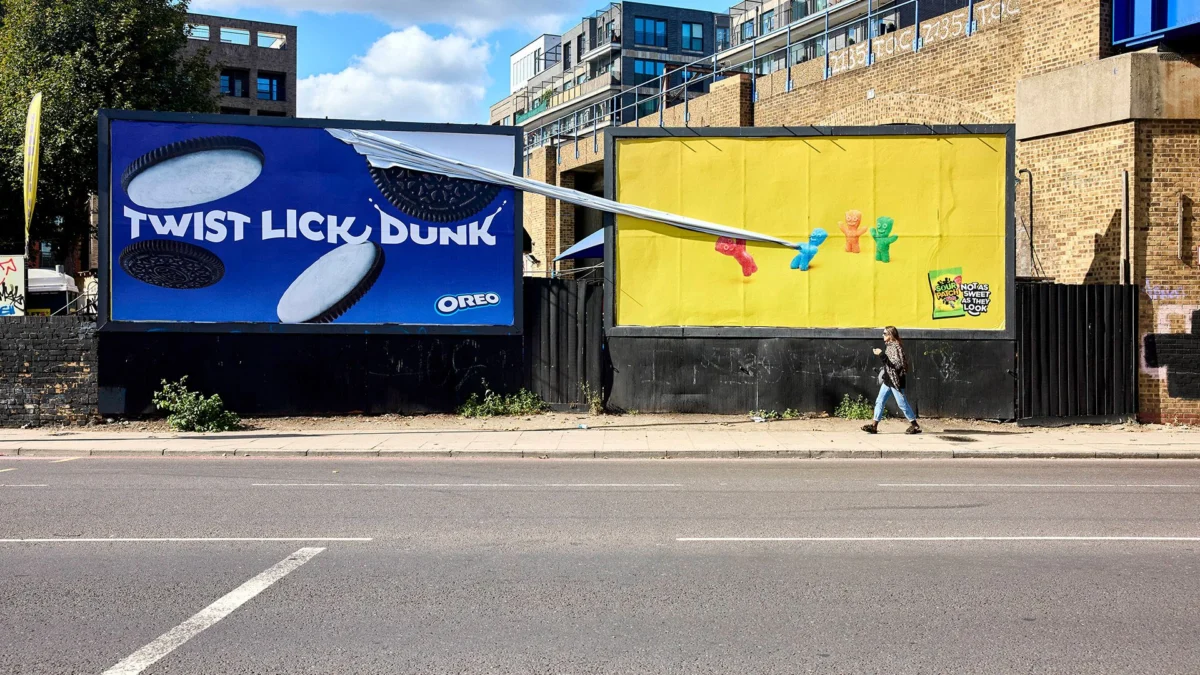
In the world of advertising, the "sweet spot" is often elusive. Brands typically play it safe, opting for aspirational imagery and friendly taglines designed to offend no one and appeal to everyone. However, the UK market has recently been shaken up by an unconventional arrival: the Sour Patch Kids. With a series of billboards that prioritize chaos, dark humor, and physical disruption, the confectionery giant has proven that sometimes, to be remembered, a brand must be willing to be a little bit "sour."
The campaign, orchestrated by the global creative agency VCCP, has turned heads across the United Kingdom. By embracing the brand’s signature persona—a mischievous blend of sugar-coated sweetness and sharp, sour intent—the campaign has moved beyond traditional static imagery, opting instead for a narrative that feels alive, unpredictable, and undeniably disruptive.
A Chronology of Chaos: The Campaign Rollout
The strategy behind the Sour Patch Kids’ UK debut was not to introduce the product with a polite wave, but to announce its presence with a theatrical explosion. The roll-out began with a series of visuals that established the characters’ personalities: they were not merely candy; they were agents of anarchy.
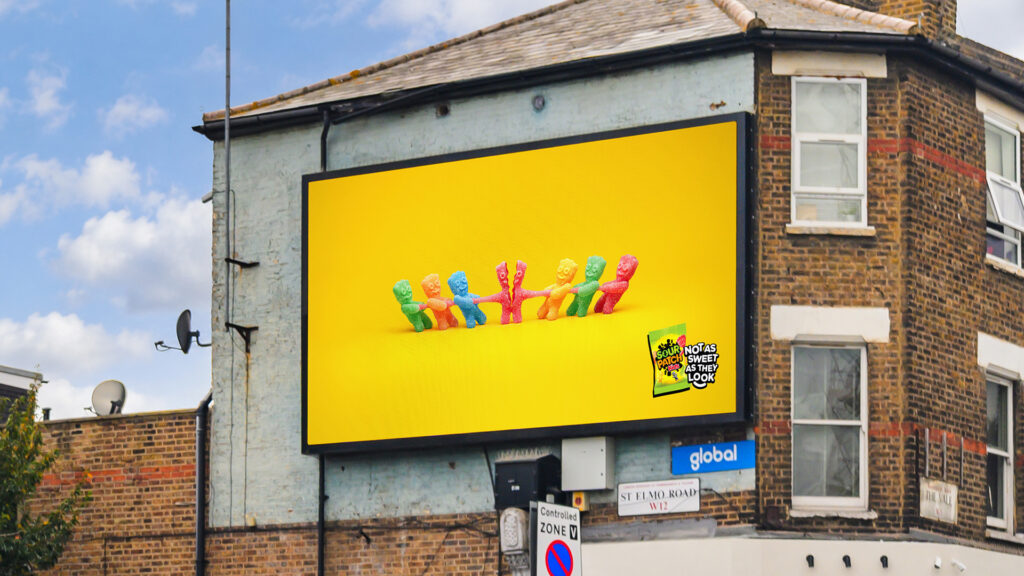
The initial phase of the campaign focused on establishing the "Not As Sweet As They Look" narrative. By placing the characters in scenarios that depicted them engaged in playful yet violent activities—such as a grisly game of tug-of-war or using a friend’s head as a tennis ball—VCCP signaled to the public that the brand was leaning heavily into the "sour" half of its identity.
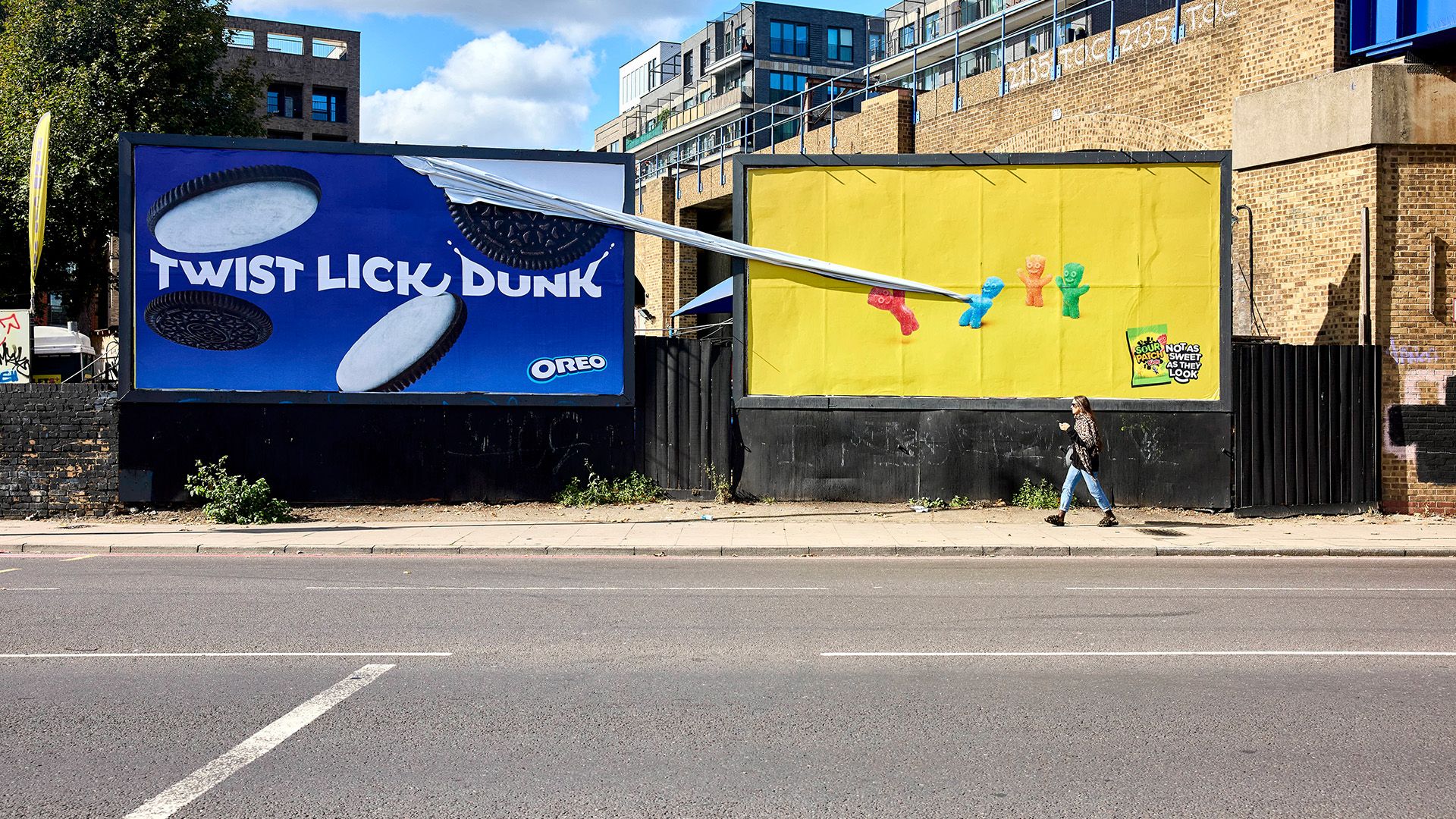
Following this introduction, the campaign escalated in physical scope. The most talked-about iteration of the rollout occurred when the Sour Patch Kids "broke out" of their own ad space. In an act of meta-advertising that blurred the lines between the digital world and the physical environment, the campaign featured characters physically tearing down a neighboring advertisement for Oreo (a fellow Mondelez brand). This stunt, which utilized the structural reality of the billboard as a storytelling device, turned a passive viewing experience into an interactive, immersive event.
Supporting Data: Why Disruption Works
In an era of digital ad-blindness, where consumers are bombarded with thousands of marketing messages per day, the "pattern interrupt" is the most valuable tool in a creative director’s arsenal. Sour Patch Kids’ reliance on physical, high-impact visuals is not merely for entertainment; it is grounded in the psychology of visual perception.
Studies in marketing psychology consistently show that "negative space" and "boundary-breaking" visuals are significantly more effective at triggering cognitive engagement. By destroying a neighboring ad, the Sour Patch Kids campaign forces the brain to reconcile a real-world object (the torn paper of the billboard) with a brand-controlled narrative. This cognitive friction—the split-second confusion caused by the "damage"—is what creates a lasting memory.
Furthermore, the campaign benefits from "earned media." Because the billboards are inherently shareable and provocative, they have gained significant traction on social media platforms like TikTok and X (formerly Twitter). In the digital age, a billboard’s success is no longer measured solely by the foot traffic that passes it, but by the virality of the photos taken by commuters and pedestrians who feel compelled to share the "mischief" with their own networks.
Official Responses: The VCCP Perspective
The philosophy driving this campaign is best summarized by those who brought it to life. Chris Birch and Jonny Parker, Chief Creative Officers at VCCP, have been vocal about the creative liberation the Sour Patch Kids brand allowed them to pursue.
"Everyone in the creative department keeps collaring us saying, ‘why don’t people rip each other limb from limb, or pull each other’s heads off, or tear down each other’s billboards in advertising anymore?’ Fair point, we thought," Birch and Parker noted in a joint statement.
For the creative team, this campaign was an opportunity to "scratch an itch" that has long been suppressed by brand-safety guidelines and corporate risk-aversion. By leaning into the "sweet but sour" persona, VCCP found a way to justify the violence and the chaos. The result, according to the duo, is a campaign that is "simple, clever, beautiful, and disturbing."
This official stance highlights a growing trend in advertising: the move away from the "squeaky clean" image. In an increasingly cynical world, brands that lean into their flaws or showcase a "naughty" side often find greater resonance with younger audiences who prioritize authenticity and subversion over polished, unattainable perfection.
The Implications for Future Advertising
The success of the Sour Patch Kids campaign signals a potential shift in how brands approach outdoor media. For years, the trend in digital and print advertising has been to refine, smooth, and sanitize. However, this campaign proves that "grit" has a place in high-end marketing.
1. The Death of the Passive Billboard
Moving forward, we are likely to see more brands attempting to break the "fourth wall" of advertising. Static images are becoming less effective, while installations that interact with their environment—whether through 3D elements, real-time weather integration, or simulated destruction—are becoming the new benchmark for success.
2. The Rise of "Brand Characterization"
Sour Patch Kids have long relied on their characters as the face of the brand. This campaign takes that to a new level by giving them agency. They aren’t just icons on a package; they are characters that act, react, and influence their environment. Brands that invest in deep, consistent, and slightly edgy character lore will likely see higher levels of brand loyalty among younger demographics.
3. The Power of "Dark" Humor
The use of "disturbing" imagery (like the tennis head-swapping) is a calculated risk. It challenges the viewer to engage with the brand on a deeper, albeit slightly uncomfortable, level. This implies that marketers are realizing that shock value, when paired with a recognizable, non-threatening product, is a powerful driver of brand recall.
Conclusion: A New Playground
The Sour Patch Kids’ entry into the UK is a masterclass in how to command attention in a crowded market. By refusing to follow the standard playbook of polite, informative advertising, the brand has established itself as an outlier—a disruptive force that demands notice.
As consumers continue to grow weary of traditional corporate messaging, the appetite for creative, subversive, and "naughty" advertising will only increase. Whether it’s through tearing down competition, engaging in cartoonish violence, or simply subverting expectations, the path forward for brands seems clear: if you want to be noticed, don’t just stand there—make a mess.
The "Not As Sweet As They Look" campaign is more than just a series of posters on a wall; it is a declaration that the rules of engagement have changed. In the playground of modern advertising, the kids are no longer just playing; they are running the show, and they aren’t afraid to break a few things along the way. For VCCP and Sour Patch Kids, this is only the beginning of a broader trend that prioritizes personality over polish, and impact over inhibition. As the industry watches and learns, one thing is certain: the bar for what constitutes a "bold" billboard has been raised, and it’s looking a little more sour than before.

 Asep Darmawan
 Azzam Bilal Chamdy
 Lina Irawan
 Nana
Nana
 Rifan Muazin
 Ali Ikhwan
 Evan Lee Salim
