
 Jia Lissa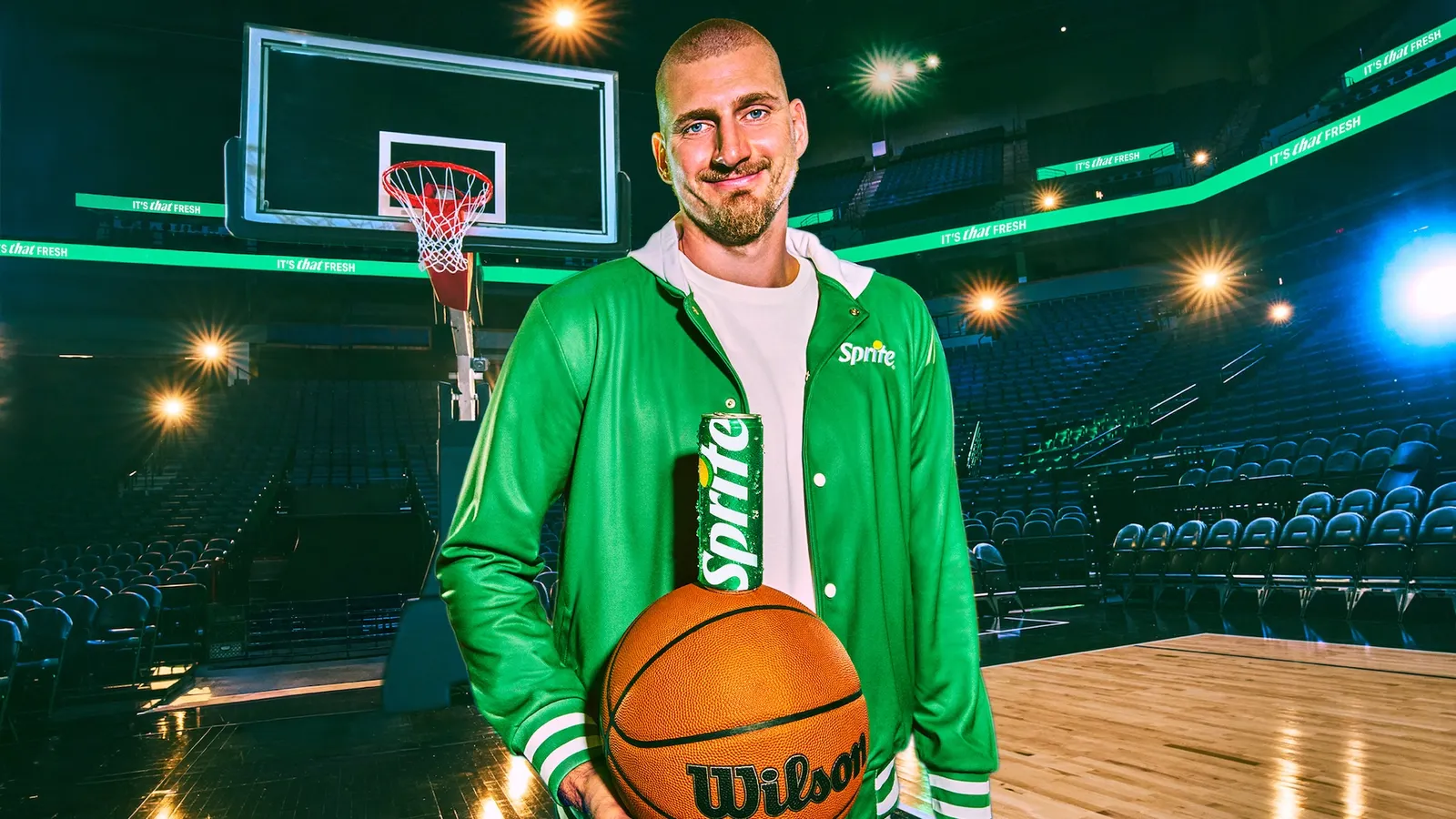
In a move that signals a seismic shift in sports marketing, Sprite has officially unveiled its new global platform, “Never Stop Refreshing the Game.” This strategic pivot marks more than just a brand campaign; it represents the consolidation of Coca-Cola’s renewed ambition to dominate the global basketball landscape. Following a decade-long hiatus, Sprite has reclaimed its mantle as the official soft drink partner of the NBA, aiming to replicate the massive, data-driven successes the parent company achieved during its recent FIFA World Cup activations.
By bridging the gap between hyper-local community engagement and massive international reach, Sprite is positioning itself as a cultural architect rather than merely a sponsor. As the brand eyes growth through 2027, the campaign is set to span across North America, Europe, Latin America, the Asia-Pacific region, Africa, and the Middle East, signaling a truly borderless marketing endeavor.
The Strategic Chronology: From World Cup Success to NBA Dominance
To understand the scale of “Never Stop Refreshing the Game,” one must first look at the blueprint established by Coca-Cola’s recent history. The brand’s internal mandate has evolved from simple awareness to deep, data-led consumer intimacy.
The World Cup Precedent (2022–2023)
The parent company’s performance during the FIFA World Cup served as the "North Star" for the current Sprite initiative. By leveraging digital platforms and physical packaging to drive engagement, Coca-Cola managed to secure over 25 million first-party data points. This data was not just a vanity metric; it allowed the company to generate over 9 billion views across social and digital channels. The success was rooted in "hyper-personalization"—a strategy that brought the massive event down to a one-on-one level for every consumer.
The Return to the NBA (2024–Present)
Sprite’s return to the NBA sponsorship fold was a calculated strike, effectively ending a long-standing association between the league and rival PepsiCo’s Starry brand. Following this, the company began a phased rollout of its new vision. The revival of the iconic "Obey Your Thirst" tagline earlier in 2024 served as the soft launch for this broader basketball strategy, positioning Sprite as a brand that values authenticity and individuality.
The 2027 Horizon
The current campaign is not a short-term sprint. It is a multi-year commitment extending through 2027. This timeframe is deliberate, aligning with the NBA’s own international expansion schedule, which includes high-profile games in Paris, Mexico City, and Manchester. Sprite’s roadmap is designed to move in lockstep with the league’s global footprint, ensuring the brand is present at every key touchpoint of the sport’s international growth.
The Face of the Brand: The Duality of Jokić and Edwards
At the heart of the campaign are two of the most potent, yet diametrically opposed, personalities in modern basketball: Nikola Jokić and Anthony Edwards.
Oana Vlad, global brand vice president of Sprite, describes the selection as a celebration of "game changers." The choice of Jokić—the Serbian three-time NBA MVP—serves as a vital link to the brand’s European and international ambitions. His reserved, workmanlike approach to the game offers a stark, yet complementary, contrast to the brash, high-energy charisma of Anthony Edwards.
"They’re two of the most talented players in the game," Vlad noted. "They’re uniquely original and absolutely comfortable in being who they are. They’ve moved the game forward, and the culture of the game."
By featuring these two, Sprite is attempting to capture the full spectrum of the modern basketball fan. Edwards appeals to the hype-culture, fashion-forward, and digitally native demographic, while Jokić provides a grounded, global credibility that resonates in emerging markets like Europe and beyond.
Supporting Data: Why Basketball?
The decision to anchor the brand to basketball is backed by compelling demographic and cultural data. As Vlad pointed out, basketball is currently the second most popular sport globally. However, its value to a brand like Sprite extends far beyond the final score.
- Cultural Convergence: Basketball sits at the intersection of music, fashion, and social justice. These are the three pillars where Sprite has traditionally held the most authority.
- Engagement Metrics: The reliance on first-party data—collected via on-package QR codes and digital interactive games—is designed to create a "closed loop" of communication. By trading access (exclusive gear, VIP tickets, Wilson game balls) for data, Sprite transforms a passive consumer into an active participant.
- The "Hoops of Refreshment" Initiative: Recognizing that brand loyalty starts at the local level, the campaign includes a massive refurbishment program for community courts. This physical commitment provides a "hyper-local" touchpoint that digital ads cannot replicate, anchoring the brand in the daily lives of local basketball communities.
Official Responses and Corporate Philosophy
The philosophy driving this campaign is one of "betterment." According to Oana Vlad, Sprite’s role in the basketball ecosystem is not just to provide refreshment, but to facilitate access.
"If we’re going to be in this space, we need to make it better," Vlad stated. "We need to help move it forward and hopefully bring experiences, especially for fans, that they wouldn’t have access to otherwise."
This sentiment is echoed in the brand’s shift toward "experiential marketing." The inclusion of integrations with NBA 2K and game-day food delivery partnerships demonstrates a realization that the modern fan consumes the sport through a digital-first lens. The brand is moving away from the "billboard" era of advertising and into the "integrated" era, where Sprite becomes part of the game-day experience itself.
Implications for the Industry
The rollout of "Never Stop Refreshing the Game" carries several significant implications for the marketing and beverage industries:
1. The Death of the "One-Size-Fits-All" Campaign
Sprite’s strategy confirms that global brands must now operate with a decentralized logic. While the campaign has a unified "North Star," the execution is explicitly designed to be amplified locally. By leveraging local influencers and community-specific court refurbishments, the brand is signaling that it understands the nuances of regional basketball cultures—from the street courts of London to the arenas of Mexico City.
2. Packaging as a Digital Gateway
The industry is moving toward a future where the physical product is merely the physical manifestation of a digital experience. Sprite’s use of QR codes on cans is a prime example of "packaging-as-media." By turning every can into a potential ticket to a high-stakes event or a piece of exclusive digital content, the brand ensures that the product is never just a commodity.
3. Data as the New Currency
The focus on collecting 25 million-plus data points via the World Cup, and the intent to repeat that with the NBA, underscores the necessity of first-party data in a post-cookie advertising landscape. Sprite is essentially building a proprietary database of loyalists. This allows for long-term re-engagement, turning a one-time purchase into a lifelong customer relationship.
4. The "Culture-First" Sponsorship
The era of putting a logo on a jersey and calling it a day is over. Sprite’s approach demonstrates that success now requires being a "cultural sponsor." By embedding itself in the fashion, music, and gaming worlds that surround the NBA, Sprite is insulating itself from the volatility of athletic performance. Even if a team loses, the cultural value of the brand’s participation in the "lifestyle" of the sport remains intact.
Conclusion
Sprite’s "Never Stop Refreshing the Game" is a masterclass in modern, integrated marketing. By leveraging the star power of figures like Nikola Jokić and Anthony Edwards, utilizing the data-driven precision honed during the FIFA World Cup, and maintaining a commitment to community-level impact through court renovations, the brand is setting a new standard for sports partnerships.
As the campaign rolls out across the globe through 2027, the focus will remain on the delicate balance of scaling a message globally while keeping the individual experience intimate. For the Coca-Cola Company, the goal is clear: to ensure that when the world thinks of basketball, it thinks of the cooling, refreshing, and omnipresent image of Sprite. In a market crowded with competitors and shifting consumer loyalties, Sprite is not just returning to the court—it is attempting to redefine the game.

 Lina Irawan
 Reynand Wu

 Nana
Nana
 Rifan Muazin
 Ali Ikhwan
 Evan Lee Salim
