
 Nana Wu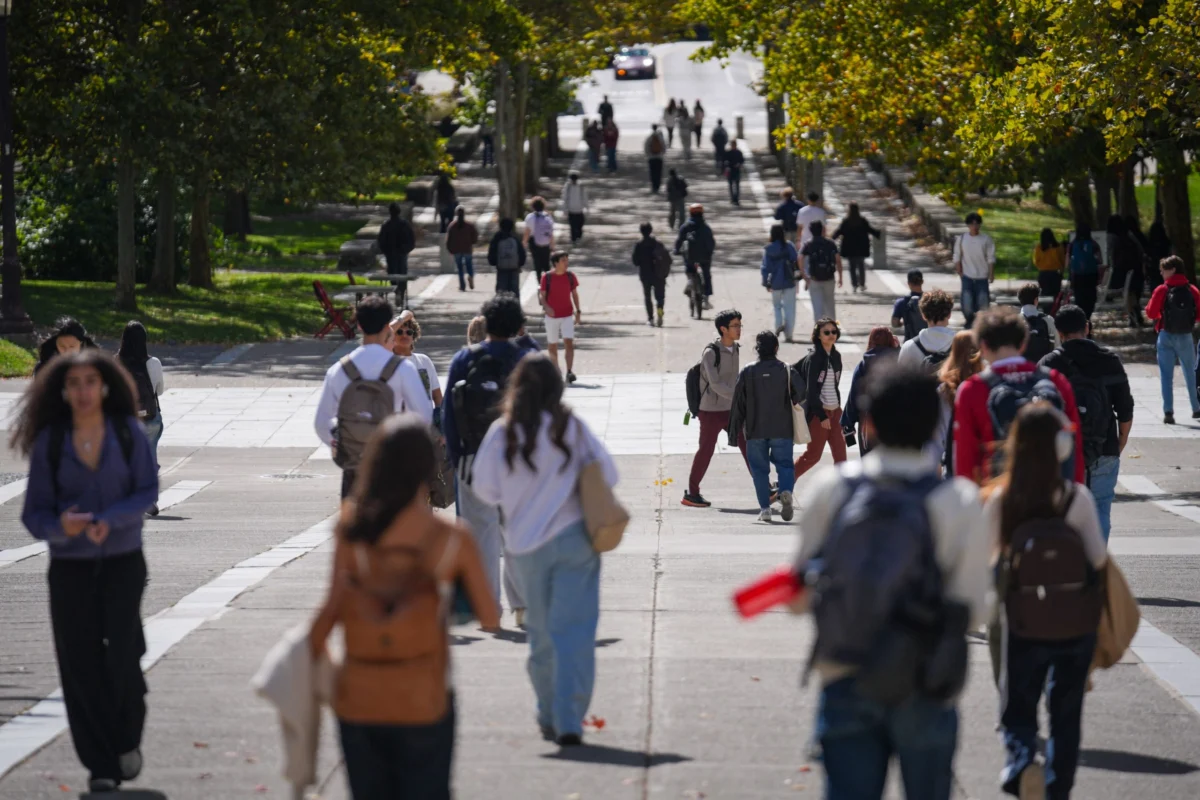
In the landscape of American cultural discourse, few topics have become as polarized as the value of a university degree. According to a landmark study released this month by Gallup, a mere 31 percent of Americans now describe a college education as "very important." This figure marks a historic nadir, representing a staggering 39-percentage-point decline since 2013, when public approval stood at 70 percent.
Yet, as rhetoric turns increasingly hostile toward ivory towers, a curious anomaly emerges: the actual behavior of the American public remains remarkably anchored. Despite the drumbeat of "college is dead" narratives, enrollment data paints a picture of resilience rather than collapse. This investigation explores the profound disconnect between what Americans say about higher education and what they actually do when it comes time to register for classes.
The Shrinking Consensus: A Shift in Public Sentiment
The recent Gallup data does not merely reflect a niche skepticism; it represents a broad, societal shift. Historically, higher education was viewed as the "great equalizer," a reliable engine of social mobility championed by Democrats, women, and minority groups alike. However, recent polling indicates that these demographics—groups that once served as the strongest proponents of the college model—have seen the most significant double-digit declines in their approval ratings.
Observers point to a "perfect storm" of catalysts fueling this sentiment. The rising costs of tuition, a mounting student debt crisis exceeding $1.7 trillion, and high-profile campus controversies—such as the recent, deeply troubling sexual assault scandal at Cornell University—have eroded public trust. When the institution’s perceived moral compass or economic utility is called into question, the public is quick to respond with skepticism.
Chronology: From the Great Recession to the Present
To understand the current state of enrollment, one must look at the historical ebbs and flows of the last two decades:
- 2008–2011: Following the Great Recession, U.S. college enrollment surged. The phenomenon is well-documented: higher education is inherently countercyclical. When the labor market suffers, young adults and displaced workers flock to universities to upskill and wait out economic volatility.
- 2011–2019: As the economy recovered, the enrollment rate saw a natural, expected decline. During this period, the conversation around "return on investment" (ROI) began to gain traction, setting the stage for the current crisis of confidence.
- 2020–2022: The COVID-19 pandemic caused a temporary disruption in campus life, leading to a period of uncertainty. However, as the world moved into the post-pandemic era, the expected exodus from higher education failed to materialize.
- 2023–2026: We are now in a phase where ideological opposition to college is at an all-time high, yet enrollment numbers are seeing a steady, upward trend.
Data Analysis: The Reality of Enrollment
While the "very important" metric has plummeted, the National Student Clearinghouse Research Center reports that the share of high school graduates immediately enrolling in two- or four-year institutions remains stable.

Among graduates from low-poverty high schools, the enrollment rate reached 74 percent in the fall of 2025, a slight increase from the previous year. Even in high-poverty school districts, where economic barriers to entry are significantly higher, the enrollment rate has held steady at 51 percent.
Furthermore, when examining total college enrollment—which includes graduate students and adult learners—the data contradicts the narrative of a systemic collapse. Total enrollment has been climbing since 2022. While the current figure of nearly 20 million students remains slightly below the 2010–2011 peak of 21 million, the long-term trend remains robust. We have witnessed an increase of over four million students since the early 2000s.
Critics often argue that enrollment should have been higher given the demographic increase in high school graduates. The fact that growth hasn’t matched the surge in the youth population suggests that while the system isn’t collapsing, it may be struggling to capture the full breadth of the next generation.
The Cognitive Dissonance: A Tale of Two Realities
Why does the public continue to enroll in institutions they increasingly claim to dislike? The answer appears to be a sophisticated form of cognitive dissonance.
A Lumina Foundation-Gallup survey offers a critical clue: 73 percent of adults without a degree, and 69 percent of those who possess one, agree that a credential is just as important today as it was twenty years ago. When parents are asked what they want for their children, a majority still prioritize the college pathway.
This suggests a "dual-track" mindset. Americans can harbor intense, valid criticisms—believing college is too expensive, overly political, or inefficiently run—while simultaneously acknowledging that, in the current American economy, a degree remains the most reliable pathway to middle-class stability. They are not rejecting the destination; they are rejecting the journey as it is currently structured.

Implications for Policy and Institutional Reform
The implications of this disconnect are profound for both universities and policymakers. For higher education institutions, the "business as usual" approach is no longer sustainable. The gap between public perception and reality is a ticking time bomb. If universities ignore the public’s dissatisfaction, they risk a genuine, long-term exodus that could destabilize the nation’s workforce development.
1. The Cost of Trust
Institutional transparency is no longer optional. Colleges must address the "hidden costs" of education, not just in dollars, but in the social and administrative failures that lead to incidents like the one at Cornell. When an institution’s culture is perceived as elitist or out of touch, the "value" of the degree depreciates in the eyes of the public.
2. Diversifying the Pathway
The rise in support for non-traditional paths—such as trade schools, certifications, and apprenticeships—should be viewed not as a threat to higher education, but as a necessary evolution. Universities that integrate experiential learning and industry-aligned certifications will likely see higher enrollment stability than those clinging to traditional, four-year-only models.
3. The Economic Imperative
Policymakers must confront the fact that the economic pressure on families is the primary driver of the "anti-college" sentiment. Until the price of admission matches the perceived ROI, the disconnect will only grow. Legislative efforts to address student loan interest, increase Pell Grant funding, and support state-level tuition freezes are vital, but they must be paired with internal university reforms that curb administrative bloat.
Conclusion: The Path Forward
The narrative of a "collapse" in American higher education is a myth—at least for now. Americans remain committed to the idea of the college degree as a fundamental component of the American Dream. However, this commitment is becoming increasingly begrudging.
The institutions that will thrive in the coming decade are those that acknowledge the validity of the public’s frustration. By shifting the focus from "institutional prestige" to "student outcomes and accessibility," universities can bridge the gap between the cynicism of the public and the necessity of the degree. The data shows that Americans are still showing up, but they are waiting for the system to justify their presence. If higher education fails to adapt, it may eventually find that the gap between opinion and behavior finally closes—not by opinion rising, but by enrollment finally falling to meet the public’s low expectations.

 Layla Zulfa
 Nana
Nana
 Dwi Wanna
 Muslim


 Rifan Muazin
 Asro
Asro