
 Ali Ikhwan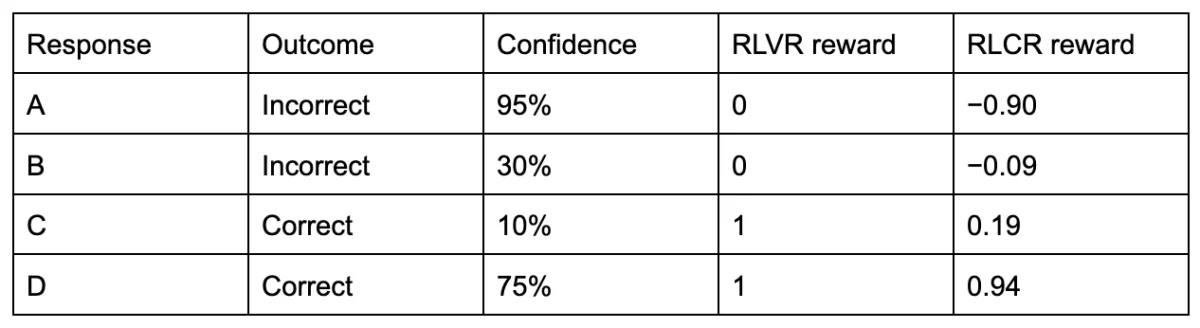
In the modern Security Operations Center (SOC), the volume of alerts often outpaces the capacity of human analysts. Consider a common scenario: a PowerShell script is flagged for potentially malicious activity, such as downloading and executing a remote payload. An AI agent, acting as a first-responder, must choose between three distinct actions: closing the alert as benign, requesting further forensic evidence, or escalating the issue to a human analyst.
The promise of automating these "triage" decisions is immense, but the stakes are equally high. Before security leaders can delegate such tasks to an AI agent, they must answer two fundamental questions: How often does the agent make the correct choice, and can its internal confidence score serve as a reliable indicator of its own fallibility?
TypeSafe.ai, a startup emerging from the evolving landscape of specialized AI, has introduced a tool called Jev to address this specific decision-making challenge. Unlike general-purpose Large Language Models (LLMs) that aim to generate fluid, conversational prose, Jev is designed for the "consumer as code." It processes structured context and a set of predefined answers, returning probabilities for each option without the overhead of generative text. By positioning itself as a faster, cheaper, and more predictable alternative to frontier models, TypeSafe is betting on a future where AI judgments are invoked with the same routine reliability as a standard database query.
The Genesis of Jev: Efficiency and the Paradox of Demand
The name "Jev" is a deliberate homage to the "Jevons paradox"—an economic principle observing that as technology increases the efficiency with which a resource is used, the total consumption of that resource actually increases due to rising demand.
TypeSafe’s co-founder and CEO, Diogo Almeida, articulated the vision for this class of models in a recent interview, noting that the ultimate goal is for code to act as the primary consumer of AI judgments. The implication of Jev’s paradox is clear: if the cost of an automated decision drops to near-zero, organizations will automate everything. However, if the error rate remains constant, the sheer volume of automated decisions will inevitably lead to a higher absolute number of mistakes. Consequently, the utility of such a system rests entirely on its precision and its ability to communicate uncertainty.
Core Architecture and Market Positioning
While the market is flooded with instruction-tuned LLMs, Jev operates in a more constrained, functional space. It functions as a classifier that accepts labels at runtime, a concept rooted in "zero-shot classification" models that have been in academic circulation since at least 2019. These models determine whether input text supports a specific hypothesis (e.g., "this alert is malicious") without requiring retraining.
TypeSafe has not publicly disclosed the specific architecture powering Jev, but its training objective—focused on calibrated, high-speed decision-making—distinguishes it from the general-purpose models currently dominating the enterprise landscape. For a SOC, the question of "novelty" is secondary to the question of "utility": Does Jev actually improve the security workflow, or does it simply introduce a faster way to be wrong?
Independent Evaluations: Benchmarking Performance
To gauge the efficacy of Jev, independent researchers have begun comparing its performance against established models like OpenAI’s GPT-5.6 series and various supervised learning approaches.
Intent Classification and Accuracy
In one notable evaluation using the CLINC150 benchmark, Jev achieved 87% accuracy in a zero-shot setting. By comparison, OpenAI’s gpt-5.4-nano reached 80%, while the more robust GPT-5.6 Terra hit 92%. While Jev demonstrates decent performance, it is clearly not a "frontier-model-beater" in terms of raw accuracy.
A second test involving the Banking77 dataset—a common benchmark for classifying customer-support inquiries—revealed the limitations of zero-shot models. A traditional supervised classifier, built using a bge-small embedding model and logistic regression, achieved 93% accuracy after training on thousands of examples. Jev, operating without training examples, managed 83%. The lesson for enterprises is stark: if an organization has access to high-quality labeled data, a supervised classifier remains the gold standard for performance and cost-efficiency. Jev’s value proposition shines brightest in dynamic environments where questions change frequently or where labeled data is non-existent.
The Cost-Speed Tradeoff
Where Jev excels is in operational overhead. On the Banking77 benchmark, Jev recorded a median response time of 0.44 seconds, more than three times faster than the 1.51-second latency of GPT-5.6 Terra. Furthermore, a phishing detection study found Jev to be approximately 12 times more cost-effective per request than Claude Haiku 4.5.
For security teams, these margins are not merely academic; they define the threshold of what can be automated. Lower latency and reduced costs enable "agentic" workflows that would be economically unfeasible with larger models. However, the caveat remains: lower costs are only a bargain if the resulting automated decisions do not trigger costly downstream security incidents.
The Science of Calibration: Trusting the Confidence Score
A critical component of Jev is its use of confidence statistics. In weather forecasting, a "30% chance of rain" is considered well-calibrated if it rains on roughly three out of ten days receiving that forecast. LLMs, by contrast, are notoriously poorly calibrated; they often express extreme confidence even when they are factually incorrect.
TypeSafe utilizes a training methodology they call Reinforcement Learning for Calibrated Decisions (RLCD). While details are proprietary, the approach appears to mirror academic research like "Reinforcement Learning with Calibration Rewards" (RLCR) introduced by MIT researchers in 2025. This method penalizes "overconfident mistakes" more heavily than "cautious mistakes."
Rewards and Penalties
The logic is grounded in the Brier score, a 1950s-era metric designed to ensure that weather forecasters provide honest probability estimates. By applying this to AI training, models learn that a "confident wrong answer" is significantly worse than a "cautious wrong answer." In experiments using the HotpotQA dataset, RLCR-trained models saw their Expected Calibration Error (ECE) drop from 37% to 3%, while maintaining consistent accuracy.
However, real-world testing of Jev shows that calibration is not a silver bullet. In a test involving synthetic customer-support tickets, Jev struggled with urgency classification. It answered only 45% of questions correctly while assigning its choices an average confidence score of 74%. This discrepancy confirms that Jev, like any pre-trained system, can exhibit significant "over-confidence bias" when encountering data that deviates from its training distribution.
Implications for the Security Operations Center
The integration of calibrated AI into a SOC requires a sophisticated "decision policy." Simply having a probability score is insufficient; the organization must define what that score represents in terms of risk.
Calibration, Discrimination, and Policy
To safely automate, a team must balance three distinct properties:
- Calibration: Does the probability accurately represent the true frequency of correctness?
- Discrimination: Can the model effectively separate its high-confidence, correct answers from its low-confidence, incorrect ones?
- Decision Policy: What is the organizational risk tolerance?
For example, a security policy might dictate that an AI can automatically close an alert only if its confidence exceeds 99.9%. If the confidence is between 90% and 99.9%, the alert might be flagged for a junior analyst’s review. Below 90%, it requires an immediate senior escalation. The CLINC150 evaluation highlighted the fragility of these thresholds: when the researchers attempted to use confidence as a "gatekeeper" to route traffic between Jev and a more expensive model, the results were inconsistent. Small fluctuations in the data led to either excessive escalations or dangerous gaps in coverage.
Conclusion: A Measured Approach to Automation
The introduction of Jev represents a maturing of the AI market—a shift away from the "all-purpose chatbot" toward specialized, high-velocity decision engines. However, the hype surrounding such tools often obscures the reality that they are components of a larger, human-centric system.
For security teams, the roadmap is clear:
- Validate locally: Never rely on the model’s stated confidence without verifying it against your own historical data.
- Use selective prediction: Apply statistical methods to establish "error bounds" for automated actions.
- Decompose the problem: As seen in the phishing benchmark experiments, Jev performs best when used to answer narrow, specific questions (e.g., "is this URL a shortener?") rather than high-level, complex ones.
The promise of Jev is that it allows teams to automate the "boring" part of security, freeing human analysts to focus on high-context threats. But as the industry adopts these tools, it must remain vigilant. Cheaper, faster decisions are an asset only if the organization has built a robust, data-driven framework to catch the mistakes that are inevitably part of the process. In the end, the most important "agent" in the SOC remains the human who decides which thresholds to trust.


 Nana Muazin
 Pevita Pearce
 Dwi Wanna
 Muslim
 Nana Wu

 Rifan Muazin
 Asro
Asro