
 Asep Darmawan
The landscape of artificial intelligence underwent a seismic shift this May as Google CEO Sundar Pichai took the stage at I/O 2026 to declare the arrival of the "agentic Gemini era." Ten years after Google’s pivotal transition to an AI-first company, the narrative has shifted from speculative research to the integration of autonomous, task-oriented intelligence into the daily lives of billions.
The message from Mountain View is clear: the era of simply querying an AI for information is over. We have entered the era of the "agent," where models move beyond simple responses to simulate reality, orchestrate complex workflows, and act on behalf of users in real-time.
The Core Transformation: From Queries to Agents
At the heart of the 2026 announcements is the evolution of Gemini from a chatbot into a proactive assistant. Pichai emphasized that the "agentic" shift is about unlocking latent productivity. By combining frontier intelligence with action-oriented capabilities, Google is redesigning its entire product suite to be not just helpful, but predictive and persistent.
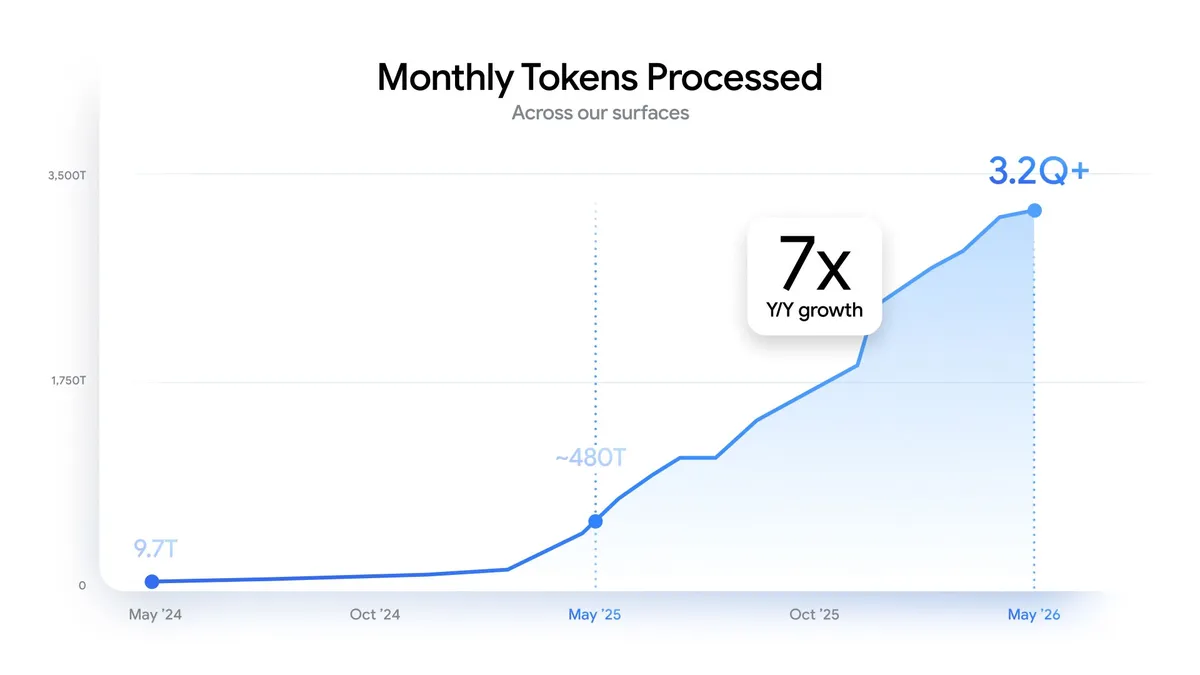
The scale of this transition is evidenced by the staggering growth in computational demand. Two years ago, Google processed roughly 9.7 trillion tokens per month across its surfaces. By last year, that figure reached 480 trillion. Today, that number has surged to over 3.2 quadrillion tokens per month—a sevenfold year-over-year increase that underscores the massive adoption of AI-powered workflows.

Chronology of the Agentic Shift
The trajectory of this transformation has been rapid and deliberate:
- 2024: The foundation was laid with the initial rollout of Gemini, moving users toward generative AI in Search.
- 2025: The focus shifted to multimodal integration, with models like Veo and Lyria enabling creative flows for artists and developers.
- May 2026: The official launch of the "Agentic Era." Google introduced Gemini 3.5 Flash, the Antigravity 2.0 platform, and the Gemini Spark agent, marking a transition from reactive assistance to autonomous task management.
Infrastructure: The Engine of Innovation
Supporting this leap in intelligence requires a massive commitment to infrastructure. Pichai revealed that Google’s capital expenditure has seen a dramatic climb, moving from $31 billion annually in 2022 to an estimated $180–$190 billion this year.
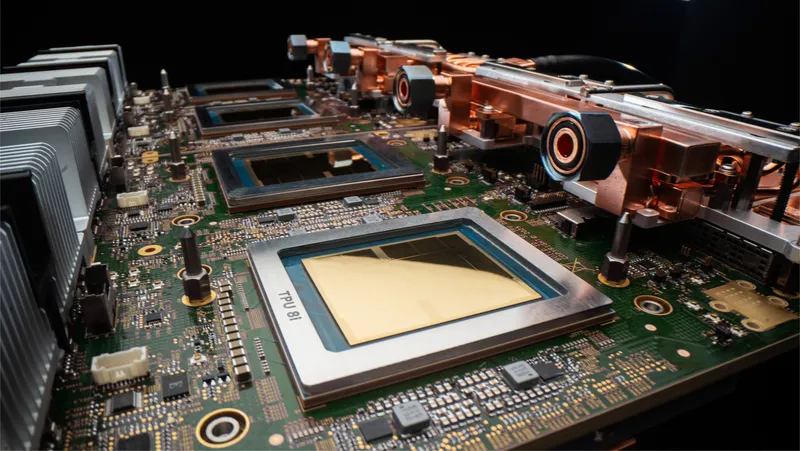
Central to this investment is the deployment of the 8th-generation Tensor Processing Units (TPUs). For the first time, Google has adopted a dual-chip architecture: the TPU 8t, optimized for high-intensity training, and the TPU 8i, specialized for inference. These chips deliver twice the performance-per-watt of their predecessors, a crucial metric as the company balances the demand for massive scale with the necessity of sustainable energy consumption.
Gemini 3.5: Frontier Intelligence Meets Action
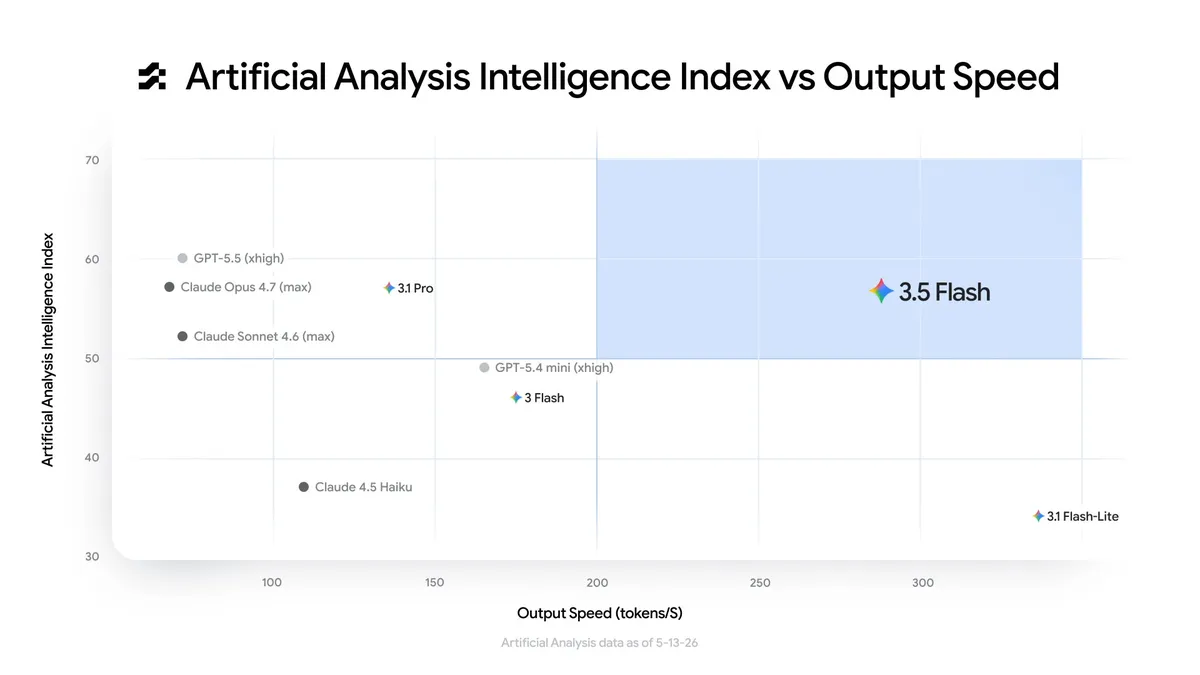
The crown jewel of the I/O announcements is the Gemini 3.5 series. Gemini 3.5 Flash, available immediately, is designed as a "daily driver" for developers and enterprises.

What sets this model apart is its efficiency. It delivers frontier-level performance at less than half the price of comparable models. Internally, Google has seen this efficiency firsthand. By shifting workloads to 3.5 Flash, the company has managed to scale its own developer tool, "Antigravity," to process over three trillion tokens daily, creating a feedback loop that continues to refine the model’s capabilities in real-time.
The Agentic User Experience: Gemini Spark and Beyond
For the consumer, the most tangible impact of this era is the introduction of Gemini Spark. This is not just a feature; it is a personalized AI agent designed to navigate one’s digital life. Unlike traditional assistants that wait for a command, Spark can be tasked with persistent, multi-step workflows.
- Ask YouTube: This feature reimagines video consumption. Instead of manually scrubbing through long-form content, users can ask specific questions and be taken directly to the relevant segment, turning video libraries into dynamic knowledge bases.
- Docs Live: This marks a shift toward voice-first productivity. Users can perform a "brain dump" of ideas, and Docs Live will synthesize, format, and edit the document in real-time, removing the friction of manual drafting.
- Information Agents in Search: Perhaps the most radical change is in Search. Users can now set up "information agents" that work in the background 24/7. These agents can track topics, manage dashboards, and generate custom UI experiences based on the user’s specific needs, effectively acting as "mini-apps" created on the fly.
Trust and Transparency: The Role of SynthID
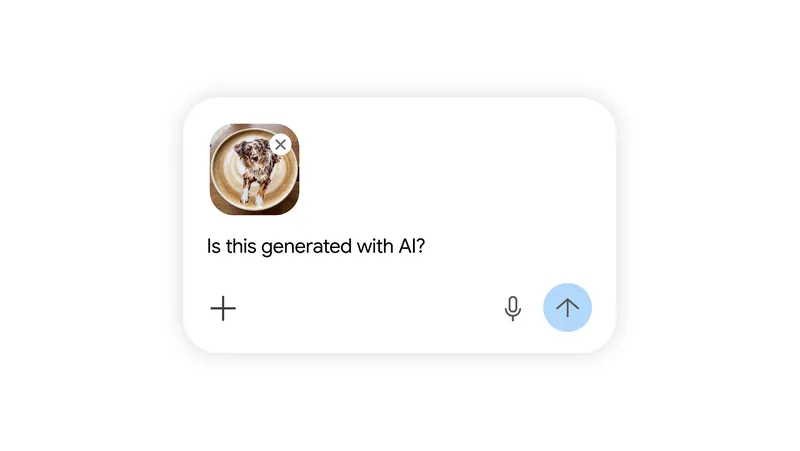
As AI-generated content becomes indistinguishable from human-created media, the issue of provenance has moved to the forefront. Google is responding by doubling down on SynthID, its digital watermarking technology.
To date, SynthID has been applied to over 100 billion images and videos. Recognizing that industry-wide standards are necessary, Google has secured partnerships with heavy hitters including OpenAI, Kakao, and Eleven Labs, who have agreed to adopt SynthID. This collaborative approach aims to set a global standard for transparency, ensuring that users can easily identify when content has been generated or altered by AI.
Strategic Implications: The Economic and Creative Shift
The implications of the agentic era are profound. By offloading long-horizon tasks—such as project management, content research, and code orchestration—to AI agents, businesses and individuals are expected to unlock significant economic value.
Pichai noted that if a top-tier enterprise shifted 80% of its AI workloads from traditional frontier models to Gemini 3.5 Flash, it could realize annual savings exceeding $1 billion. This isn’t just cost-cutting; it is capital that can be reinvested into higher-order innovation and R&D.
Furthermore, the "generative UI" capabilities announced for Search represent a shift in how humans interact with the web. Instead of consuming static web pages, users will interact with dynamic, personalized interfaces. This fundamentally changes the relationship between search engines and the internet, moving from a directory model to a synthesis model.
Challenges and Future Outlook
While the promise is immense, the transition to an agentic future is not without challenges. The reliance on persistent agents raises questions regarding data privacy, security, and the potential for "hallucinated" actions in real-world scenarios. Google’s approach to these issues is to emphasize "safe and secure" deployment, with features like Gemini Spark being introduced to trusted testers before broader releases.
Furthermore, the move toward intelligent eyewear and deeper integration with Android XR suggests that the "agentic" experience will soon move beyond the screen and into the physical environment. By integrating Gemini with hardware, users will be able to get directions, send communications, and interact with the world through natural language, without ever needing to look at a phone.
Conclusion: A New Baseline for Technology
The 2026 Google I/O marks the moment when the "AI Experiment" graduated into the "AI Utility." By aligning its massive infrastructure investments with the development of highly capable, autonomous agents, Google has provided a roadmap for how the next decade of computing will look.
We are no longer asking AI to simply tell us what the weather is; we are asking it to plan our travel, build our software, and manage our information streams. The agentic Gemini era is not merely an incremental update; it is a fundamental shift in the relationship between human intent and machine execution. As these tools continue to evolve, the distinction between "using a tool" and "collaborating with an agent" will continue to blur, setting a new baseline for what is possible in the digital age.

 Sagoh
Sagoh
 Raul Delapena Setiawan
 Dwi Wanna
 Muslim
 Nana Wu

 Rifan Muazin
 Asro
Asro