
 Nana
Nana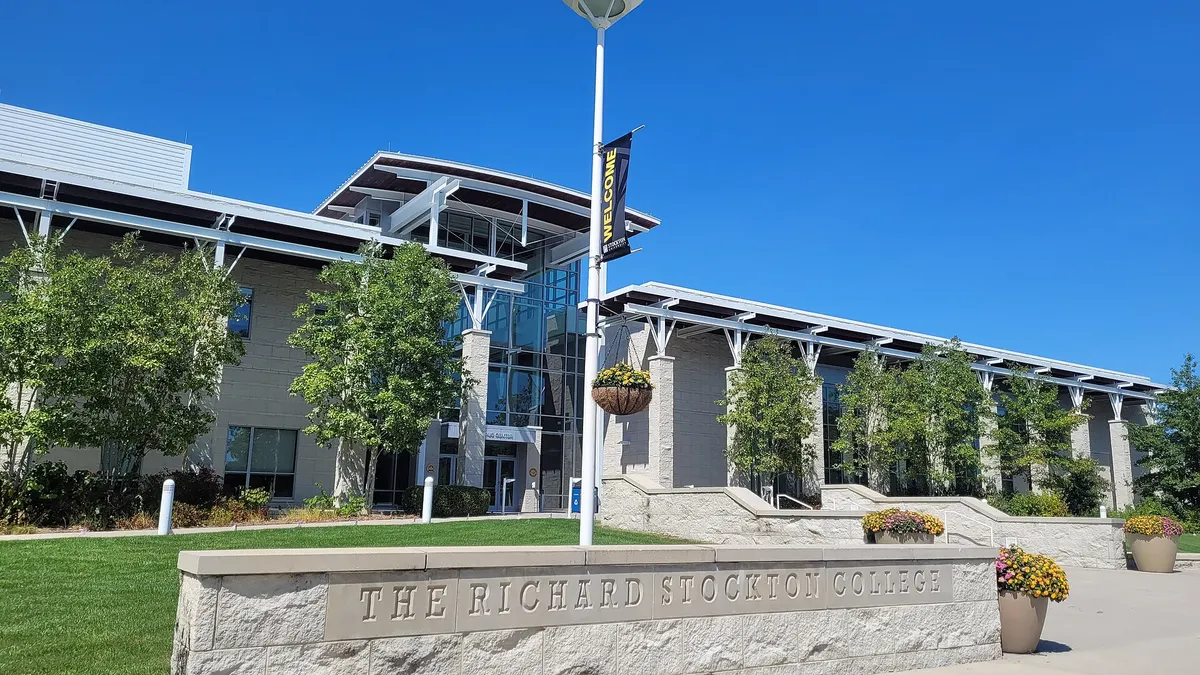
By Staff Reporter
Published: October 8, 2026
Stockton University, a prominent public institution in Galloway Township, New Jersey, has entered a period of profound institutional transformation. Confronted with a stubborn $20 million structural deficit and a sustained decline in student enrollment, the university administration has announced a series of workforce reductions, including the layoff of 14 faculty members and 7 staff members. This move represents a painful pivot for the university as it attempts to stabilize its finances in an increasingly hostile higher education landscape.
The decision to cut personnel has ignited a firestorm of debate, pitting the administration’s drive for fiscal sustainability against faculty unions who argue that the human cost of these cuts undermines the very academic excellence that defines the university. As Stockton attempts to weather this storm, the broader implications for public higher education in the Northeast—a region characterized by a shrinking pool of college-aged students—have become impossible to ignore.
The Anatomy of the Deficit: A Multi-Year Decline
The current crisis at Stockton is not the result of a single fiscal year’s mismanagement, but rather the culmination of a multi-year trend that has eroded the university’s revenue base. During a board meeting held in May 2026, President Joe Bertolino candidly acknowledged the $20 million structural deficit, emphasizing that the institution could no longer afford to delay corrective action.
The primary driver of this fiscal shortfall is a persistent drop in enrollment. Institutional data reveals a stark reality: Stockton’s total headcount has plummeted to 8,101 students this fall. This represents a 10.8% decrease since 2022 and a 6.1% decline compared to the previous academic year. In an era where tuition revenue is the lifeblood of public universities, a loss of nearly 1,000 students over a four-year period translates into millions of dollars in unrealized auxiliary and tuition income, creating the structural imbalance that the university is now scrambling to rectify.
Before authorizing the involuntary layoffs, the administration attempted to mitigate the deficit through less drastic measures, most notably a voluntary separation program. While these initiatives were designed to shrink the payroll through attrition and buyouts, they proved insufficient to plug the $20 million gap, forcing leadership to move toward more aggressive cost-cutting measures.
Chronology of a Crisis
The path to the current workforce reduction has been marked by a series of escalating warnings and strategic pivots:
- 2022–2024: Stockton experiences the beginning of a sustained enrollment slide, mirroring broader demographic trends in the Northeast where the number of traditional high school graduates has begun to contract.
- May 2026: During a formal board meeting, President Bertolino explicitly outlines the $20 million structural deficit, setting the stage for significant budget austerity.
- Summer 2026: The university implements a voluntary separation program, inviting employees to leave the institution in exchange for financial packages, hoping to avoid layoffs.
- July 2026: Fitch Ratings issues a formal warning, downgrading Stockton’s credit outlook from "stable" to "negative." Analysts cite "worsening enrollment and operating pressures" as the catalyst for the change.
- October 2026: With voluntary measures failing to reach the necessary savings targets, the university confirms the layoff of 21 employees (14 faculty and 7 staff), triggering a public response from a coalition of faculty and staff unions.
Data-Driven Pressure: The Fitch Ratings Warning
The fiscal health of a university is often quantified by the confidence of credit rating agencies, and for Stockton, the news from the financial sector has been sobering. In July 2026, Fitch Ratings moved to revise the university’s outlook to negative. While the institution maintains an "A" credit rating—indicating that a default on its debt obligations remains unlikely—the shift in outlook serves as a "canary in the coal mine."
Fitch analysts provided a grim assessment, noting that "planned cost reductions and reserve use may provide limited relief, but improvement could be slow and execution risk remains elevated." The agency pointed to a "highly competitive New Jersey market," characterized by a shrinking in-state student pool and mounting affordability challenges for middle-class families.
For the university administration, this rating shift creates a double-edged sword: they must cut costs to demonstrate fiscal discipline to creditors, yet they must also invest in marketing and student support to reverse the enrollment decline. Balancing these competing pressures with limited resources is the central challenge of the next fiscal cycle.
The Human Impact: Union Opposition and Academic Integrity
The announcement of the layoffs has been met with staunch resistance from a coalition of labor groups, including the Stockton Federation of Teachers (SFT), the Council of New Jersey State College Locals, and the American Federation of Teachers New Jersey.
In a joint statement, the coalition highlighted the university’s strong track record in student success metrics. They pointed to graduation rates that exceed national averages and the institution’s high ranking for its efficacy in graduating low-income students. The unions argue that the value proposition of Stockton lies in its faculty and staff, and that cutting these positions will inevitably lead to larger class sizes, reduced mentorship opportunities, and a degraded student experience.

"These outcomes are driven by hardworking faculty and staff who work directly with students every day to ensure their success," the unions stated. By targeting the human capital of the institution, the coalition contends that the administration is effectively "cutting its way to mediocrity," potentially sacrificing the long-term quality of the education provided to students in order to achieve short-term balance sheet stability.
Official Stance: The Administration’s Justification
In response to the outcry, the university administration has maintained a tone of somber necessity. President Bertolino has consistently framed the cuts as a "difficult but necessary step" to ensure the institution remains financially viable for the long term.
In an official statement released on October 8, the university reiterated its commitment to its core mission: "We do not make this decision lightly. Our students remain at the center of our decisions, and we will continue working to protect the core academic and student experience while preserving Stockton’s ability to serve students for generations to come."
The administration’s position relies on the logic of institutional survival: that a smaller, financially stable university is preferable to a larger, insolvent one. By consolidating departments and streamlining administrative staff, they hope to preserve the institution’s core academic pillars, even as the "bells and whistles" of university life are curtailed.
Broader Implications for Higher Education
The situation at Stockton is not an isolated incident; it is a microcosm of the "demographic cliff" facing higher education across the United States. As the number of 18-year-olds in the Northeast continues to decline, universities are finding themselves in a zero-sum game for a diminishing pool of applicants.
1. The Challenge of Affordability
As operational costs—including healthcare, energy, and technology—rise, universities are forced to choose between raising tuition (which further harms recruitment) or cutting services. Stockton’s dilemma highlights the limits of both strategies.

2. Institutional Differentiation
Fitch’s analysis of a "highly competitive market" suggests that only those institutions with a clear, marketable value proposition will survive the next decade. Stockton’s focus on high graduation rates for low-income students is a strong selling point, but it requires significant labor-intensive support, which the current budget cuts threaten to diminish.
3. The Future of Labor Relations
The tension between the unionized workforce and the administration at Stockton serves as a warning for other public institutions. As budget deficits become more common, the traditional model of faculty-administration relations—often characterized by collaboration—is being replaced by adversarial bargaining as both sides struggle to define the future of the academy.
Conclusion: The Road Ahead
As Stockton University moves through the fall 2026 semester, the atmosphere on campus is one of uncertainty. The immediate challenge is to manage the fallout of the layoffs while maintaining the trust of the student body. Looking ahead, the administration must present a clear vision for growth—one that goes beyond budget cuts and addresses the fundamental need for a revitalized enrollment strategy.
Whether these measures will be sufficient to appease credit agencies and reverse the enrollment slide remains to be seen. What is certain, however, is that Stockton University is in the midst of a defining era. The choices made in the coming months will not only determine the financial stability of the institution but will also shape its identity for the next generation of New Jersey students. The goal of "preserving the ability to serve students" will require more than just fiscal efficiency; it will require a delicate balancing act that keeps the academic mission at the forefront, even when the numbers demand otherwise.

 Nana Wu
 Layla Zulfa
 Raul Delapena Setiawan
 Dwi Wanna
 Muslim


 Rifan Muazin