
 Lina Irawan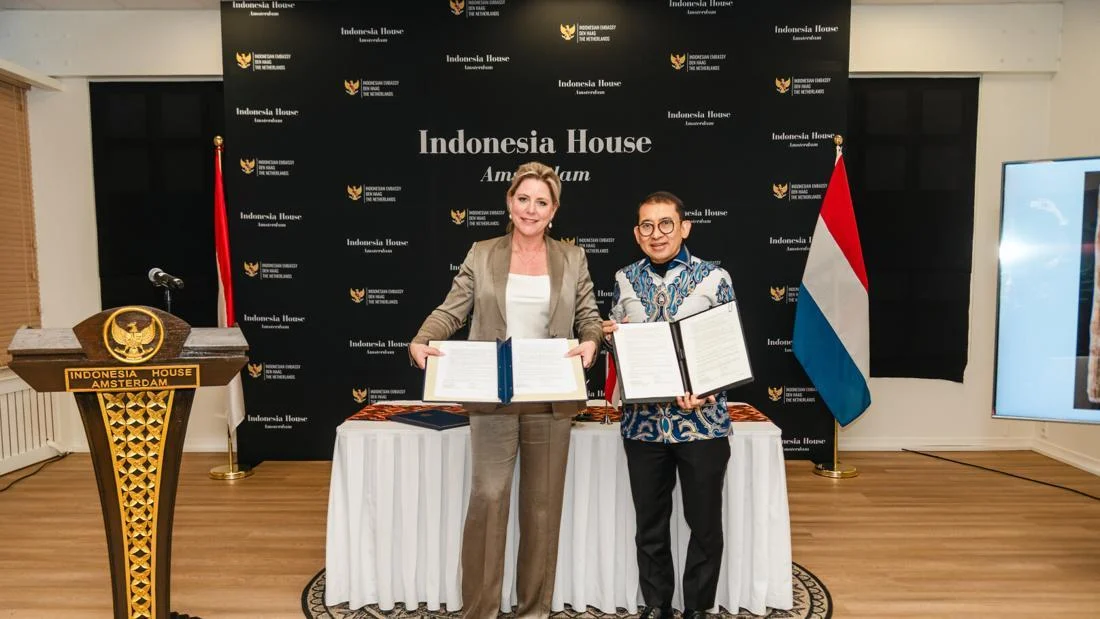
Jakarta – In a momentous step towards historical justice and cultural reconciliation, Indonesia and the Netherlands have formally agreed to the unconditional return of 29,763 invaluable cultural objects and 427 sets of human remains that have resided in Dutch collections for decades, if not centuries. This unprecedented repatriation, hailed as the largest in Indonesian history, marks a significant milestone in acknowledging and rectifying the legacies of colonialism, paving the way for a renewed cultural dialogue between the two nations.
The agreement, officially sealed on Monday, October 12, 2026, comes after years of persistent advocacy from Indonesia and a growing recognition within the Netherlands of its moral obligations concerning colonial-era acquisitions. Among the repatriated treasures are items of immense historical, spiritual, and scientific significance, including the legendary Banjarmasin Diamond, a sacred Qur’an belonging to national hero Teuku Umar’s family, and ancient Javanese wayang beber scrolls.
A Legacy Unveiled: The Historical Context of Colonial Collections
The journey of these artifacts and human remains from the archipelago to Dutch institutions is deeply intertwined with the complex and often brutal history of colonial rule. For over three centuries, the Dutch East India Company (VOC) and later the Dutch colonial administration systematically extracted resources, wealth, and cultural heritage from the vast Indonesian archipelago, then known as the Dutch East Indies. These collections were amassed through various means, including military expeditions, archaeological excavations, anthropological research, trade, and even outright plunder during periods of conflict and subjugation.
Colonial Echoes and Contested Heritage
The practice of collecting artifacts during the colonial era was often driven by a mix of scientific curiosity, a desire to assert dominance, and an imperial impulse to categorize and control the "other." Museums in colonial powers frequently served as repositories for these "trophies," presenting a narrative that often glorified colonial exploits while simultaneously dispossessing colonized peoples of their own heritage. The asymmetrical power dynamics inherent in the colonial relationship meant that consent, where it existed, was often coerced or given under duress.
In recent decades, a global movement has gained momentum, challenging the ethical foundations of these colonial collections and demanding their return to their countries of origin. This movement, often termed "decolonization of museums," seeks to address historical injustices, restore cultural sovereignty, and foster a more equitable global distribution of heritage. The Indonesian-Dutch agreement is a powerful testament to this evolving global consciousness.
Eugene Dubois and the Dawn of Paleoanthropology
A significant portion of the repatriated human remains, specifically 427 sets, were collected by the renowned Dutch paleoanthropologist Eugène Dubois. Dubois conducted extensive research in the Dutch East Indies from the late 19th to early 20th centuries, most famously discovering Homo erectus (originally dubbed Pithecanthropus erectus or "Java Man") in 1891. His groundbreaking work in Trinil, Java, revolutionized the understanding of human evolution and placed Indonesia firmly on the map of paleoanthropological research.
While Dubois’s scientific contributions are undeniable, the context of his collections, particularly human remains, has increasingly been subject to ethical scrutiny. The collection of ancestral remains from Indigenous communities, often without explicit consent or with little regard for cultural sensitivities, is a contentious issue. The return of these remains acknowledges the moral imperative to respect the dignity of the deceased and the spiritual connection that communities hold with their ancestors, allowing for their proper reburial or ceremonial care in their homeland. The repatriation of the Dubois collection represents not just a return of scientific specimens but a profound act of restorative justice for the ancestors of the Indonesian people.
Treasures Returned: A Glimpse into Indonesia’s Soul
The sheer volume and diverse nature of the repatriated items underscore their profound significance for Indonesia’s national identity, historical narrative, and cultural heritage. From symbols of ancient royalty to sacred texts of resistance, each artifact carries a story that contributes to the rich tapestry of Indonesian civilization.
The Crown Jewel: The Banjarmasin Diamond
Among the most anticipated returns is the illustrious Banjarmasin Diamond, a magnificent 38-carat gem. This diamond is not merely a precious stone; it is a potent symbol of royal power, sovereignty, and the rich mineral wealth of Kalimantan. Historically linked to the Sultanate of Banjarmasin, its acquisition by the Dutch in the mid-19th century, likely following conflict or political maneuvering, represented a profound loss of prestige and tangible heritage for the kingdom. Its return signifies the restoration of a crucial emblem of Kalimantan’s historical legacy and its rightful place within Indonesia’s national treasures. The diamond’s re-entry into Indonesian hands allows for a re-examination of its history, free from a colonial lens, and its integration into contemporary national narratives.
Sacred Texts and Ancient Narratives
The repatriation also includes items of deep spiritual and artistic value. The Al-Qur’an belonging to the family of Teuku Umar, a revered national hero from Aceh who fiercely resisted Dutch colonial rule, holds immense historical and spiritual weight. This sacred text is not just a religious artifact but a tangible link to a pivotal figure in Indonesia’s struggle for independence, symbolizing faith, resilience, and the enduring spirit of resistance. Its return provides a powerful connection for future generations to the sacrifices made for their freedom.
Equally significant are the 17th-century Javanese wayang beber scroll manuscripts. Wayang beber is one of the oldest forms of Javanese storytelling, where illustrated scrolls are unfurled incrementally by a dalang (puppeteer) who narrates the epic tales. These scrolls are not just works of art but vital conduits of ancient Javanese cosmology, philosophy, and artistic tradition. Their return ensures that these unique forms of cultural expression can be studied, performed, and cherished within their original cultural context, enriching scholarly understanding and inspiring new generations of artists and storytellers.
From Aceh to Ancestors: Diverse Collections
The repatriated collection also encompasses a wide array of other culturally significant items. From Aceh, these include the Sikin Panjang, a traditional Acehnese sword, and a collection of manuscripts from the Sultanate of Aceh. These items shed light on the sophisticated political, social, and religious life of one of Indonesia’s most historically significant regions, particularly its long and arduous struggle against colonial encroachment. Architectural panels and tombstones from Aceh further illuminate the region’s artistic and mortuary traditions, providing tangible connections to its past inhabitants.
Beyond the specifically enumerated items, the broader Dubois collection, while primarily known for its human remains, also includes an extensive array of archaeological and paleontological specimens. These collections hold critical scientific and historical value, particularly for research into human evolution and paleoanthropology. The specimens within this collection are directly related to the study of Homo erectus and other prehistoric hominids, affirming Indonesia’s pivotal position in the global narrative of human origins. The return ensures that future research and exhibitions can be conducted collaboratively, respecting both scientific inquiry and the cultural sovereignty of the source nation.
The Road to Repatriation: A Decade of Dialogue
The agreement for this historic repatriation is the culmination of sustained efforts, evolving diplomatic relations, and a shift in ethical perspectives within the Netherlands. It represents a significant departure from earlier, more resistant stances on the return of colonial heritage.
Indonesia’s Persistent Plea
For decades, Indonesia has consistently advocated for the return of its cultural heritage, viewing it as an indispensable part of its national identity and a matter of historical justice. These requests were often met with complex legal and logistical challenges, as well as differing interpretations of ownership and acquisition during the colonial period. However, Indonesia’s unwavering commitment to reclaiming its cultural sovereignty remained a constant driver in bilateral discussions. The Indonesian government, through its Ministry of Culture and Foreign Affairs, meticulously documented its claims, emphasizing the cultural, spiritual, and historical significance of the items.
Dutch Introspection: The Colonial Collections Committee
A pivotal turning point came with a period of introspection within the Netherlands regarding its colonial past and the ethical implications of its museum collections. In 2020, the Dutch government established the Advisory Committee on the Return of Colonial Collections, often referred to as the "Knoops Committee" after its chair, Lilian Gonçalves-Hoes. This committee was tasked with developing a framework for the return of cultural objects acquired in former colonies.
In its landmark report, the committee recommended the unconditional return of cultural objects that are identified as having been taken from former colonies without consent, particularly those of significant cultural or historical value to the source country. The report emphasized that a moral duty existed to return such items, acknowledging the inherent power imbalance of the colonial era. This recommendation provided a robust ethical and policy foundation for the Dutch government to act on Indonesia’s requests, moving beyond legalistic arguments to embrace a principle of restorative justice. The committee’s findings paved the way for more direct and constructive negotiations between Jakarta and The Hague.
The Agreement: A New Chapter
Following the recommendations of the Knoops Committee, bilateral negotiations intensified, characterized by a spirit of mutual respect and a shared desire to address historical grievances. The formal agreement, signed on October 12, 2026, solidifies these commitments. This act of signing is more than a bureaucratic formality; it is a symbolic gesture, marking a new chapter in the relationship between Indonesia and the Netherlands, one built on acknowledgement, reconciliation, and partnership rather than past subjugation. The process involved extensive research, identification, and logistical planning to ensure the safe and respectful transfer of these invaluable items.
Voices of Reconciliation and Renewal
The agreement has been met with profound statements of hope and determination from both Indonesian officials, underscoring the deep significance of this repatriation.
Minister Fadli Zon: Healing Historical Wounds
Indonesia’s Minister of Culture, Fadli Zon, articulated the core sentiment driving Indonesia’s pursuit of repatriation. "We do not intend to reopen wounds. We want to heal them," Minister Zon stated, as quoted by the Ministry of Foreign Affairs. "We believe that true reconciliation requires concrete action, mutual respect, and a shared determination to build a better future." His words emphasize that the return of these artifacts is not about fostering resentment but about creating a foundation for genuine healing and moving forward.
Minister Zon further underscored the historical magnitude of this event, describing it as "the largest repatriation in Indonesian history, and indeed one of the most significant repatriation milestones globally, both in terms of quantity and the quality and scientific value of its collections." He specifically highlighted the Dubois collection, noting its "immense scientific and historical importance, affirming Indonesia’s position in the history of human evolution and global paleoanthropology research." This recognition elevates the repatriation beyond mere object transfer to a reaffirmation of Indonesia’s central role in scientific discovery and human history.
The Minister also outlined Indonesia’s three guiding principles for the post-repatriation phase: "care, research, and educate." These principles emphasize the critical importance of responsible preservation, rigorous scientific and historical investigation, and expanding public access to these historical objects and the knowledge they embody. "This repatriation agreement between Indonesia and the Netherlands is an affirmation of historical justice, the restoration of cultural sovereignty, and the recognition of the dignity and cultural identity of the Indonesian nation," he affirmed, encapsulating the profound national implications of the agreement.
Ambassador Jinangkung: Strengthening Bonds
L. Amrih Jinangkung, Indonesia’s Ambassador to the Kingdom of the Netherlands, echoed Minister Zon’s sentiments, highlighting the agreement’s role in strengthening bilateral relations. "The return of cultural heritage reflects the efforts of Indonesia and the Netherlands to address their shared history through dialogue," Ambassador Jinangkung remarked. He stressed that this agreement builds upon previous repatriation efforts, fostering a cooperative framework for future cultural partnerships. The ambassador’s statement underscores the diplomatic success of this endeavor, transforming a contentious issue into a bridge for stronger ties.
Acknowledging the Past: The Dutch Perspective
While specific Dutch official statements from the provided text are limited, the very act of agreement and the recommendations of the Colonial Collections Committee reflect a significant shift in the Dutch government’s stance. This indicates an acknowledgment of colonial injustices and a commitment to fostering genuine cultural exchange and cooperation with former colonies. The spirit of reconciliation, as articulated by Minister Zon, implies a reciprocal understanding from the Dutch side that the return of these artifacts is an essential step in rectifying past wrongs and building a relationship based on equity and mutual respect. This marks a significant move from a stance of possession to one of shared heritage and collaborative stewardship.
Beyond the Physical Return: Implications and Future Endeavors
The repatriation of nearly 30,000 cultural objects and hundreds of human remains from the Netherlands to Indonesia carries profound implications, extending far beyond the mere physical transfer of items. It opens new avenues for national identity, scholarly research, public education, and sets a global precedent for future restitution efforts.
Reclaiming National Identity and Sovereignty
For Indonesia, this repatriation is a powerful act of reclaiming its national identity and cultural sovereignty. These artifacts are not just historical curiosities; they are tangible embodiments of the nation’s past, its diverse ethnic groups, its struggles, and its triumphs. Their return allows Indonesia to tell its own story, in its own museums, on its own terms, free from the interpretive frameworks often imposed by colonial powers. This act of cultural justice reinforces national pride and provides future generations with direct access to their ancestral heritage, strengthening their connection to their roots. It is a vital step in decolonizing the national narrative and asserting Indonesia’s place on the global cultural stage.
Challenges of Preservation and Accessibility
The return of such a vast and diverse collection presents significant responsibilities and logistical challenges for Indonesia. The principles of "care, research, and educate" outlined by Minister Zon will be paramount. Indonesia will need to invest substantially in state-of-the-art conservation facilities, trained conservators, and climate-controlled storage to ensure the long-term preservation of these delicate items. Plans for their display must be carefully considered, ensuring broad public access while safeguarding their integrity. This may involve new museum exhibitions, digital archiving for wider accessibility, and educational programs designed to engage both scholars and the general public. The successful integration of these objects into Indonesian cultural institutions will require sustained commitment and resources.
A Global Precedent: The Broader Repatriation Movement
This landmark repatriation sets a powerful global precedent. It underscores the growing international consensus that cultural objects acquired under colonial circumstances should be returned to their countries of origin. This agreement will undoubtedly inspire and embolden other nations to pursue similar claims against former colonial powers, strengthening the broader global movement for restitution. Cases involving the Benin Bronzes, the Parthenon Marbles, and countless other contested artifacts around the world will find renewed momentum and justification in Indonesia’s success. It highlights an evolving ethical framework in the international museum community, moving towards a more equitable sharing and understanding of global heritage.
Forging a New Cultural Partnership
Crucially, this repatriation is not an endpoint but a catalyst for forging a deeper, more equitable cultural partnership between Indonesia and the Netherlands. Ambassador Jinangkung’s emphasis on dialogue and future collaboration suggests a move beyond a transactional relationship to one built on mutual respect and shared scholarly endeavor. This could lead to joint research projects, shared exhibitions, academic exchanges, and collaborative conservation initiatives. By addressing the historical injustices of the past, both nations can build a foundation for a future where cultural heritage serves as a bridge for understanding, rather than a source of contention.
In conclusion, the agreement for the repatriation of nearly 30,000 cultural artifacts and human remains from the Netherlands to Indonesia is a monumental achievement. It is a testament to Indonesia’s unwavering perseverance, the evolving ethical consciousness in the Netherlands, and the universal imperative of historical justice. This act of profound reconciliation marks a pivotal moment in the decolonization of heritage, restoring invaluable parts of Indonesia’s soul and charting a path towards a more equitable and respectful future for global cultural exchange.

 Ali Ikhwan
 Jia Lissa
 Raul Delapena Setiawan
 Dwi Wanna
 Muslim
 Nana Wu

 Rifan Muazin