
 Raul Delapena Setiawan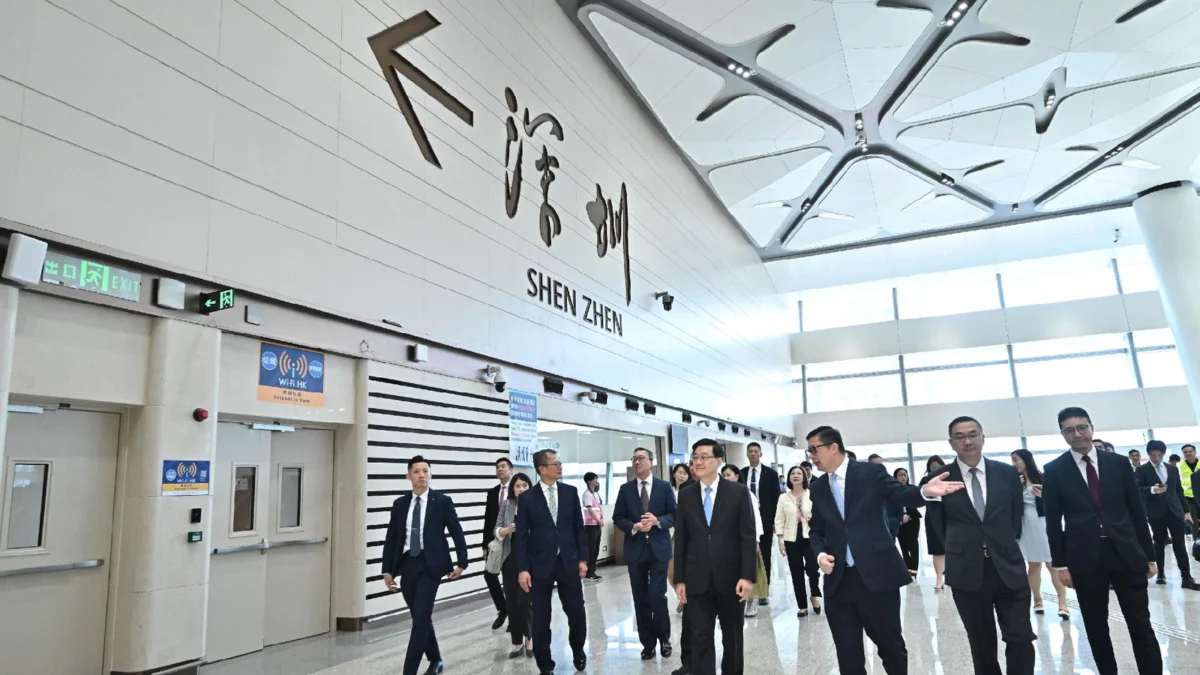
HONG KONG – In a landmark move for the integration of the Guangdong-Hong Kong-Macao Greater Bay Area (GBA), the redeveloped Huanggang Port officially commenced its 24-hour operations at 6:30 AM on 12 October 2026. As the first land boundary control point between Hong Kong and Shenzhen to implement the pioneering “collaborative inspection and joint clearance” mode, the facility marks a significant technological and administrative leap forward in cross-boundary travel and logistics.
The opening of the port is not merely an infrastructure update; it represents a fundamental shift in how the two jurisdictions manage their shared border. By streamlining immigration and customs procedures into a single process, the new Huanggang Port aims to drastically reduce transit times, bolster economic ties, and facilitate the "one-hour living circle" vision that has become a cornerstone of regional development policy.
I. Main Facts: A Paradigm Shift in Border Management
The new Huanggang Port stands as a testament to modern engineering and bilateral cooperation. Unlike traditional border crossings where travelers must exit one jurisdiction and then enter another through two separate sets of checkpoints, Huanggang utilizes a "collaborative inspection" model.
1. The "Collaborative Inspection" Model
Under this new arrangement, passengers are only required to queue once and present their identity documents a single time. The automated channels are designed to share data between the Hong Kong and Shenzhen immigration authorities simultaneously. This "one-stop" approach is expected to cut clearance times for pedestrians by more than 50%, providing a seamless experience for the thousands of daily commuters and tourists.
2. 24-Hour Operation and Capacity
The port provides round-the-clock clearance services for both passengers and passenger vehicles. This 24-hour availability is critical for the logistics sector and for business professionals who require flexibility outside of standard office hours. The facility has been designed to handle significantly higher volumes of traffic than its predecessor, with state-of-the-art halls and expanded vehicle lanes.
3. Comprehensive Insurance Integration
A unique aspect of this port opening is the proactive legal and financial framework established by the HKSAR Government. To ensure that the rights of workers and drivers are protected within the newly designated Hong Kong Port Area (HKPA), the government has successfully negotiated with 45 insurers to extend mandatory insurance coverage to this zone at no additional cost to policyholders. This includes both Motor Vehicles Insurance (Third Party Risks) and Employees’ Compensation Insurance.
II. Chronology: From Legislative Groundwork to Grand Opening
The journey to the 12 October launch was characterized by years of planning, legislative adjustments, and bilateral negotiations.
-
31 July 2026: The Legislative Foundation
The legal basis for the new port’s operation was established when the Huanggang Port Hong Kong Port Area Ordinance (Cap. 659) came into operation. This ordinance officially designated the area within the port where Hong Kong laws apply, allowing Hong Kong immigration and customs officers to exercise their authority on what was previously Mainland soil. On this same date, the agreement to extend insurance coverage to the HKPA took effect. -
August – September 2026: Public Enrollment and Testing
Following the ordinance, the Hong Kong Immigration Department (ImmD) launched an intensive public awareness campaign. Eligible residents were encouraged to enroll for the “collaborative inspection” automated channels via the “HK e-Channel” mobile app. This period also saw rigorous "stress testing" of the biometric and data-sharing systems to ensure stability for the October launch. -
11 October 2026: The Opening Ceremony
A high-level opening ceremony was held at the Mainland Port Area of the Huanggang Port. HKSAR Chief Executive John Lee, alongside senior officials from the Guangdong Provincial Government and the Shenzhen Municipal Government, officiated the event. The ceremony emphasized the symbolic and practical importance of the port in the national development strategy. -
12 October 2026, 6:30 AM: Official Commencement
The port officially opened its gates to the public. The first batch of travelers experienced the "collaborative inspection" channels, while the first vehicles moved through the "joint one-stop" lanes, marking the successful transition from a construction project to a functional international gateway.
III. Supporting Data and Technical Specifications
The efficiency of the new Huanggang Port is driven by sophisticated technology and a robust legal framework.
1. Vehicle Clearance: The "Joint One-Stop" System
For the first time, drivers do not need to stop at two separate kiosks. The new "joint one-stop" vehicle lanes utilize an Integrated Information Collection Device. This device performs four critical functions in a single stop:
- Biometric Verification: Collection of facial features and fingerprints.
- Health Screening: Automated body temperature sensing.
- Document Verification: Scanning of travel and vehicle documents.
- Customs Assessment: Linking data to a "customs front kiosk" for real-time risk assessment.
Vehicles flagged by the system are directed to a specialized inspection area, while others proceed directly into the neighboring jurisdiction, significantly reducing idling time and carbon emissions.
2. The Insurance Market Agreement
The extension of insurance coverage is a critical "soft connectivity" achievement. The HKSAR Financial Services and the Treasury Bureau (FSTB) secured an agreement with 45 individual insurers.
- Scope: The agreement covers policies required under Section 4 of the Motor Vehicles Insurance (Third Party Risks) Ordinance (Cap. 272) and Section 40 of the Employees’ Compensation Ordinance (Cap. 282).
- Cost Neutrality: Crucially, the extension comes at no additional cost to the policyholders, ensuring that businesses and private individuals are not financially penalized for the geographical shift in port operations.
3. Passenger-Vehicle Separation
To enhance safety and speed, the port adopts a strict "passenger-vehicle separation" policy. General passengers in private cars must disembark at designated drop-off zones, carry their own luggage through the passenger clearance hall, and reunite with their vehicle on the other side. This prevents the bottlenecking of vehicles during manual luggage inspections.
IV. Official Responses: A Vision for the Future
The launch was met with high-level praise and detailed guidance from various government departments.
Chief Executive John Lee’s Address
Speaking at the opening ceremony, Chief Executive John Lee highlighted the "Three Connectivities" that the new Huanggang Port embodies:
- Hard Connectivity: The physical infrastructure and high-tech equipment that bridge the geographical gap.
- Soft Connectivity: The alignment of rules, mechanisms, and legal frameworks (such as the insurance extensions and joint inspection protocols).
- Connectivity of Hearts: The ultimate goal of making travel so seamless that it fosters deeper social and cultural ties between the residents of Hong Kong and the Mainland.
"The redeveloped Huanggang Port is a shining example of our commitment to the high-quality development of the Greater Bay Area," Lee stated. "It proves that through innovation and cooperation, we can overcome traditional boundaries to create a more prosperous, integrated future."
Immigration Department (ImmD) Guidance
The ImmD has remained proactive in ensuring a smooth transition for the public. A spokesperson for the department reminded travelers that while the technology is advanced, the legal requirements for travel remain firm.
"While the ‘collaborative inspection’ system simplifies the process, passengers must still carry valid travel documents that meet the requirements of both Hong Kong and the Mainland," the spokesperson noted. The department also urged residents to use the "HK e-Channel" app to register in advance, avoiding delays at the kiosks.
V. Implications: Economic, Social, and Regional Impact
The operationalization of the new Huanggang Port carries profound implications for the region’s future.
1. Strengthening the GBA Economy
By reducing the friction of the border, the port acts as a catalyst for trade. The "joint one-stop" system for vehicles is particularly beneficial for the logistics and supply chain industry. Faster turnaround times mean lower operational costs for freight companies, which could lead to lower prices for consumers and a more competitive business environment in the GBA.
2. Labor Mobility and HR Management
From a Human Resources perspective, the extension of Employees’ Compensation Insurance to the HKPA is a vital protection. For companies with staff who frequently cross the border—such as technicians, consultants, and logistics coordinators—the legal clarity provided by the new insurance agreement removes a significant layer of risk. It ensures that if an accident occurs within the HKPA, the employee is covered under Hong Kong law, providing peace of mind for both employers and workers.
3. Urban Integration and the "One-Hour Living Circle"
The 24-hour, high-speed clearance at Huanggang makes living in one city and working in another more viable than ever. This helps alleviate housing pressure in Hong Kong by making Shenzhen’s residential areas more accessible to those working in the SAR. Conversely, it allows Hong Kong businesses to tap into the vast talent pool located in the tech hubs of Shenzhen.
4. A Template for Future Ports
Huanggang Port is widely seen as a pilot project. If successful, the "collaborative inspection" and "joint one-stop" models are expected to be exported to other land boundary control points, such as the upcoming redevelopment of the Sha Tau Kok and Man Kam To ports. The success of the insurance extension also provides a roadmap for how financial services can be harmonized across different legal jurisdictions.
5. Environmental Benefits
The reduction in vehicle idling time at the border is a significant win for the environment. By streamlining the "customs front kiosk" assessments and using automated biometric checks, the port minimizes the time engines spend running while stationary, contributing to the regional goal of carbon neutrality.
Conclusion
The official opening of the new Huanggang Port on 12 October 2026 marks a historic turning point in the relationship between Hong Kong and Shenzhen. By merging cutting-edge biometric technology with innovative legal frameworks and a commitment to "soft connectivity," the HKSAR and Mainland authorities have created a gateway that is faster, safer, and more efficient.
As the first travelers and vehicles navigate the new systems today, the port stands as a physical manifestation of a broader ambition: a Greater Bay Area where borders are no longer barriers, but bridges to shared prosperity. For businesses, commuters, and the logistics industry, the new Huanggang Port is not just a new building—it is a new way of life.


 Asep Darmawan
 Sagoh
Sagoh

 Dwi Wanna
 Muslim
 Nana Wu

 Rifan Muazin