
 Nana
Nana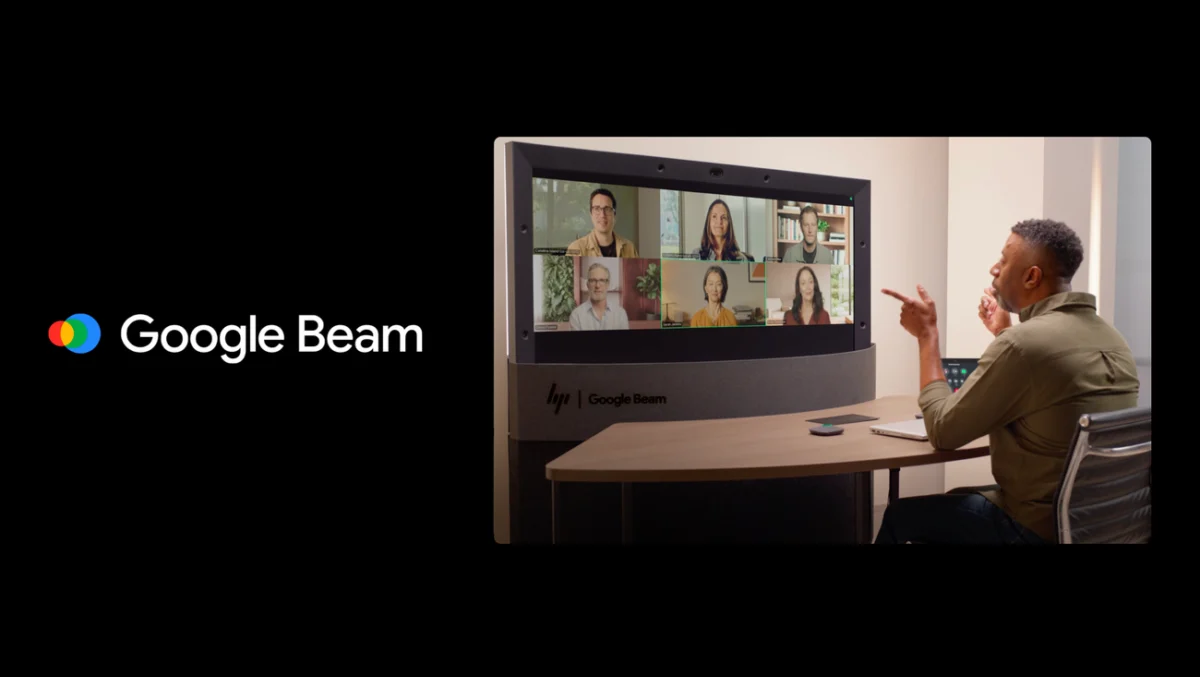
In the modern professional landscape, the transition to hybrid work has brought both unprecedented flexibility and a persistent, nagging challenge: the "inclusion gap." While video conferencing tools have bridged the physical distance between colleagues, they have frequently failed to bridge the psychological distance. Employees often report feeling like mere observers—watching a flat, two-dimensional grid of boxes rather than participating in a dynamic, collaborative exchange.
Google is now looking to dismantle these barriers with a significant expansion of its Google Beam project. By leveraging cutting-edge hardware from HP and sophisticated AI-driven rendering, Google is attempting to turn the sterile, disconnected nature of video calls into a lifelike, "true-to-life" experience that makes remote participants feel as though they are physically sitting at the same table.
The Core Innovation: Redefining Presence
The fundamental problem with traditional video conferencing is the "flatness" of the interaction. When a participant is reduced to a thumbnail in a grid, the non-verbal cues—the subtle shifts in posture, the direction of one’s gaze, and the natural ebb and flow of conversation—are lost.
Google Beam addresses this by focusing on the "human" element of communication. The latest experiment announced by the tech giant introduces a refined rendering process that utilizes HP Dimension’s immersive display technology. This system does more than just show a video feed; it interprets the geometry of the participant’s environment and renders them in their "true size."
By positioning remote colleagues as if they are occupying the same physical space, the technology creates a sense of spatial continuity. When combined with advanced spatial audio, which anchors a person’s voice to their visual position on the display, the brain no longer has to "work" to process the meeting. The audio and visual cues align naturally, mimicking the experience of a face-to-face boardroom meeting.
A Chronology of the Project Starline and Beam Evolution
To understand the significance of this update, one must look at the trajectory of Google’s immersive communication research.
- The Early Concept (Project Starline): Google first unveiled Project Starline as a high-end, research-heavy project. It required massive, custom-built light-field displays and specialized sensor arrays that were impractical for widespread enterprise adoption. It was a vision of the future, but one that was physically and financially inaccessible to most companies.
- The Pivot to Scalability: Recognizing that for immersive tech to work, it had to be usable, Google began the process of "Beam-ing" the research. This involved transitioning away from proprietary, room-sized hardware toward integrations that could function on standard hardware with high-end display partners like HP.
- The Integration Phase: Google began working in parallel with major software platforms. By integrating with Google Workspace and Zoom, the company signaled that it wasn’t trying to build a walled garden, but rather a "layer" that could sit on top of existing workflows.
- The Current Milestone: Today’s announcement represents the first major push into "group meetings" using non-specialized, off-site devices. By allowing participants joining from standard laptops or tablets to be rendered in "true-to-life" proportions on the Beam display, Google has finally closed the loop between the "immersive" office and the "standard" home-office worker.
Supporting Data: Quantifying the "Inclusion Gap"
The shift toward immersive communication is not merely aesthetic; it is backed by empirical research into group dynamics and social psychology. Google’s internal testing and user studies have yielded striking metrics regarding the efficacy of this approach.
The Impact on Social Connection
According to research released by the Beam team, participants using the new display configurations reported a 50% stronger sense of social connection. This metric is vital for long-term remote retention. When employees feel connected to their peers, the "silo effect"—where individuals become detached from the company culture—is significantly mitigated.
Enhancing Contributions
Perhaps more importantly, the experiment highlighted a 21% increase in the reported ability to contribute to conversations. This indicates that the friction caused by traditional video calls (e.g., talking over others due to lag, or being unable to read the "room" to find an opening to speak) is significantly reduced when participants can see and hear their colleagues in a spatially accurate way.
These findings suggest that when the medium of communication is "frictionless," the quality of the intellectual exchange improves. The technology effectively removes the technical barrier to entry, allowing participants to focus entirely on the content of the meeting rather than the mechanics of the software.
Official Responses and Strategic Partnerships
The success of this initiative relies heavily on ecosystem support. Google has explicitly aligned itself with industry leaders to ensure that the "Beam" experience is not an isolated experiment but a functional tool for the modern enterprise.
Jeff Smith, Head of Product for Zoom Workplace, provided insight into why this collaboration is critical. "Zoom is known for meetings that just work," Smith noted. "Now, we’re bringing our most-loved features into Google Beam for Zoom to deliver a best-in-class collaboration experience for every meeting."
This partnership is a strategic masterstroke. By incorporating Zoom’s feature set—such as screen sharing, collaborative whiteboards, and refined chat functionality—into the immersive Google Beam interface, Google ensures that users don’t have to sacrifice productivity for the sake of "presence." The goal is a seamless fusion of the immersive "room" feel and the highly functional "digital" toolkit.
The Implications for the Future of Work
The Death of the "Grid"
The implications of this technology are profound for corporate real estate and the future of the office. If a remote worker can be rendered as a life-sized, spatially-accurate presence, the necessity of having everyone physically present in a single conference room diminishes. Companies may shift away from massive, expensive, and often underutilized office spaces in favor of smaller "Beam-enabled" huddle rooms.
Bridging the Hybrid Hierarchy
Currently, there is a dangerous hierarchy in hybrid meetings: those in the room have the power, and those on the screen are the "second-class citizens." Google Beam threatens to flip this hierarchy on its head. If the remote participant appears at the same scale and with the same auditory clarity as the person sitting next to you, the physical office becomes less of a requirement for status and more of a choice for convenience.
The Psychological Shift
Beyond the logistics, there is the psychological impact on employee well-being. "Zoom fatigue" has been linked to the intense cognitive load required to interpret flattened, non-verbal social cues. By utilizing spatial audio and 3D-style rendering, Google is reducing the cognitive load on the brain. This could lead to meetings that are not only more productive but less exhausting for the participants involved.
Looking Ahead
While the current experiment is a significant leap forward, it is clearly just the beginning. The roadmap for Google Beam suggests a future where these immersive capabilities are no longer "experimental" but standard features of the professional suite.
As the team continues to iterate, the focus will likely shift to lowering the hardware requirements even further, perhaps eventually enabling high-fidelity "true-to-life" rendering on standard high-definition monitors through purely software-based AI processing.
For now, the project remains at a critical juncture: moving from a fascinating technological demonstration to an essential component of the global work infrastructure. As Google continues to refine the "inclusion gap" metrics, the ultimate test will be whether this level of presence becomes a baseline expectation for every professional interaction. For those interested in tracking the development of this interface, updates are being documented at beam.google.
The goal, as stated by the developers, is simple: to make sure that when you enter a meeting, you are present in every sense of the word. In a world where we are increasingly connected by fiber optics but separated by geography, that sense of presence may be the most valuable commodity of all.

 Asep Darmawan
 Sagoh
Sagoh
 Raul Delapena Setiawan
 Dwi Wanna
 Muslim
 Nana Wu

 Rifan Muazin