
 Sagoh
Sagoh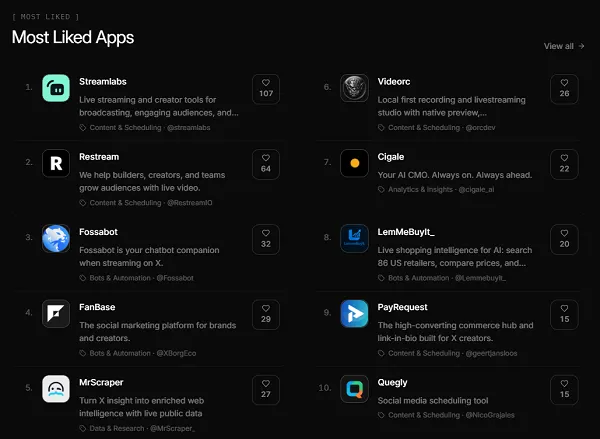
In a strategic move to court a developer community that has been deeply fractured over the last three years, X (formerly Twitter) has launched a comprehensive overhaul of its "API Exhibit" website. The redesigned portal is designed to serve as a showcase for the platform’s most successful API integrations, ranging from public utility applications to sophisticated "agentic" use cases. By highlighting these success stories, X aims to provide a roadmap for developers to integrate the platform’s real-time data streams into their own products—a mission that remains central to the company’s broader strategy under owner Elon Musk.
However, the launch comes against a backdrop of historical friction, high-profile pricing shifts, and an ongoing struggle to balance the monetization of data with the need for an open, innovative developer ecosystem.
The Core Facts: What the New Exhibit Means
The updated X API Exhibit website is more than just a gallery of logos; it is a functional hub designed to foster discovery and technical adoption. According to official communications from the X Developers account, the site has been "rebuilt from the ground up" with a primary focus on visibility and utility.
Key features of the new interface include:
- Enhanced Customization: Developers can now tailor their app listings with greater granularity, allowing them to highlight specific technical features or unique value propositions.
- Agentic Integration: A major addition is the inclusion of support for Grok Bot templates and agent skill files. This signals X’s pivot toward the burgeoning field of autonomous AI agents, encouraging developers to build bots that can act on behalf of users.
- Discovery Tools: By categorizing apps into "official partners," "public utility," and "agentic" tiers, the platform makes it easier for potential users and investors to navigate the ecosystem.
The objective is clear: X is attempting to shift the narrative from a "closed-off" platform to one that actively supports and celebrates the third-party applications built on its data.
Chronology: A Volatile History of API Access
To understand the significance of this relaunch, one must look at the tumultuous timeline of X’s relationship with its developer base since the 2022 acquisition.
2022–2023: The "Closed-Off" Era
Following Elon Musk’s takeover, X moved aggressively to restrict access to its data. The platform’s initial motivation was twofold: to eliminate third-party "client" apps that competed with the official X app, and to prevent AI companies from scraping massive amounts of data to train large language models (LLMs) without compensation. This resulted in the abrupt shutdown of legacy API access, which effectively crippled thousands of tools that relied on the platform’s free tier.
2024: The Price Spike
In 2024, X introduced a controversial tiered API pricing structure. For many independent developers and startups, the costs were prohibitive. The increase led to a mass exodus of smaller developers who could no longer justify the overhead, leading to a significant decline in the diversity of the "Twitterverse" ecosystem.
2025: A Pivot Toward Sustainability
Recognizing that the lack of third-party innovation was limiting the platform’s utility, X began revising its strategy. By introducing usage-based pricing tiers, the company sought to lower the barrier to entry for smaller, hobbyist, and early-stage developers. The launch of the new Exhibit in early 2025 is the latest step in this "reconciliation" phase.
Supporting Data: The Impact of Developer Flight
The economic implications of X’s developer strategy are profound. Before the 2022 changes, X possessed one of the most vibrant developer ecosystems in the tech world. Applications ranged from social listening tools and brand analytics dashboards to academic research platforms and accessibility utilities.
- The Data Vacuum: By restricting access, X successfully blocked AI scrapers, but it also inadvertently silenced the "signal" that third-party apps provided. When developers build tools that analyze public sentiment, they add value to the platform by making the data actionable for businesses.
- The Cost of Inaction: Independent analysis suggests that the decline in third-party integrations has correlated with a cooling of brand-side engagement. When brands cannot use their preferred third-party dashboards to track performance, their presence on the platform becomes less strategic and more fragmented.
- The Grok Factor: X is currently betting that if it can replace the "missing" third-party apps with native "Grok Bots," it can recapture that lost value. However, the data suggests that proprietary AI cannot fully replace the breadth of niche, community-led tools that developers previously built.
Official Responses and Strategic Intent
In its public messaging, X remains optimistic. The platform’s leadership has emphasized that the goal of the new Exhibit is to "showcase your X API app and get discovered."
There is an underlying tension in this messaging. On one hand, X wants to be a "developer-first" platform. On the other, the company remains highly protective of its intellectual property, specifically its firehose of real-time human conversation. The official stance is that the platform is offering a "fair value exchange": developers get access to high-quality, real-time data, and in return, they provide tools that keep users engaged on the platform.
Industry observers, however, remain skeptical. Many developers who were burned by the sudden service cuts in 2023 are hesitant to build their businesses on top of an API that has proven to be volatile. The new Exhibit is a marketing tool, but for many, it is seen as an attempt to "re-brand" a platform that still carries significant regulatory and operational risks for third-party builders.
Implications: Can X Win Back the Developer Trust?
The launch of the Exhibit raises critical questions about the future of the platform’s business model.

1. The "Agentic" Shift
By prioritizing "agentic use cases," X is effectively betting on the future of the AI economy. If developers can create bots that reliably perform tasks—such as automated customer support, personalized content curation, or real-time trading alerts—X becomes more than just a social media feed; it becomes an operating system for agents.
2. The Risk of Limited Reach
The biggest obstacle to the success of this initiative is the lingering cost of access. Even with the 2025 revisions, the pricing remains high for those who do not have a clear path to monetization. If the only apps featured in the Exhibit are those with significant financial backing, the platform risks becoming an "enterprise-only" garden, losing the grassroots innovation that defined its early years.
3. Business Utility vs. Platform Control
X’s business model depends on keeping users on the platform. Traditionally, third-party apps helped facilitate this by providing better experiences than the native client. By re-engaging developers, X is essentially inviting competition back into its fold. If the new Exhibit successfully drives adoption, it could reverse the negative business trends of the past two years. However, if the trust gap remains too wide, this initiative may struggle to gain traction beyond a handful of official partners.
Final Assessment: A Necessary but Insufficient Step
The new X API Exhibit is a polished, professional, and necessary step toward rebuilding the platform’s developer ecosystem. It provides the visibility that creators have been demanding for years and introduces support for the next generation of AI agent technology.
However, a website—no matter how well-designed—cannot fix the fundamental issues of developer trust. For X to truly succeed, it must demonstrate long-term stability in its API pricing and a genuine commitment to keeping the platform accessible to more than just the largest corporate partners. The platform is currently at a crossroads: it can continue to treat its data as a walled garden, or it can acknowledge that the true value of its data is amplified when it is interpreted and utilized by a diverse, independent, and creative global developer community.
As of now, the Exhibit serves as an invitation. Whether the developers choose to walk through the door remains to be seen. The success of this project will ultimately be measured not by how many apps are listed on the site, but by how many developers are willing to stake their business longevity on the X API in the coming years.


 Nana Wu
 Suro Senen
 Dwi Wanna
 Muslim


 Rifan Muazin
 Asro
Asro