
 Rifan Muazin
For the past two decades, the digital marketing playbook has been dominated by one objective: ranking in the top ten blue links of Google. Content strategists mastered the art of keyword research, topic clustering, and backlink acquisition to climb the SERP (Search Engine Results Page) ladder. However, the rise of generative AI—ChatGPT, Gemini, and Perplexity—has fundamentally disrupted this paradigm. We have moved from an era of "search" to an era of "answers."
This transition introduces Answer Engine Optimization (AEO), a critical new discipline that asks a haunting question for every brand: When a potential buyer asks an AI about your product category, does your brand show up as a trusted source, or are you invisible?
The Paradigm Shift: From Blue Links to AI Citations
The core philosophy of AEO is not to replace traditional SEO, but to evolve it. Traditional SEO focuses on driving traffic to a specific URL. AEO focuses on providing the precise, authoritative, and structured information that AI models require to synthesize their responses.
When a user asks, "What is the best CRM for small businesses?" they are no longer looking for a list of articles to browse; they want a definitive answer. Answer engines crawl, ingest, and synthesize data to provide that answer, often citing the sources they used to build their response. For brands, the metric of success has shifted from "clicks" to "citations" and "visibility."
The Mechanics of the Shift
Unlike standard search, where a keyword might yield thousands of pages, AI-generated answers are concise and limited by design. They prioritize:
- Directness: The AI prefers concise, declarative sentences that answer the query immediately.
- Structured Data: Content that is organized logically—often in tables, lists, or clearly defined hierarchies—is easier for LLMs (Large Language Models) to parse.
- Authority: AI models weigh the perceived expertise of a source heavily.
- Consistency: Brands that maintain a consistent narrative across their owned channels (blogs, social, technical documentation) are more likely to be cited as a "source of truth."
Chronology: The Evolution of AEO
The transition to AEO did not happen overnight; it is the culmination of years of machine learning advancements.
- The Pre-LLM Era: SEO was strictly about keyword matching and page authority. Content was written for crawlers, and human readability was often a secondary concern.
- The Semantic Search Shift: With Google’s BERT and MUM updates, search engines began understanding context and intent rather than just keywords. This laid the foundation for AI to move beyond simple string matching.
- The Launch of ChatGPT (Late 2022): The widespread adoption of generative AI changed user behavior. Users began expecting conversational, summarized responses.
- The Integration Phase (2023–2024): Search giants (Google with SGE/AI Overviews, Microsoft with Copilot) began baking generative AI directly into search interfaces.
- The Measurement Era (Current): As of late 2024, tools like HubSpot’s AEO suite have emerged, allowing brands to finally quantify their "AI visibility," moving AEO from a theoretical concept to a measurable KPI.
Supporting Data: Why Visibility Matters
The impact of AEO is no longer anecdotal. According to recent data from HubSpot, the correlation between optimized content and AI citations is profound. In recent industry tests, 92% of content pages that were specifically optimized for AI comprehension were cited by answer engines.
Perhaps more importantly, brands that optimized their content architecture saw a 49% lift in AI visibility within weeks of implementation. This data suggests that AI models are not choosing sources randomly; they are actively filtering for content that is structured, accurate, and authoritative.
The "visibility gap" is also widening. Brands that ignore AEO are seeing their competitors occupy the "source" slots in AI responses, effectively losing the customer before they ever visit a website. In the world of AI, if you are not cited, you effectively do not exist.
Official Guidance: Building an AEO-Ready Content Architecture
To win in the age of answer engines, brands must stop viewing their content library as a static archive and start viewing it as a knowledge graph.

Audit Existing Content for Citation Potential
The first step is a baseline audit. Brands must identify which of their existing pages are currently being cited and, more importantly, which ones are not. HubSpot’s AEO tool provides a blueprint for this:
- Tracked Prompts: Daily monitoring of how major AI models answer category-relevant questions.
- Citation Analysis: Mapping which domains and specific pages the AI references.
- Competitor Benchmarking: Seeing where competitors are outperforming you in AI citations.
Structural Refinements
Once the audit is complete, content strategists must perform targeted updates. This does not mean rewriting the entire library. Instead, focus on:
- The "Bottom-Line Up Front" (BLUF) Approach: AI models love definitions and clear, summarized answers at the beginning of an article.
- Addressing Information Gaps: If an AI consistently cites a competitor for a "how-to" query, create a dedicated, highly structured page that answers that query better than the competitor.
- Brand Consistency: Ensure that technical specifications, pricing information, and company background are updated across all channels. AI models rely on cross-channel consensus to verify facts.
Implications for Content Strategy
The shift to AEO has significant implications for how marketing teams are structured and how they allocate their resources.
The Rise of the Content Agent
Modern tools, including those integrated into HubSpot’s Marketing Hub, are now leveraging AI to assist in the creation of AEO-friendly content. By generating blog posts based on owned content recommendations, teams can scale their output without sacrificing the structure required for AI citation. However, the "human in the loop" remains essential. An AI-generated draft must be reviewed to ensure brand voice, emotional resonance, and accuracy.
Rethinking the "Topic Cluster"
For years, the SEO strategy was to expand topic clusters as wide as possible. In the AEO era, depth is more important than breadth. It is better to have one definitive, perfectly structured "pillar page" that captures 80% of the AI citations for a topic than ten thin, peripheral blog posts that confuse the AI.
Metrics of Success: The Brand Visibility Score
Measuring AEO success requires a new set of metrics. Brands must monitor:
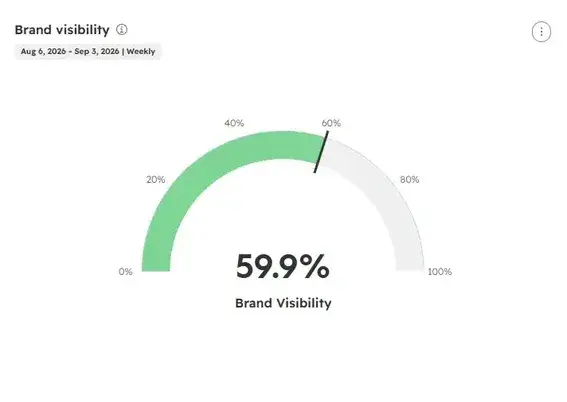
- Brand Visibility Score: An aggregate metric representing how often your brand appears in AI answers for your category.
- Citation Rate: The percentage of time your domain is linked as a source.
- Estimated Impact: Using AEO tools to forecast the potential visibility gain from optimizing a specific set of pages.
Conclusion: The Path Forward
The transition to Answer Engine Optimization is the most significant shift in digital marketing since the inception of the search engine. While the fear of being replaced by AI is prevalent, the reality is that brands that embrace AEO have a unique opportunity to become the "authoritative voice" in their industry.
By auditing current content, refining structures to meet the needs of LLMs, and tracking visibility as a core metric, content strategists can ensure their brand remains the primary source of truth in an AI-first world. The tools are available, the data is clear, and the strategy is actionable. The only question remains: will your brand be the one the AI recommends, or will you be the one it overlooks?
For more information on how to optimize your brand for the future of search, visit HubSpot’s AEO resource center to begin your baseline audit and start tracking your AI visibility today.

 Ammar Sabilarrohman
 Layla Zulfa
 Raul Delapena Setiawan
 Dwi Wanna
 Muslim
 Nana Wu

