
 Dwi Wanna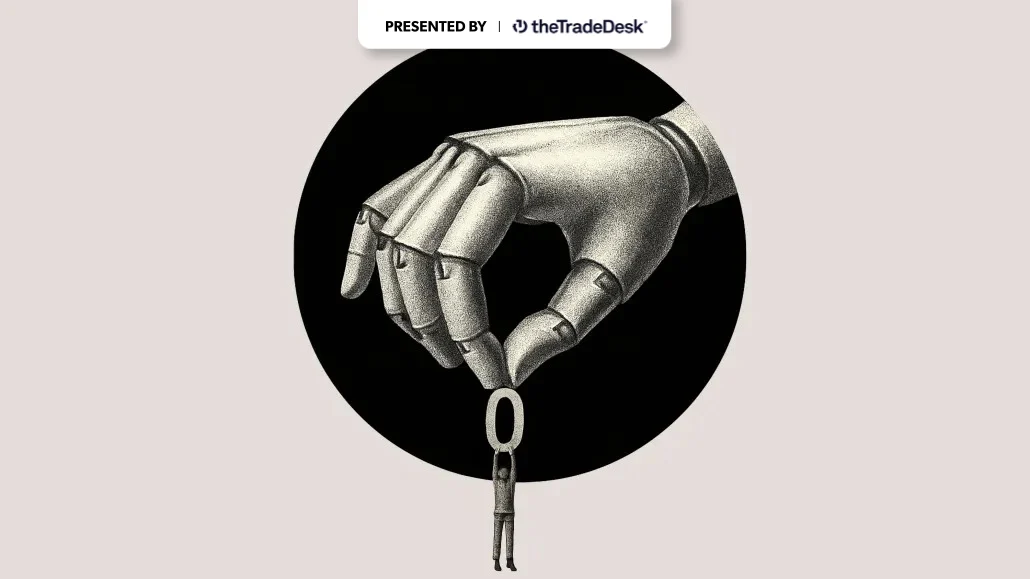
The buzz surrounding "agentic media buying"—the use of autonomous AI agents to negotiate, purchase, and optimize ad inventory—dominated the stage programming at Advertising Week New York (AWNY) last week. On the surface, the industry appears to be standing on the precipice of a revolution in how media is transacted. Yet, beneath the polished presentations and tech-forward rhetoric, a significant disconnect persists.
While media agencies are racing to integrate AI agents into their workflows to slash costs and increase efficiency, the publishing world remains remarkably cool to the trend. For the executives running the world’s most recognizable media brands, agentic media buying is currently viewed not as a transformative necessity, but as an unproven "test-and-learn" experiment fraught with more risk than immediate reward.
Main Facts: The Disparity Between Buy-Side and Sell-Side
The core tension lies in a fundamental disagreement on timing and utility. On the buy-side, agencies are moving from theoretical pilot programs to live, real-world campaigns. These agents are designed to interact directly with publishers, bypassing the traditional programmatic middlemen, reducing fees, and automating the granular process of inventory acquisition.
However, on the sell-side, the sentiment is one of cautious skepticism. During extensive conversations at AWNY, senior commercial leaders from top-tier publishers—including The Economist, Newsweek, and The New York Times—expressed a clear hesitation to commit to an "agent-first" future. The primary concerns center on the lack of established ROI metrics, the potential for brand safety issues, and the sheer unpredictability of autonomous software operating in a multi-billion-dollar marketplace.
A Chronology of the "Agentic" Shift
To understand why publishers are hitting the brakes, it is essential to look at the timeline of the AI surge in advertising:
- 2023: The Theoretical Phase: As generative AI exploded into the public consciousness, the conversation in media circles shifted from simple automation to "agentic" systems capable of independent reasoning. Agencies began exploring how these agents could perform complex tasks without constant human intervention.
- Early 2024: Infrastructure Construction: Agencies began building proprietary audit tools. These were necessary to prevent "rogue" behavior, where an AI agent might overspend or violate campaign guardrails.
- Mid-2024: The First Waves of Adoption: Some early-adopter publishers, such as CNN, began testing agent-to-agent transaction protocols. This signaled to the market that the tech was technically feasible.
- October 2024 (AWNY): The Reality Check: At Advertising Week, the conversation shifted from "What is agentic media?" to "Is this actually working?" The consensus among publishers was that while the technology is on their radar, it is not currently a priority for their bottom lines.
Official Responses: What the Publishers Are Saying
The reticence from publishing leadership is not rooted in a Luddite rejection of technology, but in a pragmatic focus on revenue stability.
Jamie Jouning, the global head of advertising at The Economist, captured the sentiment of many when he addressed the pressure from his C-suite. "It would be very hard for me to go and seek investment from our leadership team for something that we don’t know whether or not it’s going to be of value to us," Jouning stated. He noted that while the topic is on the CEO’s radar, it remains in the background. "I don’t think we’ll be hitting down that route in a big way anytime soon. We need to be aware of it, and we’ll test and learn in the background."
Danielle Varvaro, CRO of Newsweek, echoed the need for transparency. "I can’t say definitively that we have signed this deal and we’re doing X, Y, and Z because we haven’t," she said. Varvaro emphasized that publishers need to see clear KPIs before committing. "From a revenue perspective for brands, how do you then measure the ROI on this? What does a test campaign look like? What does that mean for the brand, and how do we measure it?"
Joy Robins, global chief advertising officer at The New York Times, summarized the stance of the industry’s most conservative stakeholders: "We’re always evaluating. I think the thing that we really want to make sure of is, what is going to be something that is right both for our advertisers and for us."
Supporting Data: The Economic Reality of the Pivot
According to Amit Grover, CEO of the sell-side programmatic firm KPI Village, the disparity between the buy-side and sell-side is driven by the immediate financial pressures publishers face.
"Publishers aren’t prioritizing adoption as aggressively as the buy-side because they are focused on repositioning their advertising businesses to generate revenue in the near term," Grover explained. The publishing industry is currently grappling with a trifecta of pressures: declining referral traffic from social platforms, the disruptive impact of AI search (like SearchGPT), and the persistent need to prove the value of their advertising inventory in a crowded marketplace.
For a publisher, the cost of building the infrastructure to support agent-to-agent transactions is high. If that investment does not yield a clear, immediate increase in revenue, it is difficult to justify when compared to traditional, high-margin opportunities like B2B events or direct-sold sponsorships.
Implications: Building the "Flywheel" of the Future
While the industry waits for the "agentic" dust to settle, publishers are not standing still. Instead, they are doubling down on what they do best: leveraging their brand authority and direct audience relationships.
The Rise of Verticalization
Newsweek is a prime example of this pivot. After moving away from a reliance on scale-based programmatic revenue, the publisher has spent years building a robust B2B business. By focusing on high-value verticals such as healthcare and technology, Newsweek has created a "flywheel" that includes newsletters, webinars, and rankings. Their business is growing at nearly 20% year-over-year, proving that specialized, high-intent audiences remain a more attractive proposition for advertisers than the mass-reach programmatic models that AI agents are currently targeting.
Credibility as a Monetizable Asset
The Economist is similarly diversifying. By expanding its video programming and breaking its "Insider" series into distinct, topic-specific franchises (technology, money, geopolitics), they are creating new, curated sponsorship opportunities. Jouning emphasized that advertisers are increasingly seeking the "trust and credibility" that only a premium publisher can offer. "Creating a curated space for 100 of the right people in the room can be more valuable than a campaign that spans a bunch of eyeballs," as noted by Varvaro.
The Looming Infrastructure Hurdle
The transition to agentic media is also stalled by a lack of industry-wide standards. As noted in recent reports, the current landscape is fraught with "rogue" risks. Agents operating without strict human oversight can make unauthorized decisions, leading to brand-damaging placements or overspending. Until the industry develops a standardized, transparent audit framework, publishers are unlikely to open their systems to autonomous agents in any meaningful way.
Conclusion: A Cautious Future
The promise of agentic media is undeniable: a faster, cheaper, and more efficient supply chain. However, for the publishing industry, the current AI era is about more than just speed. It is about protecting the sanctity of the reader relationship and ensuring that every ad dollar contributes to a sustainable business model.
As we move into 2025, we are likely to see a bifurcated landscape. Larger, scaled media conglomerates may begin to integrate agentic systems to capture the low-hanging fruit of automated inventory, while premium publishers will continue to focus on "human-centric" advertising—high-value, brand-safe, and deeply integrated campaigns that AI agents are currently unable to replicate.
The "test-and-learn" phase is far from over. If the buy-side wants the sell-side to fully commit to an agent-led future, the burden of proof remains on them to provide the security, transparency, and ROI that publishers require to risk their most valuable assets: their brand and their audience.


 Nana Wu
 Suro Senen

 Muslim


 Rifan Muazin
 Asro
Asro