
 Nila Kartika Wati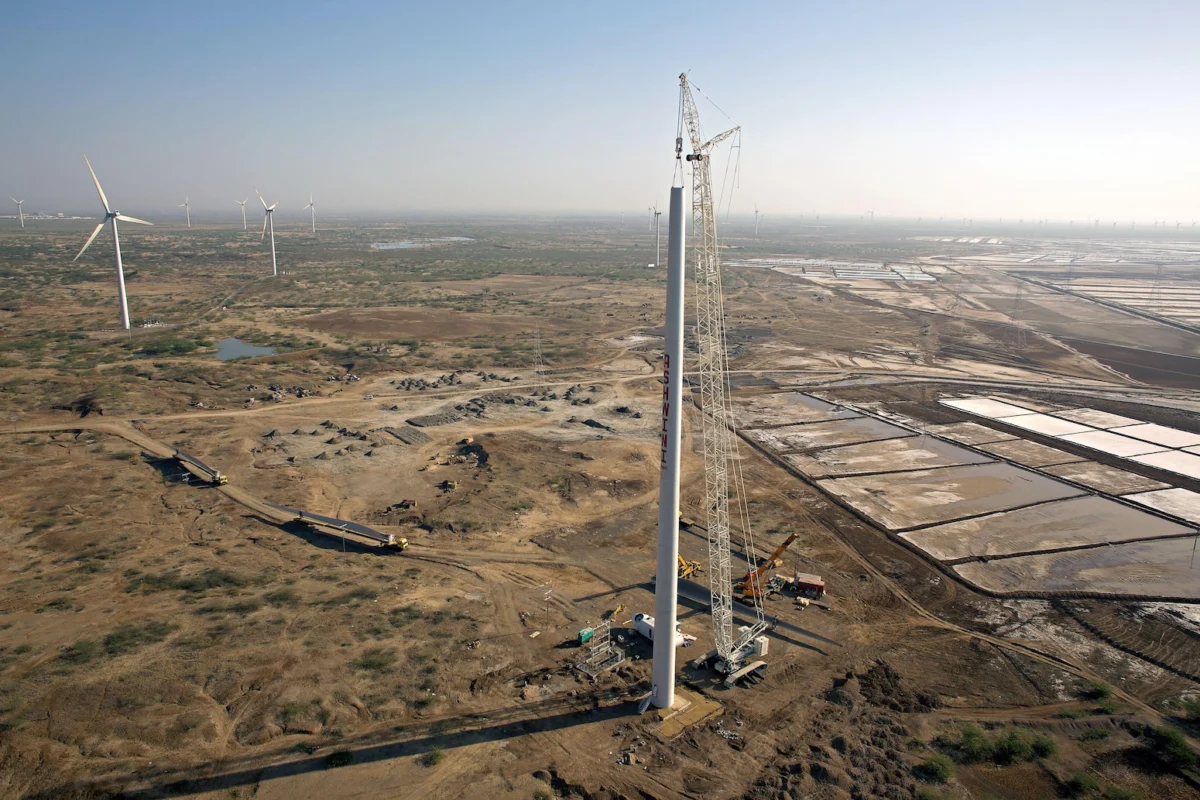
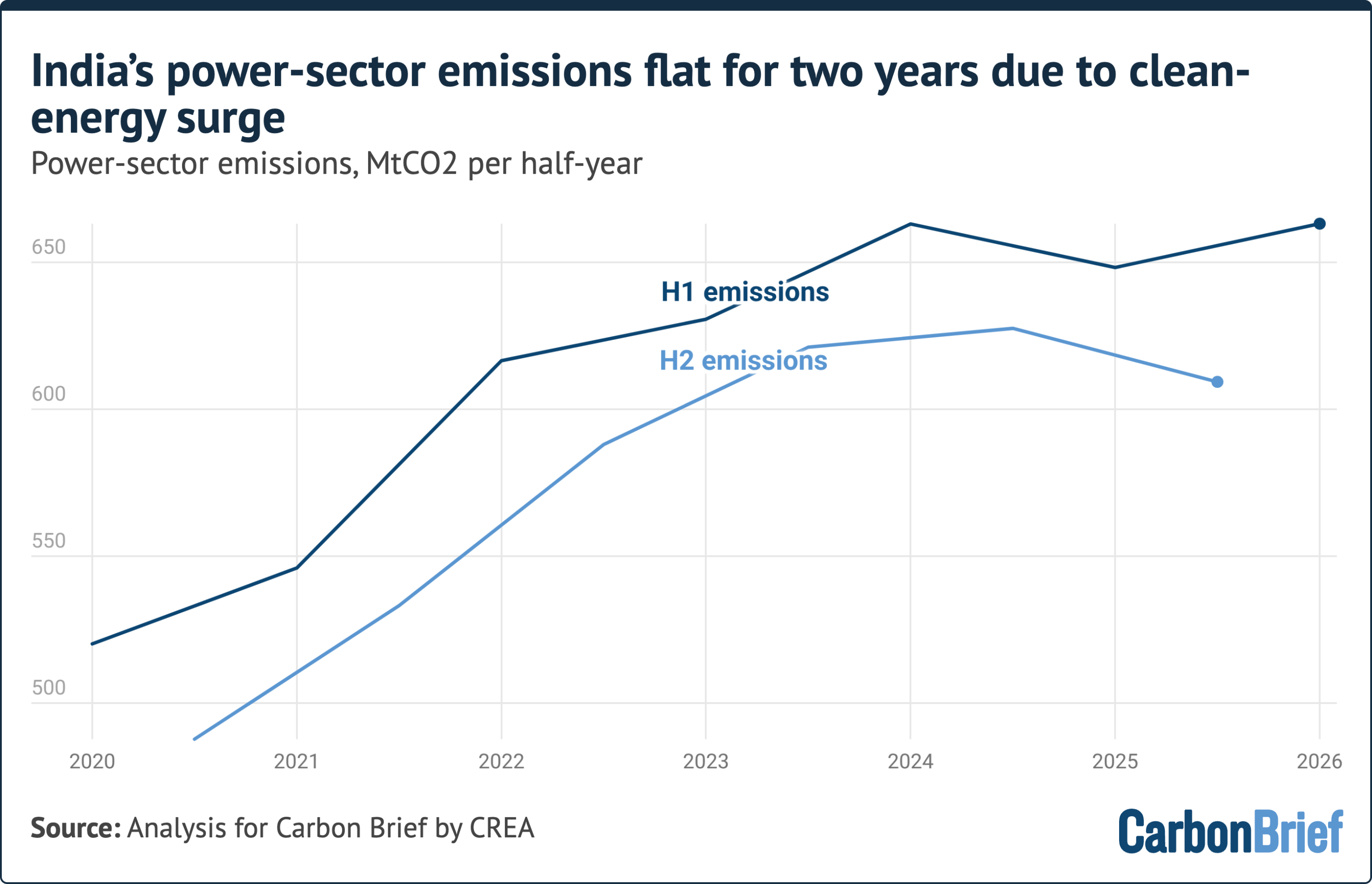
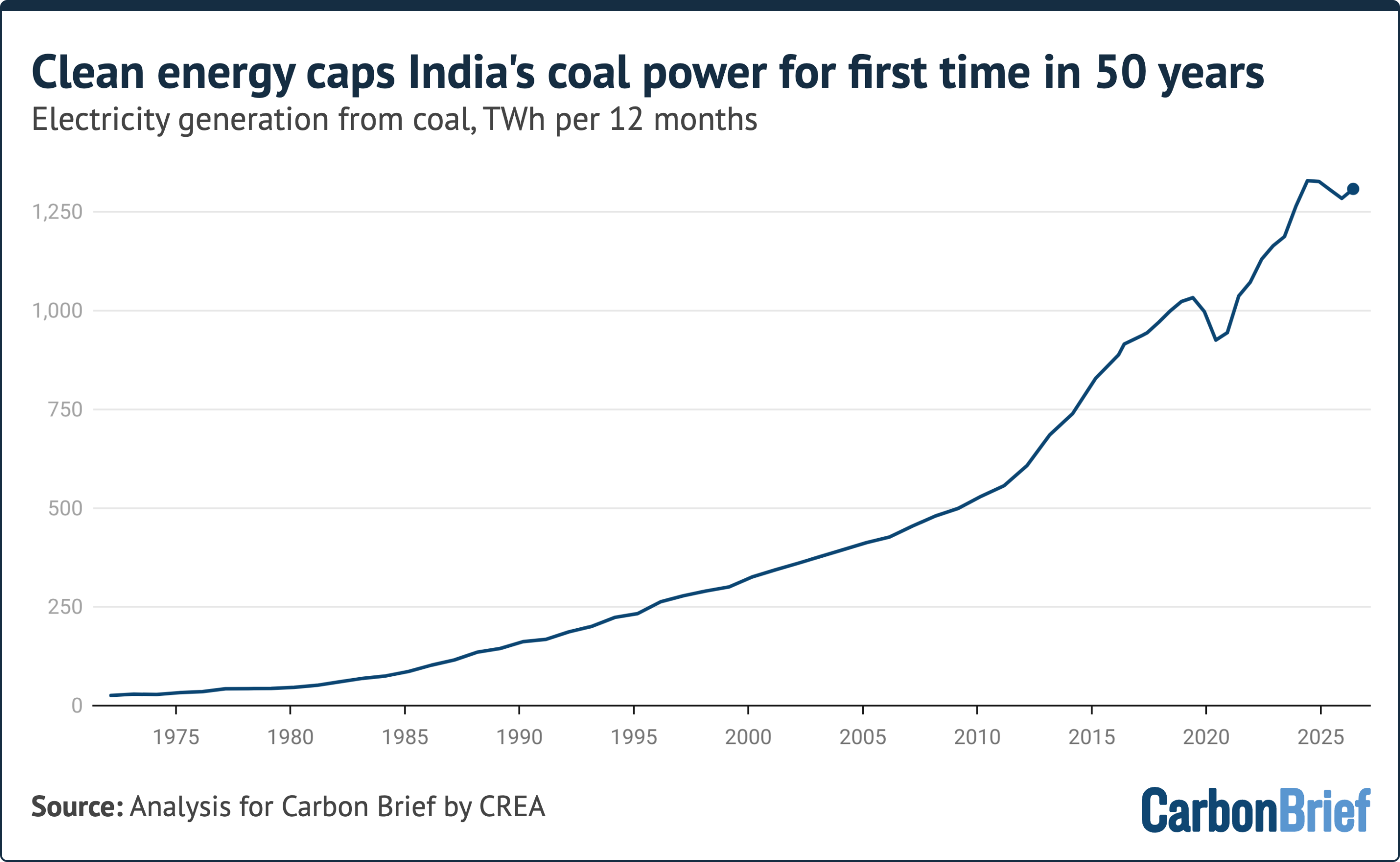
India is currently navigating a pivotal, albeit contradictory, chapter in its energy history. A new six-monthly analysis reveals a striking development: for the first time in over 50 years, the nation has seen zero growth in coal-fired power generation over a two-year period, even as overall electricity demand has continued to climb. This unprecedented stagnation in coal power—the backbone of India’s energy sector for decades—stands as a testament to the nation’s rapidly expanding clean energy capacity.
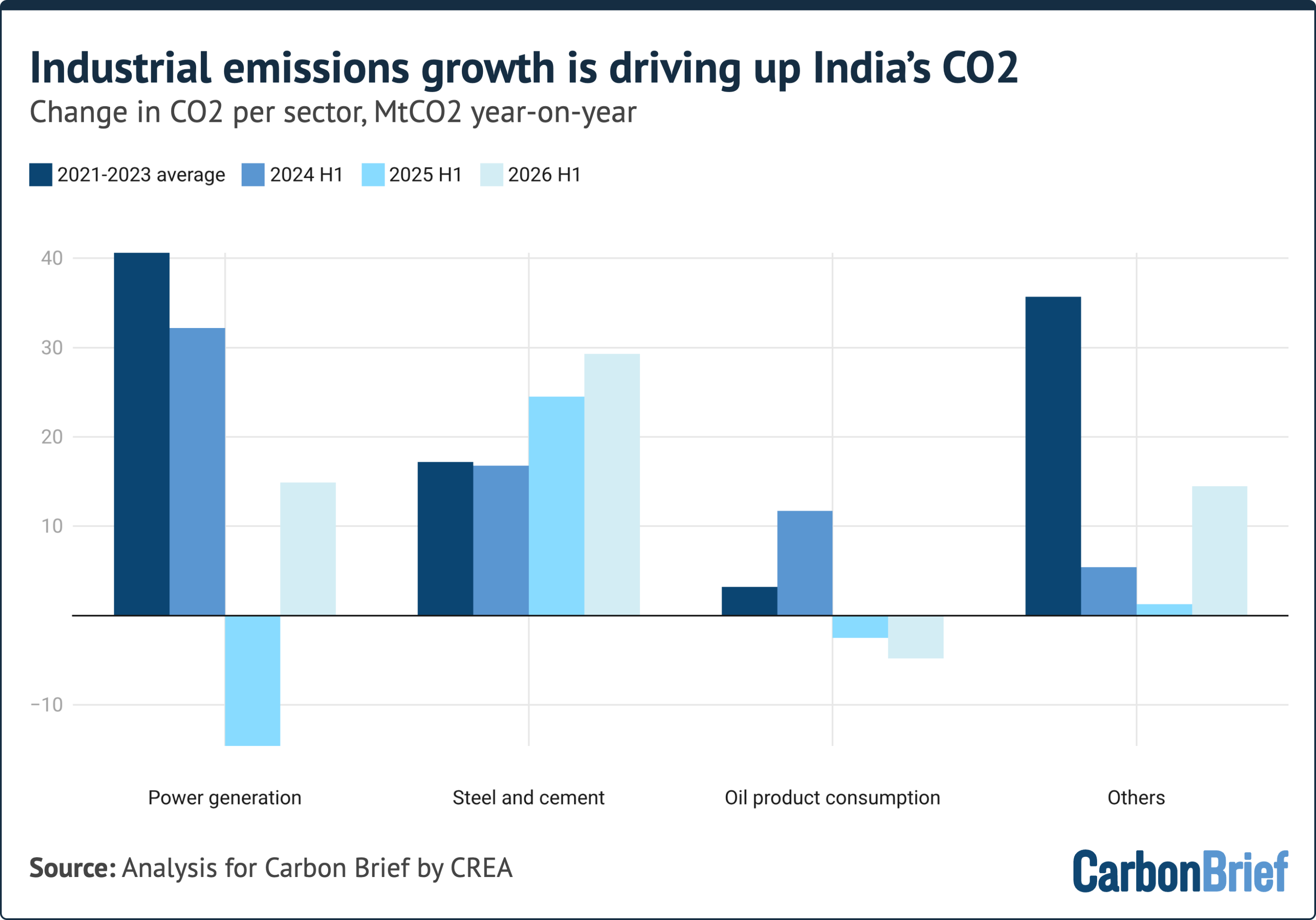
However, beneath this success lies a more complex reality. While the power sector has effectively decoupled electricity demand from carbon dioxide (CO2) emissions, India’s broader national emissions grew by 3.7% year-on-year in the first half of 2026. This increase is driven primarily by the heavy industrial sector, particularly steel and cement, which continue to rely heavily on fossil fuels.
The Main Facts: A Tale of Two Sectors
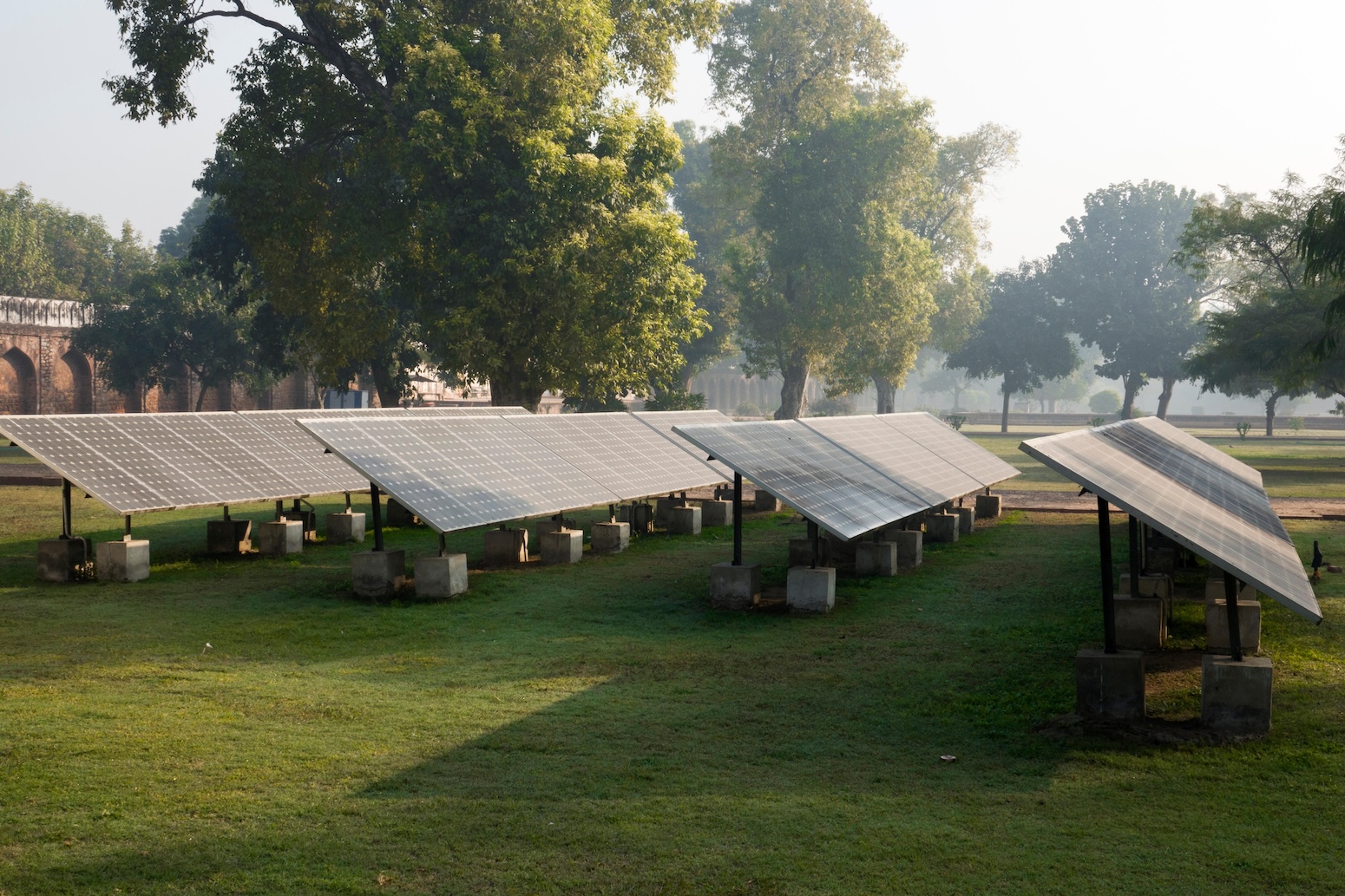
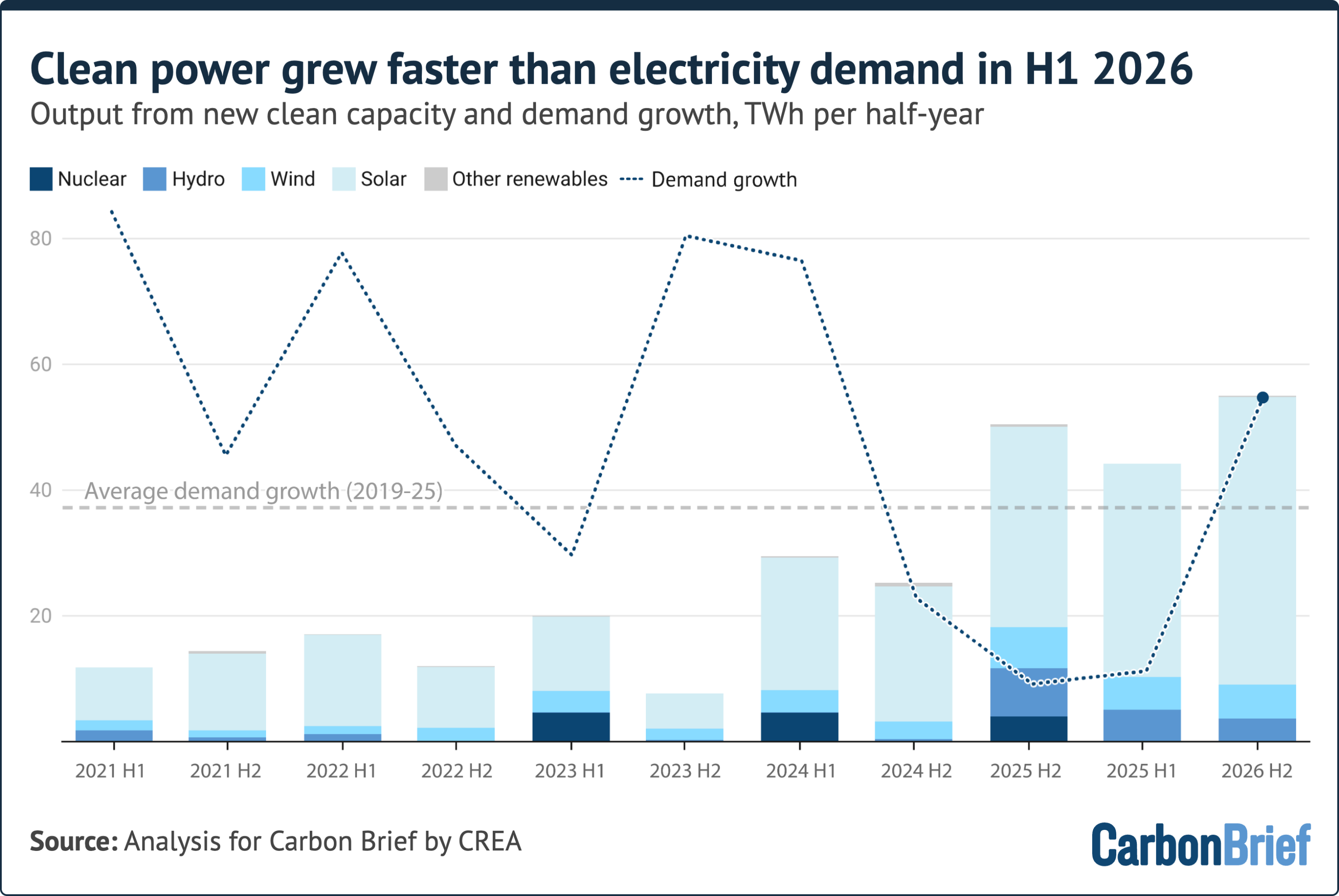
The first half of 2026 presents a split narrative. On one hand, the "flatlining" of power sector emissions is a landmark achievement. The surge in solar, wind, nuclear, and hydroelectric power has been so significant that it has absorbed the entirety of the country’s incremental electricity demand. Over the two-year period from H1 2024 to H1 2026, India added a staggering 77GW of new solar capacity, alongside 11GW of wind and 5GW of hydro.
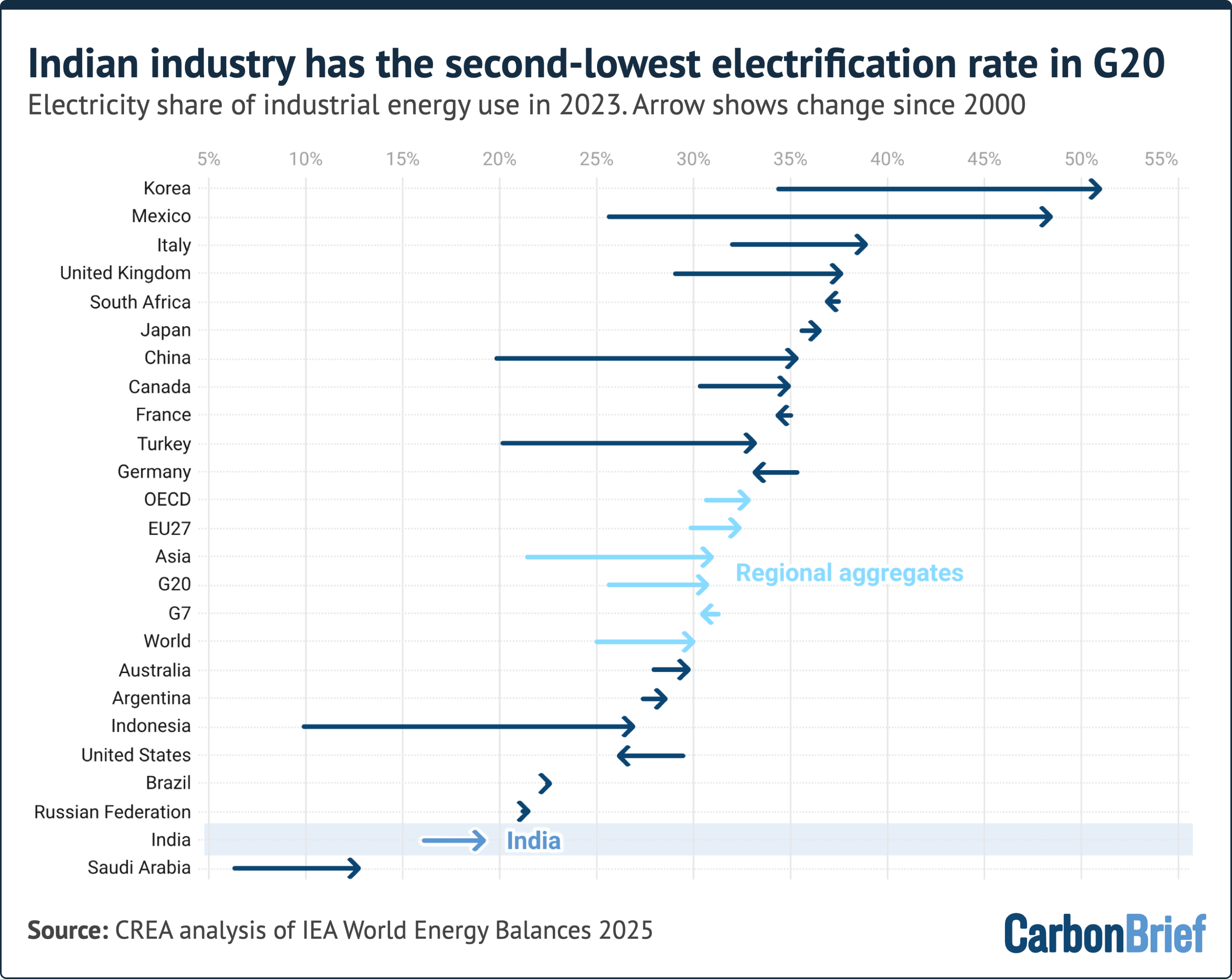
Conversely, India’s industrial engine is running hot and carbon-intensive. Steel and cement production surged by 8% and 9% respectively in early 2026, fueled by a robust real estate sector and infrastructure development. Unlike the power sector, which is increasingly electrified, India’s industrial sector remains one of the least electrified in the G20. Consequently, as industrial output rises, so does the direct consumption of coal and other fossil fuels.
Chronology of the Energy Transition
The trajectory of India’s energy shift can be traced through the following milestones:
- 2024 (First Half): India’s clean energy expansion begins to exert a noticeable "cap" on coal-fired power generation. Oil and gas consumption patterns begin to stabilize following global price shocks.
- 2025: India reaches its 20% ethanol blending target for petrol five years ahead of schedule, helping to moderate transport emissions despite a rise in vehicle ownership.
- Early 2026 (The Hormuz Shock): Geopolitical tensions in the Strait of Hormuz disrupt global oil and gas supply chains, causing price spikes. This temporarily forced some Indian industries to revert to coal and furnace oil to ensure operational continuity.
- H1 2026: Power sector CO2 emissions officially flatline for the second consecutive year. Simultaneously, the impact of El Niño leads to a delayed monsoon and intensified heatwaves, spiking cooling demand and testing the resilience of the national grid.
Supporting Data: Clean Energy vs. Industrial Demand
The data reveals that India’s clean energy investment is no longer a marginal effort; it is a structural shift. Between 2024 and 2026, India’s total power generation increased by 7%—an additional 63TWh of electricity, equivalent to the entire annual consumption of Singapore or Switzerland. Every single unit of this new demand was met by non-fossil sources.
State-Level Performance
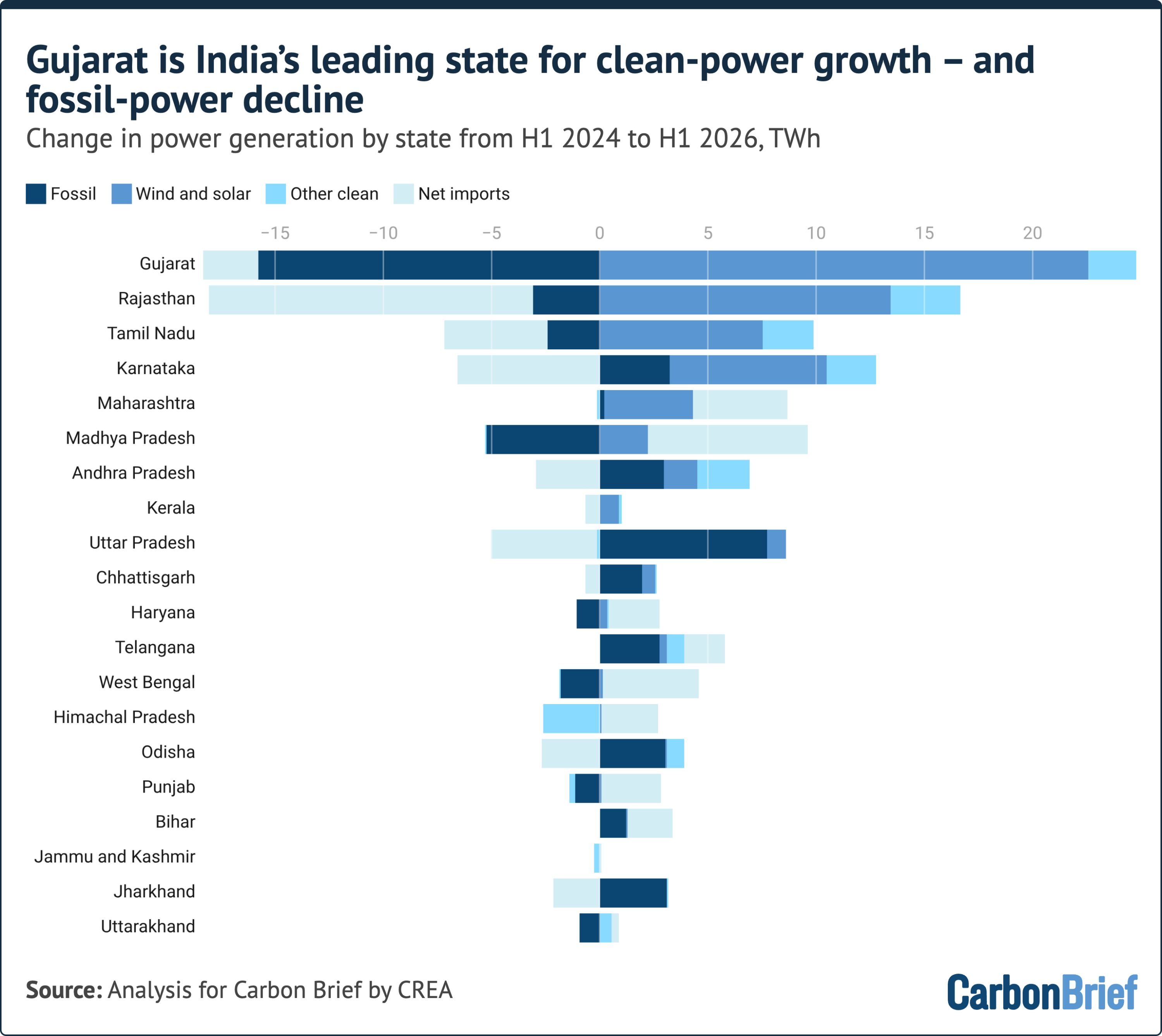
The shift is not uniform across the country. Gujarat has emerged as the clear leader, boasting the largest reduction in fossil-fuel generation alongside the most aggressive expansion of wind and solar infrastructure. Rajasthan and Tamil Nadu have followed suit, successfully reducing their reliance on coal-based power. In contrast, states like Maharashtra and Telangana, while seeing significant demand growth, have managed to keep pace largely through clean energy additions, though they remain heavily reliant on legacy thermal plants to meet base loads.
The Industrial Gap
The disparity in electrification is stark. While the power sector transitions, Indian industry remains locked into coal. As shown in recent IEA-based analyses, the share of electricity in Indian industrial energy use hovers near the bottom of the G20 rankings. This reliance on direct fuel combustion for high-temperature heat processes—such as those required in steel smelting—means that the carbon footprint of India’s industrial growth remains high.
Official Responses and Strategic Shifts
The Indian government is balancing a delicate "trilemma": energy security, industrial growth, and climate commitments. In response to the Hormuz-related supply disruptions in early 2026, the Ministry of Power and various state regulators issued temporary relaxations, allowing industries to utilize alternative fuels like coal and biomass. This was an emergency measure, but it highlighted the vulnerability of the industrial sector to global energy price volatility.
Furthermore, the government is moving forward with a "dual-track" strategy. On one hand, it is pushing for mandatory battery storage for new renewable energy projects, with the Central Electricity Authority proposing that, after June 2027, all new government-owned solar and wind projects must include two-hour battery storage.
On the other hand, the state continues to promote coal as a strategic asset. The designation of domestic coking coal as a "critical and strategic mineral" in early 2026 signals a long-term commitment to coal-based steel production. Ambitious plans for coal gasification—aimed at producing chemicals and plastics—suggest that while the power sector may be decarbonizing, the government views coal as an essential feedstock for industrial self-reliance.
Implications: The Road Ahead
The next phase of India’s energy transition will depend on three critical factors:
1. Grid Flexibility and Storage
The current trend of clean energy matching demand growth is impressive, but it is hitting physical limits. Curtailment—where renewable energy is "wasted" because the grid cannot accept it—is becoming a recurring issue. To maintain the current pace, India must rapidly accelerate the deployment of long-duration energy storage and upgrade its transmission network to handle the variable nature of solar and wind.
2. Industrial Electrification
If India is to meet its overall climate goals, the industrial sector must undergo a transformation similar to the power sector. This requires moving away from direct combustion of coal and toward electric arc furnaces and green hydrogen-based steel production. Currently, however, the economic case for such a transition is hampered by the relatively low cost of coal and the high capital expenditure required for electrification.
3. The "Lock-in" Risk
The government’s continued investment in new coal mines and coal-to-chemical plants presents a risk of "carbon lock-in." By building infrastructure today that is designed to operate for decades, India risks creating assets that may become stranded as the cost of renewable energy and battery storage continues to fall.
Conclusion
India’s energy landscape is a paradox of progress and persistence. The power sector has demonstrated that a massive, emerging economy can scale clean energy at a pace that rivals the world’s most developed nations. The fact that coal power has not grown in two years—despite a hungry, developing economy—is a historic shift.
However, the "flatlining" of power sector emissions is only half the battle. As long as India’s industrial growth is tethered to coal-fired processes, national emissions will remain on an upward trajectory. The transition from here on will require moving beyond just generating clean electricity; it will require the systematic replacement of fossil fuels in the heart of India’s manufacturing sector. The coming years will determine whether India can turn this industrial carbon surge into a final, peak-emissions moment, or if the dependency on coal will endure for decades to come.


 Pevita Pearce
 Rifan Muazin
 Dwi Wanna
 Lina Hope
 Layla Zulfa
 Asep Darmawan
 Azzam Bilal Chamdy