
 Jia Lissa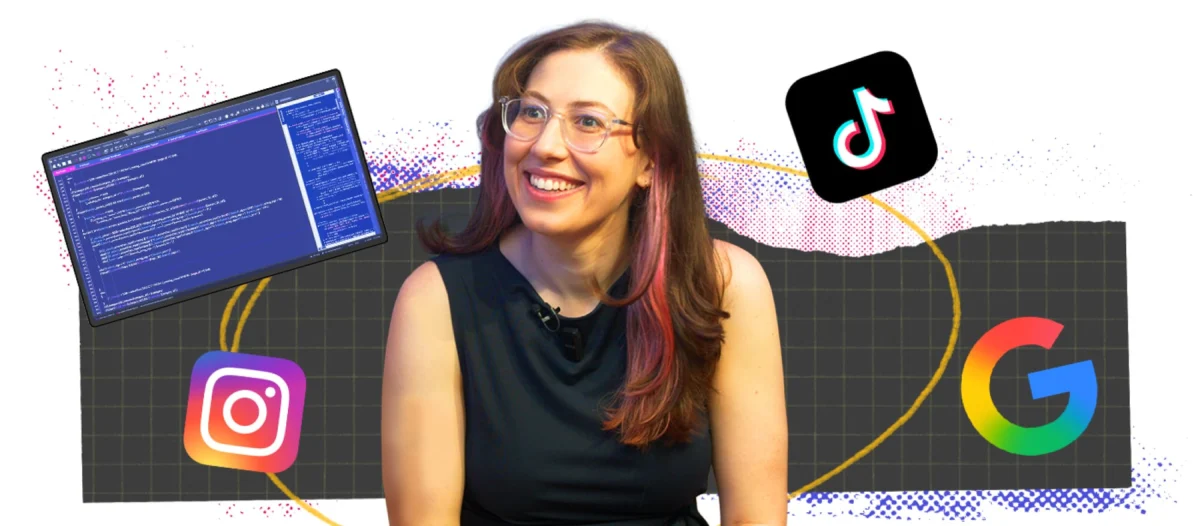
For six and a half years, the professional life of Alberta Tech—a prominent digital creator—was defined by the high-stakes, rigorous world of Silicon Valley software engineering. As a developer at Google, she spent her days building features for YouTube, one of the most influential platforms on the planet. By night, however, she was moonlighting as a burgeoning content creator, crafting comedy sketches that resonated with a growing audience of tech workers and industry insiders.
In 2026, Alberta Tech made the definitive leap: she resigned from her stable corporate role to pursue content creation as a full-time career. This transition from "big tech" employee to independent creator offers a rare, high-level perspective on the shifting landscape of the creator economy, the evolving utility of generative AI, and the psychological hurdle of walking away from a traditional career path.
The Accidental Origin Story: From Boredom to Virality
Alberta Tech’s entry into the creator space was not a calculated business maneuver; it was born out of the isolation of the COVID-19 pandemic. Like many, she sought a creative outlet to mitigate the boredom of remote work and the monotony of life in a confined New York apartment.
"I started making content during COVID… I was just bored at home," she explains. "I was like, ‘I want to be making jokes on TikTok,’ because everybody I know is scrolling TikTok right now."
Her initial content focused on the relatable absurdities of pandemic life. However, as her feed evolved, she began to tap into a specific, underserved niche: the technical, often surreal world of software development. Because she was embedded in the tech industry, her satire hit with a level of precision that outsiders couldn’t replicate. Her audience grew rapidly as developers and engineers saw their own daily frustrations—from legacy code issues to the idiosyncrasies of office culture—reflected back at them with humor and sharp insight.

A Chronology of a Double Life
For a significant portion of her career, Alberta lived what she describes as a "techy Hannah Montana" existence.
- 2020–2022 (The Incubation Phase): While working as an engineer, she maintained her content output as a hobby. She was careful to maintain a professional distance, rarely disclosing her specific employer to mitigate the risk of corporate blowback.
- 2023–2025 (Building Credibility): As her channel grew, she utilized her technical expertise to establish authority. She didn’t just tell jokes; she dissected complex industry trends, such as the emergence of Large Language Models (LLMs), earning the trust of a highly specialized audience.
- Early 2026 (The Pivot): Realizing that the quality and consistency required to reach the next tier of the creator economy were incompatible with a full-time engineering workload, she made the difficult decision to resign.
- Late 2026 (Present): Now a full-time creator, she is experimenting with new mediums and AI-assisted workflows, fully immersing herself in the creator ecosystem she once helped build from behind the scenes.
Supporting Data: The "Credential" Factor in Content
One of the most compelling aspects of Alberta Tech’s rise is the importance of "domain authority." In the current creator economy, audiences are increasingly skeptical of influencers who lack tangible expertise in the subjects they cover.
Alberta Tech notes that over half of her current audience consists of software engineers and developers. This demographic is notoriously difficult to engage, as they value technical accuracy over mere spectacle. By holding a background at Google, Alberta provided herself with a "credential" that allowed her to satirize the industry without being dismissed as an outsider.
"To speak to that group of people, you need to have some kind of credential behind you," she explains. "You need to know what you’re talking about."
This phenomenon suggests a broader trend in the creator space: the "Expert Creator." As platforms become more saturated, audiences are gravitating toward creators who treat their channels as a specialized trade rather than generic entertainment.

The AI Paradox: A Skeptic Turned Power User
Perhaps the most surprising element of Alberta Tech’s transition is her nuanced relationship with Artificial Intelligence. Having been a "hard skeptic" during the early adoption of generative AI—citing concerns over "stochastic parrots" (the theory that LLMs are merely predicting the next plausible word rather than possessing true understanding)—she has since integrated these tools into her daily workflow.
AI’s Strengths in Production:
- Research Acceleration: Alberta uses AI to explore complex topics, allowing her to dive into "rabbit holes" that she might not have discovered otherwise. It acts as an interactive search engine, helping her map out the historical context of technical trends.
- Efficiency: AI assists in managing the administrative burdens that come with being a solo entrepreneur, such as scheduling and communication.
AI’s Limitations:
- The Creative Gap: Despite the hype, Alberta remains unconvinced of AI’s ability to generate high-quality humor. "Whenever I say, ‘Generate a funny script’—not quite. It’s not quite there yet."
- The "Vibe Coding" Reality: She addresses the industry-wide debate over "vibe coding"—the practice of using AI to generate code without fully understanding the underlying logic. While the term was once a pejorative, she observes that it has evolved into a legitimate, if controversial, tool-assisted development process that most engineers are now forced to adopt.
Implications for the Creator Economy
Alberta Tech’s journey provides several takeaways for those considering a similar career shift.
1. The "Value-Add" Requirement
Alberta emphasizes that potential creators must identify their specific value proposition before leaving their day jobs. "Your audience doesn’t really care about you as a person," she warns. "You have to make them care about you. Until you can find that thing… you have to keep trying."
2. The Power of "Technical Literacy"
Being an engineer didn’t just give her material for her videos; it taught her how to conceptualize problems and communicate complex ideas simply. Conversely, her time as a creator has helped her bridge the communication gap between technical teams and non-technical stakeholders—a skill that is increasingly valuable in the modern workforce.
3. Future-Proofing via Originality
In an era where AI-generated influencers are becoming a reality, Alberta remains optimistic about the role of the human creator. Her experiments with AI-generated video remakes revealed that while AI can mimic production quality, the "concept"—the unique, human-centric idea—remains the true differentiator.

Official Outlook: The Future of Tech-Centered Content
The landscape of tech content is moving away from dry, instructional tutorials and toward cultural commentary. As Alberta Tech notes, topics that were once confined to niche technical forums are now front-page news.
"We are really on the precipice of this really intelligent AI, and everyone is paying attention," she says. "These used to be topics that were so small and only appealed to a small group of very technical people. But now it’s something that is in the news every day."
For creators like Alberta, this environment offers a unique opportunity to act as translators. By balancing humor with legitimate education, she is not just entertaining her audience—she is helping them navigate a rapidly shifting technological reality.
As she moves forward in her full-time career, her story serves as a template for professionals in other fields who feel the pull of the creator economy. It is a cautionary tale about the risks of leaving a stable salary, but also a testament to the power of authentic, expert-led content in an age of artificial noise. The lesson is clear: for those who have mastered a professional craft, the greatest creative potential may lie in the ability to make that craft accessible to the rest of the world.


 Suro Senen
 Pevita Pearce
 Ali Ikhwan
 Siti Muinah
 Muslim