
 Laily UPN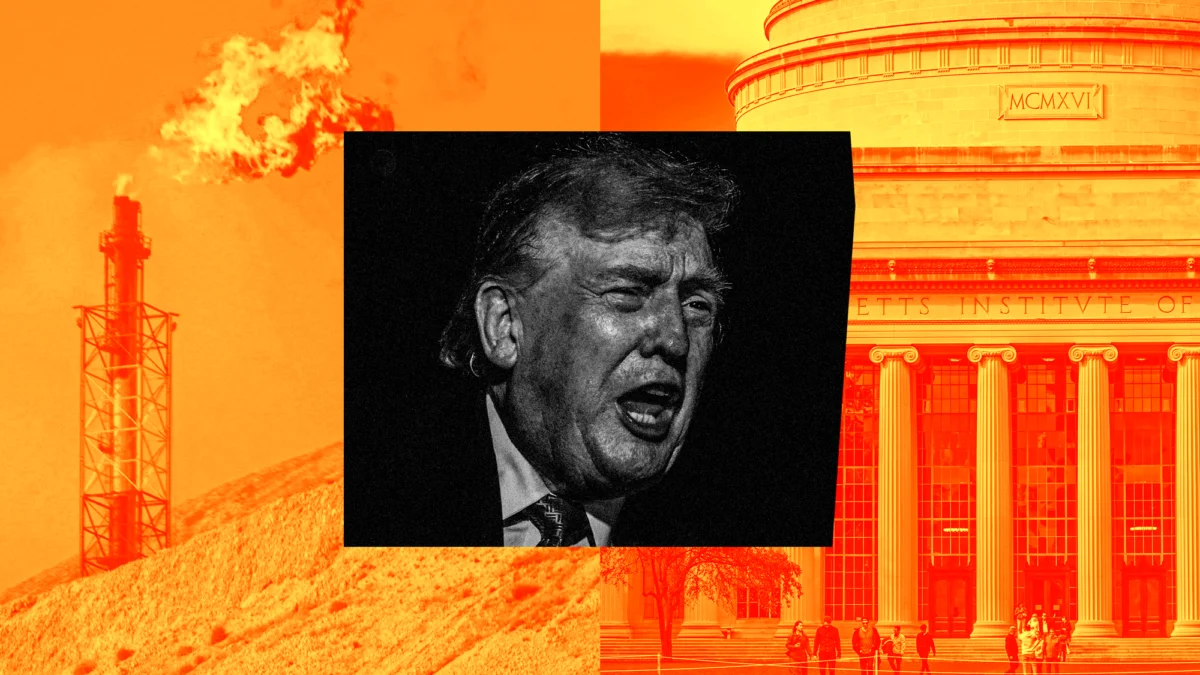
In the hallowed halls of America’s most prestigious research institutions, a silent crisis is unfolding. For decades, universities were viewed as the final bastions of objective inquiry—places where data dictated truth, regardless of political or financial convenience. However, a landmark study published in the journal Energy Research & Social Science suggests that this autonomy is rapidly evaporating.
According to the research, a toxic convergence of libertarian donor networks, fossil fuel capital, and aggressive political interference from the Trump administration has fundamentally compromised the independence of higher education. The result is a landscape where climate science is sidelined, faculty are intimidated into self-censorship, and the very definition of "academic freedom" is being rewritten by the entities that stand to lose the most from independent research.
The Anatomy of the Attack: A Chronology of Erosion
The current state of American higher education did not happen overnight; it is the culmination of a century-long strategy to shift the ideological center of gravity within academia.
The Early Foundations (1920s–1950s)
The attempt to influence academic output is not a modern invention. As early as the 1920s, electric utility monopolies partnered with academics to curate curricula that favored private utility control over public regulation. By the 1950s, the playbook had been refined by the fossil fuel industry, which began funneling significant resources into universities to sow doubt regarding the public health impacts of their products. Internal industry documents from the era reveal a calculated realization: academic research provided a veneer of neutral credibility that could be used to shape public opinion and thwart environmental policy.
The Rise of Donor Influence (2010–2020)
The strategy grew more sophisticated in the 21st century. Between 2010 and 2020, six major fossil fuel corporations funneled over $700 million into U.S. universities. This capital was often attached to "donor agreements"—contracts that granted private corporations influence over hiring, the development of course curricula, and the direction of research. Notable figures, such as the late David Koch, exemplified this model; his $185 million contribution to the Massachusetts Institute of Technology (MIT) was accompanied by a seat on the university’s highest governing board, effectively bridging the gap between corporate interest and institutional policy.
The 2025 Inflection Point
The situation reached a breaking point in 2025. The Trump administration launched a coordinated offensive against the academic establishment, freezing billions in federal research funding and initiating investigations into 75 different institutions. By forcing colleges to sign agreements that aligned with administration policy as a prerequisite for federal grants, the government effectively turned the "power of the purse" into a tool of political suppression. The administration notably canceled $4 million in climate research funding at Princeton University, explicitly characterizing the work of scientists as a source of "climate anxiety" rather than scientific advancement.
Supporting Data: The Collapse of Institutional Autonomy
The Academic Freedom Index provides a chilling quantitative snapshot of this decline. Measuring the ability of scholars to research and teach without interference, the Index shows a staggering drop in U.S. institutional autonomy, falling from a score of 3.3 in 2019 to 1.7 in 2025 on a scale of 0 to 4.
This decline is not merely statistical; it is experiential. Noel Healy of Salem State University, the lead author of the recent study, notes that the chilling effect has caused a wave of preemptive compliance. "Scientists have been deleting words like ‘climate change’ from their grant applications because those words can get an application rejected," Healy explains. "Some universities have shut down programs before the government even asked them to, hoping to avoid becoming a target. You don’t have to ban speech if people fear that speaking up will cost them their funding."
Furthermore, the "donor-influence" model has been codified into state law. Since 2016, when Arizona pioneered the creation of a publicly funded libertarian academic center, other states have followed suit. These centers, which are expected to receive $50 million in taxpayer support during the 2025-2026 academic year, effectively bypass traditional faculty governance, instead answering directly to state legislators. From 2021 to 2023, more than 150 bills were introduced at the state level aimed at dismantling tenure, curbing diversity, equity, and inclusion (DEI) initiatives, and policing educational content.
Official Responses and Institutional Justifications
The institutions caught in this crossfire often defend their relationships with industry donors as a necessary bridge between theoretical research and practical application.
MIT, for example, has consistently maintained its stance against divesting its endowment from fossil fuel companies. The university argues that maintaining these ties is essential for developing real-world climate solutions. The MIT Energy Initiative has long asserted that their corporate funders possess no influence over the findings or the content of their research reports, maintaining a strict wall between the source of the funding and the academic output.
However, critics argue that such "firewalls" are largely performative. When a university becomes financially dependent on an industry, the nature of the questions being asked—and, more importantly, the questions being ignored—inevitably shifts. As Healy points out, "When the industry being regulated gets to shape the questions researchers ask, it ends up shaping the policy too."
The Implications: Why Academic Freedom Matters
The implications of this corporate and political capture are profound. If the university’s primary mission is to provide the public with objective, evidence-based research, the current trend suggests that this mission is being compromised for the sake of donor satisfaction and federal funding.
The Loss of Public Trust
Soaring tuition costs and rising student debt, often linked to the corporate-run business model of higher education, have already severely damaged the public’s perception of universities. When the public perceives that academic institutions are merely extensions of the political and corporate apparatus, trust evaporates. This creates a feedback loop: as trust drops, institutions become more desperate for private funding, which in turn deepens the reliance on corporate donors, further alienating the public.
The Precedent of Total Control
The study’s authors provide a grim warning by looking at international examples. "In other countries, attacks on university legitimacy paved the way for faculty purges, campus closures, and centralized political control," the report notes. "Universities came under attack before those governments had full control, not after." The current American trajectory mirrors these historical precursors, where the normalization of interference eventually leads to the total loss of university independence.
A Path Forward: Reclaiming the Ivory Tower
To reverse this decline, the study’s authors propose a multi-pronged approach centered on radical transparency and the empowerment of faculty.
- Faculty Governance: Universities must grant faculty committees the power to review and, if necessary, reject major gifts that threaten academic freedom or present conflicts of interest.
- Transparency Requirements: Donor agreements must be made public. The era of "dark money" in academia must end, allowing for public scrutiny of the conditions attached to institutional funding.
- Unionization: Strengthening union contracts can provide faculty with the legal and collective bargaining power needed to resist corporate capture and political intimidation.
- Model Policies: Campaigns like UnKoch My Campus provide frameworks for gift-acceptance policies that prioritize the university’s public mission over the interests of wealthy donors.
"Transparency lets you see the deal, but it doesn’t let you stop it," Healy emphasizes. "Faculty need the power to review major gifts before they’re accepted and to refuse the ones that threaten academic freedom."
The battle for the soul of the American university is not just an academic dispute; it is a fundamental struggle over who gets to define reality. If research is permitted to exist only when it conforms to the interests of the powerful, the consequences for climate policy, public health, and democratic stability will be catastrophic. As the study concludes, the survival of the university as a space for honest, independent inquiry is not guaranteed—it must be fought for.


 Lina Hope
 Layla Zulfa
 Iffa Jayyana
 Rifan Muazin
 Suro Senen
 Lina Irawan