
 Layla Zulfa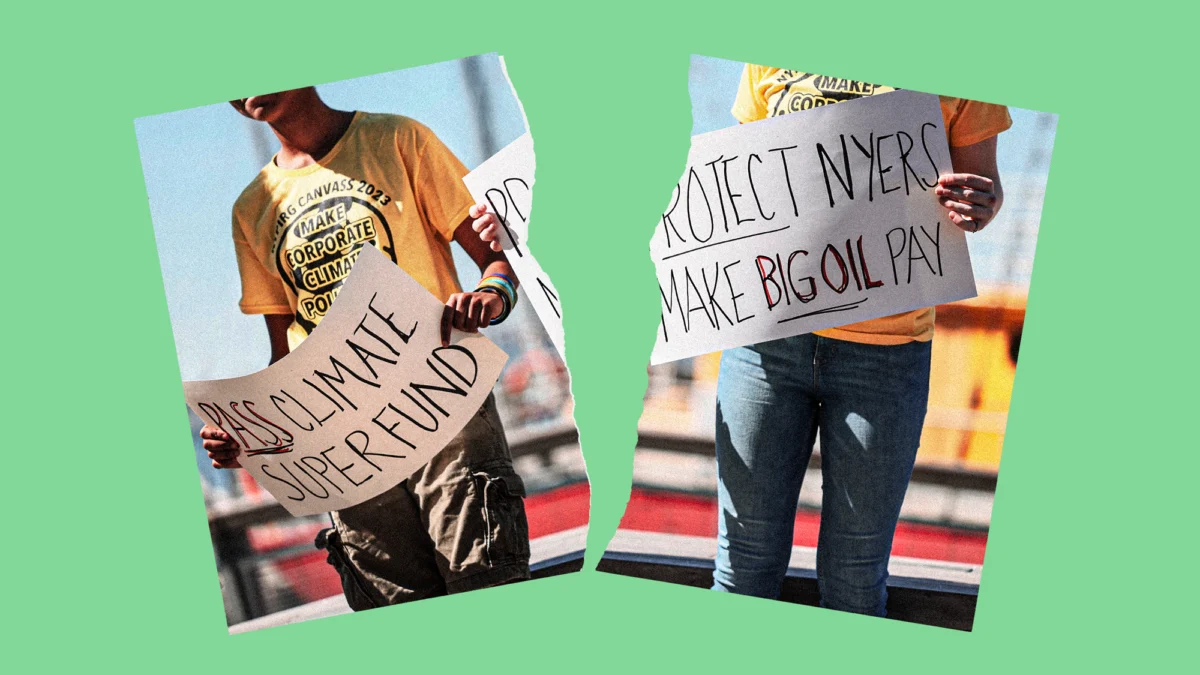
In a significant legal blow to the burgeoning state-led climate accountability movement, a federal judge has effectively dismantled New York’s ambitious Climate Change Superfund Act. The ruling, issued by U.S. District Judge P. Kevin Castel during the state’s annual Climate Week, serves as a major victory for the Trump administration and the fossil fuel industry, setting a precarious precedent for a wave of similar legislation sweeping across the United States.
At the heart of this confrontation is a fundamental question of jurisdiction and fiscal responsibility: As climate-related disasters grow in frequency and intensity, who should foot the bill for the resulting infrastructure destruction—the taxpayers, or the multi-billion-dollar corporations whose historical emissions have been scientifically linked to these events?
The Rise and Fall of the New York Statute
Enacted in 2024, New York’s climate superfund legislation was designed to be a landmark effort to bypass federal inaction on carbon regulation. Modeled after the federal Superfund program established in the 1980s to clean up toxic waste sites, the New York law sought to impose a $75 billion assessment on fossil fuel companies over 25 years. These funds were earmarked specifically for climate adaptation, infrastructure hardening, and public health initiatives necessitated by a warming planet.
However, the legal architecture of the bill proved vulnerable. Judge Castel ruled that the statute was preempted by the federal Clean Air Act and that it impermissibly interfered with the federal government’s exclusive authority to conduct foreign affairs. This decision follows a near-identical ruling by Judge Brenda Sannes in a parallel lawsuit brought by a coalition of Republican-led states, industry groups, and fossil fuel giants.
For the fossil fuel industry, these rulings are a strategic triumph. They provide a clear legal roadmap for challenging similar “polluter pays” laws elsewhere, potentially insulating corporations from state-level liability for climate-driven damages.
Chronology of a Regulatory Conflict
- 2023: New York lawmakers introduce the Climate Change Superfund Act, sparking a national conversation on state-level corporate accountability.
- May 2024: Vermont passes its own version of a climate superfund law, further emboldening activists in other states.
- Early 2025: The U.S. Department of Justice (DOJ) files motions for summary judgment, signaling a coordinated federal effort to block state-level climate litigation.
- September 2026: Judge Brenda Sannes rules against the validity of similar state efforts.
- Late September 2026: During New York’s Climate Week, Judge P. Kevin Castel strikes down the New York law, citing federal preemption.
- Upcoming (Late 2026): The U.S. Supreme Court is scheduled to hear Suncor v. Boulder, a case that may set the tone for all future climate liability litigation.
Supporting Data: The Cost of Inaction
The urgency behind these bills is rooted in staggering economic data. According to data previously maintained by NOAA’s “Billion-Dollar Weather and Climate Disasters” database—a project now managed by Climate Central after the Trump administration discontinued the federal version—the United States has seen a relentless increase in extreme weather events.
In Minnesota, for example, the state experienced 62 confirmed weather or climate disasters exceeding $1 billion between 1980 and 2024. Minnesota State Rep. Athena Hollins, a leading advocate for climate legislation, projects that her state could face $20 billion in climate-related costs by 2040—a figure equivalent to roughly one-third of the state’s current annual budget.
"The costs are coming," Hollins noted in an interview. "We have to decide: is it the taxpayers who pay for our broken bridges and flooded homes, or is it the billionaires?"
The data supports the necessity of these funds. From agricultural sector losses due to shifting rainfall patterns to the increased need for grid resiliency against storm surges in coastal states like Connecticut, the "externalities" of the fossil fuel industry are now being internalized by municipal and state governments. A recent study from Brown University’s Climate and Development Lab underscored that this sentiment has deep public support, with voters favoring climate superfund laws at a 3-to-1 ratio in public hearings.
Official Responses and the Federal Stance
The federal government, under the current administration, has taken an aggressively anti-regulatory stance. The Department of Justice has been instrumental in the legal effort to invalidate state laws, arguing that environmental policy is a federal prerogative.
Following Judge Castel’s ruling, DOJ official Adam Gustafson praised the decision, stating, "Both courts hold that the federal government is responsible for setting national policy on global pollution, not states." This position is further underscored by the EPA’s 2025 decision to rescind its own authority to regulate greenhouse gas emissions, creating a "regulatory vacuum" where the federal government neither regulates emissions nor allows states to demand compensation for the resulting damages.
Industry groups, including the American Petroleum Institute and the U.S. Chamber of Commerce, have echoed these arguments, framing the legislation as "state overreach" that threatens the stability of the American energy sector.
Implications for Future Legislation
Despite the legal setbacks, the movement is far from dead. Legislators in Washington, California, Illinois, and Massachusetts have indicated that they intend to move forward with their own versions of the bill.
Lessons from Washington State
Washington State Rep. Shaun Scott views the New York loss as a "silver lining." By analyzing the specific legal "landmines" encountered in New York, Scott and his team are working with climate justice groups like 350Seattle to craft a more resilient legal framework. Their strategy involves leveraging existing state laws—such as the Climate Commitment Act—to build a more defensible case for why these companies should be held liable.
The Vermont Front
Vermont remains a focal point of the struggle. Despite being hit by two consecutive summers of catastrophic flooding, the state is currently defending its law against a lawsuit by the U.S. Chamber of Commerce. State Senator Anne Watson remains defiant, noting that the urgency of the climate crisis in her state makes the legislative push a moral, as well as economic, imperative. "This isn’t going to make us back down," Watson said. "It’s a matter of time before the fossil fuel industry is held accountable."
The Supreme Court Shadow
The most critical development to watch is the upcoming Supreme Court hearing regarding the city of Boulder, Colorado, and its lawsuit against Suncor Energy and ExxonMobil. While the legal theories differ from the "superfund" approach, a broad ruling by the conservative-majority Court could effectively shut down the entire avenue of climate litigation. Experts warn that any language in a Supreme Court decision limiting state power to sue for climate damages would be immediately co-opted by industry lawyers to strike down state superfund statutes across the country.
Conclusion: A High-Stakes Legal Chess Match
The conflict represents a profound tension in American federalism. On one side are states, facing existential threats from extreme weather, attempting to apply the principle of "polluter pays" to the companies that built their wealth on the very fuels driving these crises. On the other side is a federal government and a powerful industrial lobby arguing that such power resides solely in Washington—a city that has, thus far, proven either unable or unwilling to address the crisis at the necessary scale.
For the advocates in state capitals, the New York ruling is a setback, but it has not broken their resolve. As they prepare for the 2027 legislative sessions, the goal is clear: to refine their legal arguments, gather more grassroots support, and force a reckoning that the federal government continues to avoid. The outcome of this struggle will likely determine the fiscal future of American climate adaptation for decades to come.


 Laily UPN
 Lina Hope
 Iffa Jayyana
 Rifan Muazin
 Suro Senen
 Lina Irawan