
 Jia Lissa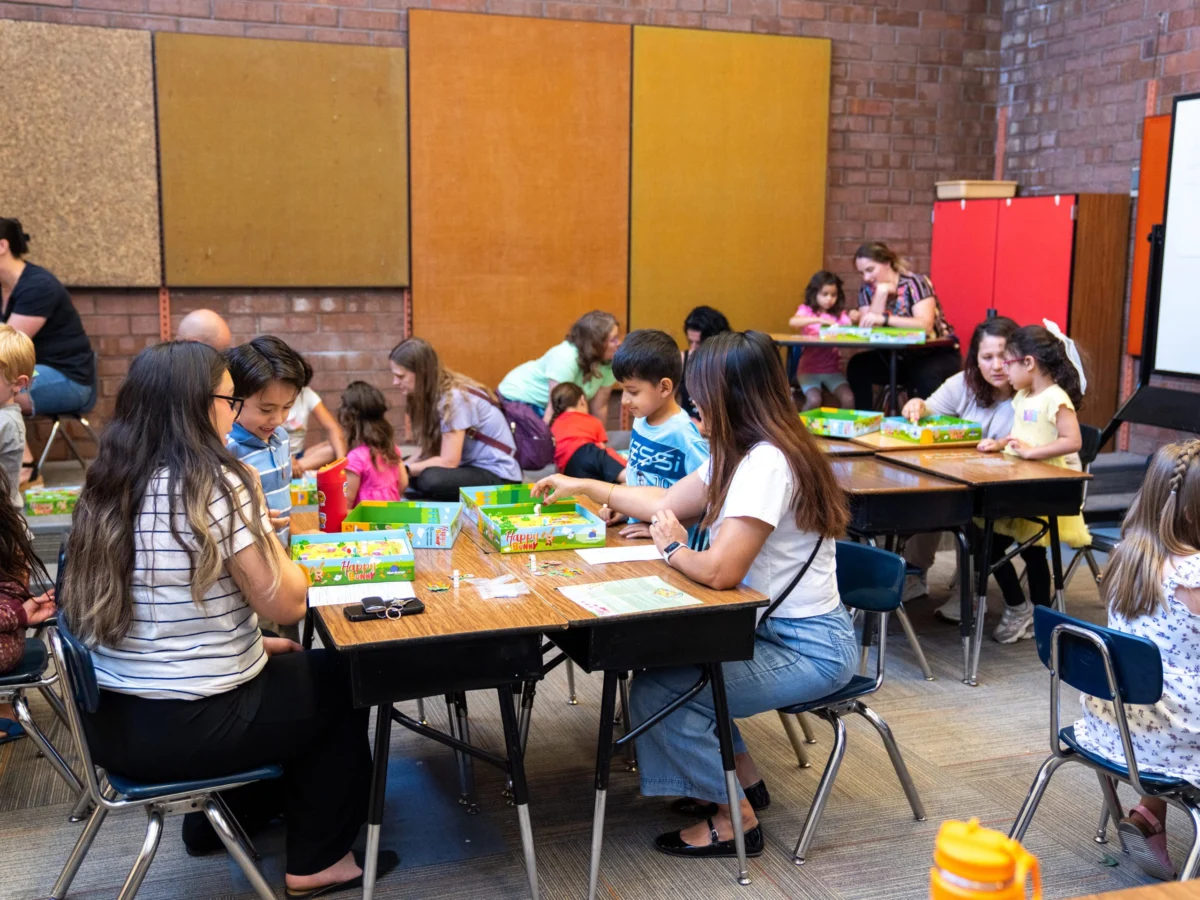
TAYLORSVILLE, Utah — Inside a brightly lit elementary school classroom just south of Salt Lake City, a quiet revolution is taking place. It doesn’t involve high-tech software or expensive curriculum mandates. Instead, it involves 15 parents, a board game called Happy Bunny, and a fundamental shift in how adults perceive their role as their child’s "first teacher."
Clarence Ames, who leads research and implementation for the Utah STEM Action Center, stands at the front of the room. He poses a question that strikes a chord with almost everyone present: “Has anybody here ever heard or said, ‘I’m not a math person’?”
Nearly every hand in the room shoots up. A ripple of nervous laughter confirms the shared sentiment. For these parents, math is often a source of anxiety, a vestige of traumatic childhood experiences or the belief that numeracy is a talent one is born with, rather than a skill one builds. Ames, an "early math evangelist," is here to change that narrative. Through a state-backed initiative known as MILO & Friends, Utah is betting that the key to solving the national math achievement crisis isn’t just better schooling—it’s empowering parents to start the conversation long before the first school bell rings.
The Roots of the "Math Trauma"
The apprehension felt by the parents at Plymouth Elementary is not unique to Utah. Across the United States, parents frequently default to the idea that math is a subject reserved for school hours, best left to trained educators. While society readily embraces the importance of reading to toddlers to boost literacy, the "math talk" equivalent is often neglected.
"When I mention the importance of doing math with their kids, I’m often met with deer-in-the-headlights looks," Ames explains. "Then, those parents end up sharing their math trauma stories with me. Because we all have one, right?"
This hesitation is a significant barrier to early childhood development. Researchers have long argued that math skills are a critical predictor of future academic success, often carrying more weight than literacy when it comes to long-term adult earnings and career trajectory. Yet, despite the stakes, systemic efforts to help parents foster numeracy remain sparse compared to the massive infrastructure supporting early childhood reading.
A National Crisis in Numeracy
The urgency behind the MILO & Friends initiative is underscored by sobering national data. According to the board governing the National Assessment of Educational Progress (NAEP)—often referred to as the "Nation’s Report Card"—the landscape of American mathematics proficiency is dire.
As of late 2025, the achievement gap in math between the highest and lowest-performing students in 12th grade had widened to its largest margin since at least 2005. Performance across all tested grades—fourth, eighth, and 12th—has dipped below 2019 levels. Perhaps most alarmingly, only 33 percent of 12th graders in 2024 were considered academically prepared for entry-level college mathematics, a four-percentage-point decline from five years prior.
For Deborah Stipek, a professor emerita at Stanford University and a leading voice in early math development, these numbers are the inevitable result of neglecting the preschool years. "For anyone who’s serious about trying to reduce the achievement gap, it’s very clear that you need to start before children enter school," Stipek asserts.
Research shows that by the time children enter kindergarten, students from low-income households, as well as many Black and Hispanic students, are already statistically behind in foundational math skills. This early deficit often compounds, making it increasingly difficult for students to catch up as the curriculum grows more complex.

The Genesis of MILO & Friends
Recognizing this, Ames sought a solution that was both accessible and scalable. Five years ago, he began researching public engagement campaigns in states like Washington and collaborated with the Utah Education Policy Center at the University of Utah. The goal was to translate complex academic research into everyday, actionable practices for families.
With limited funding for a massive PR blitz, Ames and his team opted for a grassroots approach. They developed MILO & Friends—an acronym for "Math Introduction and Learning Opportunities"—which officially launched in September 2022. The core philosophy was simple: math is everywhere, and parents don’t need to be mathematicians to teach it.
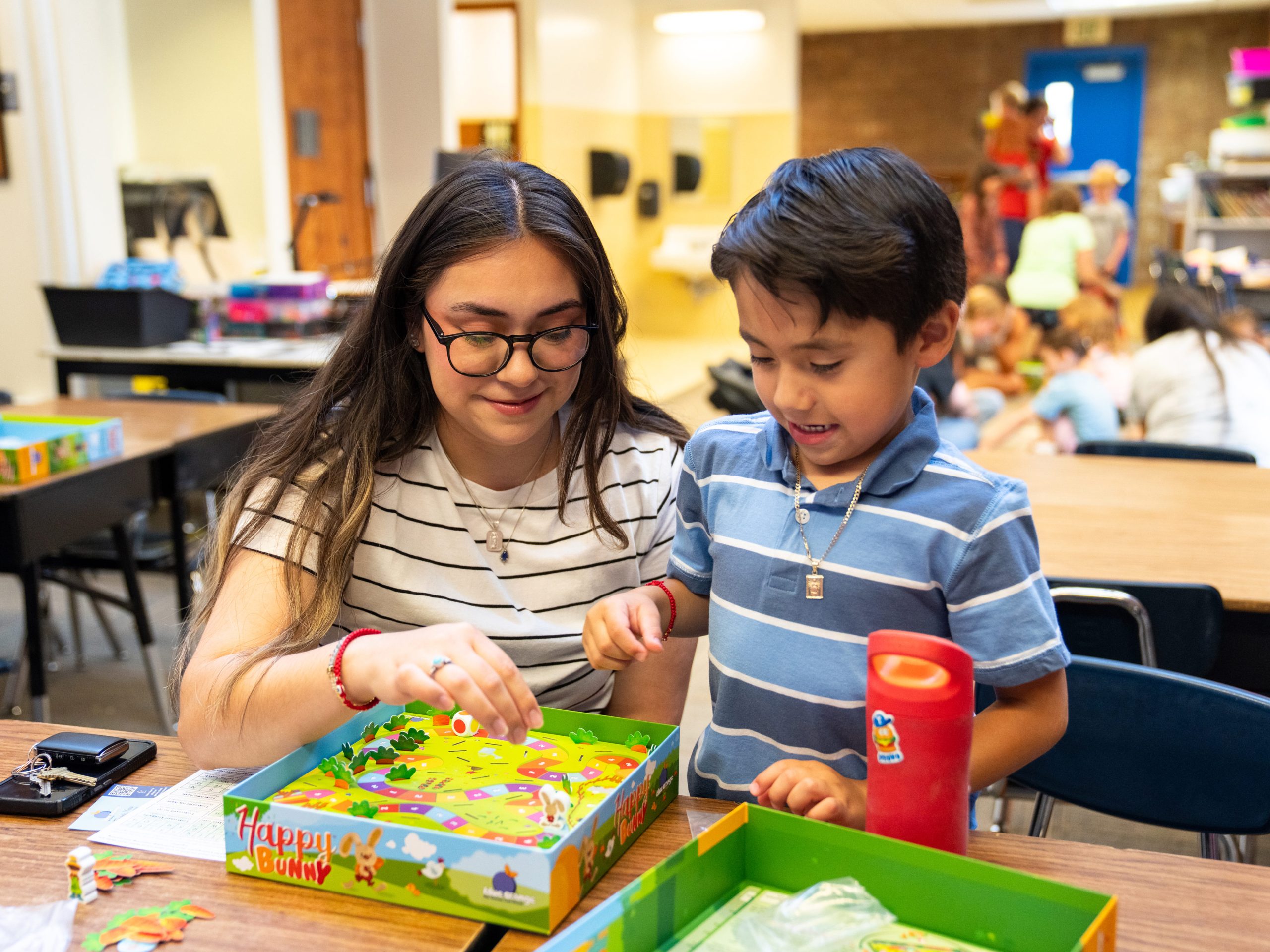
The initiative centers on the use of simple, fun, and mathematically rich board games. After evaluating hundreds of options, the team selected Happy Bunny. The game is designed to be "foolproof," allowing parents to guide their children through basic mathematical concepts without the need for an advanced degree.
How a Board Game Builds Brain Power
At the Plymouth Elementary session, the mechanics of the game are on full display. Happy Bunny involves a race between a rabbit and a farmer. As players move along a board, they land on colored squares that dictate how many carrots they harvest. Some carrots have a "bite" taken out of them, while others are whole.
While it looks like a simple game of chance, it is a sophisticated pedagogical tool. Ames explains the hidden layers of learning:

- Abstraction: Matching the color on the die to the color on the board teaches children to move from concrete objects to abstract symbols.
- Sequencing: Understanding that one must move to the next blue square—not just any blue square—teaches logic and order.
- Symbolic Number Recognition: Learning that the number on a square represents the amount of carrots to pull bridges the gap between digits and quantity.
- Cardinality: Counting the carrots helps children grasp that the final number they reach is the total of the set.
- Set Differentiation: Sorting carrots into "bitten" and "unbitten" piles introduces the foundations of classification and logic.
Katie Bearnson, a mother playing with her sons, 6-year-old Bradley and 5-year-old Bentley, experienced this transition in real-time. "We’ve definitely leaned more toward reading than math because reading’s easy," she admitted. "Math, you have to put a little bit of thought into it to ask questions." After just one session, she felt empowered to weave these inquiries into their daily routine.
Success Stories and Long-Term Impact
The impact of these programs is often seen in personal transformation. Emilia Perez, now a family liaison with the Granite School District, attended one of Ames’s early workshops with her daughter, Emily, three years ago.
Like many parents, Perez lacked confidence in her own math abilities. "I didn’t think of myself as a math person," she said. After the workshop, she began using Happy Bunny and incorporating math talk into walks around the neighborhood, counting street signs and objects. Today, Emily is in first grade and performing well beyond her peers, having already mastered multiplication and division—skills typically reserved for third grade.
"If I’d had this material for my older kids, just even known about it, it would have helped a lot," Perez reflected.
The Broader Landscape of Support
Utah is not entirely alone in this endeavor. California’s PBS SoCal Family Math initiative is perhaps the largest of its kind, offering workshops and resources that have been replicated in at least 12 other states.

While long-term longitudinal studies on these specific programs are still in the early stages, the preliminary results are promising. A 2025 evaluation of the PBS SoCal program showed that parents who participated in workshops reported significantly higher confidence and a more positive emotional connection to mathematics. Similarly, a study by the Utah Education Policy Center found that MILO & Friends sessions improved parental self-efficacy, particularly among Spanish-speaking families and those with lower levels of formal education.
The next phase for the Utah STEM Action Center is even more ambitious: starting next year, they plan to track the kindergarten entry scores of children who have received MILO & Friends materials, partnering with local pediatricians to reach families in diverse settings.
Implications for a Free Society
For those involved in the program, the initiative is about more than just closing the achievement gap or improving test scores. Madeleine Clark, a coordinator for the district’s family engagement program, notes that the sessions serve as a bridge for parent-child bonding. "If a child’s bored and they’re not getting that connection and that eye contact and that conversation from their parent, they usually melt down," she said. The act of sitting down to play a game is, at its heart, an act of emotional and intellectual engagement.
Clarence Ames views the mission through a wider lens. He believes that early math development is intrinsically linked to the health of the republic. By fostering an early love for numbers, reasoning, and critical thinking, the state is cultivating a generation of citizens capable of navigating a complex world.
"I care about living in a free society," Ames said, his voice echoing the stakes of his work. "So selfishly, I want everyone to have these skills."

As the parents at Plymouth Elementary packed up their boards and headed home, they carried more than just a copy of Happy Bunny. They carried the newfound realization that math is not a locked room requiring a key, but an open field they have been walking through all along—one that, with a little encouragement, can be a place of exploration, connection, and growth for their children.

 Sagoh
Sagoh
 Basiran
 Laily UPN
 Iffa Jayyana
 Rifan Muazin
 Suro Senen
 Lina Hope
 Lina Irawan