
 Siti Muinah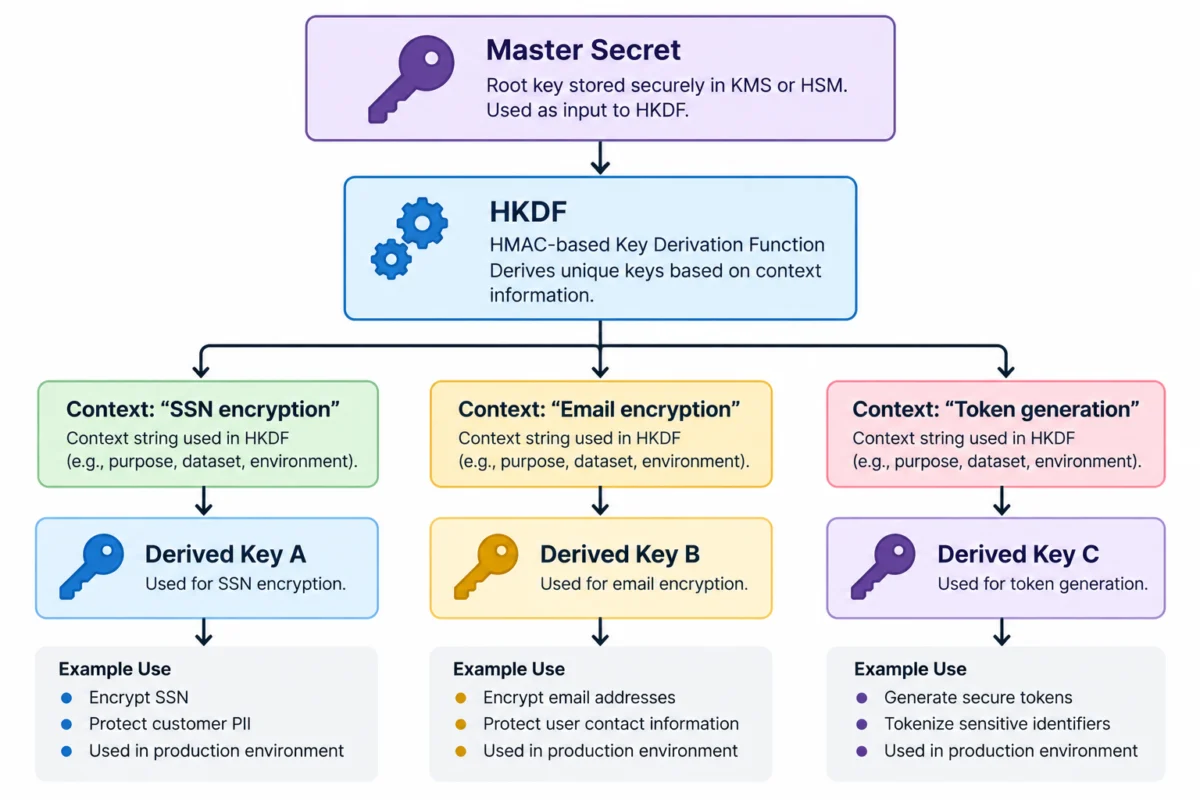
In the modern data-driven enterprise, the ability to collect, process, and analyze information is the lifeblood of business intelligence. However, as organizations like Intuit handle massive volumes of sensitive information—such as TurboTax e-filing data—the imperative to protect Personally Identifiable Information (PII) has moved from a regulatory check-box to a core architectural requirement.
The fundamental conflict facing data engineers today is a paradox: how do you maintain the confidentiality of highly sensitive records like Social Security Numbers (SSNs) while ensuring that downstream analytics teams can still perform essential business operations, such as record identification and exact-match lookups? This article explores the cryptographic strategies, key management frameworks, and architectural patterns required to solve this security-utility dilemma.
The Core Problem: The PII Protection Mandate
At the heart of the issue lies the nature of PII. SSNs, email addresses, and financial records are "high-value" targets for malicious actors. If these are stored in plaintext within a data lake or a relational database, any breach at the storage layer results in catastrophic exposure.
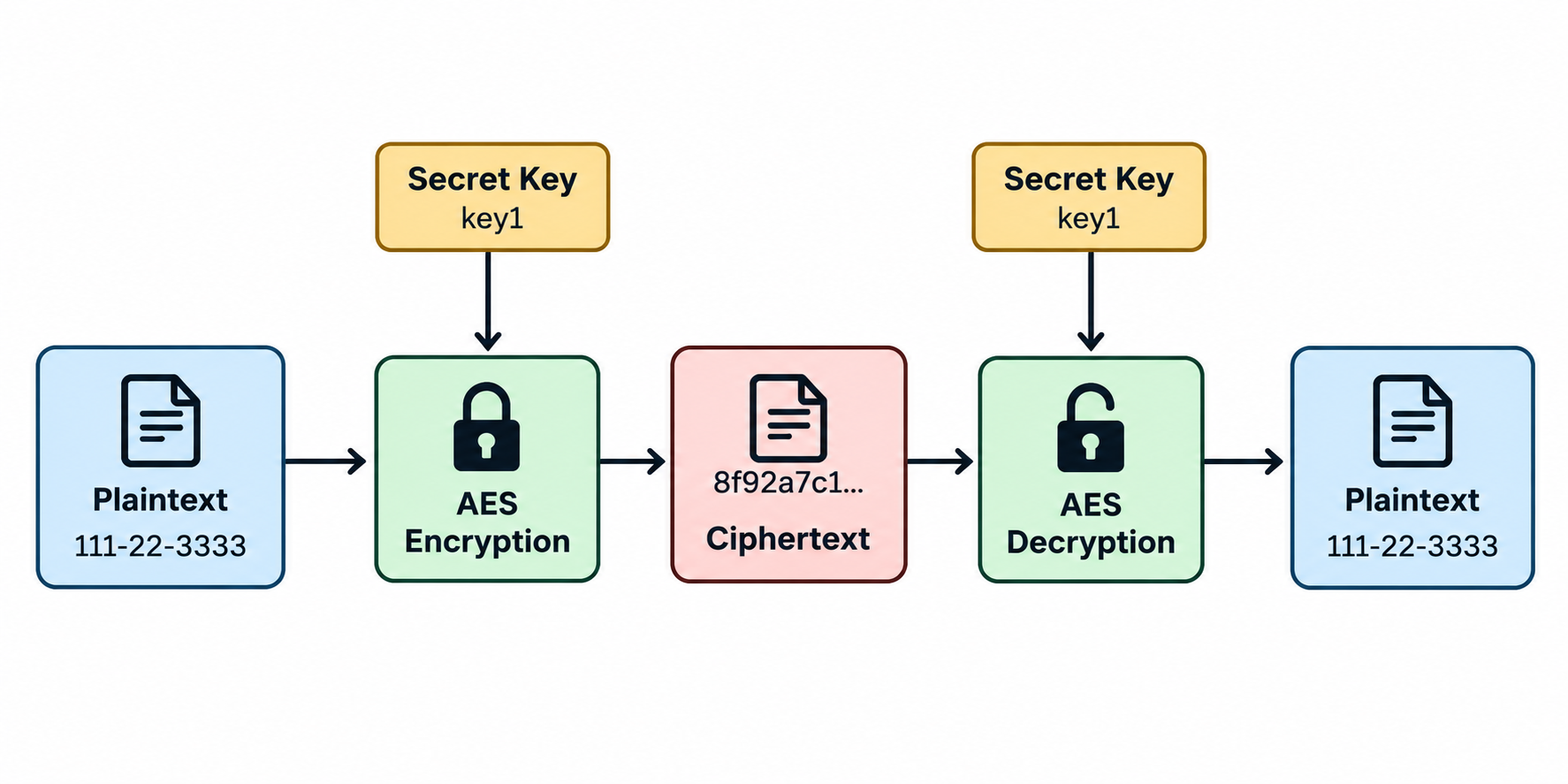
Encryption is the standard defense against such breaches. By transforming plaintext into ciphertext using a cryptographic key, an organization ensures that even if an unauthorized actor gains access to the storage volume, the data remains unintelligible. However, encryption is not a monolithic solution. When you encrypt a field, you change its utility. An application that needs to find all records associated with a specific SSN cannot simply query the database for that number if the number has been transformed into a randomized string of characters. If the application decrypts the entire dataset to perform the search, it negates the security benefits of the encryption.
Cryptographic Fundamentals: AES, Probabilistic, and Deterministic Encryption
To understand the solution, one must first look at the Advanced Encryption Standard (AES), the bedrock of modern symmetric encryption. AES uses a secret key to transform plaintext into ciphertext and the same key to decrypt it. The behavior of this encryption, however, changes based on how the algorithm is implemented.
Probabilistic Encryption: The Gold Standard for Confidentiality
Probabilistic encryption incorporates randomness—often via an initialization vector (IV) or a nonce—into the encryption process. Because of this, encrypting the same SSN twice with the same key will produce two entirely different ciphertext strings.
- Advantages: This provides the highest level of security. An attacker observing the encrypted data cannot determine if two records belong to the same person, as there is no discernible pattern in the ciphertext.
- The Limitation: It breaks searchability. Because "111-22-3333" might become "X8a91…" in one row and "P72k4…" in another, a database query for a specific SSN will return zero results.
Deterministic Encryption: Enabling Searchability
Deterministic encryption is designed to produce the same ciphertext for the same plaintext every time, provided the same key and context are used. This consistency allows analytics platforms to perform WHERE clause operations on encrypted columns.
- The Trade-off: While it enables functionality, it leaks equality patterns. If an attacker sees that a specific ciphertext appears three times in a column, they can infer that those three records belong to the same entity. This makes deterministic encryption a tactical tool rather than a blanket solution, to be used only where the business need for exact-match searching outweighs the risk of pattern leakage.
Key Management and the Hierarchy of Security
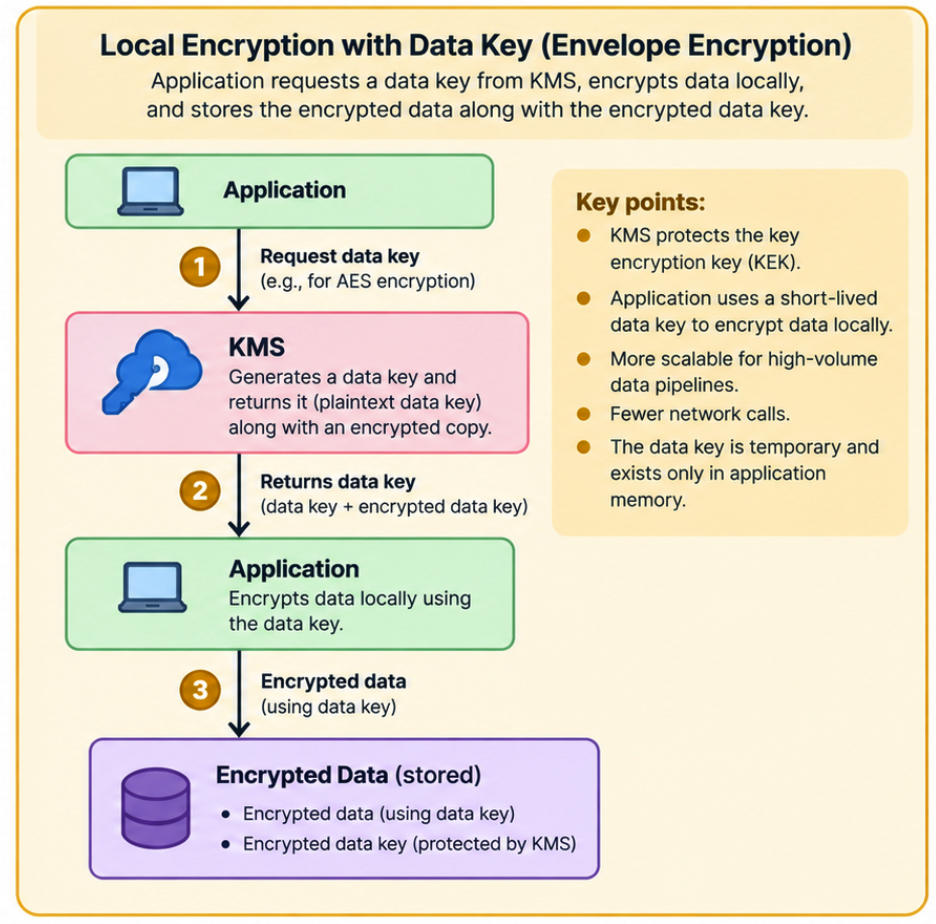
The security of an encrypted pipeline is only as robust as its key management architecture. Storing keys in source code or configuration files is a critical vulnerability. Instead, enterprise-grade pipelines utilize a hierarchy of keys, anchored by a root key managed within a Hardware Security Module (HSM) or a cloud-based Key Management Service (KMS).
Key Separation via HKDF
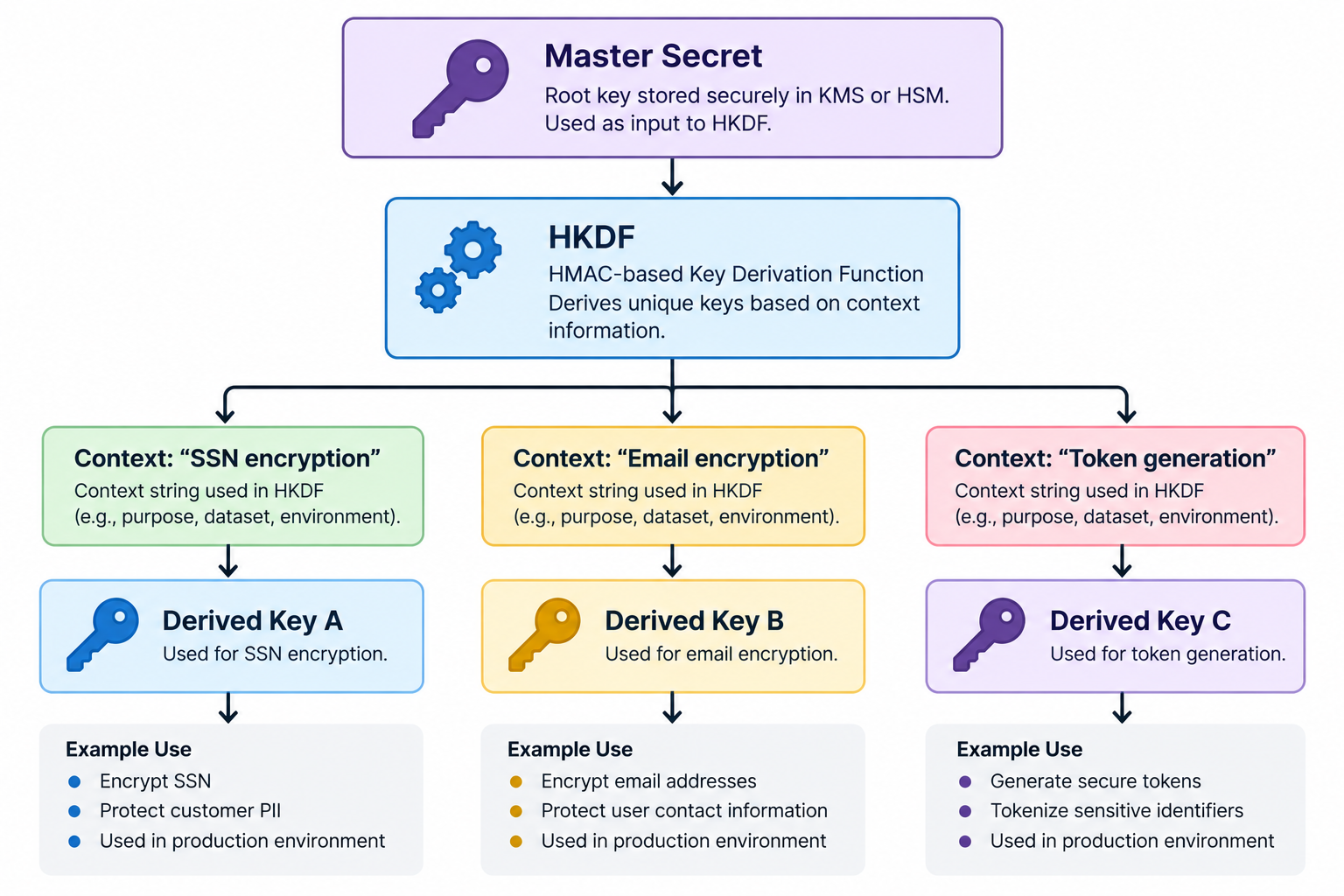
A best practice in high-scale systems is the use of an HMAC-based Key Derivation Function (HKDF). Rather than using one master key for every operation, organizations derive purpose-specific keys.
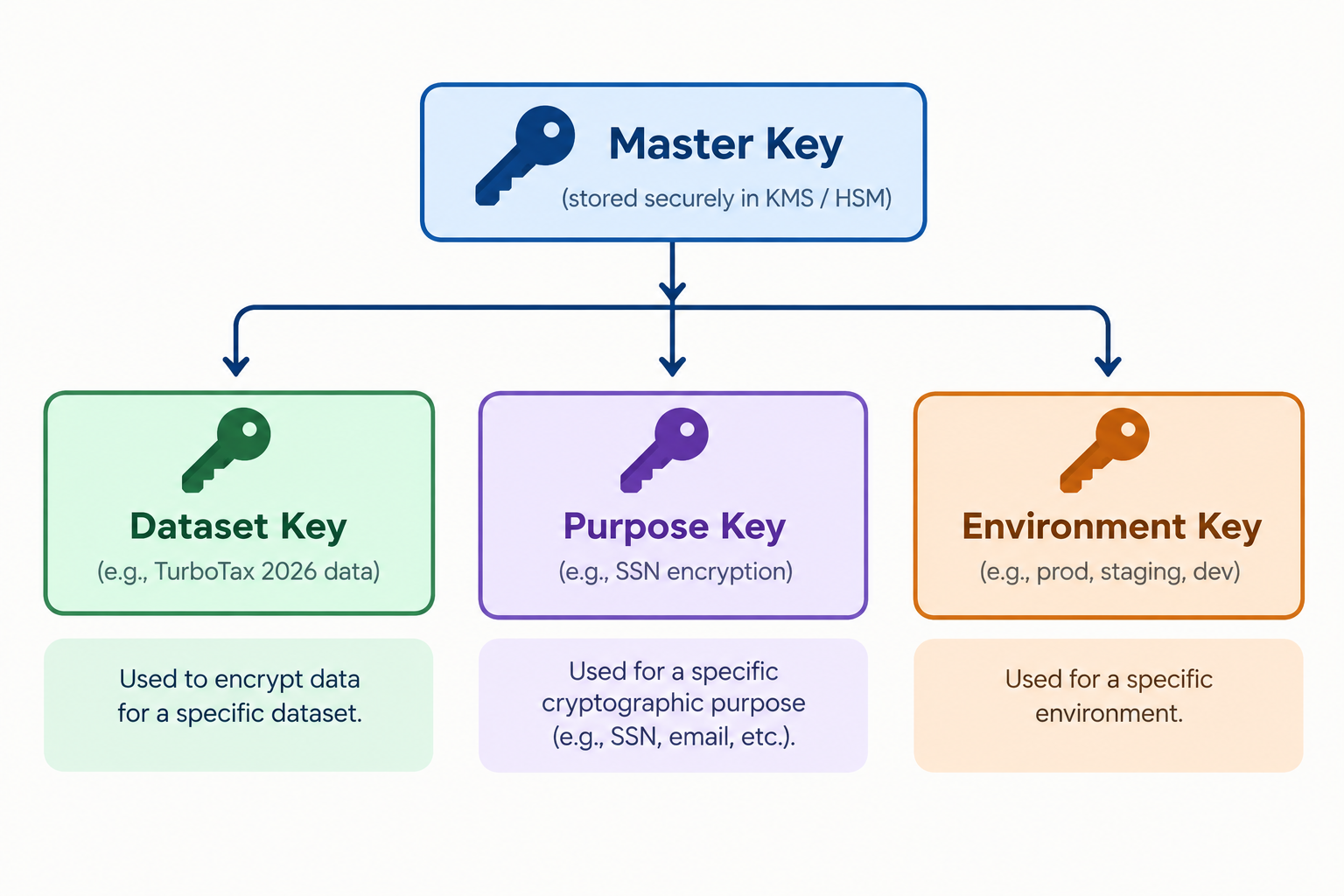
For instance, a master secret can be used to derive a "Production-SSN" key and a "Production-Email" key. Because these keys are cryptographically separated, a breach of one does not automatically expose the other. This ensures that the impact of a compromised key is contained within a specific domain.
Local vs. Remote Cryptographic Operations
The architectural choice between local and remote operations determines the system’s performance profile:
- Local Operations: The application fetches a data-encryption key from the KMS and performs the encryption in memory. This is highly scalable for large-scale batch processing as it minimizes network round-trips.
- Remote Operations: The application sends the plaintext to the KMS, which performs the encryption and returns the ciphertext. This provides superior security and centralized audit trails but introduces latency, making it less ideal for high-volume, real-time pipelines.
Advanced Alternatives: HMAC and Tokenization
When requirements dictate that the original value does not need to be recovered, other methods may be more appropriate than standard encryption.
HMAC: The Non-Reversible Match
An HMAC (Hash-based Message Authentication Code) is a keyed cryptographic hash. Like deterministic encryption, it produces the same output for the same input, allowing for equality matches. Unlike encryption, however, it is not designed to be reversed. This is an ideal property for analytics datasets where you need to perform joins or identify duplicates without ever needing to see the underlying SSN.
Tokenization: The Vault Approach
Tokenization replaces sensitive data with a non-sensitive "token." A secure token vault maintains the mapping between the real data and the token. This decouples the identity from the data lake; downstream systems work exclusively with tokens, and only authorized systems with explicit permission can interact with the vault to "detokenize" a record. This is often the preferred architecture for highly regulated environments like financial services.
Implications: The Path to Secure Pipelines
The implementation of these technologies carries profound implications for data governance. As organizations transition toward these secure architectures, they must navigate several key organizational and technical shifts:
- The Shift to Least Privilege: The ability to query an encrypted column should not grant the user the ability to decrypt it. Modern data platforms must implement granular Role-Based Access Control (RBAC) that separates query permissions from decryption permissions.
- Auditability as a Requirement: Every interaction with a KMS or token vault must be logged. Organizations need to monitor not just who accessed the data, but which keys were used and when.
- Performance Overheads: Security is rarely "free." Deterministic encryption and tokenization require extra processing cycles and storage space for metadata. Engineers must design their pipelines with these overheads in mind, ensuring that security measures do not cause prohibitive latency.
- Lifecycle Management: Keys must be rotated regularly. A robust architecture includes automated key rotation policies that ensure keys are swapped periodically without disrupting the ability to decrypt historical data (by maintaining a history of key versions).
Conclusion: Designing for the Future
Building a secure data pipeline is not a one-time configuration; it is an ongoing architectural process. The goal is to move beyond the binary choice of "encrypt or don’t encrypt." By leveraging a combination of deterministic encryption for searchability, HMACs for non-reversible matching, and tokenization for sensitive identity isolation, engineers can build systems that are both highly secure and highly useful.
As Intuit’s experience highlights, the primary challenge is not the library or the algorithm; it is the thoughtful integration of these tools into the broader ecosystem of data governance. When security is treated as a first-class citizen of the architecture, it becomes possible to extract profound business insights from sensitive data without ever compromising the privacy of the individual behind the record.
Ultimately, the most successful data pipelines are those that view encryption as an enabler of business, rather than a hurdle, ensuring that the trust customers place in an organization is protected by the most advanced cryptographic standards available.


 Rifan Muazin
 Sagoh
Sagoh
 Laily UPN
 Iffa Jayyana
 Suro Senen
 Lina Hope
 Lina Irawan