Lina Hope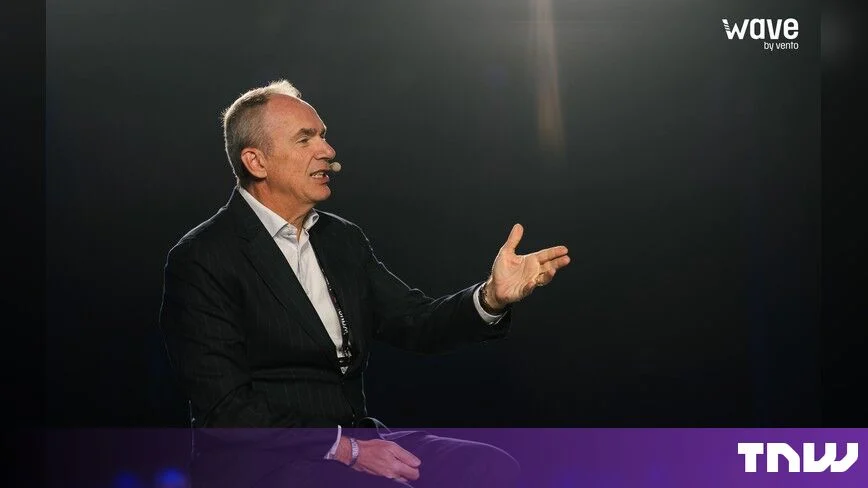
Introduction: The Great European Scaling Challenge
For years, the narrative surrounding European technology has been defined by a persistent, frustrating paradox: a continent that excels at groundbreaking scientific research and early-stage innovation, yet consistently fails to produce the next generation of global tech titans. As startups move from the "garage" phase to the "growth" phase, they have historically found the path of least resistance leads across the Atlantic.
Jean-Christophe Laloux, the incoming Chief Executive of the European Investment Fund (EIF), is on a mission to break this cycle. Speaking at the Wave by Vento conference in Turin, Laloux articulated a vision that moves beyond mere innovation: the survival of Europe’s economic relevance depends on its ability to provide the capital necessary for companies to scale within its own borders. For Laloux, this is not a matter of protectionism, but of fundamental technological and economic sovereignty.
Main Facts: A Shift in Strategy
The EIF, which serves as the venture capital arm of the European Investment Bank (EIB) Group, is repositioning itself to address the "missing middle" of European finance—the gap between Series B and Series C funding.
The core of this strategy is the European Tech Champions Initiative (ETCI). Launched as a fund-of-funds with an initial capital base of approximately €4 billion, the initiative aims to institutionalize a pipeline of growth capital. By backing venture funds that reach the €1 billion threshold, the EIF is empowering European firms to write the "bigger cheques" required to compete with American and Asian venture capital giants.
Laloux’s tenure, beginning January 1, 2025, will focus on expanding this model. He emphasizes that sovereign resilience requires local alternatives in critical sectors: deep tech, cybersecurity, raw materials, and artificial intelligence.
Chronology: From Innovation Hub to Scaling Powerhouse
- 2019–2020: The European tech ecosystem sees a surge in early-stage valuations, but the "scaling gap" becomes increasingly apparent as late-stage funding remains dominated by US-based venture firms.
- July 2024: The EIB Group officially announces the appointment of Jean-Christophe Laloux as the next CEO of the EIF, signaling a strategic pivot toward deepening European capital markets.
- September 2024: Laloux addresses the Wave by Vento conference, outlining a roadmap for the EIF that prioritizes scaling over simple startup volume.
- November 2024 (Forthcoming): The EIF is expected to announce "ETCI 2.0," a secondary phase of the initiative designed to support mid-sized funds and introduce new co-investment platforms for private institutional capital.
Supporting Data: By the Numbers
The data behind the EIF’s strategy reveals a rapidly maturing but still vulnerable ecosystem:
- Growth in Deep Tech: The valuation of the European deep tech sector has surged from roughly €1 trillion to €4 trillion in just five years, outperforming other sectors of the European economy.
- The ETCI Impact: The current iteration of the European Tech Champions Initiative has already backed 12 funds—a three-fold increase in the number of €1 billion-plus venture funds in Europe compared to 2019. These funds currently hold 15 European unicorns in their portfolios.
- Italian Integration: Italy’s contribution of €150 million to the ETCI has catalyzed nearly €600 million in investments across seven Italian startups. Three of these deals involved international syndication, proving that the Italian market is increasingly attractive to global investors.
- AI Gigafactories: The EIB has committed €3 billion specifically toward the development of AI "gigafactories," a move designed to provide the computational infrastructure needed to compete with the likes of OpenAI and Anthropic.
Official Responses and Strategic Vision
Laloux’s philosophy is rooted in the belief that "innovation without scale is a gift to the rest of the world." During his discussion with Ian King of The Times, he clarified that "sovereignty" in the European context should not be conflated with isolationism.
"Sovereignty means offering European alternatives where things really matter," Laloux noted. This implies that while Europe should remain an open market, it must ensure that if a supply chain or a technology platform becomes "critical"—such as cloud security or space-grade propulsion—there is a viable, well-funded European provider available.
Supporting this view, Vittorio Colao, speaking at the same Turin event, reinforced the necessity of a single capital market. Without a unified regulatory and financial framework, European startups are essentially forced to operate across a fractured landscape, complicating their ability to scale compared to their counterparts in the unified markets of the US or China.
Implications: The Four Pillars of European Future
The EIF’s future strategy rests on four distinct pillars. These sectors are identified not just as profitable investment targets, but as essential components of European statecraft:
1. Artificial Intelligence
The EIF is walking a tightrope between regulation and promotion. Laloux argues that Europe cannot afford to be a bystander in the AI revolution. His approach is to avoid both "smothering" the industry with excessive bureaucracy and allowing it to develop without sufficient institutional backing. The €3 billion earmarked for AI infrastructure is a direct attempt to ensure that European developers have the compute power necessary to innovate locally.
2. Security and Defence
In the past year, security and defence have seen the highest growth in valuation among all EIB-backed sectors. As geopolitical instability rises, the EIF is prioritizing cyber resilience and dual-use technologies. The goal is to ensure that European security infrastructure is not reliant on non-European vendors for its backbone.
3. Space and Biotech
The success of companies like Isar Aerospace—which recently successfully launched the Spectrum rocket—serves as a template for what the EIF wants to achieve. By de-risking the capital-intensive early stages of space and biotech through venture debt and equity structuring, the EIF is helping these companies reach the scale needed for international market competition.
4. Cleantech
As Europe moves toward its 2050 climate goals, the EIF is channeling funds into the technologies required for the energy transition. This is perhaps the area where "sovereignty" is most urgent, as energy independence is now inextricably linked to national security.
The Role of Venture Debt
Beyond traditional equity, the EIF is increasingly utilizing "venture debt." This is a critical instrument for startups that are not yet ready for an IPO but have moved beyond the seed round. By providing loans that require no repayment for at least five years—often paired with warrants rather than high interest—the EIF aligns its incentives with the company’s long-term success. This model, combined with the European Innovation Council’s equity funding, creates a comprehensive "toolbox" for early-stage companies to bridge the gap toward institutional maturity.
Conclusion: The Path Forward
The upcoming launch of the second version of the European Tech Champions Initiative in November represents a crucial evolution. By diversifying the fund-of-funds model to include €300 million to €500 million funds, the EIF acknowledges that not every regional ecosystem has the capacity to support a billion-euro vehicle.
Furthermore, the introduction of a platform for institutional and private investors to co-invest alongside the EIF is a masterstroke in capital efficiency. It signals a move away from state-only reliance toward a hybrid model where public funds act as a catalyst for private wealth.
For Jean-Christophe Laloux, the goal is clear: to ensure that the next European breakthrough doesn’t just start in Europe, but stays in Europe. By providing the capital, the scale, and the strategic support necessary to compete globally, the EIF is attempting to transform Europe from an innovation factory into a powerhouse of sustainable, independent, and high-growth enterprise. As the continent faces an increasingly volatile global landscape, this mandate to "scale within" has never been more vital.

 Lina Irawan
 Suro Senen
 Laily UPN
 Iffa Jayyana
 Rifan Muazin