
 Ammar Sabilarrohman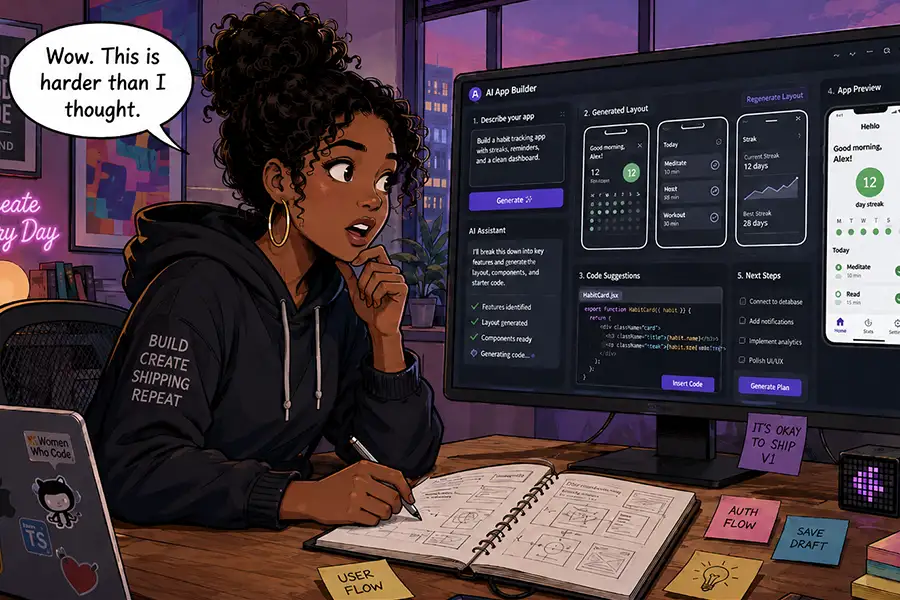
The modern developer is no longer constrained by the limitations of their own typing speed or the depth of their technical library. With the advent of advanced Large Language Models (LLMs) like Claude, GPT-4, and specialized coding assistants, the barrier to entry for complex software development has collapsed. What once required a dedicated team of engineers, designers, and project managers can now be initiated by a single individual with a vision and a high-speed internet connection.
This empowerment has led to a burgeoning trend: the “vibe coding” of SaaS (Software as a Service) replicas. Developers are increasingly tempted to bypass expensive, subscription-locked enterprise tools by building their own tailored alternatives. But as the excitement of rapid prototyping settles, a more complex reality emerges—one where the ease of generation meets the grueling burden of long-term maintenance.
The Rise of the Solo Architect
The allure is undeniable. SaaS subscriptions have become an inescapable tax on business operations, with costs compounding across CRM, accounting, project management, and communication platforms. Beyond the financial drain, many users find themselves trapped in "feature bloat," paying for enterprise-grade complexity while only utilizing a fraction of the available tools.
Proprietary lock-in—the inability to easily export data or modify core functionalities—has become a primary driver for those seeking to reclaim agency over their software stack. AI acts as the great equalizer here, allowing a solo developer to bridge the gap between a conceptual need and a functional codebase. By leveraging AI to write boilerplate code, debug logic, and suggest database schemas, creators are effectively outsourcing the grunt work of development, turning the coding process into a high-level orchestration task.

A Chronology of a DIY SaaS Project
The journey from user to developer often follows a predictable, yet treacherous, path. For one developer who recently transitioned from a legacy accounting tool to a self-built WordPress-based CRM, the process unfolded in three distinct phases:
Phase 1: The Honeymoon of Rapid Prototyping
The project began with an intense burst of productivity. By utilizing AI as an on-demand consultant, the developer was able to scaffold a functional prototype within 60 minutes. The excitement of seeing a custom-built interface—one designed specifically for their workflow—is a potent motivator. During this stage, the AI excels, handling the heavy lifting of SQL queries, PHP logic, and frontend styling.
Phase 2: The Reality Gap
As the prototype moved toward a Minimum Viable Product (MVP), the limitations of AI-generated code began to surface. While the code was functional, it lacked the "nuance of intent." Simple tasks like handling edge-case billing cycles, differentiating between hourly and project-based labor, or managing data migrations from legacy systems required significant manual intervention. The developer quickly realized that while AI can write code, it cannot act as a product manager. It lacks the subjective experience required to balance user interface efficiency with complex backend logic.
Phase 3: The Maintenance Debt
Once the tool was "finished," the true challenge began. The software wasn’t just a static object; it was a living system. Every time an API integration (such as a payment gateway like Stripe) updated, the developer had to act as the lead engineer to ensure compatibility. The realization set in that by "building it yourself," you are effectively signing up for a permanent role as a system administrator and security lead.

Supporting Data and the Cost of Complexity
While there is no official industry-wide statistic on the failure rate of DIY SaaS replicas, anecdotal evidence from the developer community suggests a high churn rate for these side projects.
- Infrastructure Overhead: A survey of independent developers indicates that as an app grows from a local tool to a multi-user environment, infrastructure costs—previously hidden by SaaS providers—begin to mount. Server maintenance, database backups, and security patching are costs that SaaS companies distribute across thousands of users; the solo dev must shoulder them alone.
- The API Fragility Factor: Modern SaaS products are rarely monolithic; they rely on a web of APIs. The more a developer integrates third-party tools to mimic the functionality of platforms like HubSpot or Asana, the more points of failure they introduce into their ecosystem.
- Security Responsibilities: When using a third-party SaaS, the provider assumes the liability for data breaches and compliance (e.g., GDPR, CCPA). When you build your own replica, you become the primary custodian of user data. The burden of ensuring that your custom CRM is hardened against SQL injection or XSS (Cross-Site Scripting) attacks is a massive, ongoing responsibility.
Perspectives from the Industry
Industry experts remain divided on the "vibe coding" movement. On one hand, advocates argue that this is the natural evolution of software development, where the focus shifts from writing syntax to defining business logic.
"The best way to learn the architecture of a complex system is to attempt to replicate it," notes one veteran software architect. "However, there is a fundamental difference between building software for the sake of learning and building software for the sake of business continuity. The former is a win regardless of the outcome; the latter is a high-stakes gamble."
Conversely, critics point to the "hidden costs of convenience." They argue that AI-generated code is often "brittle"—it works perfectly in a vacuum but fails when subjected to the chaotic, unpredictable environment of real-world usage. Professional SaaS companies invest millions in QA (Quality Assurance) and UX testing, a level of rigor that is difficult for a solo creator to replicate regardless of how many prompts they feed into an AI model.

The Implications of the "DIY" Shift
What does this mean for the future of the software economy?
- The Death of the "Generic" Tool: As it becomes easier to build custom, bespoke solutions, generic enterprise software may see a decline in adoption among smaller businesses. If a company can build a tool that does exactly what it needs for a fraction of the cost, they will likely choose that over a bloated, expensive competitor.
- The Rise of the "Micro-SaaS" Economy: We are likely to see a proliferation of highly specialized, niche plugins and apps that solve single, specific problems better than general-purpose giants.
- A Shift in Developer Skillsets: The role of the developer is evolving. Future software engineers will be less concerned with writing low-level code and more focused on "system orchestration"—knowing how to connect AI-generated modules, manage security, and design sustainable, long-term architecture.
Final Considerations: Should You Build It?
Before committing to the path of building a SaaS replica, it is essential to conduct a personal audit. Ask yourself:
- Is this a hobby or a mission-critical dependency? If it is the latter, you must be prepared to treat your project like a full-time job.
- Are you prepared for the "Day 2" problems? Coding the MVP is "Day 1." "Day 2" is when the bugs appear, the server crashes, and the third-party APIs update. Are you prepared to troubleshoot those issues?
- What is the opportunity cost? The time spent building and maintaining your custom tool is time not spent on your core business goals.
Ultimately, AI is a powerful force-multiplier, but it is not a substitute for the institutional knowledge, security infrastructure, and professional product design that define successful SaaS platforms. You can, indeed, build your own version of a favorite app—but you must decide if you are ready to inherit the responsibilities that come with being the manufacturer. Building is easy; maintaining is the true test of your ambition.


 Reynand Wu
 Iffa Jayyana
 Laily UPN

 Rifan Muazin
 Suro Senen
 Lina Hope
 Lina Irawan