
 Raul Delapena Setiawan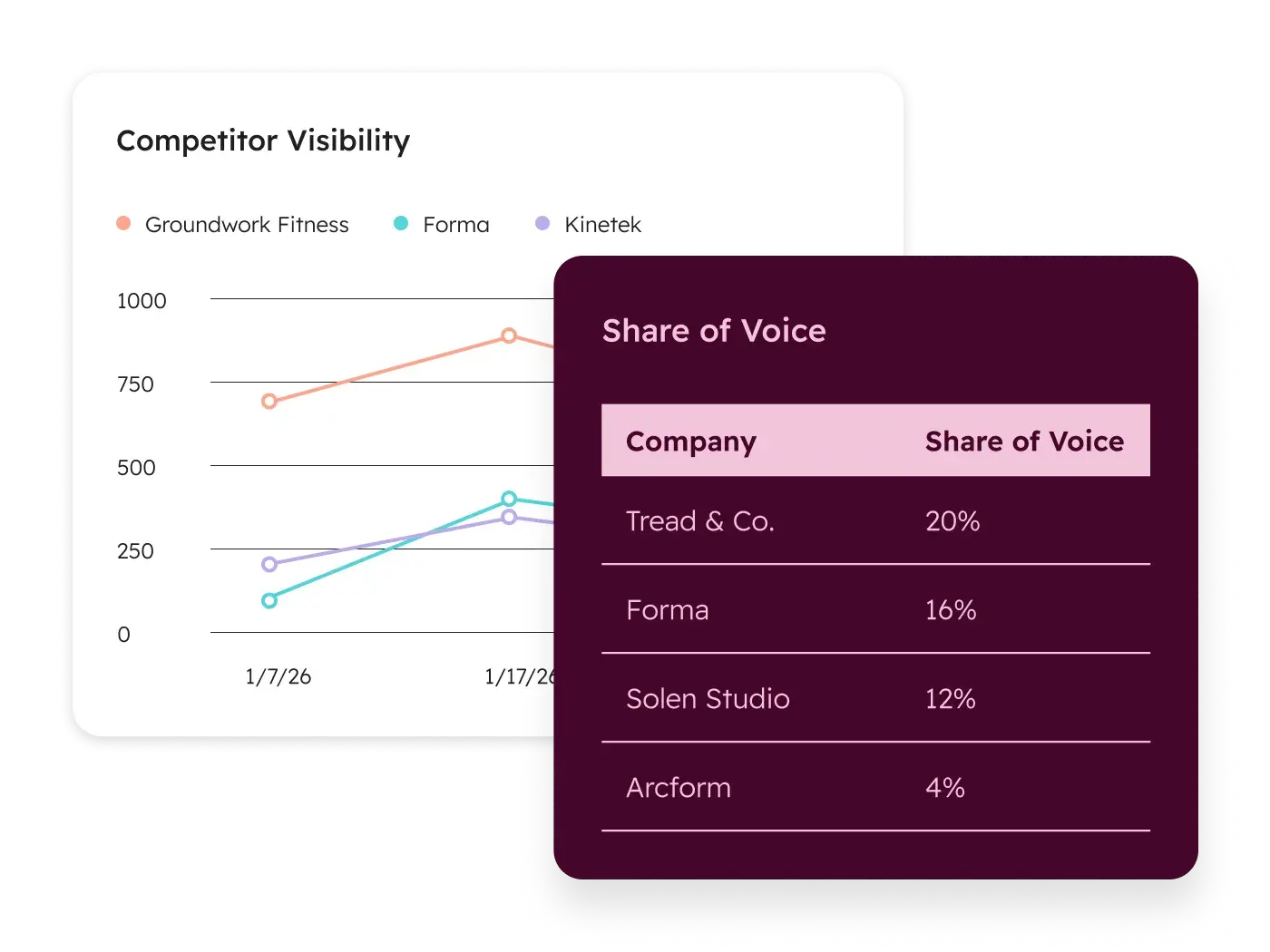
For decades, the marketing playbook for driving customer acquisition has remained remarkably consistent. CMOs and demand generation leads focused their budgets on a predictable mix: paid search, content marketing, industry events, and email nurture campaigns. These channels offered well-understood benchmarks, reliable customer acquisition cost (CAC) ranges, and a clear path to attribution.
However, a fundamental shift is currently disrupting this traditional framework. The rise of generative AI-powered search—often referred to as "answer engines"—is changing the way potential buyers discover solutions. Today, the most high-intent buyers are bypassing traditional search results and websites, turning instead to platforms like Perplexity, ChatGPT, Gemini, and AI-enhanced search features to gather information. This evolution marks the transition from Search Engine Optimization (SEO) to Answer Engine Optimization (AEO), a shift that promises to redefine how brands are discovered, vetted, and selected.
Main Facts: The New Reality of Buyer Discovery
In the traditional search paradigm, a user would type a query, click through a list of blue links, and visit various websites to synthesize information. In the era of answer engines, that friction is removed. Buyers now receive a concise, AI-generated summary that frames the problem and provides a curated list of credible vendors before they ever reach a brand’s landing page.
This creates a "winner-takes-all" dynamic. If a brand is not featured as a primary solution within that initial AI-generated response, they are effectively invisible to that buyer during the most critical stage of the decision-making process. Marketing leaders are realizing that their established metrics—once the bedrock of their annual planning—are increasingly decoupled from the reality of how their target audience is researching.
Chronology: The Evolution of Search
To understand the urgency of AEO, one must look at the rapid timeline of search evolution:

- 2000–2010 (The Era of Keywords): Search was driven by direct matching. Ranking was a matter of keyword density, metadata, and backlink volume.
- 2010–2022 (The Era of Intent and Content): Google shifted toward semantic search. Brands competed by creating high-quality, comprehensive content that answered user questions directly on their own web properties.
- 2023–Present (The Era of Synthesis): The introduction of large language models (LLMs) changed the game. Instead of providing a list of links, search engines now provide an answer. This "Zero-Click" future means that the battle for attention is no longer about getting a user to click a link; it is about ensuring your brand is the "authoritative voice" cited by the AI.
Supporting Data: The Case for AEO Investment
The transition to AEO is not merely a theoretical shift; it is backed by concrete performance data. As organizations begin to integrate AI-focused visibility metrics into their existing reporting stacks, the impact on the bottom line is becoming clear.
According to internal research from HubSpot, organizations that have proactively adopted AEO strategies are witnessing a significant competitive advantage. Specifically, AEO-focused teams are generating 2.7x more Marketing Qualified Leads (MQLs) compared to those who have yet to prioritize AI visibility.
Furthermore, competitive intelligence data indicates that brands which consistently appear in the top-tier of AI citations for their category-defining prompts see a compounding effect. Once a brand is established as a "default answer" by an AI engine, it becomes exponentially more difficult for competitors to displace them, as the AI continues to reinforce those existing patterns of authority.
The Competitive Intelligence Gap
Despite the clear ROI, most marketing departments currently lack a systematic way to measure their presence in AI answers. In traditional SEO, tools like Ahrefs, SEMrush, or Google Search Console provide a granular view of where a brand stands. In the world of AEO, that infrastructure is still maturing.
Marketing leaders are frequently flying blind. A brand might be dominating traditional Google rankings but remain completely invisible in AI-generated summaries. HubSpot’s AEO tool aims to bridge this gap by offering a Brand Visibility Dashboard. This tool provides:

- Share of Voice: A metric quantifying how often a brand is cited relative to competitors across critical category prompts.
- Visibility Score: A singular, high-level index that allows leadership to track growth or decline in AI authority over time.
- Competitive Benchmarking: A clear look at whether a brand is leading, lagging, or facing a widening gap against their primary rivals.
Building the Business Case for Leadership
For marketing leaders, the challenge lies in the "experimental" label often attached to new channels. When stakeholders view AEO as a speculative project, it is easily deprioritized in favor of channels with "cleaner" ROI stories. To overcome this, leaders must treat AEO not as a separate experiment, but as a core component of their revenue engine.
The business case for AEO investment rests on three pillars:
- Current Baselines: Using data to show exactly where the brand stands today compared to competitors.
- Trajectory: Demonstrating how citation frequency is trending. If a competitor is gaining ground, the "cost of inaction" becomes a powerful argument for budget allocation.
- Revenue Attribution: Connecting AI-referred traffic to specific pipeline metrics.
Implications: The Future of Revenue Operations
The most successful marketing teams are those that refuse to let AEO live in a silo. The goal is to integrate AEO performance into the same CRM and reporting dashboards that leadership already relies on.
When marketers can tag AI-referred contacts and track their movement through the funnel—from the first AI-driven discovery to the eventual closed deal—they change the conversation with the C-suite. They are no longer asking for a budget to "experiment with AI"; they are presenting a business case that demonstrates how AI visibility directly influences pipeline velocity, lead volume, and win rates.
Strategic Recommendations for CMOs:
- Audit Your AI Presence Now: Don’t wait for a drop in organic traffic. Assess your brand’s citation frequency against the top 10 prompts in your category immediately.
- Redefine Your Reporting: Ensure that your CRM tracks the source of discovery. If a buyer mentions they found you through an AI summary, that data point must be captured.
- Bridge the Gap Between SEO and AEO: Do not abandon your existing SEO strategy, but evolve it. Focus on creating high-authority, nuanced content that is "AI-friendly"—content that is easy for LLMs to parse, synthesize, and cite as an authoritative source.
- Prepare for the Board: The "organic pipeline" of three years ago will look very different from the organic pipeline of next year. Establish your measurement frameworks now so that when the board asks why search dynamics have shifted, you can show the data, the strategy, and the results.
Conclusion: The Narrowing Window
The window to secure a dominant position in the AI-driven landscape is closing. As large language models continue to refine their training and retrieval processes, the "default answers" they provide are becoming increasingly sticky. Brands that build their authority today will enjoy a compounding advantage, while those that wait until the market matures will find the cost of entry significantly higher.

Marketing leadership is no longer just about allocating resources between paid, content, and events. It is about understanding that the "Search Engine" is evolving into an "Answer Engine." The brands that succeed in this new era will be the ones that view AEO not as an experimental project, but as a critical, measurable, and essential pillar of their growth strategy.
The data is clear: the buyers have already moved to the answer engines. The only question remaining is whether your brand will be there to greet them.


 Nana Wu
 Suro Senen
 Nila Kartika Wati

 Dwi Wanna
 Muslim

