
 Reynand Wu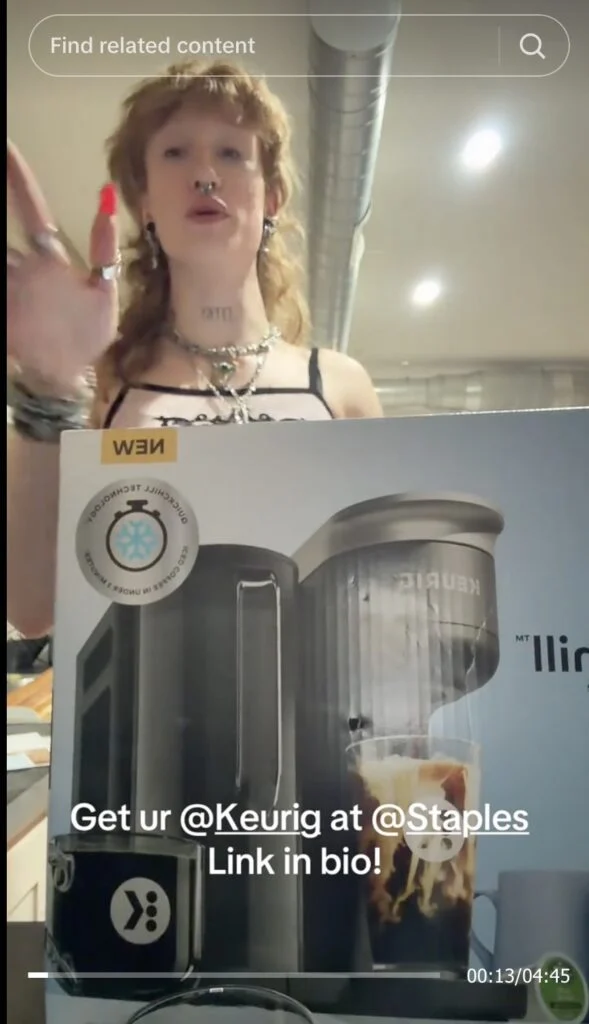
For over a decade, the primary objective of any brand on social media was singular and straightforward: grow the follower count. The logic was an immutable law of digital marketing—more followers meant greater reach; greater reach yielded higher engagement; and higher engagement inevitably paved the path to increased sales. It was a reliable, rinse-and-repeat playbook that defined the social media era.
However, as we move through 2026, that playbook is not just aging; it is effectively obsolete. The rise of algorithmic recommendation feeds has fundamentally restructured how content travels across the digital landscape. Today, a post can accrue thousands, if not millions, of views from individuals who have never clicked the "follow" button. In this new ecosystem, relevance has usurped audience size as the primary driver of digital success.
The Shift from Community to Content Discovery
The modern social feed is no longer a chronological or social graph-based diary of accounts you subscribe to. It is an algorithmic discovery engine. Whether it is Instagram’s Reels tab or TikTok’s "For You" page, the primary mechanism of distribution is now content-to-user matching based on interest.
Data from Sprout Social confirms this tectonic shift: more than 70% of views on modern platforms originate from non-followers at least 60% of the time. When the majority of your audience consists of strangers, the traditional metric of a "follower count" becomes little more than a vanity metric. Indeed, consumer behavior has followed suit; only 17% of users report checking an influencer’s follower count before deciding to engage with their content or follow the account themselves. Trust is no longer signaled by a large number at the top of a profile, but by the resonance of the content appearing on a user’s screen.
Chronology of the Algorithmic Revolution
- The Early Social Era (2010–2016): Brands prioritized "community building." Reach was gated by follower counts, leading to the "follow-gate" era and aggressive acquisition strategies.
- The Rise of Interest Graphs (2017–2022): Platforms like TikTok began prioritizing content quality over social connections. The "For You" page proved that an unknown creator could reach millions instantly if the content was compelling.
- The Integration of Search (2023–2025): Social platforms evolved into search engines, with platforms like Instagram and TikTok aggressively indexing video content to compete with traditional search engines.
- The AI Integration Phase (2026–Present): With AI answer engines like ChatGPT, Claude, and Gemini pulling data from social platforms, discoverability is now a multi-channel necessity that extends far beyond the social app itself.
Supporting Data: The Niche Creator Advantage
The decline of the mega-influencer—or at least the decline of their perceived superiority—is rooted in the shift toward authenticity. Niche creators and micro-influencers are proving that engagement and purchase intent do not scale linearly with follower counts.
According to recent Pulse Survey data, consumers are significantly more likely to purchase based on a recommendation from a niche creator (21%) than from a mega-influencer (15%). This disparity exists because smaller, community-focused creators maintain higher trust levels. When an influencer has a massive, broad audience, their content often feels like a "broadcast megaphone," whereas niche creators produce content that feels personal and vetted.
The expectation of authenticity is also evolving. 80% of consumers believe influencers should actively use the products they promote, with 44% of respondents explicitly stating that an influencer should be a long-term user before signing a sponsorship deal. This "real-world" usage is far easier to verify and sustain with smaller creators who have built their reputation on specific, vertical expertise.
The Rise of the Internal Advocate: Frontline Employees
Perhaps the most surprising trend in 2026 is the surge in interest toward employee-generated content. Audiences have grown weary of the polished, over-produced corporate campaigns delivered by C-suite executives or marketing departments. Instead, they crave the "raw" reality of the frontline.
The phenomenon of the "Staples Baddie"—a retail employee whose TikTok content about the mundane, relatable aspects of her job turned into a national cultural moment—serves as a blueprint for the future. Data indicates that employee-generated content drives product discovery for 40% of consumers, a figure that jumps to 62% among Gen Z.
However, brands must approach this with caution. The "creator economy" is moving into the corporate office. 61% of consumers believe that employees should be compensated for the work of content creation if it falls outside their standard job description. Forward-thinking companies like Gap and Starbucks are already formalizing these programs, providing employees with clear brand guidelines while granting them the creative autonomy to remain authentic.

Tactical SEO: Mastering Social Search (SOSEO)
With social media now functioning as the second most popular search engine across all demographics, the tactical side of discoverability—Social Media SEO (SOSEO)—has become mandatory.
Brands are learning that they must optimize for more than just text. Algorithms now parse spoken audio, on-screen text, and closed captions to determine the relevance of a video. A brand that ignores the importance of keyword-rich captions or misses the opportunity to display relevant text on screen is effectively invisible to the recommendation engine.
Furthermore, this content is no longer ephemeral. Once viewed as a 24-hour cycle, content is now becoming "evergreen." Because Google now pulls "Short Videos" into traditional search results, and AI answer engines index social content to answer user queries, a well-optimized post can generate traffic for months, or even years, after its initial publication.
Implications for the Future of Marketing
The transition from a "follower-first" to a "discoverability-first" model has profound implications for how budgets are allocated and how performance is measured.
1. Re-evaluating Influencer Partnerships
Brands should no longer filter potential partners by follower count. Instead, they must audit for "topic relevance" and "engagement velocity." A partner should be chosen because their specific niche audience overlaps with the brand’s target demographic, not because they offer the largest reach.
2. The Multi-Layered Content Strategy
Content must now be engineered to live in three places simultaneously:
- The Algorithmic Feed: Optimized for retention and interest-based delivery.
- The In-App Search: Optimized with keywords and metadata for user queries.
- The External Web: Optimized for SEO and AEO (Answer Engine Optimization) to appear in Google and AI-generated search results.
3. The Death of the "Polished" Ad
The data is clear: consumers reject the corporate facade. Brands that succeed in 2026 will be those that empower their employees and niche creators to speak honestly. The "polished" look is being replaced by the "authentic" look. The goal is to provide value—be it through entertainment, education, or behind-the-scenes utility—rather than merely broadcasting promotional messaging.
Conclusion: Success in the Post-Follower Era
The era of the "follower" as the ultimate metric of success is over. In its place, we have entered the era of the "discovery engine."
For the modern marketer, the path forward is clear. By prioritizing content that is inherently discoverable, building relationships with niche creators who hold genuine trust, and leveraging the untapped potential of frontline employees, brands can build a sustainable digital presence that is not reliant on the fluctuations of a follower count.
The brands that win in 2026 will be the ones that understand one fundamental truth: an audience that finds you through relevance is always more valuable than an audience you have to "build" through mass acquisition. Discoverability is not just a tactic; it is the new foundation of brand survival. As platforms continue to prioritize user interest over social history, the ability to be found—when and where the user is looking—will define the leaders of the next decade.


 Nana Wu
 Suro Senen
 Nila Kartika Wati
 Raul Delapena Setiawan
 Dwi Wanna
 Muslim

