
 Suro Senen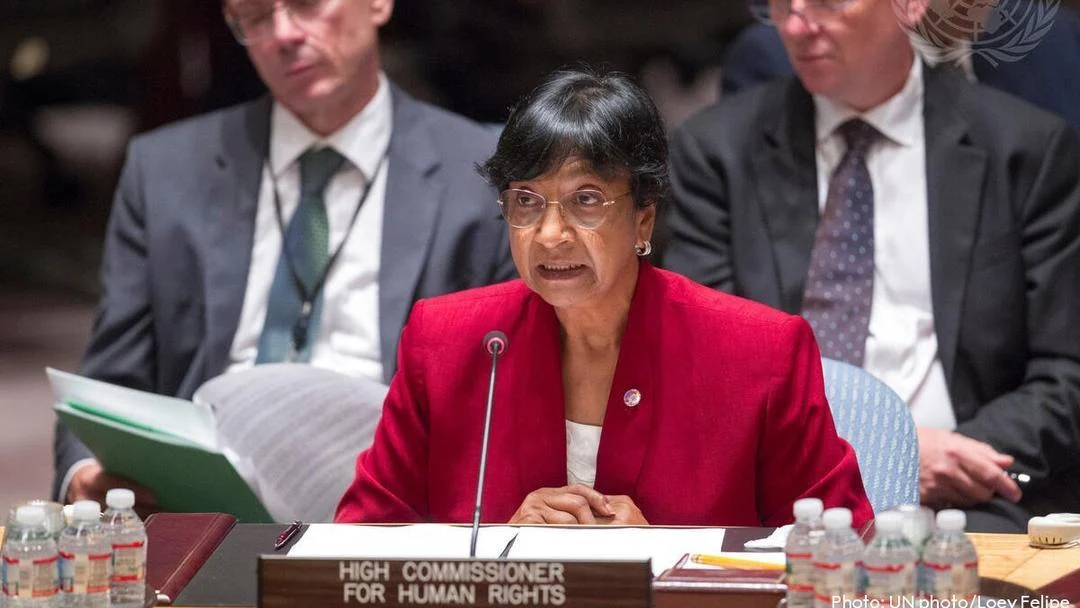
Oslo, Norway – October 10, 2026 – The Norwegian Nobel Committee today officially announced that the prestigious Nobel Peace Prize for 2026 has been awarded to the distinguished South African international judge, Navanethem "Navi" Pillay. The Committee recognized Pillay for her unwavering and profound contributions to the promotion of peace and international law, citing her as a pivotal figure in shaping the global legal landscape.
Born on September 23, 1941, in Durban, South Africa, Pillay’s life and career have been inextricably linked with the struggle for justice, equality, and human rights. From her early days challenging the oppressive apartheid regime to her later roles on the world’s highest judicial and human rights bodies, she has consistently stood at the forefront of efforts to develop and uphold a robust international legal order.
"This Nobel Prize is an acknowledgment of a lifetime dedicated to ensuring accountability and justice for the voiceless," stated Berit Reiss-Andersen, Chair of the Norwegian Nobel Committee, during the announcement. "In a world increasingly fraught with conflict and a growing disregard for established legal norms, Judge Pillay stands as a beacon of hope and a testament to the transformative power of international law. Her tireless advocacy for the rule of law as the cornerstone of peace offers a critical path forward for resolving disputes without violence or coercion."
The Committee’s decision underscores the vital importance of international legal frameworks in an era marked by escalating geopolitical tensions and humanitarian crises. Pillay’s journey from a young lawyer fighting institutionalized racism to an international jurist setting groundbreaking precedents against grave crimes embodies the very principles the Nobel Peace Prize seeks to champion.
A Life Forged in the Crucible of Injustice: Early Years and Anti-Apartheid Activism
Navi Pillay’s path to global recognition began in the racially segregated landscape of apartheid-era South Africa. Born into a Tamil Indian family in Durban, she experienced firsthand the systemic discrimination and injustices enforced by the white minority government from 1948 to the early 1990s. This period was characterized by laws that dictated where people could live, work, and even love, based purely on their racial classification. For non-white communities, education and professional opportunities were severely restricted.
Despite these formidable barriers, Pillay’s intellect and determination shone through. She pursued a legal education, a rare and challenging feat for a woman of color in that era. Upon graduating in 1967, she immediately plunged into the legal profession, establishing her own law firm – a courageous and pioneering move given the prevailing societal norms and professional landscape. Her practice quickly became a sanctuary for activists and dissidents who dared to challenge apartheid. She defended countless individuals, often pro bono, who were arrested, detained, or tortured for their opposition to the regime. Her work during this period was not merely legal representation; it was an act of defiance, directly confronting the state’s power and providing a glimmer of hope to those oppressed.
Pillay’s commitment to justice was further solidified through advanced studies. She pursued a Doctor of Juridical Science (SJD) at Harvard University, graduating in 1988. This academic achievement not only honed her legal expertise but also provided her with a global perspective on human rights and international law, which would prove invaluable in her later career. Returning to South Africa, she continued her advocacy, becoming a leading voice against structural discrimination, segregation, and exclusion as the apartheid system began its slow, painful unraveling.
Her relentless efforts to dismantle the legal foundations of apartheid earned her respect and recognition, paving the way for her historic appointment in 1995 as the first non-white woman judge to the High Court of South Africa. This was a monumental milestone, symbolizing a new chapter for a nation grappling with its past and striving for a more equitable future.
Chronology of a Groundbreaking Career: From National Courts to Global Justice
Navi Pillay’s career trajectory is a testament to her unwavering dedication to justice, marked by a series of groundbreaking appointments that saw her rise from a national advocate to a global arbiter of human rights and international law.
Shaping International Criminal Justice: The ICTR Years (1999-2003)
Just four years after her historic appointment to the South African High Court, Pillay transitioned to the international stage, taking on a role that would profoundly impact the development of international criminal justice. In 1999, she was appointed as a judge to the International Criminal Tribunal for Rwanda (ICTR), established to prosecute those responsible for the 1994 Rwandan genocide. Her tenure at the ICTR was particularly impactful, culminating in her election as President of the Tribunal.
It was during this period that Judge Pillay made some of her most significant contributions to international jurisprudence. With unwavering resolve, she presided over cases that established crucial legal precedents, particularly regarding sexual violence. Her rulings unequivocally affirmed that acts of sexual violence, including rape, could constitute not only war crimes but also crimes against humanity and even genocide, when committed with specific intent. This was a revolutionary interpretation at the time, fundamentally altering how international law viewed and prosecuted gender-based violence in conflict zones. Prior to her work, sexual violence was often dismissed as an ancillary consequence of war, rather than a deliberate tool of conflict and extermination. Pillay’s leadership ensured that victims of such atrocities finally saw their suffering recognized within the highest echelons of international law, holding perpetrators accountable for crimes that had long gone unpunished.
Advancing Universal Jurisdiction: The International Criminal Court (ICC)
Following her impactful service at the ICTR, Pillay’s expertise was sought by another nascent but critical institution: the International Criminal Court (ICC). As a judge at the ICC, she contributed to the establishment and early operations of the world’s first permanent international criminal court with jurisdiction over genocide, crimes against humanity, war crimes, and the crime of aggression. Her experience from the ICTR was instrumental in shaping the ICC’s procedural and substantive law, ensuring a robust framework for prosecuting the most heinous international crimes.
Championing Human Rights Globally: UN High Commissioner (2008-2014)
Perhaps her most visible and influential role came in 2008 when she was appointed as the United Nations High Commissioner for Human Rights, a position she held for six years until 2014. As the UN’s top human rights official, Pillay was tasked with leading the global human rights agenda, advocating for the protection of all fundamental freedoms, and monitoring human rights situations worldwide.
During her tenure, she navigated complex geopolitical landscapes, speaking out against abuses in various countries, from politically motivated detentions to systematic torture and violations of freedom of expression. She played a crucial role in raising awareness about emerging human rights challenges, including the impact of climate change on human rights, the rights of migrants, and the need for greater accountability for economic, social, and cultural rights. Her leadership was characterized by a pragmatic yet principled approach, often requiring delicate diplomacy combined with forceful condemnation of egregious violations. She tirelessly campaigned for the strengthening of human rights institutions and mechanisms, emphasizing the indivisibility and universality of human rights.
Sustained Engagement in International Inquiries and Justice (2019-2025)
Even after concluding her term as High Commissioner, Pillay’s commitment to international justice remained undiminished. Her expertise continued to be in high demand for critical international inquiries and judicial roles.
In 2019, she served as an ad hoc judge at the International Court of Justice (ICJ) in the landmark case brought by The Gambia against Myanmar, alleging the state’s responsibility for genocide against the Rohingya minority. Her involvement in this case underscored her ongoing commitment to addressing mass atrocities and ensuring accountability at the highest international judicial level.
More recently, from 2021 to 2025, Pillay led the UN Independent International Commission of Inquiry on the Occupied Palestinian Territory, including East Jerusalem, and Israel. This high-profile and politically sensitive role involved investigating alleged violations of international human rights law and international humanitarian law, providing crucial, impartial reporting to the Human Rights Council. Her leadership in this commission exemplified her courage to tackle some of the world’s most intractable conflicts, always prioritizing the rights and suffering of civilians.
The Nobel Committee’s Rationale: A Driving Force for International Order
The Norwegian Nobel Committee’s decision to award Navi Pillay the Peace Prize in 2026 is a profound recognition of her multifaceted contributions and the critical relevance of her work in the contemporary global landscape. The Committee emphasized that Pillay has been a "driving force" in the development and strengthening of the international system of law and order.
In its official statement, the Committee highlighted the current fragility of international legal frameworks. "At a time when the number of wars and conflicts is escalating, and international legal institutions are increasingly under political attack, the Committee believes it is vital to acknowledge those who work to ensure that conflicts can be resolved without violence or coercion, through the supremacy of international law," the statement read.
The Nobel Committee explicitly linked Pillay’s tireless efforts to the fundamental prerequisites for global peace. "An international legal system where war criminals are held accountable and victims of abuse see justice served is a prerequisite for a peaceful world," the Nobel Prize organization underscored. This sentiment reflects a growing concern among international observers that the principles of accountability and the rule of law are being eroded by resurgent nationalism, geopolitical rivalries, and a retreat from multilateralism.
Pillay’s career stands in stark contrast to these trends, offering a powerful counter-narrative. Her work has consistently demonstrated that even in the face of immense political pressure and deeply entrenched injustices, international law can provide a pathway to redress, reconciliation, and ultimately, peace. Her legal breakthroughs, particularly at the ICTR, have ensured that perpetrators of sexual violence and those who incite hatred through propaganda cannot escape justice, thereby strengthening the deterrent effect of international law. By championing the rights of the most vulnerable and insisting on accountability for the most powerful, she has reinforced the credibility and moral authority of the international legal order.
Official Responses and Humble Acceptance
The news of the Nobel Peace Prize sent ripples of congratulation across the globe, but for Navi Pillay herself, the announcement came as a profound surprise, delivered in a uniquely fitting setting.
Pillay recounted hearing the news while attending a session at the Nuremberg Principles Academy International, listening to a panel discussion on justice and reparations. In the midst of the proceedings, Christoph Safferling, the Academy’s Director, approached her with a serious expression, conveying the momentous news.
"They all saw it in the media first, so I looked at him in disbelief," Pillay explained, describing the surreal moment. "Gradually I started getting all the notifications and watching the announcement. So, then I began to believe. I was truly shocked and very, very honored and touched."
Her initial reaction, captured and shared by news outlets like Al Jazeera on social media, quickly went viral. As she emerged from the session, she was met with a spontaneous and thunderous round of applause from attendees. With characteristic humility and a touch of wit, Pillay responded to the ovation:
"Thank you very much, thank you very much," she said, a smile gracing her face. "If you applaud a little bit more, maybe I will share this prize with Trump [referring to former US President Donald Trump]." The playful jibe, delivered with good humor, elicited laughter and further applause, showcasing her ability to connect with an audience even in a moment of overwhelming personal triumph.
Pillay further elaborated on the significance of the public’s appreciation. "That appreciation, that clapping, means a lot to me," she stated. "You don’t deserve an award if the public doesn’t agree." She expressed her belief that the warm reception she received indicated public consensus regarding her worthiness of the Nobel Peace Prize 2026. "So that’s how I appreciate your applause today, thank you very much. But, as a lawyer and a judge, I still want to verify this information," she concluded with another lighthearted remark, underscoring her commitment to fact and evidence even in the face of such an extraordinary honor.
Implications for International Law and Global Peace
Navi Pillay’s receipt of the 2026 Nobel Peace Prize carries profound implications for the future of international law, human rights, and the pursuit of global peace.
Firstly, the award serves as a powerful validation of the international legal system itself. In an era where multilateralism is challenged and international institutions are often undermined, the Nobel Committee’s choice reaffirms the indispensable role of law in fostering stability and resolving conflict. It sends a clear message that adherence to international humanitarian law and human rights principles is not merely an ideal, but a practical necessity for preventing atrocities and building sustainable peace.
Secondly, the prize highlights the enduring relevance of accountability. Pillay’s career has been a relentless pursuit of justice for victims of the most egregious crimes. By recognizing her work, the Nobel Committee emphasizes that impunity for war crimes, crimes against humanity, and genocide is unacceptable. This recognition will bolster the efforts of international courts and tribunals, encouraging states to cooperate in prosecuting perpetrators and strengthening mechanisms for victim redress.
Thirdly, Pillay’s personal journey offers a beacon of inspiration. Her rise from an oppressed background under apartheid to a global champion of justice demonstrates the transformative power of individual commitment and perseverance. She serves as a role model for aspiring lawyers, human rights defenders, and all those who believe in the possibility of a more just world. Her story is a powerful reminder that change is possible, even in the face of seemingly insurmountable obstacles.
Finally, the award underscores the interconnectedness of peace and justice. As Pillay herself has often articulated, there can be no lasting peace without justice. By bringing perpetrators to justice and upholding the rights of the vulnerable, societies can begin the difficult process of healing and reconciliation, thereby laying the groundwork for a more stable and peaceful future. The Nobel Committee’s choice of Navi Pillay is not merely an acknowledgment of past achievements, but a call to action, urging the international community to redouble its efforts in upholding the rule of law and ensuring human dignity for all. Her legacy will undoubtedly continue to inspire generations to come, guiding the world towards a future where peace is not just an aspiration, but a reality built on the bedrock of justice.


 Nila Kartika Wati

 Laily UPN
 Iffa Jayyana
 Rifan Muazin

 Lina Hope
 Lina Irawan