
 Reynand Wu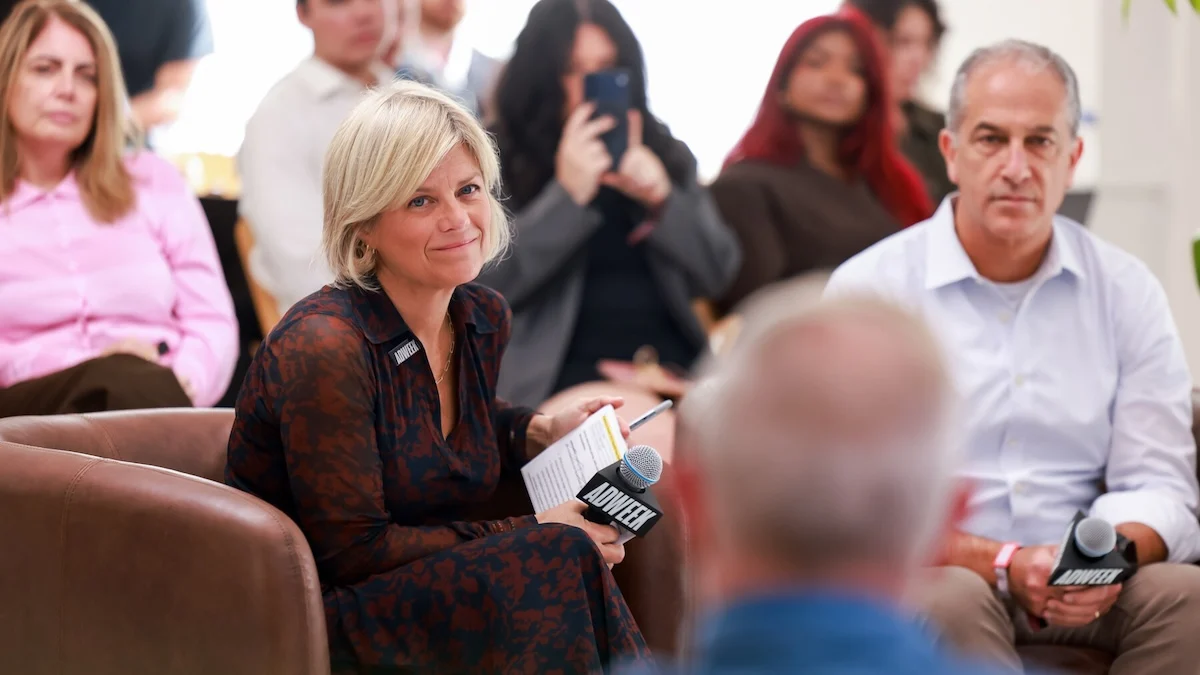
This article was created in partnership with Publicis Health
The modern healthcare journey no longer begins in the sterile, fluorescent-lit office of a primary care physician. Instead, it often initiates with a subtle haptic vibration from a smartwatch, a late-night scroll through TikTok, or a pointed query typed into an generative AI chatbot. This fundamental shift in how consumers interact with their well-being has dismantled the traditional linear model of medical care, creating a complex, multi-channel ecosystem that presents both significant opportunities and profound challenges for healthcare marketers.
During a recent ADWEEK House Advertising HQ group chat co-hosted with Publicis Health, industry leaders convened to discuss how the convergence of artificial intelligence, high-fidelity data, creative strategy, and shifting cultural norms is rewriting the rules of patient engagement.
The Decentralization of Health: A New Chronology of Care
The traditional patient journey was once defined by a clear chronology: symptom onset, clinical visit, diagnosis, and treatment. Today, that timeline is fragmented and fluid.
The First Signal
The conversation among industry experts opened with a foundational question: Where do we turn when we first suspect something is wrong? The answers revealed a dramatic departure from the past. Peter Scherr, CMO of Noom, shared a personal anecdote that perfectly encapsulates this new reality. His father’s Apple Watch detected a heart anomaly, providing data that served as the primary catalyst for his medical investigation.

"He consulted the device before his doctor," Scherr noted. "It drove home the point that health is everywhere." This is the "first signal" era, where wearable technology acts as the initial diagnostic checkpoint, often predating any formal clinical interaction.
The Rise of the "Always-On" Consumer
Following the first signal, the modern patient enters a cycle of continuous discovery. Unlike the passive patients of the 20th century, today’s consumers are hyper-informed and perpetually connected. However, this empowerment comes at a cost: complexity. Matt McNally, global CEO of Publicis Health, observed that while people have more tools than ever to manage their health, the navigation of that information has become exhausting. "With the tools we have now, it’s our job to help people navigate the healthcare journey," McNally explained.
The industry is currently in a state of transition, moving from a model of "providing information" to one of "curating clarity."
The Data Deluge: Distinguishing Signal from Noise
As health data proliferates—pulled from blood glucose monitors, sleep trackers, genetic testing kits, and AI-driven health apps—the primary pain point for the consumer is no longer a lack of information, but an excess of it.
The Paradox of Choice
Peter Scherr highlighted the mounting tension between the abundance of data and the scarcity of actionable wisdom. "There’s a lot of data masquerading as answers," he warned. "It’s very overwhelming." This sentiment is shared by many, as patients attempt to synthesize disparate data points from wearables, apps, and lab results, often arriving at incorrect conclusions or heightened anxiety.

The Responsibility of Guidance
For marketers, this creates a dual mandate: providing the necessary evidence to support health decisions while maintaining the emotional intelligence required to guide a person through what is often a high-stakes, stressful period. Katie Baldwin, VP of consumer marketing at AbbVie, framed this as a binary challenge: "Do you move them, or do you arm them?"
According to Baldwin, the most successful brands are those that can effectively balance the two. Advertising agencies are tasked with the emotional "move"—building trust and empathy—while the structural side of the business must focus on "arming" the patient with accurate, digestible information that mitigates, rather than adds to, the cognitive load.
The AI Revolution: Beyond Optimization
Artificial Intelligence is the engine driving this new healthcare paradigm, but its application remains a subject of intense debate among industry leaders.
Shifting from AEO to Contextual Utility
Fannie McWatt, PhD, head of data and AI strategy at Publicis Health, emphasized that the industry must look beyond simple search engine optimization (SEO) or even AI-based search optimization (AEO). The goal, she argues, is to understand where AI serves as an "influencer" at every juncture of the patient’s life.
"It’s actually looking at where AI is an influencer throughout the entire journey and what information in that particular situation needs to be retrieved at that moment," McWatt explained. The objective is not just to be visible, but to be contextually relevant.

The Accuracy Threshold
McWatt also issued a stern warning regarding the limitations of current AI models. "We have to be really careful when we’re building the AI algorithms and structuring evidence and providing the context around it," she said. Because AI models can sometimes prioritize confidence over accuracy, health brands bear the ethical responsibility of ensuring that the information surfaced via these tools is scientifically rigorous and clinically sound.
Health as Culture: The New Creative Standard
Perhaps the most significant shift discussed at the ADWEEK House was the total integration of health into the fabric of daily life. Health is no longer a niche topic reserved for doctor’s offices and medical journals; it is now a central pillar of pop culture, social media discourse, and personal identity.
The Era of Visibility
Allison Ceraso, chief creative officer at Digitas Health, offered a compelling thesis: "Health isn’t in culture. I think right now health is our culture. They are synonymous."
This cultural shift means that health brands must operate with a higher degree of sophistication. It is no longer sufficient to push product benefits; brands must understand the fears, the private questions, and the social contexts that influence how people make sense of their bodies and minds. Ceraso noted that the best health marketing today begins with deep, ethnographic empathy—understanding the "why" behind the "what" of a patient’s behavior.
An Industry Inflection Point
Craig Romanok, chief commercial officer at Digitas Health/Publicis Health, underscored the scale of this transformation. "There’s no doubt we are at a moment right now, an inflection point in this category, this industry, that we have never seen before," he remarked. This inflection point is forcing a move away from traditional, broadcast-style marketing toward more personalized, empathetic, and utility-driven engagement.

Implications: From Personalization to Anticipation
As the discussion turned to the future, the consensus shifted toward the concept of "anticipatory health." If personalization was the goal of the last decade, anticipation is the goal of the next.
The Next Phase of Patient Support
Matt McNally posited that the next iteration of patient support will depend on a brand’s ability to anticipate points of friction before they occur. "It’s not enough just to know me. That’s table stakes," he said. "What do I need next? What am I going to need two weeks from now if I have a side effect that someone else on the product didn’t have?"
This requires a sophisticated, permission-based use of data that provides help without crossing into the realm of surveillance. The goal is to act as a proactive partner in the patient’s health, rather than a reactive advertiser.
The Human Touch in a Tech-Driven World
Ultimately, the panelists agreed that while technology will continue to accelerate, the most critical moments in a patient’s life require a human touch. As Ceraso poignantly concluded, "People don’t want your product all the time; they need it. So, you have to come into the conversation with empathy and understanding."
The true test for healthcare brands in the coming years will not be found in the complexity of their algorithms, but in their ability to make critical moments feel clearer, better timed, and—above all—more human. The future of health is not just digital; it is deeply, profoundly personal.


 Asep Darmawan
 Rifan Muazin
 Laily UPN
 Iffa Jayyana
 Suro Senen
 Lina Hope
 Lina Irawan