
 Raul Delapena Setiawan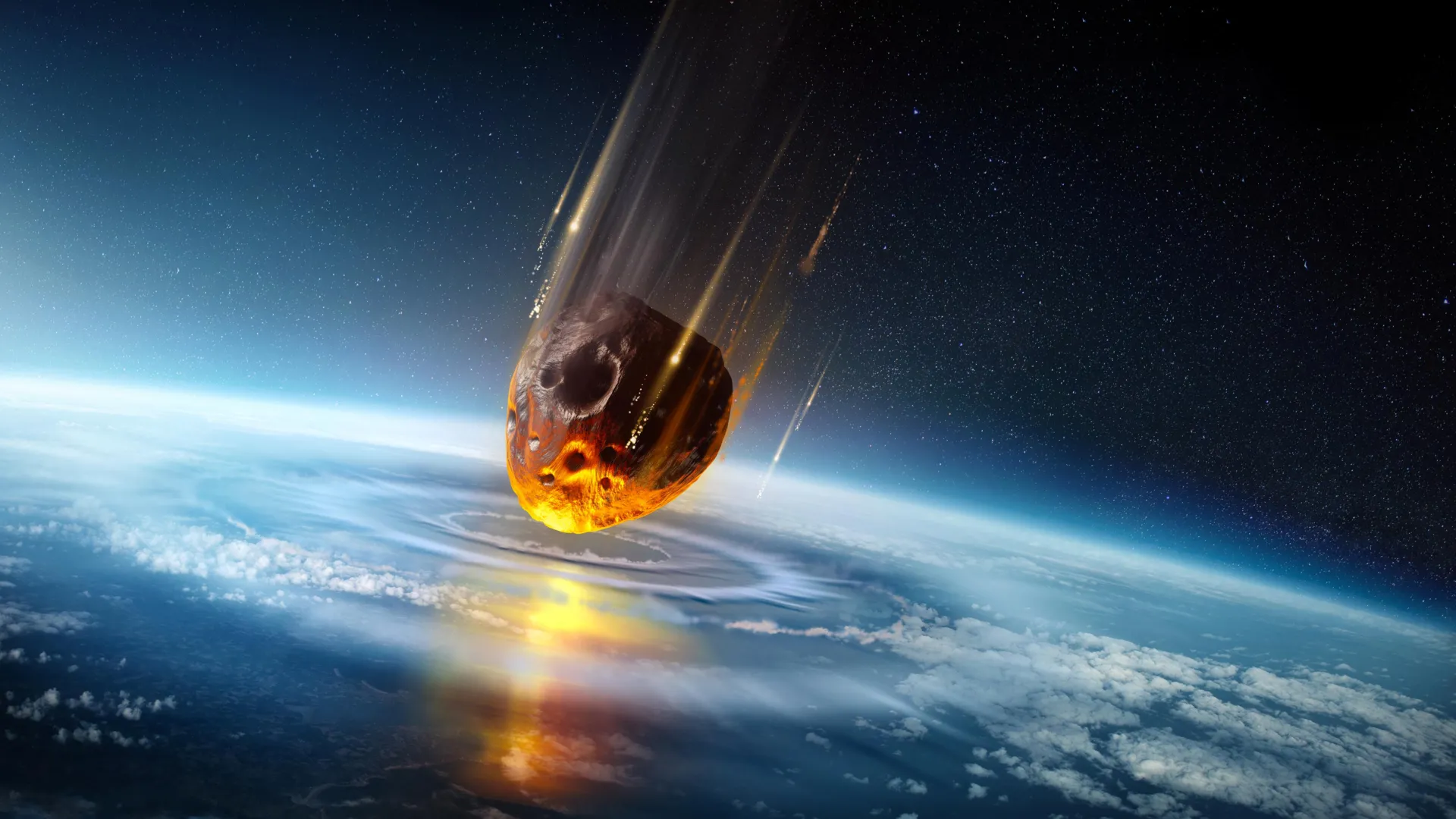
For decades, the Ames impact structure—a sprawling, subterranean scar buried deep beneath the plains of Oklahoma—was considered a cornerstone piece of evidence in one of Earth’s most debated prehistoric narratives. Geologists and paleontologists alike pointed to the crater as a definitive member of the "Ordovician Meteor Event," a theoretical period roughly 467.5 million years ago when the Earth was allegedly bombarded by a debris field, potentially mirroring the rings of Saturn.
However, a groundbreaking study from the University of Texas (UT) at Austin has fundamentally dismantled this timeline. By employing state-of-the-art geochronology, researchers have determined that the Ames crater is nearly 100 million years younger than previously assumed. This revision does more than just update a map; it forces a reassessment of the causal links between extraterrestrial impacts and the mass extinction events that have shaped the evolution of life on our planet.
The Ames Crater: A Hidden Giant
Beneath the quiet town of Ames, Oklahoma, lies a geological anomaly of immense proportions. While the surface remains largely indistinguishable from the surrounding farmland, deep underground exists a massive circular depression, the result of a violent collision between Earth and an asteroid.
The structure is not merely a scientific curiosity; it is a vital economic asset. The crater serves as a significant reservoir for oil and gas, its fractured rock architecture trapping hydrocarbons that have fueled regional industry for years. For geologists, the site has long served as a "smoking gun" for the Ordovician Meteor Event. The prevailing wisdom suggested that because the crater’s geological footprint appeared to align with other North American impact sites, it was undoubtedly formed during that ancient period of intense celestial activity.
Chronology of a Misconception: The Conodont Conundrum
The original dating of the Ames crater was hampered by a reliance on biostratigraphy—the practice of using fossils to determine the age of rock layers. Researchers had previously identified teeth from conodonts, extinct eel-like organisms, within the impact-affected rock. Because these fossils were exclusively associated with the Ordovician period, it was assumed that the impact occurred while these creatures were alive.
"Before this study, the Ames impact had only been dated using biological evidence," explains Elizabeth Catlos, associate professor at UT’s Department of Earth and Planetary Sciences and lead author of the study published in Meteoritics & Planetary Science.
The fallacy, as the UT team discovered, was one of context. The asteroid did not land in a pristine, contemporaneous environment; rather, it struck an area that already contained ancient, fossil-rich sediment. The force of the impact pulverized and churned the local geology, effectively "recycling" older material into the crater’s structure. Like a time capsule containing items from a century prior, the conodont teeth were millions of years old long before the meteor arrived. By relying on these "intrusive" fossils, previous generations of scientists had inadvertently anchored the crater to the wrong epoch.
Supporting Data: The Precision of Zircon Dating
To break the cycle of misleading biological data, the research team turned to the most reliable clock in the geologist’s toolkit: zircon crystals. Zircon is a mineral remarkably resistant to chemical weathering and thermal alteration, making it an ideal candidate for U-Pb (uranium-lead) dating.
The team, led by UT researchers and utilizing samples obtained from the Oklahoma Geological Survey, extracted these microscopic crystals from granite altered by the massive heat and pressure of the asteroid strike. Danny Stockli, dean of the Jackson School of Geosciences and co-author of the study, emphasized the precision of this method.
"Zircon U-Pb dating offers one of the most accurate ways to determine when events occurred deep in Earth’s past," Stockli noted. "These small crystals allow us to go back in time and learn about the major changes to Earth’s ancient landscapes."
To ensure the data was indisputable, the team collaborated with NASA, employing advanced imaging techniques including cathodoluminescence and electron backscatter diffraction. When zircon is subjected to the cataclysmic pressures of a meteor impact, it undergoes a unique recrystallization process. By imaging these distinct structural changes, the researchers were able to confirm that the zircons had recorded the specific moment of the collision, rather than the age of the surrounding granite bedrock.
The results were unequivocal: the Ames impact occurred approximately 370 million years ago, during the Late Devonian.
Official Responses and Collaborative Effort
The research project itself carries a poignant legacy. Initiated by Andrew Parisi, a brilliant graduate student at the Jackson School of Geosciences who passed away in 2018, the study represents the culmination of years of rigorous field and lab work. Parisi’s initial efforts in collecting the rock cores and isolating the crystals laid the foundation for the team’s eventual breakthrough.
The project also benefited from the expertise of the late Michael Brookfield, an affiliated researcher whose contributions were vital to the final analysis. Their work was supported by the collaborative efforts of Research Professor Sean Gulick and Professor Emeritus Mark Cloos.
Reflecting on the persistence of the data, Professor Catlos noted, "No matter what technique we used, it was coming back to this younger signal." The consensus among the team is that the evidence is ironclad. The Ames crater is not a remnant of the Ordovician period; it is a witness to the chaotic events of the Late Devonian.
Implications: A New Piece of a Mass Extinction Puzzle
The reassignment of the Ames impact to the Late Devonian has profound implications for our understanding of Earth’s history, particularly regarding the Frasnian-Famennian mass extinction event. Occurring roughly 372 million years ago, this event was one of the "Big Five" mass extinctions in Earth’s history, causing a massive decline in biodiversity among marine life.
By shifting the date of the Ames impact, the researchers have placed it squarely within the timeframe of this biological catastrophe. This raises a critical question that has long plagued geologists: what causes mass extinctions? Are they the result of terrestrial processes, such as massive volcanic eruptions or shifts in ocean chemistry, or are they triggered by external shocks from space, like the Ames impact?
"With this research, we’re basically taking a major pawn out of the Ordovician Meteor Event and dumping it into the Frasnian-Famennian event, and saying, ‘This is where this impact belongs,’" Catlos said.
This discovery provides a potential link between the Ames crater and the Frasnian-Famennian extinction, suggesting that the impact may have played a more significant role in the environmental collapse of the period than previously understood. It also underscores the importance of revisiting "settled" science. In geology, as in many fields, a single misidentified data point can lead to a house of cards that persists for decades.
Looking Toward the Future
The UT study serves as a call to action for the broader geological community. As Dean Stockli noted, "It would be great to do this for more of the meteor impact sites across the continent so we could get a more accurate timeline for these major events."
If the Ames crater—once a textbook example of an Ordovician impact—was misdated, how many other impact sites across the globe are similarly misunderstood? The reliance on biological markers without the support of robust geochronological data has likely skewed our perception of Earth’s impact history.
As researchers move forward, the use of zircon imaging and high-precision U-Pb dating will likely become the gold standard for characterizing impact structures. By refining the chronology of these events, scientists can finally begin to decouple the noise from the signal, determining which environmental shifts were the result of internal planetary evolution and which were the result of violent, unpredictable visitors from the stars.
The Ames impact, once a symbol of a Saturn-like ring of asteroid debris in the Ordovician sky, has been recast as a key player in a much more recent and equally devastating chapter of Earth’s history. It is a reminder that the past is never truly set in stone; it is waiting to be rewritten by the next generation of evidence.


 Dwi Wanna
 Iffa Jayyana

 Muslim
 Nana Wu

 Rifan Muazin