
 Pevita Pearce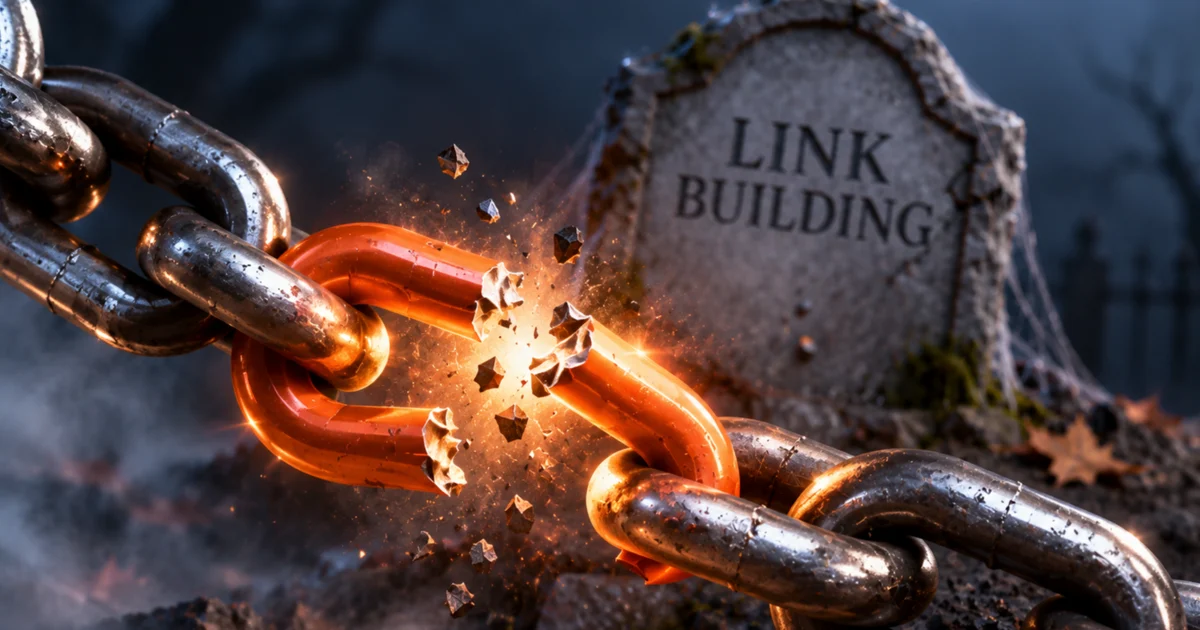
As we approach 2027, the digital marketing landscape is undergoing its most significant transformation since the inception of search engines. With the maturation of Google’s AI Overviews and the widespread adoption of AI-driven search interfaces, the age-old practice of link building is facing an existential audit. Is the backlink dead, or is it merely evolving?
To address this shift, Michael Johnson, CEO of Resolve, is set to headline a pivotal webinar on October 21, 2026, titled “The Link Building Graveyard: What to Bury & What Still Wins.” This session aims to clarify how off-page SEO strategies must be recalibrated to maintain visibility in a search environment increasingly dominated by generative AI.
The State of SEO: Why Links Remain Relevant
Contrary to the "SEO is dead" narrative that has periodically surfaced for over a decade, link building remains a cornerstone of search engine optimization. However, the intent and execution of these campaigns have changed. In the current search ecosystem, AI models like Google’s AI Overviews do not operate in a vacuum; they function by synthesizing vast amounts of indexed web content.
Links continue to serve two critical functions:
- Discovery: They act as the "highways" that allow search crawlers to find and index new or updated content.
- Authority and Relevance: They provide a signal of trust, indicating that a specific piece of content is a reliable source of information.
While a single backlink is no longer a guaranteed ticket to the top of the SERP (Search Engine Results Page), the absence of a robust backlink profile often results in lower authority scores, making it harder for AI systems to "trust" your content enough to cite it as a reference.
A Chronology of the Link Building Shift
To understand where we are going in 2027, it is essential to look at the recent evolution of off-page SEO:
- Pre-2023 (The Volume Era): Link building was primarily a numbers game. Quantity often outweighed quality, and guest blogging networks and directory submissions were rampant.
- 2023–2025 (The E-E-A-T Shift): Google’s focus on Experience, Expertise, Authoritativeness, and Trust (E-E-A-T) forced a shift toward high-quality, niche-relevant link acquisition. Content-led link building became the standard.
- 2026 (The AI Integration Era): The emergence of AI Overviews shifted the priority from "ranking for keywords" to "being cited as an answer." Data from Ahrefs in March 2026 confirmed that 37.1% of URLs cited in AI Overviews also occupied the top 10 organic results, proving that traditional organic authority is still a prerequisite for AI visibility.
- 2027 (The Strategic Future): We are entering an era of "Intent-Based Authority." Linking is no longer just about passing PageRank; it is about establishing a brand’s presence in the datasets that power generative AI.
Supporting Data: The AI Citation Paradox
The relationship between organic search and AI citations is complex. While many SEO professionals worry that AI will "steal" the traffic, the data suggests a symbiotic relationship.
Ahrefs’ March 2026 study provides a critical insight for modern strategists: search visibility remains the "north star." If a website does not exist in the traditional organic index, the probability of it being included in an AI summary is near zero. This effectively kills the argument that companies can ignore traditional SEO in favor of AI optimization alone. The implication is clear: link building is not a separate activity from AI optimization; it is the foundation of it.
The "Keep or Cut" Audit: Refining Your 2027 Strategy
As Michael Johnson will detail in his upcoming presentation, teams must perform a ruthless audit of their current off-page tactics.
What to "Bury" (The Graveyard)
- Low-Quality Guest Posting: Engaging with sites that exist solely to host guest posts is a liability. AI-driven search algorithms are increasingly capable of identifying patterns of low-value, transactional linking.
- Automated Link Exchanges: If the primary goal is a reciprocal link without inherent value to the user, it is time to stop. These links offer zero "trust" signal in an era where AI analyzes the topical relevance of content.
- Unsolicited Mass Outreach: Generic, templated outreach emails are largely ignored by high-authority publications and are increasingly flagged by sophisticated spam filters.
What to "Win" (The Future)
- Original Research and Data: Content that provides unique insights, original surveys, or proprietary industry data is the gold standard for earning organic, high-authority links.
- Practical Tools and Utilities: Free, useful digital tools (calculators, templates, or interactive dashboards) naturally attract links because they solve a specific problem for the reader.
- Thought Leadership and Expert Commentary: Establishing your brand’s executives as industry authorities who are quoted by high-traffic, authoritative news outlets remains the most resilient link building strategy.
Implications for Your 2027 Execution Plan
The move toward AI-centric search means that SEO teams must adopt a more holistic view of "Digital PR." In 2027, link building should be viewed as a brand-building exercise rather than a technical SEO task.
Bridging the Gap Between AI and Humans
Your content strategy must cater to two audiences simultaneously. First, you must satisfy the "AI crawler," which needs clean, well-structured, and authoritative data to synthesize answers. Second, you must satisfy the human user who clicks through from those AI citations to learn more. If your content is boring, poorly researched, or lacks a unique perspective, the user will bounce, and the AI will eventually stop citing your domain as a "trusted source."
The Role of Authority
The implication for 2027 is that authority is the new currency. In a world where AI can generate infinite amounts of "average" content, the internet will reward the "exceptional." Link building, when executed correctly, is the mechanism by which the industry validates that your content is, indeed, exceptional.
Official Guidance and Upcoming Insights
As the industry prepares for the 2027 fiscal year, the consensus among experts is that agility is paramount. Google’s guidance has remained consistent: create content for people, and the search engine signals will follow. However, in the context of AI, "creating for people" now includes ensuring that your site is a node in the network of knowledge that AI models rely upon.
Michael Johnson’s webinar, moderated by SEJ Founder Loren Baker, promises to provide a concrete, actionable roadmap for this transition. The session will feature real-world campaign examples, moving beyond theory to demonstrate what actually moves the needle in a post-2026 search environment.
Key Takeaways from the Webinar
Attendees of the session will learn:
- How to pivot from link quantity to "topical authority" acquisition.
- The specific types of content that are currently being cited by AI Overviews.
- How to measure the success of an off-page program when organic traffic metrics are shifting due to AI.
- A tactical "keep-or-cut" checklist for your existing link building assets.
Conclusion: Embracing the Future
The evolution of SEO is not a death knell for link building; it is a call to maturity. By discarding the outdated, spammy tactics of the last decade and focusing on high-value, research-backed content that serves both human readers and AI models, organizations can secure their place in the future of search.
For those who cannot attend the live session on October 21, 2026, registration is still recommended. All registrants will receive a recording of the webinar, ensuring that your team can begin the 2027 planning cycle with the most up-to-date insights on off-page SEO and AI visibility.
The link building graveyard is filling up—but for those willing to adapt, the future of off-page SEO has never been more vital to the health of the brand.


 Nana Wu
 Suro Senen
 Raul Delapena Setiawan
 Dwi Wanna
 Muslim


 Rifan Muazin