
 Nana
Nana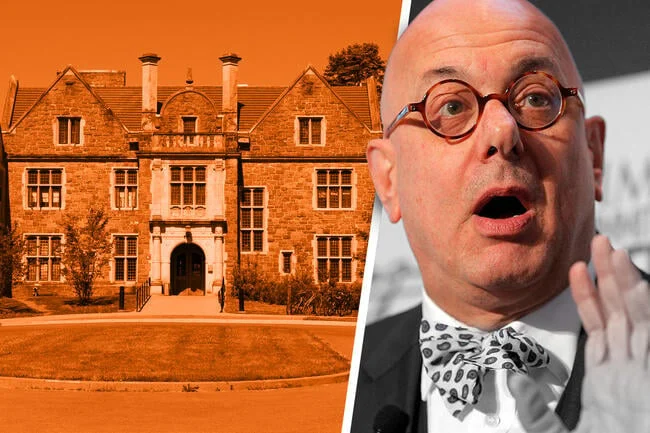
By Investigative Staff
Leon Botstein, the long-serving academic titan who presided over Bard College for more than half a century, has formally resigned from all remaining affiliations with the institution. The move follows a dramatic escalation in a House Judiciary Committee investigation that has unearthed disturbing new details regarding Botstein’s relationship with the late convicted sex offender Jeffrey Epstein, as well as whistleblower allegations that he systematically interfered with Title IX proceedings to shield faculty members accused of sexual misconduct.
The resignation marks a stunning end to an era for the private liberal arts college in Annandale-on-Hudson, New York. Botstein, who stepped down as president in July 2026 after 51 years at the helm, had initially retained a professorship and leadership roles within the college’s prestigious music programs. Those ties have now been severed entirely as the institution faces a crisis of credibility and mounting pressure from federal lawmakers.
The Congressional Inquiry: A Pattern of Abuse?
The impetus for Botstein’s total departure was a scathing letter sent Wednesday by Representative Jamie Raskin, the ranking member of the House Judiciary Committee. In his correspondence to Bard’s acting president and board chairman, Raskin laid out findings from an ongoing congressional probe that began in June 2026.
According to Raskin, evidence gathered by the committee suggests that Botstein "likely enabled and possibly even participated in Epstein’s abuse" during his time as college president. The committee’s investigation, which has scrutinized records from the Department of Justice, centers on a 2014 interaction involving a young woman trafficked by Epstein.
The "Jane Doe" Email
Documents obtained by the committee reveal that in May 2014, Epstein facilitated a meeting between an aspiring vocalist—referred to as "Jane Doe"—and Botstein. The ostensible purpose was for the college president to evaluate the woman’s musical talent and offer educational guidance.
However, an email sent on May 15, 2014, from an account associated with Botstein to Epstein, contains language that investigators find chilling. The email asks: "Is [Jane Doe] for me, or are you keeping her for yourself?"
While the Department of Justice had initially redacted the presidential email address in public filings, congressional members were granted access to the unredacted correspondence. Raskin’s letter pulls no punches in its interpretation of the exchange. "It is hard to construct any kind of innocent explanation for Botstein’s question and the surrounding events," Raskin wrote. "We know that Epstein was neither a college president recruiting students nor a symphony director recruiting players, so what would it mean for Botstein to ask Epstein whether Jane Doe was for him or whether Epstein was ‘keeping her for yourself’?"
Whistleblower Allegations: A Culture of Impunity
Beyond the Epstein connection, the House Judiciary Committee has received testimony from whistleblowers painting a grim picture of governance under Botstein’s long tenure. The reports suggest that the president’s influence extended into the college’s internal disciplinary apparatus.
Specifically, the committee is investigating claims that Botstein personally intervened in Title IX proceedings. The allegations suggest that, on multiple occasions, the president utilized his administrative power to manipulate investigative processes and protect sexual predators within the Bard faculty. This revelation has sent shockwaves through the Bard community, as students and alumni grapple with the possibility that the institution’s high-minded reputation for progressive education was being undermined by a top-down culture of silence and protectionism.

Chronology of a Downfall
To understand the scope of the current crisis, one must examine the timeline of Botstein’s exit and the mounting pressures that led to it:
- June 2026: The House Judiciary Committee officially expands its investigation into Jeffrey Epstein’s network to include potential ties to academic institutions, specifically naming Bard College and Harvard University.
- July 2026: After months of intense public scrutiny regarding his communications with Epstein, Leon Botstein announces his retirement as president of Bard College, ending a 51-year tenure. He elects to remain as a professor and director of several music initiatives, including The Orchestra Now.
- August–October 2026: Internal and external pressure continues to mount as new details regarding the Epstein network emerge through ongoing congressional reviews.
- November 2026: Ranking Member Jamie Raskin issues a formal letter to the Bard Board of Trustees detailing the "deeply troubling" findings regarding Botstein’s 2014 email and his alleged interference in Title IX cases.
- November 2026 (Present): Botstein formally resigns from all remaining positions at Bard College in an attempt to distance the institution from the allegations.
Official Responses and Denials
In a written statement provided to Inside Higher Ed on Wednesday, Botstein issued a categorical denial of the allegations. He maintained that he was unaware of Epstein’s criminal activities and specifically contested the authenticity of the incriminating email.
"The allegations in [Raskin’s] letter are untrue, including an email that I did not author or send," Botstein wrote. "Any assertion that I knew of or was involved in Epstein’s criminal behavior is wrong. I am confident that any fair review would confirm these facts. But I do not want to see even false allegations about me put the institution I have served for more than half a century at any risk."
The college’s response has been one of damage control. Brandon Weber, chairman of the Bard Board of Trustees, issued a statement promising a "full review" of the allegations brought forward by the House Judiciary Committee. "The board takes these allegations with the utmost seriousness," the statement read. "We will cooperate fully with the committee’s investigation as we work to ensure that our institution upholds the highest standards of safety and integrity."
Implications for Bard College and Higher Education
The resignation of Leon Botstein is a watershed moment for American higher education. As a figure who was long considered a visionary in the humanities and arts, his fall from grace mirrors a broader reckoning regarding the nexus between elite academic institutions and powerful, morally compromised donors.
Institutional Reputation
For Bard College, the challenge ahead is immense. The institution must now reconcile its identity with the reality that its longest-serving leader is being investigated for potentially facilitating sex trafficking and undermining Title IX protections. This will likely trigger a massive internal audit, potential lawsuits from former students, and a difficult conversation about the governance structures that allowed such power to be concentrated in one individual for over half a century.
The Role of Congress
The involvement of the House Judiciary Committee signifies a new era of oversight for universities. When academic institutions become conduits for the social and professional networks of figures like Jeffrey Epstein, they effectively forfeit the autonomy they often claim as a shield against political scrutiny. The precedent set by this investigation suggests that Congress is prepared to hold academic leaders personally accountable for their connections to criminal networks, regardless of their status or academic legacy.
The Future of Accountability
As the investigation proceeds, the legal and ethical questions remain: To what extent were university boards aware of these interactions? Did the culture of "prestige" surrounding figures like Botstein create a blind spot that allowed for the potential protection of predators?
For now, the Bard community—students, faculty, and alumni—is left to digest a reality that feels far removed from the liberal ideals the college promotes. The "full review" promised by the Board of Trustees will be watched closely, not just by the House Judiciary Committee, but by the entire higher education sector. As the investigation deepens, one thing is clear: the era of unquestioned authority in academic leadership is facing its most significant test in modern history.

 Sagoh
Sagoh
 Jia Lissa
 Laily UPN
 Iffa Jayyana
 Rifan Muazin
 Suro Senen
 Lina Hope
 Lina Irawan