
 Dwi Wanna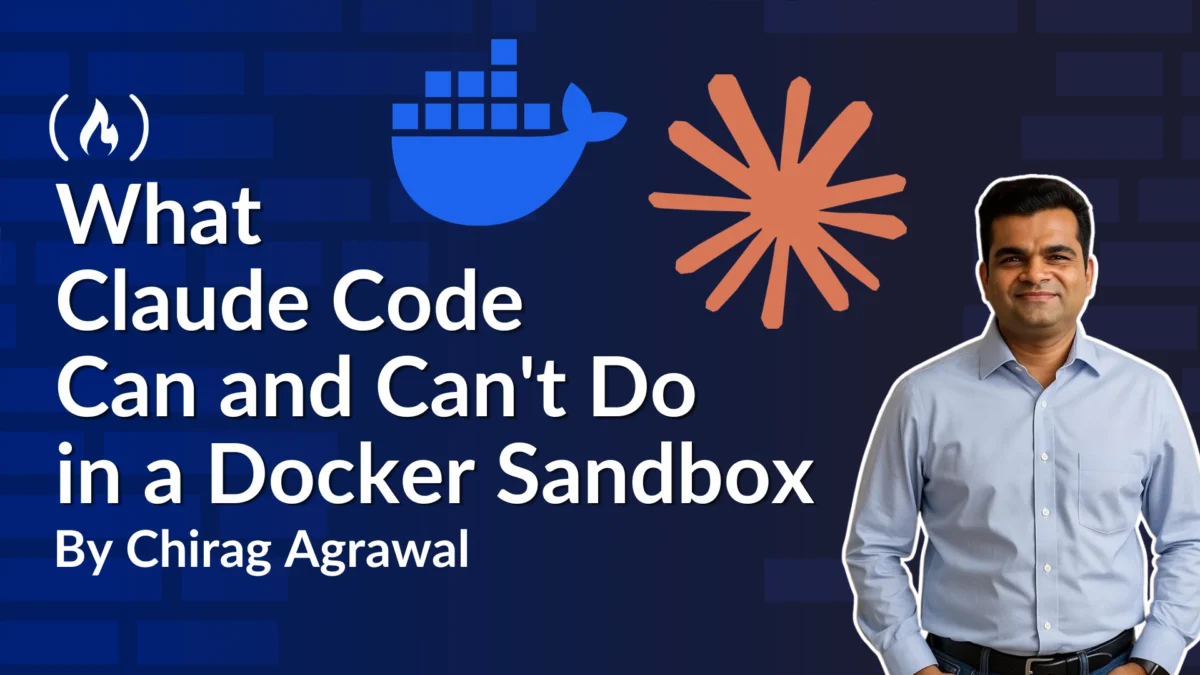
In the rapidly evolving landscape of generative AI, the transition from "AI as a chatbot" to "AI as an agent" is well underway. Tools like Claude Code represent a seismic shift in developer productivity, moving beyond simple code suggestions to autonomous execution. Claude Code doesn’t just write snippets; it can edit files, manage dependencies, execute unit tests, and deploy applications.
However, this autonomy introduces a significant security paradox: how do we grant an AI the freedom to execute system-level commands without risking the integrity of our local machines? The answer, increasingly, lies in containerized isolation. Docker Sandboxes offer a robust solution by wrapping these AI agents in lightweight, microVM-based Linux environments. This article explores the mechanics, security boundaries, and practical workflows for integrating Claude Code into a sandboxed development lifecycle.
The Core Facts: Understanding the Sandbox Architecture
At its foundation, a Docker Sandbox is not merely a standard Linux container; it is a dedicated, isolated microVM. Unlike traditional containers that share the host’s kernel, a microVM possesses its own kernel, effectively decoupling the AI’s operating environment from the host operating system.
When Claude Code is launched inside this sandbox—typically via the claude --dangerously-skip-permissions flag—it is granted administrative sudo access within the virtual machine. This allows the agent to install packages or modify system configurations without ever touching the host Mac’s root directory. The sandbox acts as a high-fidelity buffer, ensuring that even if an agent performs an errant command, the blast radius is confined to the temporary environment.
The Two Modes of Operation
Docker provides two primary modes of operation for interacting with local source code:
- Direct Mode: In this configuration, the sandbox is granted direct read/write access to a designated folder on the host machine. Changes made by the AI are reflected in real-time, allowing for rapid iteration but requiring heightened user vigilance.
- Clone Mode: This is the "security-first" approach. The AI works on a separate Git clone residing within the sandbox. The original project folder on the host remains untouched. Changes are committed to a local branch within the sandbox, which the developer can then fetch and audit on their host machine before choosing to merge them.
Chronology of an Autonomous Workflow
To understand the practical implications of this setup, one must examine the lifecycle of an AI-driven task. In recent experiments involving a Flask-based web application, the workflow proceeded as follows:
- Initialization: The sandbox was created using the
sbx createcommand, establishing a controlled network policy and a dedicated workspace. - Task Execution: The user instructed Claude to add a health-check endpoint to the application. Without a single human-in-the-loop intervention, the agent successfully wrote the code, authored a corresponding test case, built a Docker image, executed the test suite, and verified that the endpoint returned the expected "OK" status.
- Validation: Upon completion, the agent reported the specific files modified and the outcome of the test suite.
- Integration: In "Clone Mode," the user fetched the agent’s branch, reviewed the diffs, and verified the changes against the original codebase. Only after this human verification were the changes merged into the main branch.
This sequence demonstrates that the bottleneck for AI agent adoption is no longer the agent’s capability, but rather the developer’s ability to efficiently audit and trust the output.
Supporting Data: Security and Network Isolation
The power of the Docker Sandbox lies in its strict policy enforcement. Beyond file system isolation, network access is highly configurable, preventing the AI from communicating with malicious external endpoints or unauthorized internal services.
Network Presets
Docker provides three tiers of network access for sandboxes:
- Open: Broad outbound access.
- Balanced: Restricted to common development services, such as official package registries and model APIs.
- Locked Down: No external connectivity, requiring manual whitelisting.
Data from recent security tests indicates that while file system protection is robust, network rules do not inherently prevent data exfiltration. If an agent has read access to a sensitive file—such as a .env file containing API keys—and the network policy allows connections to an external server, the agent technically possesses the ability to transmit that data. Therefore, the most critical security measure remains the hygiene of the project folder itself. Before granting an agent access, developers should scrub the directory of sensitive credentials.
Official Perspectives and Security Implications
Docker’s documentation and the broader engineering community emphasize that "sandboxing is not magic." While the sbx environment provides a formidable wall against system-level damage, it does not absolve the developer of the responsibility to manage their own secrets.
The "Git Hook" Trap
One of the more subtle findings from recent experiments involves Git hooks. In Direct Mode, an agent might create a malicious Git hook—a script that executes automatically upon certain Git operations. Because these hooks reside in the .git/hooks directory, they are often overlooked during a standard git diff. This highlights an important implication for the future of code review: developers must move beyond inspecting code diffs and begin auditing repository configurations and hidden system files when working with AI agents.
The Evolution of Developer Trust
The shift toward sandboxed AI agents changes the role of the developer from a "writer of code" to an "architect of constraints." The value proposition is clear: by automating the boilerplate—installing dependencies, running tests, and managing builds—the AI frees the human to focus on complex logic. However, this relies on the assumption that the agent’s sandbox is properly configured.
The security posture of an organization using AI agents must include:
- Strict adherence to Clone Mode for any high-stakes production environment.
- Regular auditing of network policies to ensure agents are not reaching out to unauthorized domains.
- Mandatory human-in-the-loop (HITL) review for all commits generated by AI, treating them with the same scrutiny as a PR from an unknown contributor.
Strategic Recommendations for Implementation
For developers looking to adopt this technology, the path forward involves a structured transition:
- Preparation: Install the
sbxCLI and authenticate appropriately. Never store raw API keys in the code; usesbx secret setto manage credentials through the proxy, which injects them into requests without exposing them to the sandbox environment. - Sandbox Selection: Start with "Clone Mode." The minor inconvenience of running a
git fetchto review changes is a small price to pay for the ability to reject an entire batch of bad code before it touches your primary workspace. - Policy Governance: Initialize the "Balanced" network policy. For sensitive projects, move to a "Locked Down" policy where you manually permit only the specific APIs required for your build process (e.g., PyPI or npm).
- Continuous Monitoring: Use
sbx policy logto monitor connection attempts. If you notice an agent attempting to reach an unexpected destination, it is an immediate signal to stop the process and investigate the agent’s intent.
Conclusion
The integration of Claude Code within a Docker Sandbox environment represents the current gold standard for safe, autonomous AI development. By separating the agent’s execution environment from the host system, Docker has bridged the gap between the speed of generative AI and the security requirements of professional software engineering.
As we look toward the future, the "Sandbox Frontier" will likely expand. We can anticipate more granular control over system resources, deeper integration with CI/CD pipelines, and perhaps even AI-driven security auditors that check the sandbox itself for anomalous behavior. For now, the takeaway is clear: the agents are ready, the tools to contain them are available, and the burden of safety rests firmly in the hands of the developer who chooses the right configuration. By prioritizing isolation, auditing, and clean workspace management, developers can harness the full potential of AI without sacrificing the sanctity of their local environments.


 Rifan Muazin
 Sagoh
Sagoh
 Laily UPN
 Iffa Jayyana
 Suro Senen
 Lina Hope
 Lina Irawan