
 Jia Lissa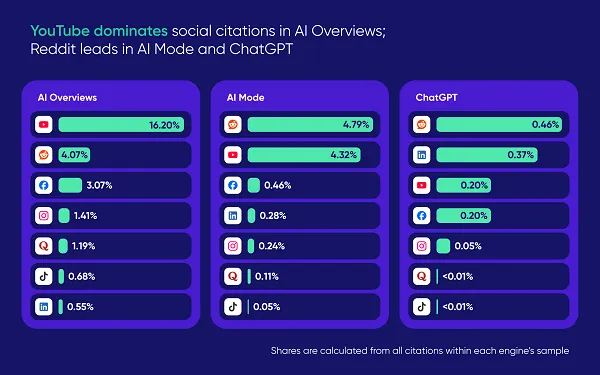
As the digital landscape undergoes its most significant transformation since the dawn of the search engine, brands are finding that the traditional rules of Search Engine Optimization (SEO) are no longer sufficient. A groundbreaking new study by SEO analytics firm SE Ranking has revealed a critical evolution in how information is surfaced: maintaining an active, robust presence on social media is now a primary lever for increasing brand visibility within artificial intelligence-generated search results.
In an era where consumers are increasingly turning to AI chatbots and AI-powered search over traditional blue-link listings, the mechanism of discovery has shifted. AI models do not merely rank websites; they synthesize information from a vast array of sources to provide conversational, direct answers. According to the data, social media platforms have become an essential component of this synthesis, frequently cited by chatbots as authoritative sources of consumer sentiment, product information, and real-time updates.
Main Facts: Social Media as an AI Ranking Signal
The SE Ranking report, which analyzed a massive dataset of 100,000 keywords across various brand niches, provides empirical evidence that social media is no longer just a channel for community engagement—it is a critical pillar of modern discoverability.
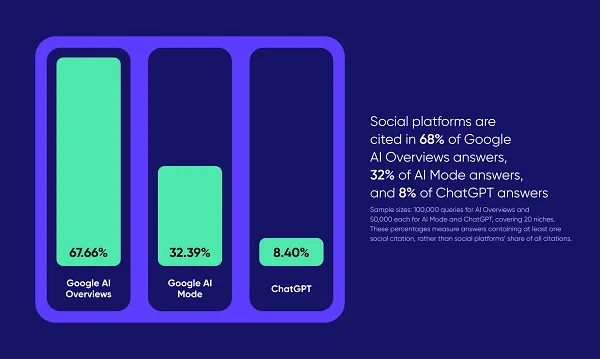
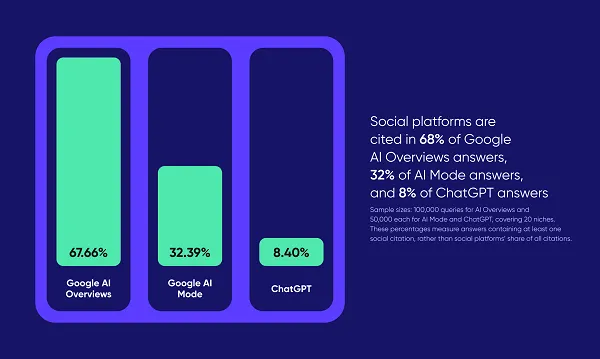
The core takeaway is that AI models are actively "reading" social platforms to populate their responses. The study found that social media platform links were present in:
- 67.66% of Google AI Overviews.
- 32.39% of Google AI Mode replies.
- 8.4% of ChatGPT answers.
These figures underscore a paradigm shift. For years, digital marketers focused on technical SEO, backlinks, and keyword density. Now, they must consider the "AI-visibility" of their social profiles. If a brand is absent from the social conversation, it is effectively invisible to the AI agents that are increasingly acting as the gatekeepers of the modern internet.
Chronology: The Evolution of AI-Driven Discovery
To understand how we arrived at this point, one must look at the rapid integration of Large Language Models (LLMs) into search.
Early 2023: The "AI Race" intensifies as Google and OpenAI compete to redefine search. Initially, the focus was on technical accuracy and internal database training.
Late 2023 – Early 2024: Both platforms begin experimenting with live web integration. Google rolls out its "AI Overviews" (formerly Search Generative Experience), while OpenAI enhances ChatGPT with real-time web browsing capabilities.
August 2024: A significant disruption occurs. Reports from Search Engine Land indicate that ChatGPT’s reliance on Reddit as a primary source of information plummeted by 86.4% in just four days. This event served as a "canary in the coal mine" for marketers, demonstrating that AI tools are not static; they are prone to algorithm shifts that can erase a brand’s visibility overnight if that visibility is tied to a single platform.
Present Day: The data from SE Ranking confirms that while platform-specific citations may fluctuate, the aggregate presence of social media links remains a fundamental feature of AI-generated responses.
Supporting Data: Where AI Turns for Information
The SE Ranking report breaks down which platforms hold the most weight in the eyes of different AI models, revealing a fragmented landscape that requires a diversified strategy.
The Google Ecosystem
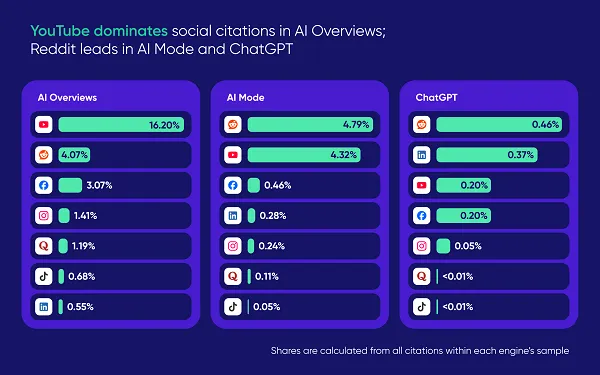
Google’s AI Overviews show a distinct preference for its own properties. YouTube, unsurprisingly, is the most cited source in Google’s AI responses. This suggests that video content—a format that is notoriously difficult for AI to "read" without proper transcripts and metadata—is being prioritized, likely due to Google’s deep indexing of the platform.
The ChatGPT Ecosystem
Conversely, ChatGPT shows a different set of preferences. While Reddit and LinkedIn have historically been top-tier sources for ChatGPT, the recent volatility regarding Reddit citations highlights a lack of stability. In instances where ChatGPT does cite social platforms, the frequency is lower than in Google’s AI Overviews, yet it remains a non-zero factor that brands cannot afford to ignore.
Branded vs. Non-Branded Queries
The study also examined the difference between branded and non-branded searches within Google’s AI Mode:
- Branded Queries: Social media sources appeared in 39.34% of responses.
- Non-Branded Queries: Social media sources appeared in 48.58% of responses.
This is a profound insight. It suggests that when users are performing "discovery" searches (non-branded), AI is turning to social media to gauge community consensus and product reviews. For brands looking to capture new customers, having an active social footprint is arguably more important for unbranded discovery than it is for maintaining a brand’s reputation among those who already know the name.
Official Perspectives and Industry Implications
The implications for digital strategy are twofold: volatility and diversification.
The Volatility of AI Partnerships
The relationship between platforms like Reddit and AI giants like Google and OpenAI is a commercial, not just a technical, one. The "data-sharing deal" between Google and Reddit has essentially guaranteed that Reddit remains a staple in Google’s AI Overviews. However, as noted by industry analysts, such deals create a "walled garden" effect. If a platform is not part of a formal data-sharing partnership, its visibility within AI responses could be throttled or removed at the whim of the AI provider.
The Death of "One-Size-Fits-All" SEO
For two decades, SEO was dominated by a singular goal: rank at the top of Google. The new reality is that there is no universal "AI-SEO." Optimizing for Google’s AI Overviews requires a different tactical approach than optimizing for ChatGPT, Perplexity, or Microsoft Copilot.
"Unlike traditional SEO, which was largely a matter of technical compliance and content authority, optimizing for AI is a variable, multi-front war," says one industry strategist. "You cannot simply put all your eggs in the Google basket anymore. You have to ensure that your brand’s social signals are consistent across LinkedIn, Facebook, and YouTube, because you never know which platform the AI will choose to cite as its ‘source of truth’ for a specific user query."
Strategic Implications: How Brands Should Pivot
Based on the findings from SE Ranking, brands should adopt the following strategies to maintain visibility in the age of AI:
- Prioritize High-Authority Platforms: Since YouTube and LinkedIn appear to be favored by major AI models, focusing content efforts on these platforms provides a higher probability of being cited.
- Monitor AI Source Attribution: Brands must treat "AI-visibility" as a metric. Tools that monitor which sources are being cited for specific industry keywords will become as common as traditional rank trackers.
- Content as a Conversation: Because AI models look for "human" consensus, brands should encourage authentic engagement. Comments, discussions, and user-generated content on social platforms act as "social signals" that AI models interpret as credibility.
- Diversify Away from Reliance on One Platform: The 86% drop in Reddit citations in ChatGPT serves as a cautionary tale. Brands should not rely on a single social platform for their entire AI presence. A broad, multi-platform strategy acts as a hedge against sudden algorithm shifts.
Conclusion: The Future is Conversational
The transition to AI-generated search is not a temporary trend; it is the new baseline for internet discovery. While the volatility of these models remains a challenge, the SE Ranking study provides a clear roadmap: social media is the new SEO. By fostering active, reputable communities on social platforms, brands can ensure they remain part of the conversation when AI models go looking for answers. The winners in this new era will not be the ones with the most backlinks, but the ones whose digital footprint is the most pervasive, trusted, and accessible to the machines that now help the world find what it is looking for.


 Nana Wu
 Suro Senen
 Raul Delapena Setiawan
 Dwi Wanna
 Muslim


 Rifan Muazin