
 Jia Lissa
It has been ten years since the founder of the Financial Independence Podcast—a pioneer in the "Financial Independence, Retire Early" (FIRE) space—walked away from his career as a software developer. A decade later, he is sharing a candid, reflective analysis of what life looks like on the other side of the "freedom" finish line.
For those who have followed his journey, the message is clear: the pursuit of financial independence is not merely a math problem to be solved; it is a profound psychological evolution. As he celebrates ten years of post-FI life, his reflections offer a roadmap—and a warning—for those still in the "accumulation" phase of their careers.
The Shift from Accumulation to Optimization
Moving Beyond Lean FIRE
In the early days of the FIRE movement, the focus was often on "Lean FIRE"—a minimalist, bare-bones approach designed to exit the workforce as quickly as possible. Looking back, the podcaster admits he is grateful he ended up with a "Fat FIRE" outcome—a lifestyle characterized by financial abundance—rather than sticking to his original, more restrictive plans.
He argues that for high-earning professionals, particularly those in the volatile software development sector, there is a distinct advantage to staying in the workforce longer than necessary. "If you are in a good job that’s high-paying," he suggests, "and you are not completely miserable, I would suggest sticking with it a bit longer than that bare-bones level."
This advice is rooted in a pragmatic view of the modern economy. The rapid rise of Artificial Intelligence (AI) has fundamentally altered the job market for developers. Having built tools like Claude Code to explore his own curiosity, the author notes that the professional landscape is shifting. Had he not already secured his financial independence, he would feel significantly more precarious.
The Psychology of "Unlimited" Spending
One of the most striking revelations in his ten-year reflection is the mental transition from scarcity to abundance. He notes that while his lifestyle might look "normal" to an outside observer, his mental state has shifted to one of complete financial freedom.
The "Unlimited" Mindset
"I feel like I can live an unlimited lifestyle in my current situation," he explains. "I’m never considering the price on anything anymore."
This shift mirrors the philosophy championed by personal finance expert Ramit Sethi: "Why spend less when you can spend more?" The author notes that this realization was initially counterintuitive. However, once one reaches a certain level of wealth, money ceases to be the primary constraint. Instead, the limiting factors become time, energy, and the physical realities of raising children.
He now embraces "asset-based" lifestyle creep. Unlike the negative connotations usually associated with spending more after a raise, this approach is sustainable because it is funded by the growth of a robust investment portfolio rather than a salary. He advocates for using at least 4% of one’s portfolio annually to enhance one’s current quality of life, arguing that it makes the path to FI much more enjoyable.
Abandoning Efficiency for Quality
A core tenet of the early FIRE community was extreme optimization—tax strategies, backdoor Roth contributions, and complex asset allocation. After a decade of freedom, the author has pivoted toward simplicity.
The Case for Simplicity
He has abandoned complex financial maneuvers like backdoor Roth contributions, noting that the mental cost of managing these tasks outweighs the marginal benefit. Similarly, he has simplified his investment portfolio, moving away from "fun" individual stock picks to a streamlined, "set-it-and-forget-it" model.
This philosophy of simplification extends to his life choices as well. He now prioritizes "memory dividends"—a concept popularized by Bill Perkins’ Die With Zero—over rigid efficiency. For instance, if a vacation is no longer providing joy, he is perfectly comfortable cutting the trip short and flying home, viewing the "wasted" cost as a small price to pay for ending on a high note rather than forcing a lackluster experience.
Strategic Risk Management
Despite his comfort with his current financial standing, he has made one significant adjustment to his portfolio: allocating 10% to 30-year Treasury Inflation-Protected Securities (TIPS).
- The Strategy: By purchasing 30-year TIPS with a real yield near 3%, he has created a guaranteed, inflation-adjusted "floor" for his retirement.
- The Goal: This ensures that when he reaches his 70s—a time when Required Minimum Distributions (RMDs) from 401(k) accounts will create significant tax obligations—he will have a reliable income stream to provide stability.
This move marks a departure from his previous growth-focused strategy, reflecting a transition into a "wealth preservation" mindset suited for the long term.
Future Horizons: The Quest for "Gravity"
As he enters his second decade of post-FI life, the author faces a unique challenge: for the first time in his adult life, he has no major long-term goals. While he admits this is "uncomfortable," it is also liberating.
Finding a Home Base
His current focus is on maximizing his "peak spending years" while his children are young. He is actively researching the concept of "gravity"—a term he uses to describe a location so well-suited to his family’s lifestyle that it will naturally draw his children back to visit as they grow older.
He is looking for a home base that offers:
- Walkability and Weather: Environments that encourage a high quality of daily life.
- Community Roots: A place where he and his family can integrate deeply into the local culture.
- Space for Connection: A property large enough to host extended family and friends for extended stays.
He invites his audience to share their own experiences of finding a "forever home," underscoring the collaborative, community-driven nature that has defined the FIRE movement for years.
Implications for the FIRE Community
The reflections shared by the Financial Independence Podcast host serve as a testament to the success of the FIRE movement, but also as a critique of its early, rigid dogmas.
Key Takeaways for the Aspirant:
- Don’t Delay Joy: Use your wealth to improve your life today. The "4% rule" is a tool for living, not just a mathematical constraint.
- Embrace Flexibility: Your plans should evolve as you do. What worked for you at age 25 may not serve you at age 40.
- Optimization has a Ceiling: There is a point where simplicity provides more value than additional complexity.
- Define Your "Why": Financial independence is only a means to an end. Once the "freedom" is achieved, the real work of defining a meaningful life begins.
As he looks toward the next ten years, the author is not concerned with hitting another financial milestone. Instead, he is focused on being a present father, a supportive partner, and an engaged community member. His journey highlights that the ultimate goal of financial independence is not to stop working, but to gain the autonomy to choose how to spend one’s most precious, non-renewable resource: time.
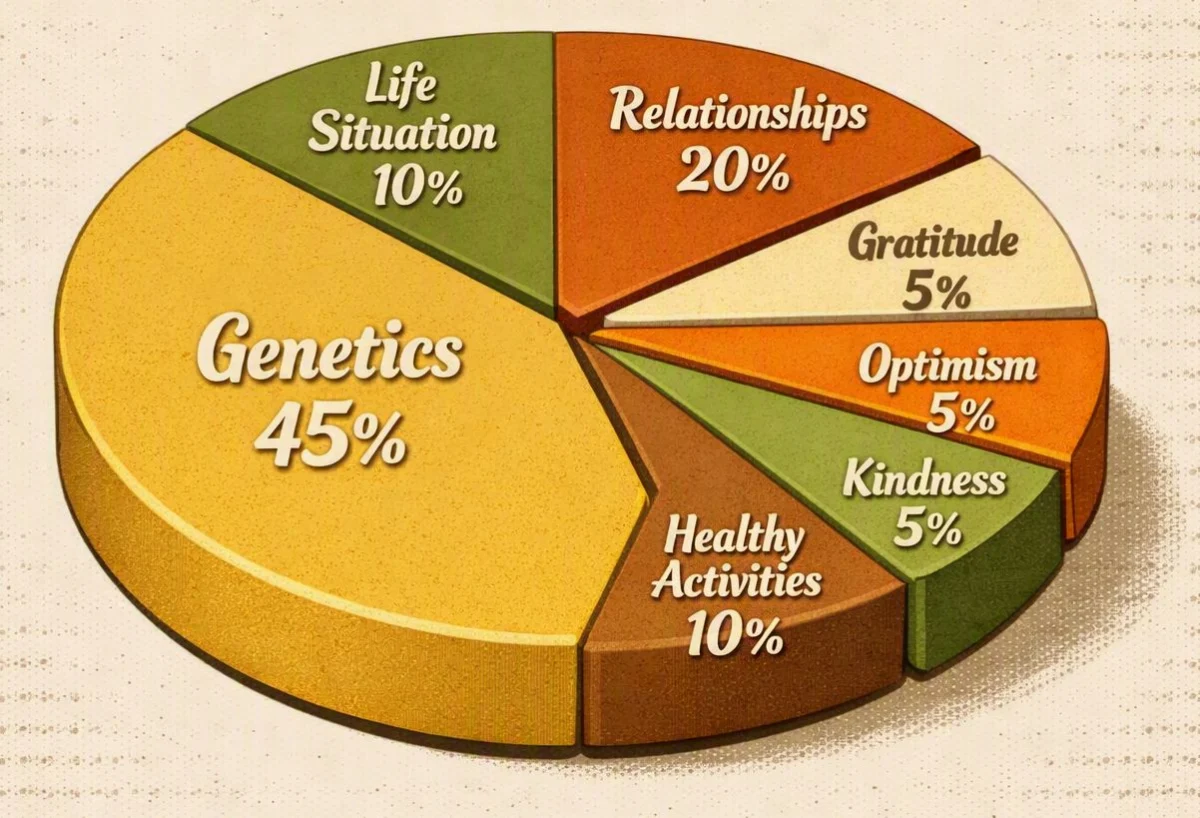
For the growing legion of FIRE followers, this decade-long update offers a sobering but inspiring reality check. It confirms that while the math of saving is the foundation, the art of living—characterized by gratitude, intentionality, and the courage to change—is what truly defines a successful retirement.

 Raul Delapena Setiawan
 Nana Muazin
 Nila Kartika Wati

 Basiran
 Sagoh
Sagoh

 Lina Hope