
 Nila Kartika Wati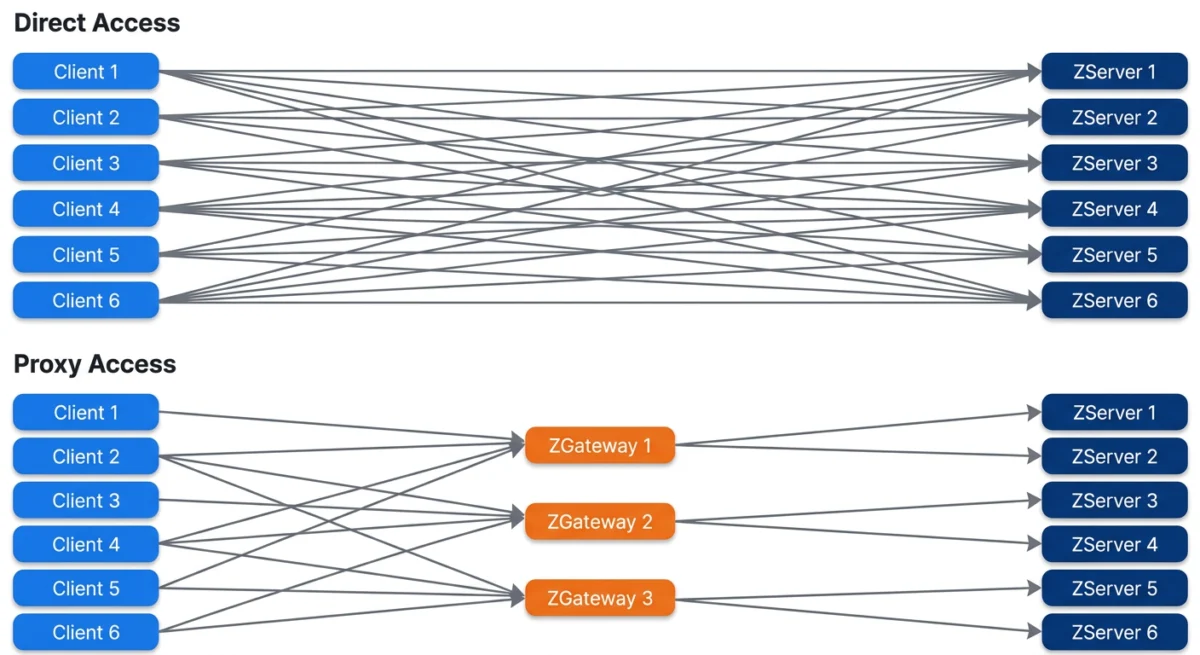
At the heart of Meta’s global infrastructure lies ZippyDB, a high-performance, key-value store that serves as the backbone for the company’s product metadata, counters, and configuration data. Operating at a scale that spans the globe, ZippyDB handles billions of operations per second. However, as the ecosystem grew, the direct-access model—where millions of client hosts connected directly to database nodes—reached a breaking point. To resolve this, Meta engineers developed ZGateway, a sophisticated proxy layer that has fundamentally altered how the company manages its data traffic.
The Architecture of ZippyDB and the "Mesh" Problem
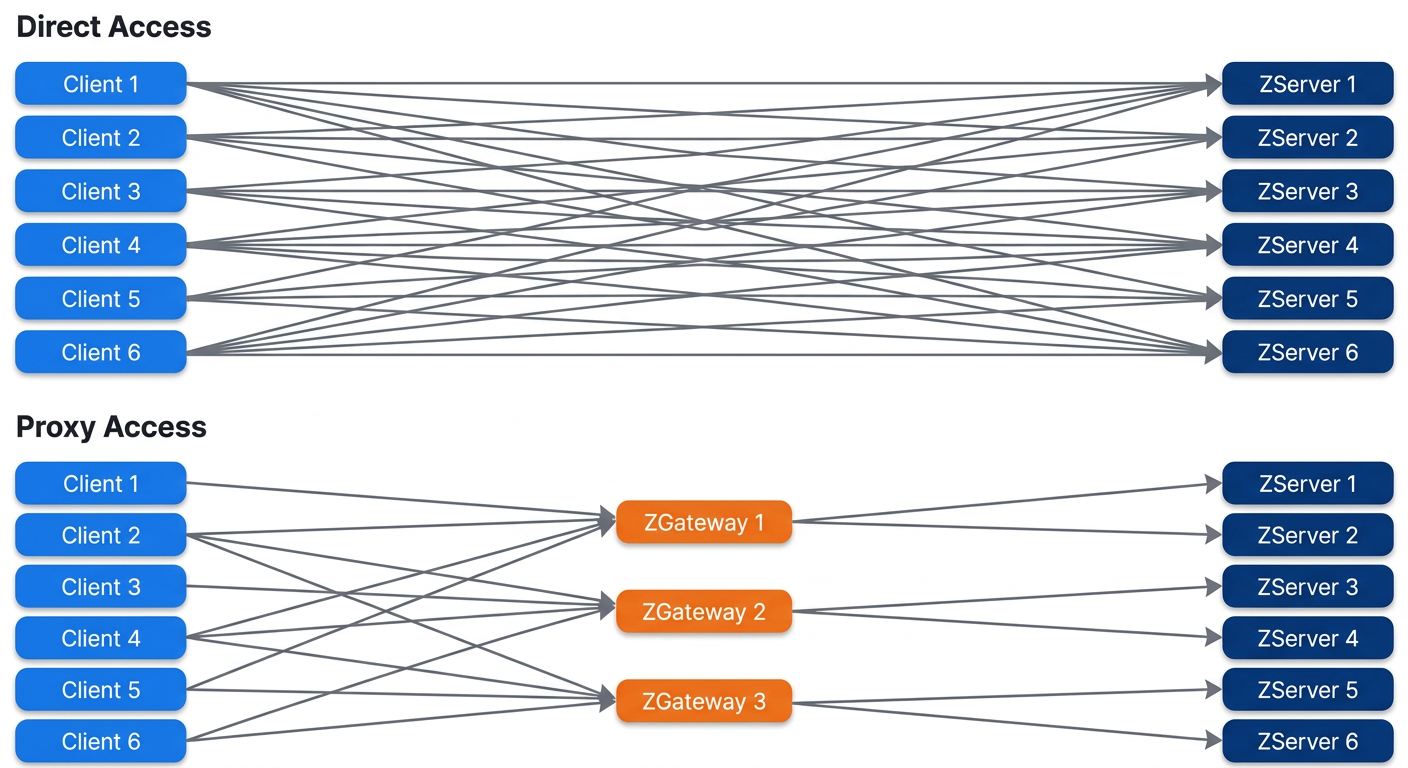
In its early stages, ZippyDB relied on a direct-access model. In this setup, every ZippyDB client (which could be any of Meta’s millions of service hosts) maintained direct connections to the specific database shards it needed to access. As the number of clients and the number of shards grew, the infrastructure encountered a "many-to-many" connection mesh.
A single client might interact with tens of thousands of shards, which in turn were distributed across hundreds of thousands of database hosts. This created a fragile, inefficient network. Every connection consumed valuable resources—CPU, memory, and file descriptors—even when idle. Furthermore, because every client managed its own connection pooling and failover logic, a single deployment or a service restart could trigger a "reconnection storm." These storms often led to catastrophic failures, including file-descriptor exhaustion and out-of-memory (OOM) crashes across the database fleet.
Chronology: From Direct Access to Managed Proxy
The transition to ZGateway was not an overnight decision but a calculated evolution of Meta’s infrastructure strategy.
- The Era of Direct Access: For years, direct access was sufficient. However, as the client population grew into the millions, the "fan-in" (inbound connections per database host) scaled linearly with the client count. This meant that every new product team or service launch made the database infrastructure slightly more unstable.
- The Conceptualization of ZGateway: Realizing that client-side management was too decentralized to fix, engineers moved the connection management logic to a managed tier. By interposing a proxy, Meta could decouple the database fleet’s stability from the volatility of millions of individual clients.
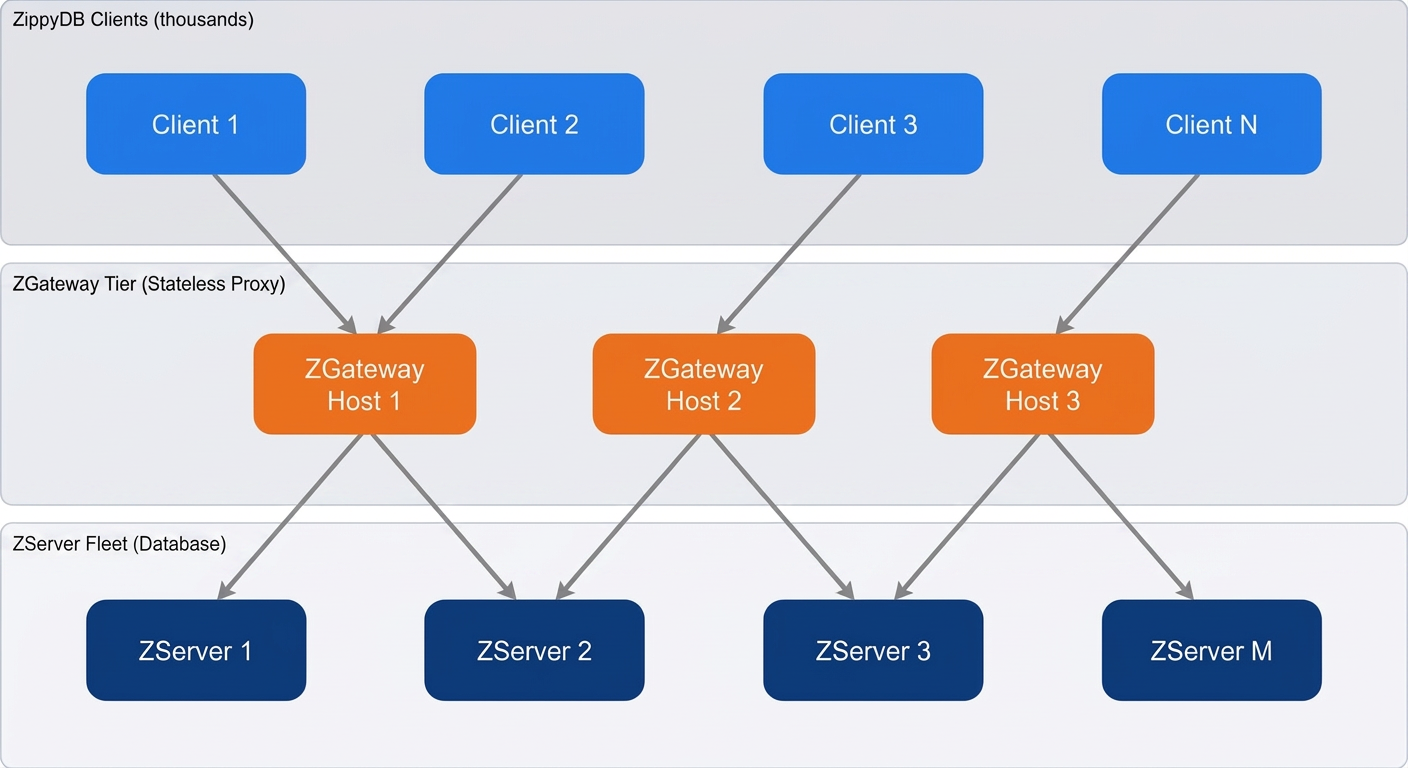
- Development and Rollout: ZGateway was built as a stateless, regional proxy tier, integrated with ServiceRouter, Meta’s hyperscale service mesh. The rollout was incremental, utilizing percentage-based routing knobs that allowed for real-time adjustments and instant rollbacks.
- The Modern Era: Today, ZGateway carries approximately 40% of all ZippyDB traffic, with projections to exceed 60%. It has successfully transitioned from a simple connection pooler to a multi-functional intelligence layer that handles batching, caching, and load shedding.
Supporting Data: The Arithmetic of Efficiency
The impact of ZGateway on system performance is quantifiable through its reduction of connection overhead. Meta engineers modeled the fleet using a "balls into bins" approach, where shards represent balls and database hosts represent bins.
In a direct-access model, the fan-in is a function of the entire client population. With ZGateway, the client population is effectively removed from the database host’s direct view. Instead, the database host only sees connections from the ZGateway fleet—a number that Meta controls and bounds.
Key Performance Metrics:
- Connection Reduction: Per-host connection counts have collapsed by approximately 97–98%.
- Operational Overhead: Despite adding an extra network hop, ZGateway introduces only about 6% computational overhead to an average use case.
- Throughput: The system is capable of handling over 1 billion operations per second.
- Resilience: During controlled overload tests involving 1,350 tenant buckets, the system successfully shed traffic from the top 6 "noisy neighbors" while maintaining 99.9% execution success for the remaining 1,344 tenants.
Official Perspective: Reliability as a Feature
Meta’s engineering leadership emphasizes that the value of ZGateway is structural, not just performance-oriented. By centralizing traffic management, the company has transformed a chaotic, distributed problem into a manageable, centralized one.
"We tell the story through the two clearest cases: connection management and request batching," the team noted in their technical documentation. They argue that direct access was the correct design for the initial phase of ZippyDB, but at scale, the mesh becomes a reliability limit. ZGateway is not a reimplementation of the database client; rather, it is a managed service that owns traffic management, allowing Meta to harden the system centrally without requiring changes to a million disparate client binaries.
Implications: The Future of Distributed Gateways
The success of ZGateway has opened new doors for how Meta approaches distributed systems. The proxy is no longer just a traffic cop; it is becoming a programmable intelligence layer.
Agent-Operated Heuristics
The current system relies on human-tuned knobs for load shedding, failover, and balancing. The next phase involves "agent-operated heuristics." By exposing internal state and telemetry to AI agents, Meta aims to automate the remediation of noisy neighbors and resource contention, allowing the system to diagnose and fix issues faster than any human operator could.
Data Locality through Co-location
While ZGateway currently exists as a separate tier, the team is exploring ways to push parts of the gateway logic closer to the database servers. By co-locating certain components, the latency of the "gateway-to-server" leg can be minimized, while maintaining the centralized control plane that makes the system so effective at scale.

Fault Isolation via Multi-processing
Currently, ZGateway runs many responsibilities in a single process. A memory-intensive tenant can theoretically impact other tasks on the same host. The future roadmap includes splitting the gateway into cooperating processes—separating connection/TLS front-ends, request workers, and cache components. This modularity will provide hard fault isolation, ensuring that a crash in one component does not threaten the stability of the entire gateway host.
Conclusion: A Paradigm Shift for Infrastructure
The evolution of ZGateway represents a classic architectural transition in hyperscale computing: the move from decentralized, "thick" clients to centralized, "smart" proxy tiers. By acknowledging that client-side behavior is inherently unpredictable and difficult to control at scale, Meta has built a system that prioritizes structural stability.
As the ZGateway continues to evolve into a programmable, AI-driven entity, it serves as a blueprint for other organizations struggling with the complexities of microservices and massive-scale data storage. The lesson is clear: when the mesh becomes too dense to manage, the solution is not to try and fix every connection, but to redefine the boundaries of the network entirely. Through ZGateway, Meta has not only secured the performance of its databases but has also created a platform for the next generation of automated, self-healing infrastructure.

 Pevita Pearce

 Iffa Jayyana
 Ammar Sabilarrohman
 Lina Irawan

 Nana Muazin