
 Reynand Wu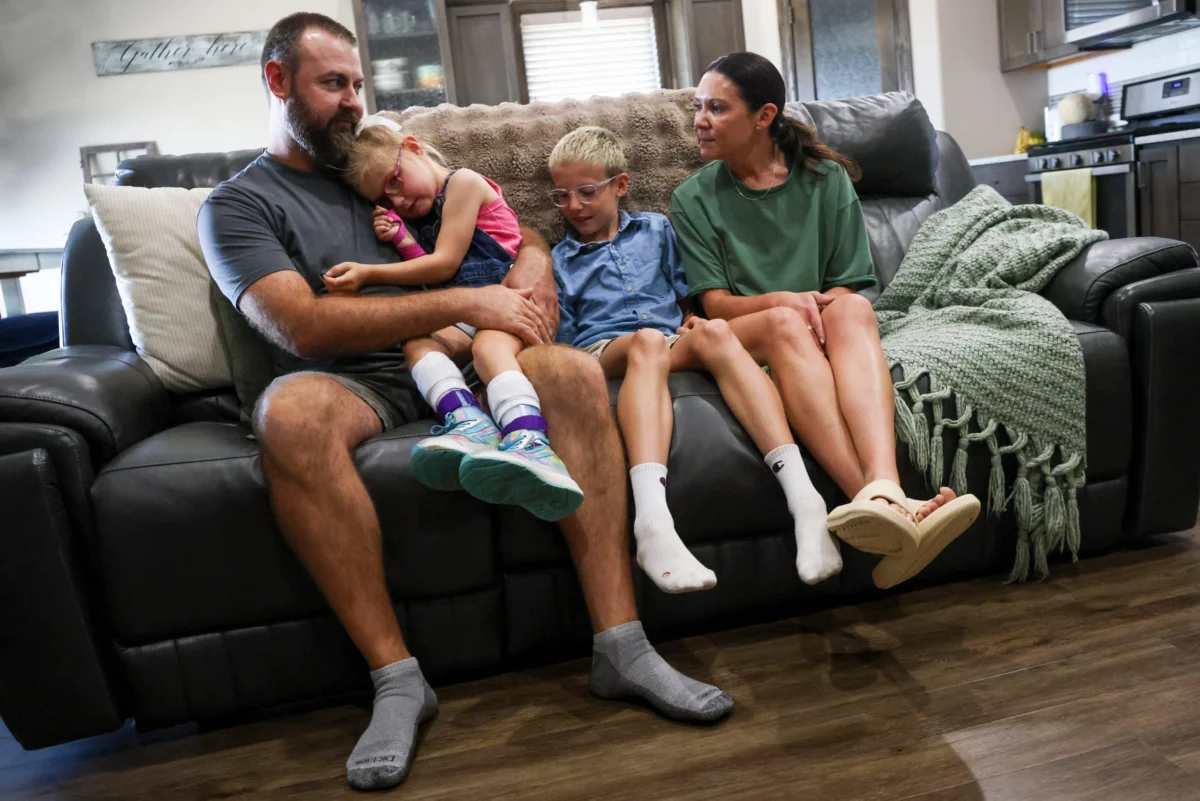
For Kris and Matthew Ferderer, the dream of bringing their daughter, Elliott, home from the hospital was tempered by the grim reality of medical necessity. Before their 9-month-old could leave the clinical environment of the ICU, her parents had to master a complex suite of life-sustaining procedures: managing oxygen equipment, navigating feeding tubes, and monitoring a cardiac catheter that delivered medication directly to their daughter’s heart.
Today, at age 6, Elliott’s journey has been defined by a relentless series of medical hurdles. Born with a rare heart defect that necessitated a transplant before she could even roll over, Elliott suffered catastrophic complications, including seizures and two strokes. These events left her with cerebral palsy and severely limited mobility. In a tragic turn during her transplant surgery, she lost blood flow to her right foot, resulting in the permanent loss of her toes and heel.
“We were full-on ICU in our home,” says Kris, who resides in Mandan, North Dakota, just outside the state capital of Bismarck. “We were doing everything the hospital staff were doing—only without the backup of a full medical team.”
The Ferderers are part of a growing, invisible workforce of parents across the United States who have effectively traded their professional careers for the role of full-time, round-the-clock medical caregivers. As states grapple with a chronic shortage of qualified home health aides, many have begun turning to an unconventional solution: paying parents to provide the care their children are entitled to receive. However, as the Ferderers have learned, the bureaucratic path to that support is fraught with arbitrary definitions, legal battles, and a constant struggle for recognition.
A Chronology of Care and Conflict
The path to the Ferderers’ current situation began long before the state of North Dakota considered its pilot program. For years, the family relied on home care aides to assist with Elliott’s significant needs. However, the search for qualified, reliable help was a recurring nightmare. In one instance, Kris recalls the horror of discovering an aide who was intoxicated while on duty.
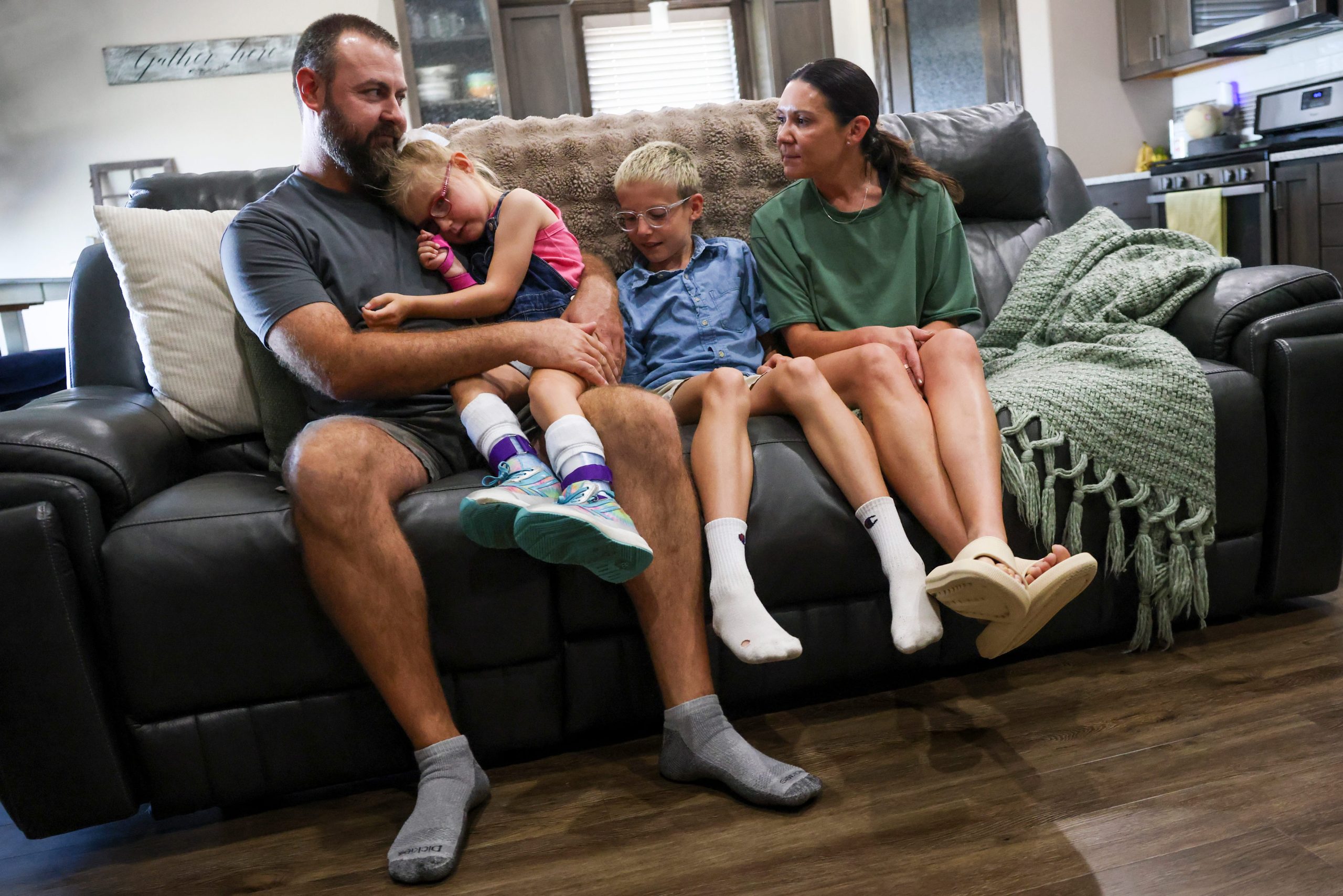
Faced with the terrifying prospect of inadequate care for a child whose life depended on precise medical intervention, Kris eventually made the difficult decision to leave her career as a program coordinator for a disability nonprofit to become Elliott’s primary caregiver.
By April 2024, when North Dakota launched its Family Paid Caregiver Pilot Program, the Ferderers were among the first to apply. By then, Elliott’s daily routine was a masterclass in medical management: eight daily medications, thrice-weekly physical, occupational, and speech therapy, constant monitoring of vital signs, and the maintenance of a sterile environment to protect her immunosuppressed system.
Despite their exhaustive efforts, the family’s application was denied. The state determined that their care did not meet the threshold of “extraordinary care.”
“I could not imagine—with everything I was doing when I brought her home—if someone had looked at me and said, ‘I’m sorry, what you’re doing is not extraordinary to any other 9-month-old,’” Kris reflects. “I would have lost it.”
The denial prompted an appeal that reached the North Dakota Supreme Court. In April 2026, the court ruled in favor of the parents, finding that the state had failed to follow proper administrative rulemaking procedures—specifically, the requirement to solicit public input before finalizing the "extraordinary care" assessment tool. While the ruling forced the state to restart its process, it did not guarantee the Ferderers the funding they sought, leaving them and hundreds of other families in a state of limbo.

The Data: A Crisis of Supply and Demand
The push for paid parental caregiving is a direct response to a crumbling infrastructure of pediatric home health. According to the American Academy of Pediatrics, specialized care is not a luxury; it is the fundamental bridge that allows children with complex medical needs to attend school and participate in their communities.
Currently, at least 37 states have sought federal Medicaid exemptions to allow for family caregiver payments, a practice that gained momentum during the pandemic and has persisted due to the sheer lack of available professional staff.
The scope of the demand is massive. In Arizona, for instance, over 6,000 parents were receiving payments as of June 2024. Conversely, in North Dakota, the need far outstrips supply: out of 550 families who applied for the pilot program, only 75 were accepted.
For those who do qualify, the financial relief is life-altering but often precarious. North Dakota parents can currently earn approximately $166 per day, up from the initial $77 rate offered in 2024. Capped at five days a week, the maximum annual salary sits at roughly $43,000—a modest sum that nonetheless prevents families from falling into poverty.
Official Responses and the "Extraordinary" Dilemma
The primary hurdle for state agencies is the definition of "extraordinary care"—activities that exceed the standard responsibilities a parent would perform for a typically developing child.

Tina Bay, a director at the North Dakota Department of Health and Human Services, admits the difficulty. “It’s just really difficult trying to parse out what truly is extraordinary,” she says. “I think that is probably the most difficult thing that we’ve struggled with as a state.”
This ambiguity has created a legal and financial minefield. In states like Arizona, the program’s rapid expansion led to a $122 million budget shortfall in 2025. Lawmakers responded by imposing caps on billable hours and attempting to restrict the types of care that qualify, such as excluding toileting assistance for children under 6. These austerity measures have triggered fierce backlash from advocacy groups who argue that the state is balancing its budget on the backs of the most vulnerable.
Meanwhile, federal oversight has intensified. The Trump administration has scrutinized Medicaid programs, freezing over $1 billion in funds to California and Minnesota over allegations of fraud. While states argue that oversight is necessary to prevent misuse, advocates warn of the "convenience" of labeling essential care as "fraud" to justify budget cuts.
“It just seems awfully convenient to call anything you wanted to cut fraudulent,” says Kim Musheno, senior director of Medicaid policy at The Arc of the United States.
Implications for the Future of Family Care
The debate over paying parents has profound implications for the future of disability policy in America.

For many, this is a binary issue of sustainability. As Dr. Mark Brittan, a professor at the University of Colorado School of Medicine, notes, "For many of these parents who have to perform [care] 24/7, it’s their only source of income. They can’t leave the house for the most part." If these programs were eliminated, the alternative would not be a surge of qualified professional workers, but rather the mass institutionalization of children, which would be exponentially more expensive for the state and devastating for the families.
Brandi Coon, president of the Arizona-based Raising Voices Coalition, puts it bluntly: "If we all of a sudden remove 5,000 to 10,000 caregivers overnight, we don’t have the workforce to replace that. Institutionalization—whether that’s a hospital, a group home, or another placement—would be drastically more expensive."
A Path Forward
The Ferderer family’s battle is far from over, but their persistence has already changed the landscape in North Dakota. By successfully challenging the state’s opaque rulemaking, they have ensured that future assessments must involve public transparency.
Elliott, meanwhile, continues to thrive. She is social, vibrant, and preparing to enter kindergarten this year. The school district will provide a one-to-one aide—an individual whom Kris plans to train personally to ensure the level of care matches Elliott’s medical reality.
For the Ferderers, the fight was never just about their own paycheck. “If we had been able to be on that program, it would have been life-changing,” Kris says. “That’s why we push for this. It’s about us and Elliott, but it’s more so about [the fact that] they need to get this right.”

As more states consider or revise their own versions of these programs, the lesson from Mandan, North Dakota, is clear: the care provided by parents is not merely a "parenting" responsibility—it is an essential, professional-grade service that requires adequate funding, clear definitions, and, above all, the respect of the state. Without it, the burden on families remains not just extraordinary, but often unsustainable.


 Nana Muazin
 Layla Zulfa
 Raul Delapena Setiawan

 Sagoh
Sagoh

 Azzam Bilal Chamdy
 Ali Ikhwan