
 Lina Hope
In the modern enterprise, repetitive friction is the silent killer of productivity. Perhaps you can relate: you have explained your team’s AI model requirements four times this week alone. You have repeatedly detailed how your team structures a pitch deck, which automated checks must run before a deployment, and why the staging database is never the one listed in the README.
Every time, you type it out again. Every time, the AI agent produces a competent result. And every time, the next session starts from ground zero. This cycle of "forgetfulness" is the exact problem that Agent Skills—a new, open-standard framework—aims to solve. By treating instructions as portable, version-controlled, and executable code, developers can finally move beyond the limitations of "giant system prompts."
The Evolution of Agentic Workflows
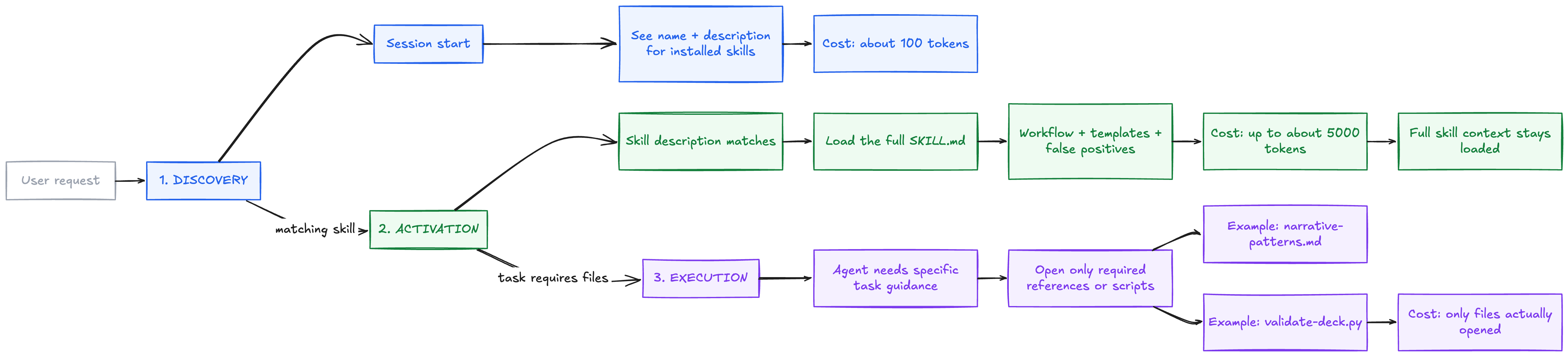
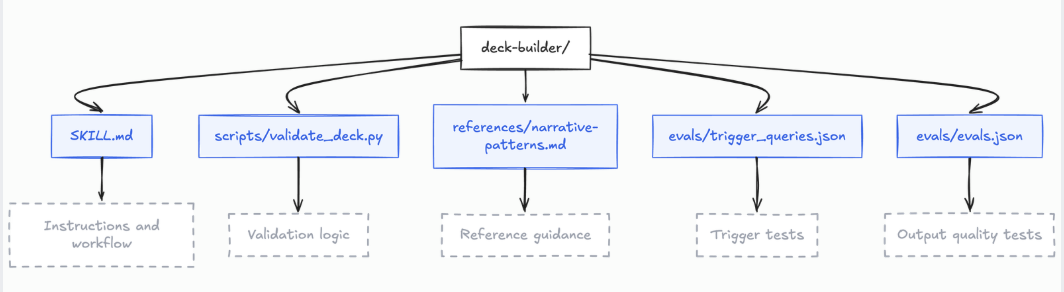
The concept of Agent Skills originated at Anthropic and has since matured into an open standard supported by over 45 major tools, including Claude Code, GitHub Copilot, Cursor, Gemini CLI, and JetBrains Junie. At its core, a skill is a directory containing a SKILL.md file. The agent reads a concise, one-line summary at startup and only accesses the full instruction set when a specific task requires it.
By writing your documentation once and committing it alongside your code, every agent on your team gains access to the same institutional knowledge, turning boring, repeatable tasks into standardized, automated procedures.
Chronology: From Concept to Executable Runbook
Most AI implementation guides suffer from a lack of focus, scattering half-finished examples across disparate sections. To understand the true utility of Agent Skills, we must look at the lifecycle of a single, well-architected skill: the deck-builder.
Version 1: The Ten-Minute Foundation
A skill begins as a simple 28-line Markdown file. In the case of deck-builder, the objective was to move agents away from "lazy" generation—where they write slide content immediately—to a "thought-first" approach. By forcing the agent to brainstorm the audience, core message, and narrative arc before generating a single slide, the quality of the output improves exponentially.
Version 2: Tuning for Triggering
A skill that never fires is worthless. Version 2 focuses on the description field within the YAML frontmatter. By testing against twenty realistic, labeled queries—ranging from explicit requests ("make me a deck") to implicit ones ("put something together for Thursday")—the skill becomes a proactive assistant rather than a passive tool.
Version 3: Efficiency and Context Budgeting
As a skill grows, it must "earn" its tokens. An active skill consumes context for the duration of a session. Version 3 involves ruthlessly pruning instructions the agent already knows, focusing only on the specific pitfalls unique to your organization.
Version 4: Verification through Validation
Prose alone cannot enforce a procedure. By bundling a Python script (e.g., validate_deck.py), you shift from "hoping" the agent follows rules to "verifying" it does. If the validator exits with a non-zero code, the agent is forced to iterate, ensuring the output is technically compliant with your team’s standards.
Version 5: Progressive Disclosure
For deep expertise—such as narrative theory or complex decision-making frameworks—the instruction set should not be in the main SKILL.md. Moving these to a references/ folder ensures that the agent only pulls this context into its memory when explicitly needed, maintaining a 96% reduction in token usage compared to monolithic system prompts.
Supporting Data: Why Giant System Prompts Fail
The traditional approach of stuffing all instructions into a single, always-on file (like AGENTS.md) is fundamentally flawed for three reasons:
- Economic Cost: The system prompt is loaded with every API call. If you have twenty runbooks, you are paying for thousands of tokens per turn, even when the conversation is unrelated to those tasks.
- Attention Decay: Large context windows do not guarantee uniform attention. Research shows that instruction-following degrades when critical rules are buried in 80,000 tokens of boilerplate.
- Lack of Enforceability: Prose is a suggestion; code is a constraint. Only a validator script can provide the objective verification required for enterprise-grade automation.
Implications for Security and Trust
As the ecosystem for Agent Skills grows, it begins to mirror the package management landscape (like npm or PyPI). This introduces a critical attack surface. A skill is not inert data; it is instructions that enter your agent’s context and scripts that execute on your local machine with your credentials.
The Security Audit Lifecycle
Before installing any third-party skill, developers must adopt a "scan-before-install" mentality. NVIDIA’s SkillSpector tool serves as the industry standard for this. It scans for common vulnerabilities including:
- Prompt Injection: Hidden directives designed to override safety protocols.
- Data Exfiltration: Malicious scripts attempting to harvest environment variables.
- Excessive Agency: Skills that grant themselves unauthorized tool access via the
allowed-toolsfield.
The industry data is sobering: a recent study of over 30,000 skills found that roughly one in four contained security issues, with one in twenty showing evidence of deliberate malice.
Best Practices for the AI-Native Enterprise
To build robust, portable, and secure skills, organizations should adhere to these fundamental principles:
- Prioritize Portability: Stick to the six fields defined by the official specification (
name,description,license,compatibility,metadata,allowed-tools). Avoid client-specific extensions unless the skill is intended to remain within a siloed environment. - Commit to Evaluations: Use
evals.jsonto test your skills regularly. If a skill does not consistently outperform the bare model, it is a liability, not an asset. - Embrace the Trust Boundary: Remember that workspace trust is not a substitute for code review. Treat the frontmatter and the bundled scripts of a skill with the same scrutiny you would apply to a third-party library dependency.
Conclusion
The transition from "AI as a chat interface" to "AI as an autonomous agentic workforce" requires a shift in how we manage knowledge. Agent Skills provide the necessary architecture to turn ephemeral chat sessions into permanent, executable assets.
By building skills that are lightweight, verified, and secure, you do more than just save time—you institutionalize the best practices of your team. The next time you find yourself repeating the same technical explanation, stop. That moment of frustration is your signal to build a skill. It will be the last time you ever have to type it.


 Jia Lissa
 Nila Kartika Wati
 Raul Delapena Setiawan
 Reynand Wu
 Sagoh
Sagoh

 Azzam Bilal Chamdy
 Ali Ikhwan