
 Azzam Bilal Chamdy
In a significant challenge to the UK’s long-term climate strategy, the opposition Conservative Party has unveiled a new report proposing a radical departure from the nation’s 2050 net-zero trajectory. Authored by the centre-right thinktank Onward, the report argues that current climate policies are "bankrupting" the country and posits that a pivot toward a gas-and-nuclear-heavy energy system could save the UK over £320bn.
However, the proposal has ignited a firestorm of expert criticism. Climate scientists, energy economists, and policy analysts warn that the report’s foundational assumptions—ranging from the future stability of global gas prices to the feasibility of building new nuclear capacity—are deeply flawed. By dissecting the report’s logic, this analysis reveals a disconnect between the Conservative vision of "cheap, reliable power" and the economic and physical realities of the global energy transition.
Main Facts: The "Alternative Policy Pathway"
The Onward report, underpinned by modelling from consultancy Transira Energy, contrasts the current "net-zero" trajectory with an "Alternative Policy Pathway" (APP). The APP assumes the abandonment of the UK’s 2050 climate targets following the next general election in 2029.
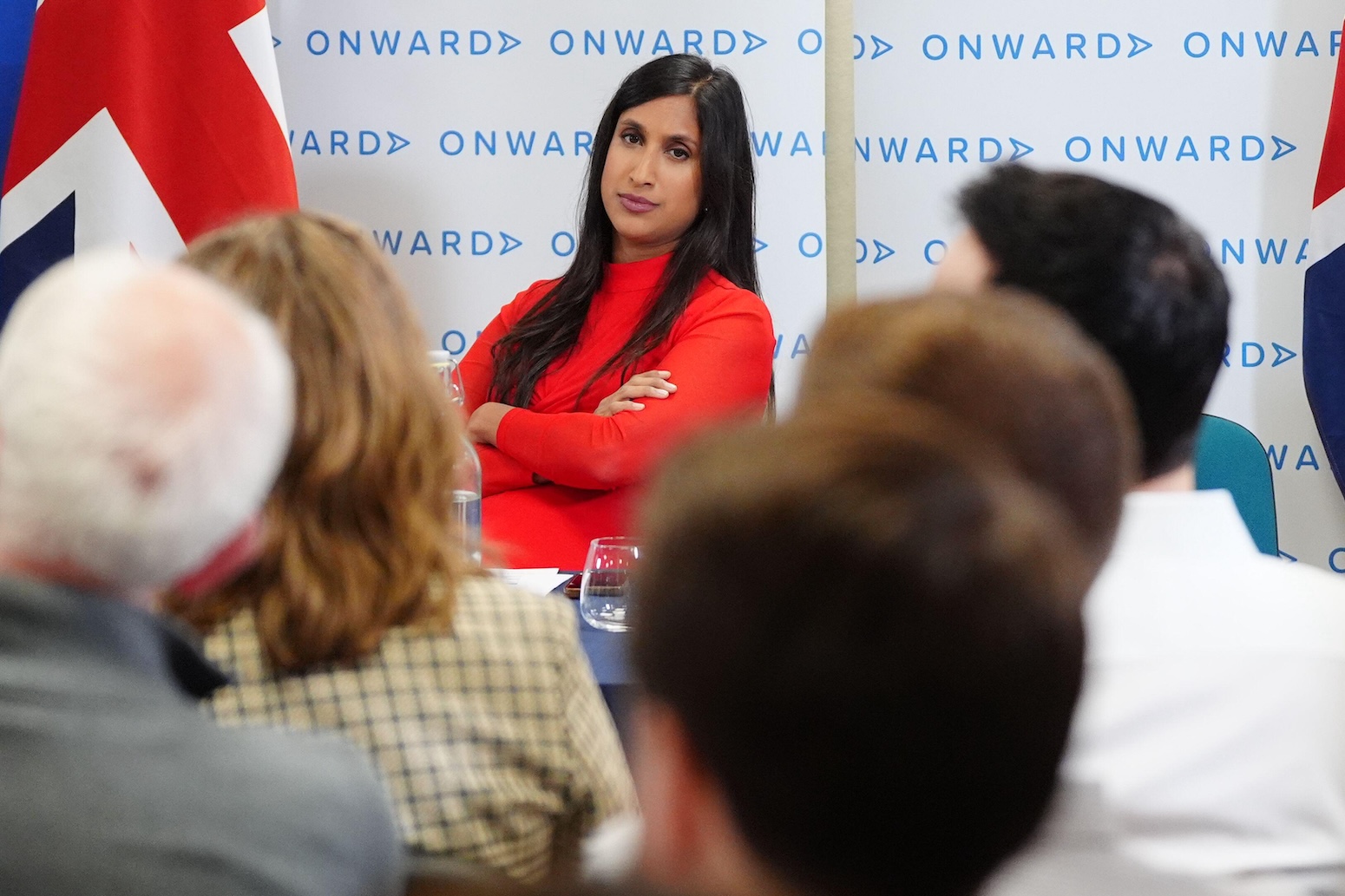
The core argument is that by scrapping subsidies for renewables, removing electrification mandates, and prioritizing gas and nuclear generation, the UK can lower electricity prices and stimulate the economy. Shadow energy secretary Claire Coutinho, in the report’s foreword, claims this approach makes electrification "more attractive" by focusing on price reduction rather than regulatory mandates.
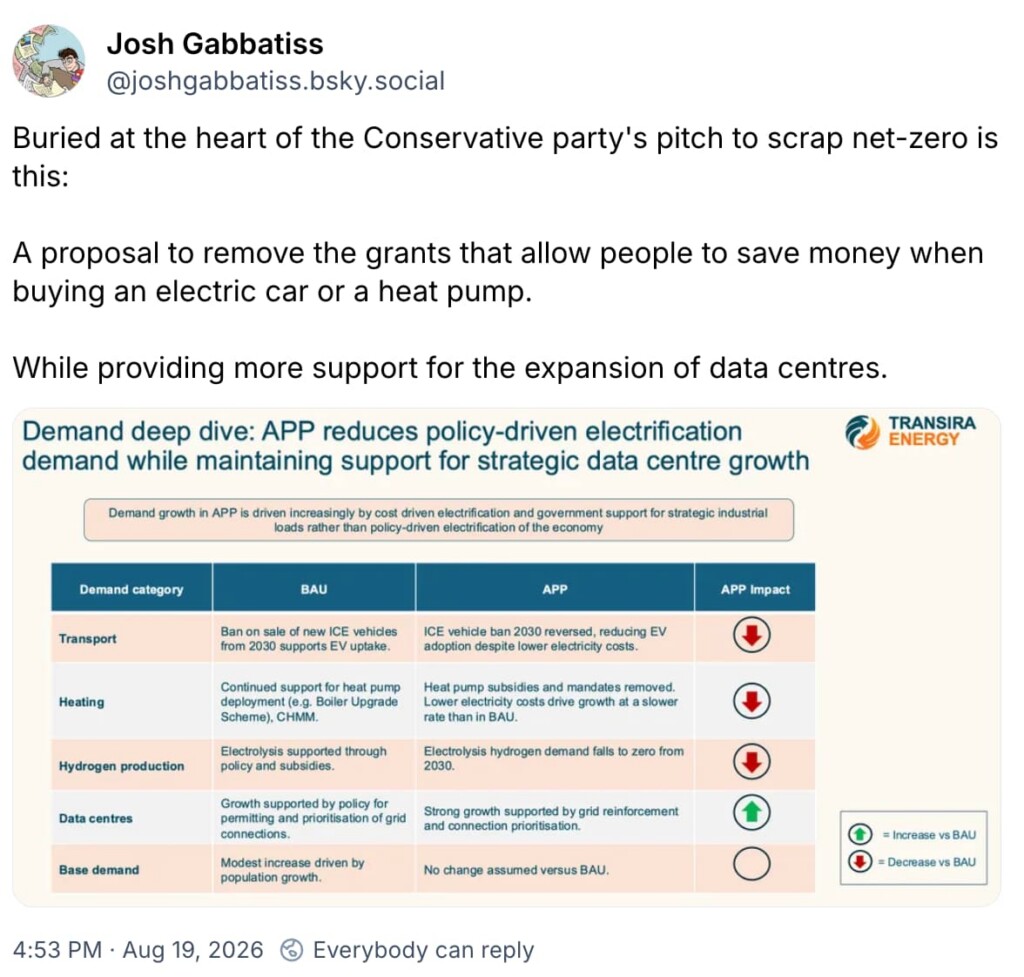
Yet, the report’s own data contradicts this optimistic framing. The APP scenario results in 524 million tonnes of additional CO2 emissions (MtCO2) by 2050—a volume equivalent to the annual emissions of South Africa. Furthermore, the model predicts a slower uptake of heat pumps and electric vehicles (EVs), fundamentally undermining the claim that the policy would accelerate the electrification of the British economy.
Chronology of the Debate
- 2019: The UK legislates the "net-zero by 2050" target, setting a global precedent for a major economy.
- 2022-2026: Geopolitical volatility, including the war in Ukraine and the Iran-linked energy supply disruptions, causes severe spikes in UK energy costs, leading to calls from some quarters to reconsider the pace of the transition.
- August 2026: Onward publishes its report, "Firm Foundations," calling for a shift away from intermittent renewables.
- August 2026: Energy experts and academic institutions, including Imperial College London, issue immediate rebuttals, identifying significant gaps in the report’s modelling.
Supporting Data: Where the Assumptions Fail
The criticism of the Onward report centres on three critical pillars: the price of gas, the cost of infrastructure, and the systemic value of renewables.
The Gas Price Fallacy
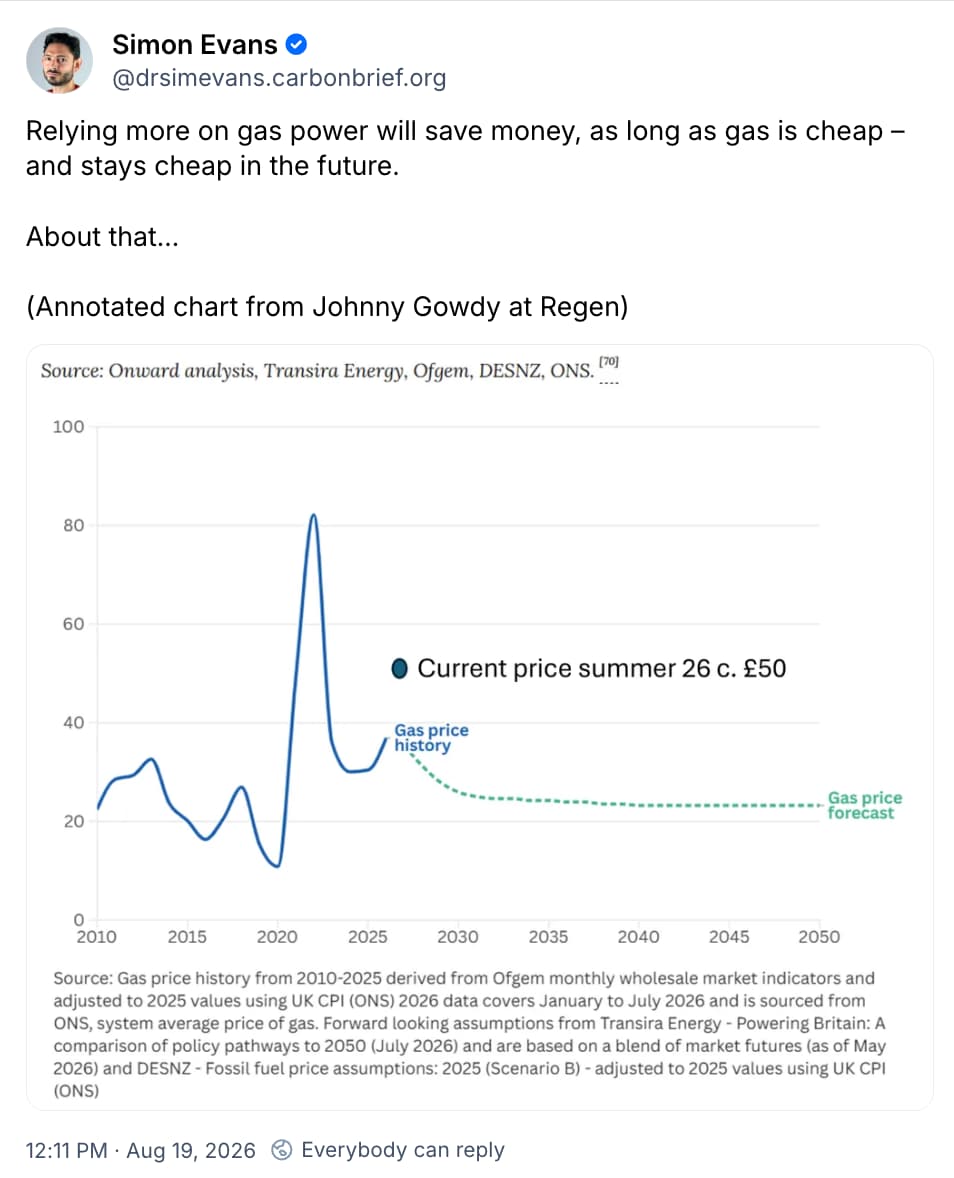
The report assumes that natural gas prices will return to pre-conflict levels and remain stable for the next two decades. This assumption is viewed by market analysts as "hard to fathom." Recent history has shown that gas is the primary driver of UK electricity price volatility. By tying the nation’s energy future to increased gas consumption, the APP model significantly exposes the British public to future geopolitical shocks.
Infrastructure and Capital Costs
The report assumes a capital expenditure for new gas power plants of £650 per kilowatt (kW). Independent data from GridLab and other international energy agencies suggest that modern costs are frequently double or triple this figure, often exceeding £1,400-£2,000/kW due to global supply chain bottlenecks for turbines.
The "System Integration" Myth
Perhaps the most contentious claim is that integrating wind and solar costs an additional £125/MWh. Experts like Iain Staffell of Imperial College London argue this figure is "far out of line with mainstream thinking." When accounting for the full system benefits of renewables—including reduced wholesale prices and the avoidance of fuel-import costs—renewables remain the most cost-effective path to decarbonization. The Onward report appears to double-count costs, simultaneously factoring in expensive network upgrades while assuming an unrealistic reduction in the need for such infrastructure.
Official Responses and Expert Critique
The professional community has reacted with significant skepticism.
Iain Staffell, Imperial College London: "The report tells a good story, but the modelling underpinning it has more holes than a Swiss cheese."
Daniela Quiroga, Copenhagen Infrastructure Partners: "The report overlooks potentially important feedback effects. As electricity prices and the capital costs of electrification technologies fall, uptake should increase, not decrease as the model suggests."
Adam Bell, Stonehaven Consultancy: Regarding the "system integration costs," Bell noted that the report’s methodology is "really egregious," essentially attributing all future network upgrade costs to renewables while ignoring that aging grid infrastructure would require massive investment regardless of the generation mix.
Conservative leadership, led by Kemi Badenoch, maintains that their "common sense" approach is necessary to prevent energy poverty. They argue that "net-zero" policies have become a burden that the British public can no longer afford. However, they have yet to provide a robust response to the critique that their plan relies on cheaper energy imports that the global market may never provide.
Implications: The Risks of a Policy Pivot
The implications of adopting the Onward proposal are profound, touching on economic, environmental, and diplomatic spheres.
Undermining Investor Confidence
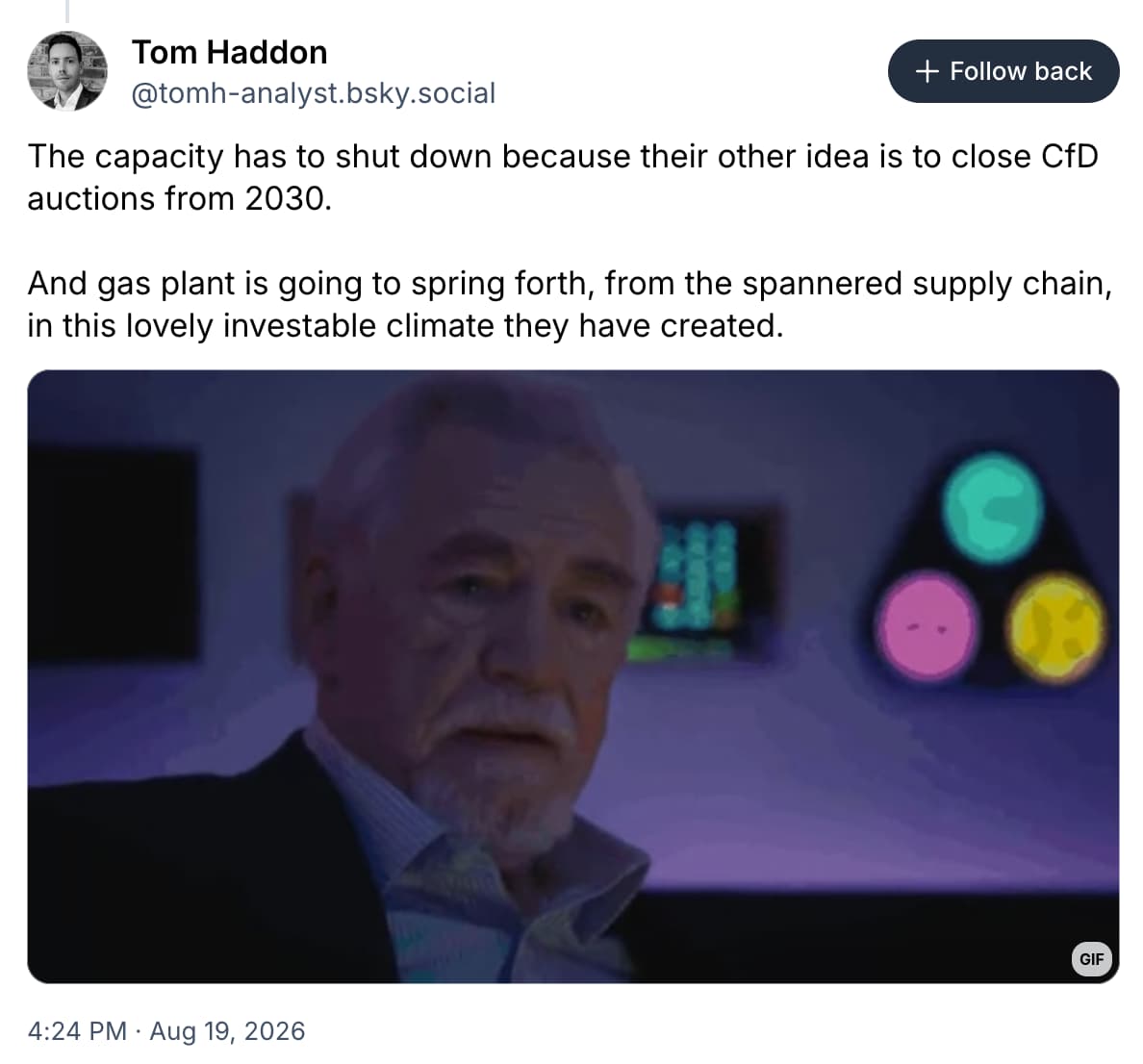
The proposal to retroactively end the "Renewables Obligation" (RO) payments and prematurely shutter the "Contracts for Difference" (CfD) auctions would send a chilling signal to global capital markets. Investors in the energy sector prioritize policy stability above all else. If the UK government were to renege on existing contracts for renewables, it is highly unlikely that investors would trust the government’s commitment to new "Regulated Asset Base" (RAB) contracts for nuclear projects.
The International Dimension
The UK’s commitment to a carbon price on electricity is a legal pillar of the post-Brexit trade agreement with the European Union. By proposing to remove power plants from the UK Emissions Trading Scheme (UK ETS), the government would likely trigger a trade dispute and potentially invite carbon border adjustment mechanisms (CBAM) from the EU, effectively imposing taxes on British exports.
The Climate Legacy
Abandoning the 2050 target would not only forfeit the UK’s position as a global leader in climate policy but would also lock the country into a carbon-intensive infrastructure for decades. The reliance on gas-fired plants ensures that even if energy prices were temporarily lowered, the UK would remain vulnerable to the volatile and inflationary nature of fossil fuel markets.
Summary
The Onward report serves as a diagnostic tool for the current political divide regarding energy. While the desire to lower consumer bills is universally shared, the methodology proposed—trading long-term energy security and environmental stability for short-term gas-dependency—fails the test of rigorous economic analysis.
The path to a stable, affordable energy future, according to the majority of independent experts, lies in diversifying the grid through increased renewable capacity, investing in long-duration energy storage, and upgrading the national transmission network. The Conservative proposal to "go it alone" with gas and nuclear, while stripping away the regulatory framework that makes such a transition possible, appears to be a solution that addresses the symptoms of the energy crisis while exacerbating the underlying disease. As the UK looks toward 2050, the debate will continue to oscillate between the appeal of "common sense" rhetoric and the cold, hard data of the energy transition.

 Raul Delapena Setiawan
 Laily UPN
 Reynand Wu
 Sagoh
Sagoh


 Ali Ikhwan