
 Dwi Wanna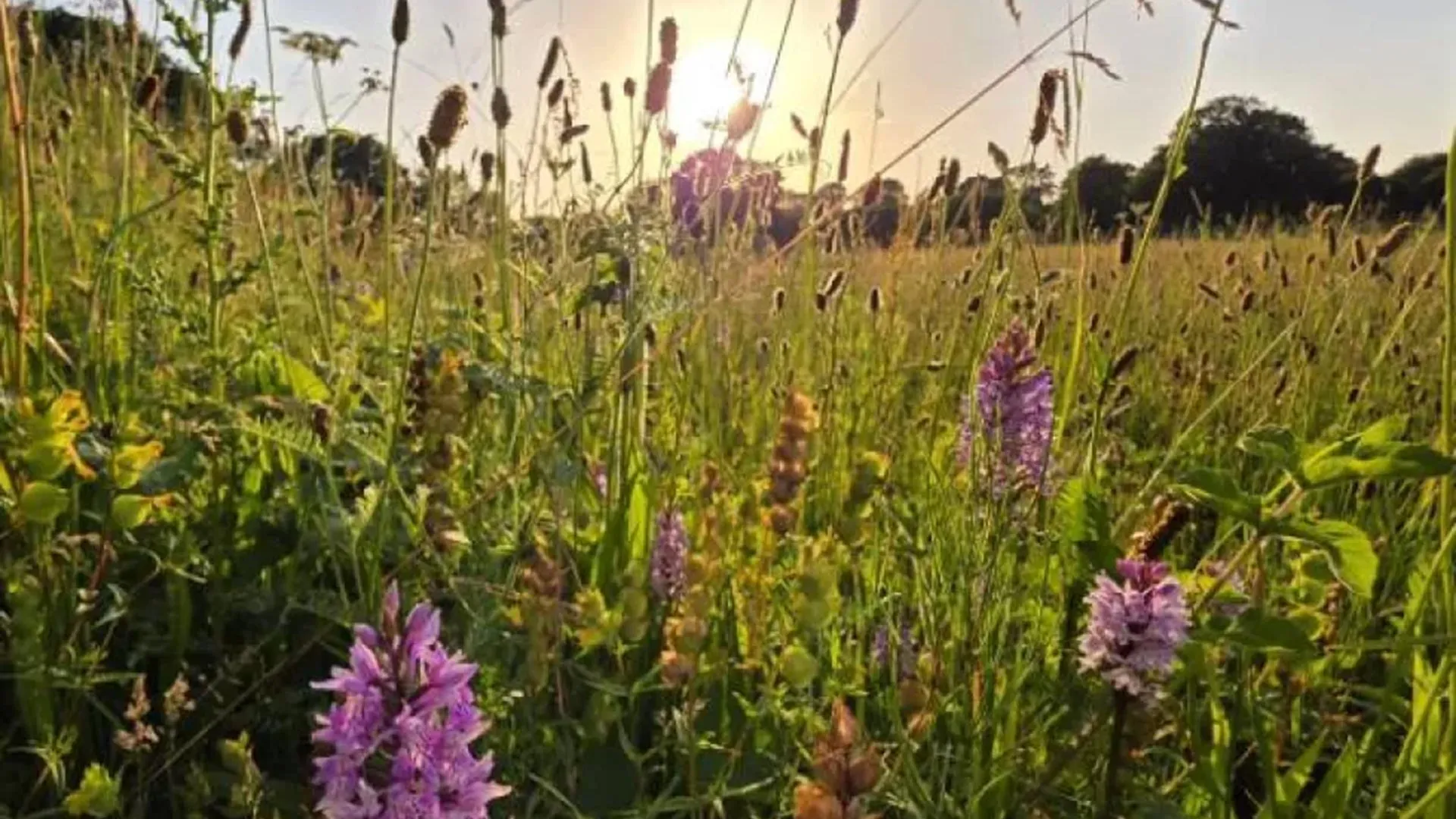
In an era where biodiversity loss has reached a critical tipping point, the global conservation community has largely coalesced around a singular, interventionist strategy: active restoration. Whether through the mass distribution of commercial seed mixes or the intensive engineering of soil profiles, the prevailing wisdom suggests that damaged ecosystems require a heavy human hand to return to their former glory. However, a landmark study led by researchers at UCL Geography is challenging these foundational assumptions, suggesting that when it comes to habitat restoration, the most effective tool may simply be time.
Research published in the journal Restoration Ecology provides compelling evidence that abandoned farmland can recover naturally, blossoming into vibrant, species-rich wildflower meadows without the need for expensive or artificial interventions. By tracking the evolution of a two-hectare field in North Norfolk over 11 years, the study offers a powerful argument for a "hands-off" approach to ecological restoration—one that prioritizes natural spontaneity over the traditional, seed-packet-driven model.
A Chronology of Recovery: From Arable Crop to Wildflower Haven
The study site, known as Sayer’s Meadow in the village of Bodham, provides a unique, real-world laboratory for ecological succession. The site’s transformation began in 2005, when farming operations ceased following a final harvest of oilseed rape. The land, which had long proved difficult to manage due to poor drainage, was left to its own devices.
For the subsequent years, the site was subjected to only the most minimal human management: a traditional annual hay cut. This age-old agricultural practice, which removes biomass and prevents the land from scrubbing over into dense woodland, serves as the only constant human input.
Between 2011 and 2022, Professor Carl Sayer and his collaborator, Pete Robinson, undertook a rigorous, long-term monitoring project. The goal was to document how the abandoned arable land would respond to the cessation of intensive farming. What they discovered was not a barren landscape awaiting human "repair," but a dynamic, self-organizing system. Within a decade, the field had transitioned from a monotonous former crop site into a burgeoning tapestry of biodiversity, proving that ecological recovery is not only possible but perhaps more robust when left to unfold naturally.
The Data: Quantifying the Return of Nature
Ecological studies of this duration are notoriously rare, often falling victim to shifting land ownership, funding gaps, or the logistical challenges of long-term field research. However, the consistent monitoring at Sayer’s Meadow has produced a dataset that is as significant as it is inspiring.
The researchers conducted vegetation surveys every two to three years, mapping every plant species within permanent plots across the two-hectare site. The data revealed a steady, upward trajectory of biodiversity. In 2011, the average number of plant species per survey plot hovered at approximately 10. By 2022, that figure had doubled, reaching nearly 20 species per plot.
This increase was not merely in the quantity of plants, but in their quality and rarity. The site saw the natural colonization of indicator species—plants that thrive only in healthy, undisturbed grasslands. Among these were southern marsh orchids, greater tussock-sedge, yellow rattle, and common centaury. Most remarkably, thousands of orchids established themselves across the meadow, turning a former oilseed rape field into a site of local ecological importance.
The researchers hypothesize that the arrival of these more specialized plants was likely facilitated by local wildlife. Deer and other small mammals, acting as unintentional vectors for seeds, likely moved through the landscape, transporting plant matter from nearby ancient meadows and hedgerows into the newly opening habitat. This suggests that the "success" of the meadow was not a result of human precision, but of a wider, interconnected landscape functioning as it should.
Official Responses and the "Seed Packet" Debate
The implications of this research are profound, sparking a lively debate within the conservation sector. Professor Carl Sayer, a specialist in Limnology and Freshwater Ecology at UCL, has become a vocal advocate for rethinking the current "restoration-by-numbers" paradigm.
"Our study shows that resisting seeding and allowing nature to lead may be worth trying a lot more in wildflower meadow restoration," Professor Sayer stated in his assessment of the findings. "Natural plant recovery better safeguards genetic diversity than seeding and ensures that local species thrive, making meadows less generic. As things stand, the UK needs nature recovery fast, at big scales. In the push to achieve this goal, our study poses the question: should we be employing patience over seed packets more often?"
The critique here is aimed at the industry-standard practice of purchasing "meadow mixes." While these mixes often contain colorful, popular species, they frequently lack the genetic diversity of plants that have evolved over millennia to suit specific local soil conditions and microclimates. By introducing commercial seeds, conservationists may inadvertently be "homogenizing" the landscape, creating "meadows-in-a-box" that lack the resilience and authentic character of naturally recovered grasslands.
Implications for Climate Resilience and Biodiversity
As governments across the UK and the European Union grapple with the urgent need to meet biodiversity targets and climate adaptation goals, the Sayer’s Meadow study arrives at a critical juncture. There is an increasing realization that species-rich grasslands are not just aesthetic assets; they are essential infrastructure for a healthy planet.
The Role of Ecosystem Resilience
Healthy meadows act as vital habitats for pollinating insects, whose decline threatens global food security. Furthermore, these grasslands support complex networks of birds and small mammals. From a climate perspective, grasslands with deep-rooted, diverse plant species are more resilient to the extremes of drought and flooding, helping to stabilize landscapes in an increasingly volatile climate.
Cost-Effectiveness and Scalability
Beyond the ecological benefits, the "nature-led" approach offers a clear economic advantage. Restoration projects that rely on intensive seeding, soil amendment, and ongoing human maintenance are prohibitively expensive and logistically complex. The Sayer’s Meadow model demonstrates that by simply removing the pressures of industrial agriculture and allowing for natural processes—assisted by traditional hay-cutting—landowners can achieve high-level biodiversity at a fraction of the cost.
For policymakers looking to implement "nature recovery at scale," the findings suggest that the best strategy may involve designating vast tracts of marginal farmland for "natural succession." This approach requires a shift in mindset: moving from a culture of "managing nature" to one of "facilitating the conditions for nature to manage itself."
Personal Reflections: A Return to Simplicity
For Professor Sayer, the project was also deeply personal. Reflecting on the journey from a struggling crop field to a blooming meadow, he emphasizes the emotional and historical resonance of the site.
"The field belongs to my family, and after an oilseed rape crop in 2005, we stopped farming it as the land was difficult to drain," Sayer recounted. "I really wanted a wildflower meadow, and all advice was to seed it, but I resisted the temptation, as I have always been interested in nature’s ability to recover itself."
His patience was rewarded in ways that commercial intervention could never replicate. "When the first orchids started appearing in our surveys, we were thrilled," he said. "Now the meadow is unbelievably diverse, with thousands of orchids that delight locals in the village. Our study shows what can be achieved by a traditional hay-cutting approach combined with nature’s brilliant spontaneity. A visit to the meadow is like stepping back through time."
Conclusion: A New Strategy for a Fragile Future
The evidence provided by the Sayer’s Meadow study is a call to action for conservationists, landowners, and policymakers alike. While there will always be a place for active intervention in highly degraded sites, the research confirms that we have perhaps underestimated the restorative power of natural succession.
By adopting a model of "patience over seed packets," we can foster landscapes that are not only more biologically diverse and genetically resilient but also more cost-effective to maintain. In the urgent race to reverse biodiversity loss, the lesson from North Norfolk is clear: sometimes, the most effective way to help nature is to step back, provide the necessary space, and allow the landscape the time it needs to heal itself.


 Ammar Sabilarrohman
 Neng Nana
 Asep Darmawan
 Asro
Asro
 Layla Zulfa
 Nila Kartika Wati
 Muslim