
 Nana Muazin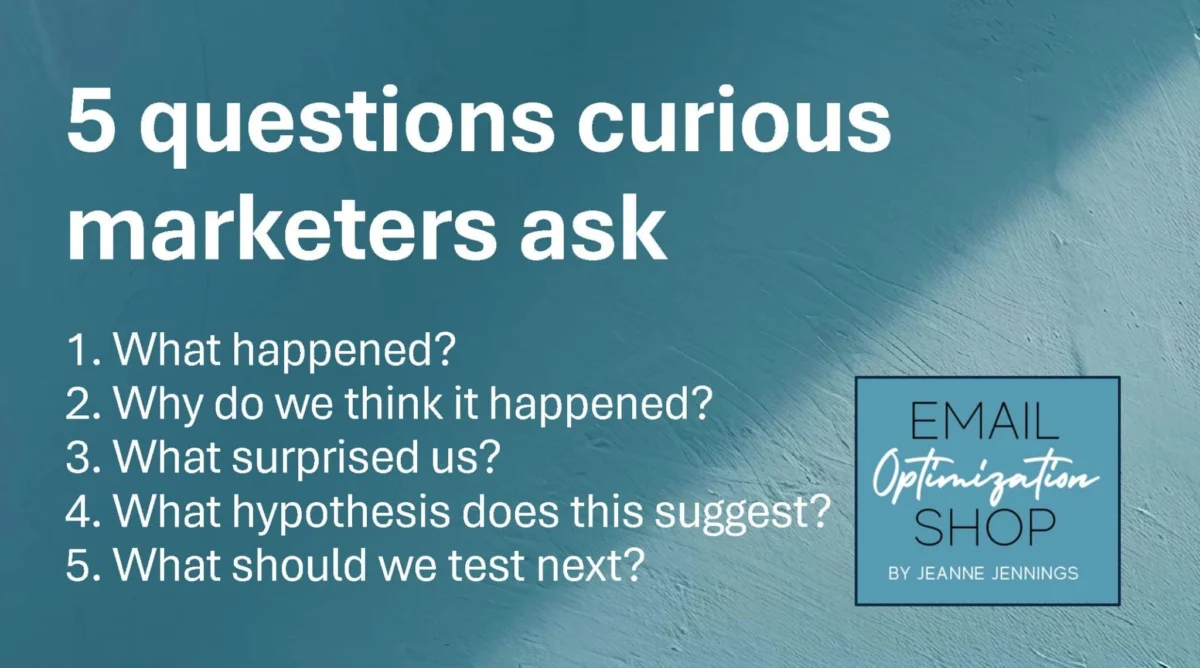
In the modern marketing landscape, the rhythm of the work cycle has become predictable: a campaign is launched, data streams into a dashboard, and the team moves on. If the numbers are favorable, there is a momentary celebration. If they fall short, there is a brief, often defensive discussion about what went wrong. In both instances, the cycle typically concludes with the team rushing toward the next deadline.
This industrial-age approach to marketing execution, however, suffers from a fundamental flaw. It treats marketing as a manufacturing process rather than a scientific inquiry. By focusing solely on the "what"—the clicks, the conversions, and the revenue—marketers are missing the most critical component of long-term success: the "why."
The Anatomy of the Missing Link: Curiosity
The distinction between routine execution and continuous optimization lies in the presence of curiosity. While technical proficiency in SEO, automation, and paid media is non-negotiable in the digital age, these skills merely provide the infrastructure for output. They do not, by themselves, ensure improvement.
Curiosity is the cognitive bridge that transforms raw data into actionable intelligence. When a conversion rate dips by 18%, a data-driven marketer notes the decline; a curious marketer initiates an investigation. They ask whether the dip was localized to specific demographics, if traffic quality shifted, or if a subtle friction point was introduced on the landing page. This transition from passive reporting to active inquiry is the hallmark of high-performing marketing teams.
The Scientific Framework: Moving Beyond Observation
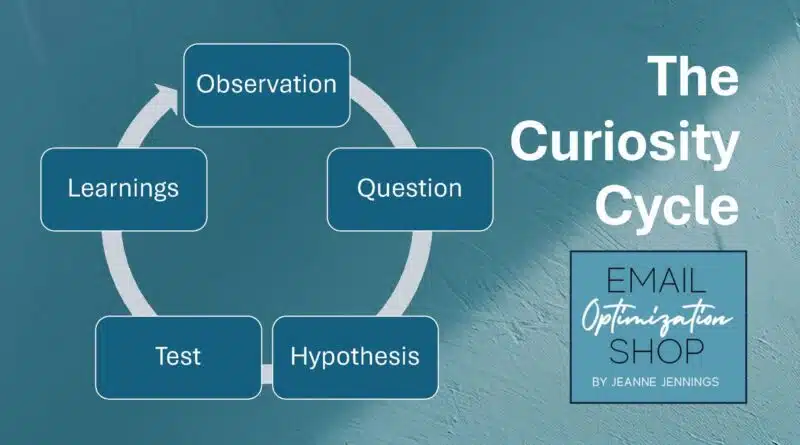
To institutionalize curiosity, marketers must shift their mindset from "proving" success to "discovering" truth. This requires adopting a rigorous, evidence-based workflow:
- Observation: Identifying a shift in performance, whether positive or negative.
- Questioning: Probing the underlying variables that could have influenced the outcome.
- Hypothesizing: Formulating a testable explanation for the observed behavior.
- Testing: Executing controlled experiments to validate or refute the hypothesis.
- Learning: Codifying the results to inform future strategy.
This cycle never truly reaches a final endpoint. Instead, it creates a flywheel of compounding knowledge. Every "losing" test is not a failure of strategy, but a success of methodology, as it eliminates variables and narrows the focus toward what truly resonates with the audience.
The Fallacy of "Best Practices"
Marketing is rife with dogmatic "best practices." We are told to keep forms short, place calls-to-action above the fold, and maintain strict cadence in content distribution. While these heuristics offer a helpful starting point, they are frequently treated as universal laws.

Curiosity acts as a safeguard against these bad habits. A curious marketer asks: "Best for whom? Under what conditions?" By treating industry benchmarks as hypotheses rather than gospel, teams can engage in localized testing that respects the unique nuances of their specific customer base. If conventional wisdom suggests a tactic should work, but your audience disagrees, the data—not the article you read online—must dictate the next move.
Embracing the Discomfort of Being Wrong
Perhaps the greatest barrier to curiosity is the human ego. We invest time, budget, and reputation into our campaigns. When a test contradicts our expectations, the instinct is often to defend the initial hypothesis.
However, the most successful marketers are those who are comfortable being wrong. In the pursuit of optimization, a disproven hypothesis is just as valuable as a confirmed one. It sheds light on erroneous assumptions and prevents the organization from doubling down on ineffective strategies. Shifting the goal from "being right" to "finding out what is true" creates a culture of intellectual humility that is essential for navigating the volatility of digital markets.
Investigating the Winners
One of the most common mistakes in campaign management is the failure to scrutinize successes. If a campaign beats projections by 40%, many teams are content to replicate the process blindly. This is a missed opportunity.
Understanding why a campaign succeeded is just as important as understanding why one failed. Was it the creative? The audience segmentation? A shift in external market sentiment? Without deconstructing the victory, the team cannot replicate it with consistency. Curiosity turns a lucky break into a repeatable strategic advantage.
Building Curiosity into the Workflow
To transition from a team that "runs campaigns" to a team that "optimizes performance," curiosity must be operationalized. It cannot be an abstract value; it must be a procedural requirement. Every post-campaign review should center on five foundational questions:
- What was the primary driver of this result? (Moving beyond vanity metrics to causal factors.)
- What was the most surprising piece of data we uncovered? (Focusing on anomalies.)
- What assumptions were challenged by this outcome? (Identifying flawed mental models.)
- What is the next logical hypothesis we should test? (Maintaining momentum.)
- What information are we still missing? (Identifying gaps in intelligence.)
By integrating these questions into the standard operating procedure, organizations move beyond simple reporting and enter the realm of true strategic growth.
The Competitive Moat: Intelligence in the Age of AI
We are currently entering an era where access to technology is becoming commoditized. AI tools, advanced analytics platforms, and automation software are available to every competitor in the market. Consequently, technical execution is no longer a significant differentiator.
The competitive moat of the future will not be built on which company has the most sophisticated toolset, but on which company has the most curious culture. When everyone has access to the same data, the company that asks the best questions will consistently win.
Conclusion: A Continuous Path Forward
The future of marketing belongs to those who refuse to settle for the "what" and remain relentlessly committed to the "why." By fostering a culture of inquiry, challenging established dogmas, and embracing the results of rigorous testing, marketers can transcend the role of executors and become architects of growth.
The next time you review your dashboard, look past the green and red arrows. Ask yourself why the numbers look the way they do, hypothesize what might change the outcome, and commit to the test. In a world of increasing noise and automation, your curiosity is the only asset that cannot be automated—and it is the one that will make tomorrow’s marketing significantly better than today’s.
Stay curious. Keep testing. Keep learning.
Author’s Note on Methodology
This article was developed through a collaborative process utilizing AI as a strategic thought partner. AI was instrumental in organizing the narrative structure, pressure-testing the core arguments, and refining the clarity of the prose. All viewpoints, case examples, and strategic conclusions remain the original work of the author, who conducted a comprehensive review and final edit prior to publication. Transparency in AI integration remains a core tenet of ethical marketing practice.


 Ammar Sabilarrohman
 Sagoh
Sagoh
 Raul Delapena Setiawan
 Reynand Wu


 Azzam Bilal Chamdy
 Ali Ikhwan