
 Suro Senen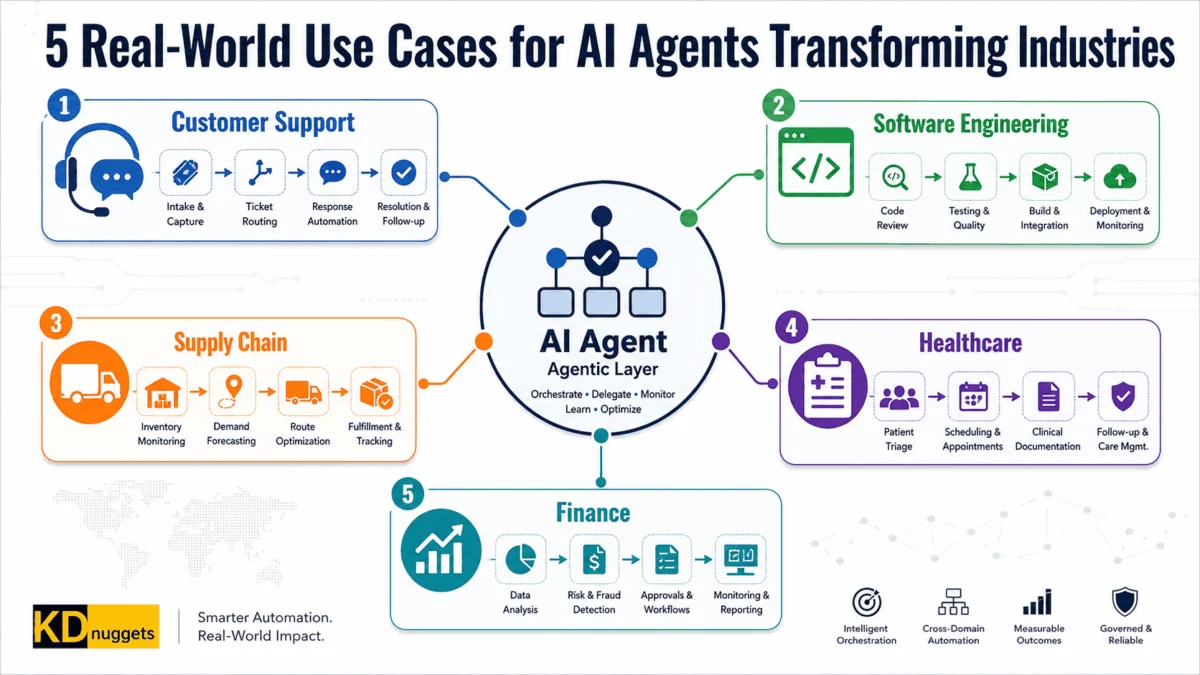
In the landscape of 2026, the technology sector has reached a definitive inflection point. The era of the "passive chatbot"—those systems that waited for a user prompt to generate a static response—has effectively ended. In its place, we have entered the age of Agentic AI. These systems no longer merely suggest; they act. They are autonomous, goal-oriented, and capable of executing multi-step, complex workflows across external databases, APIs, and software ecosystems with minimal human intervention.
For the modern enterprise, this transition from "Generative AI" to "Agentic AI" is the difference between a glorified spell-checker and a digital employee. These agents are now navigating supply chain crises, debugging complex software architectures, and auditing multi-million dollar financial transactions in real-time.
The Chronology of the Agentic Revolution
To understand how we reached this point, one must look at the rapid maturation of the technology over the last 24 months:
- 2024: The Era of Foundation Models: The industry was focused on the sheer capabilities of Large Language Models (LLMs). The primary goal was prompt engineering and maximizing the quality of text output.
- 2025: The Rise of RAG and Tooling: Developers began connecting LLMs to external data via Retrieval-Augmented Generation (RAG). This allowed models to access private company data, providing the "memory" required for agents.
- 2026: The Autonomy Threshold: With the refinement of agentic frameworks (such as AutoGen, CrewAI, and LangGraph), AI systems achieved the "reasoning loop" capability. They can now iterate on their own actions, self-correct based on error logs, and plan long-horizon tasks, marking their official transition into production environments.
Five Pillars of Industrial Transformation
The impact of these agents is not theoretical. Across five major sectors, we are seeing a fundamental reconfiguration of the human-machine division of labor.
1. The Autonomous Customer Support Loop
Historically, "customer service automation" meant a series of rigid decision trees. Today’s AI agents serve as full-lifecycle operators. By integrating directly into CRMs like Salesforce or Zendesk, they handle complex, context-sensitive requests.
- The Workflow: An agent can receive an email regarding a missing shipment, verify the status via a logistics API, cross-reference the refund policy in the company’s internal documentation, and process a partial refund—all while drafting a personalized, empathetic apology to the client.
- Implications: The "Average Handle Time" (AHT) metric has plummeted. More importantly, human agents are no longer burdened by password resets or status lookups; they are elevated to "Tier 3" problem solvers who handle emotionally charged or highly complex escalations.
2. Software Engineering: The "Agentic Developer"
Software engineering is undergoing its most radical shift since the advent of high-level programming languages. Autonomous coding agents are now capable of consuming an entire repository, identifying a bug, writing a unit test, patching the code, and submitting a Pull Request (PR) for review.
- Operational Reality: Platforms like SWE-agent allow developers to offload the "boilerplate" drudgery. These agents act as junior engineers, performing the repetitive tasks of regression testing and dependency updates.
- The Strategic Shift: Human developers are moving away from writing lines of code and toward the role of "Architectural Overseer." They spend their days on system design, security auditing, and code reviews, effectively managing a team of AI agents to ship features at a velocity previously thought impossible.
3. Supply Chain Orchestration
Global logistics is a fragile, high-stakes game of "what-if." Multi-agent systems now monitor real-time global telemetry—weather patterns, port strikes, and geopolitical shifts—to dynamically re-route cargo.
- Data-Driven Negotiation: When a disruption occurs, these agents can negotiate with alternative carriers, calculate the cost-benefit analysis of air freight versus sea freight, and update inventory systems across the global chain.
- The Result: Supply chain resilience is no longer a reactive human process. It is a proactive, algorithmic constant. Organizations are reporting a 30-40% reduction in "bullwhip effect" disruptions, as agents anticipate bottlenecks before they manifest in the physical world.
4. Healthcare: Curing Administrative Burnout
The healthcare sector faces a silent crisis: administrative bloat. Doctors and nurses often spend 40% of their time on EHR (Electronic Health Record) documentation. Agentic AI is reclaiming this time.
- Clinical Triage: AI agents now handle the pre-visit intake, gathering patient symptoms and reconciling them with historical data. They don’t diagnose, but they synthesize the medical history into a concise briefing for the physician.
- Compliance and Coordination: By managing scheduling and insurance pre-authorizations, these agents reduce the overhead that leads to clinician burnout, allowing the medical staff to return to the human-centric aspects of patient care.
5. Financial Compliance and Fraud Detection
The "arms race" in finance has been lopsided for years: fraudsters use automated bots, while banks rely on sluggish, rule-based compliance teams. AI agents have leveled the playing field.
- Contextual Investigation: Unlike traditional systems that flag every large transaction, agentic systems perform deep, contextual investigations. They analyze the "behavioral DNA" of a user, cross-referencing account activity with recent login locations, device fingerprints, and typical spending patterns.
- Efficiency: By filtering out the false positives that traditionally plague compliance departments, these agents allow human investigators to focus on the high-probability fraud cases, significantly reducing the "noise-to-signal" ratio.
Supporting Data and Industry Insights
According to recent enterprise reports, companies that have successfully integrated agentic workflows are seeing a 25-50% increase in operational throughput. The data indicates that the primary value is not necessarily in "cost-cutting" through layoffs, but in "capacity expansion"—the ability to scale services to meet demand without linearly scaling headcount.
Official Responses and Ethical Considerations
While the productivity gains are substantial, industry leaders are increasingly vocal about the need for "Human-in-the-Loop" (HITL) oversight.
"We are not removing the human; we are removing the friction," says Vinod Chugani, an expert in AI education. "The goal of an autonomous agent is to provide a ‘draft’ or a ‘completed action’ that is vetted by a human expert. The liability and the strategic intent remain firmly in human hands, but the manual execution is outsourced to the agent."
Regulatory bodies are also responding. There is a growing movement toward "Agentic Governance," where companies must maintain an immutable audit trail of every decision an agent makes. As these systems gain more autonomy, the ability to trace an agent’s logic—to understand why it chose to re-route a shipment or deny a claim—has become a mandatory requirement for enterprise-grade adoption.
Implications for the Future of Work
The rise of agentic AI implies a permanent shift in the global labor market. The skills required for the workforce of 2030 will be vastly different from those of 2020.
- AI Orchestration: The most valuable employee will no longer be the one who can perform the task best, but the one who can design the best agentic workflow to perform that task.
- Strategic Oversight: As agents handle the "execution layer," human workers must double down on empathy, complex negotiation, ethical judgment, and high-level strategy—areas where silicon remains vastly inferior to carbon.
- The Continuous Learning Loop: Because agentic systems are constantly iterating, the workforce must adopt a culture of continuous technical literacy. Understanding the basics of agent frameworks (like LangChain or CrewAI) is quickly becoming as essential as understanding how to use email or spreadsheets.
Conclusion
The transition from generative AI to agentic AI marks the moment when technology moves from answering questions to actively doing the work. Across every industry discussed, a consistent pattern emerges: agents absorb the high-volume, rule-bound, time-sensitive execution layer of a workflow, while humans shift into oversight, exception handling, and creative strategy.
This is not a distant vision of a utopian future; it is the current operational reality for enterprises across the globe. For professionals and organizations, the mandate is clear: start by identifying the repetitive, high-volume "execution layers" in your own operations. The agents are ready, the tools are open-source, and the competitive advantage goes to those who start building today.

 Neng Nana
 Evan Lee Salim
 Raul Delapena Setiawan
 Reynand Wu
 Sagoh
Sagoh

 Azzam Bilal Chamdy
 Ali Ikhwan