
 Azzam Bilal Chamdy
In the modern B2B landscape, marketing is no longer a "creative" department; it is a data-driven engine responsible for fueling the sales pipeline. Yet, a startling disconnect has emerged at the highest levels of corporate strategy: organizations are aggressively allocating budgets and shifting strategies based on data that fewer than half of the leaders responsible for that data actually trust.
A comprehensive new study, "The Communications ROI Reset: What B2B Leaders Measure, Trust And Act On," conducted by 10Fold, reveals a profound crisis of confidence. Despite the sophisticated martech stacks being deployed across enterprises in the U.S., U.K., France, and Germany, only 49% of survey respondents expressed high confidence in the accuracy and completeness of their marketing data.
This lack of conviction hasn’t slowed the pace of spending, however. The study found that 88% of respondents allow this "distrusted" data to dictate strategy and budget allocation in paid social, while 87% rely on it for paid media and digital, and 85% use it to steer owned content efforts. This creates a dangerous paradox: if B2B marketing is the backbone of growth, why is that backbone built on a foundation of skepticism?
The Anatomy of the Study: A Snapshot of Global B2B Marketing
To understand the scope of the problem, 10Fold surveyed 400 professionals responsible for marketing and communications, including C-level executives, department heads, and managers. These leaders operate in high-stakes environments where every dollar spent must be accounted for by the board.

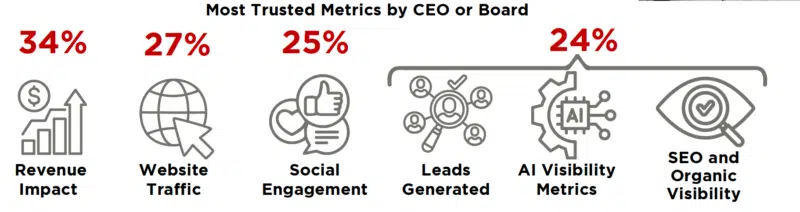
The research suggests that the issue is not a lack of data—it is an abundance of fragmented, non-integrated, and often manual systems. While 67% of teams pull from website analytics and social data, and 63% rely on CRM insights, they are effectively looking at different pieces of a puzzle that have not been cut to fit together.
Chronology of the Measurement Gap
To understand how we reached this point, we must look at the evolution of B2B marketing over the last decade.
Phase 1: The "Vanity Metric" Era (2015–2019)
Marketing measurement was dominated by easily accessible but largely superficial data points: page views, likes, shares, and email open rates. These metrics were simple to track and provided a positive narrative, but they rarely correlated with revenue.
Phase 2: The Integration Struggle (2020–2023)
As marketing budgets tightened and the demand for accountability from CEOs grew, teams began moving toward CRM and marketing automation platforms. However, the rapid adoption of specialized "point solutions" (one tool for social, one for SEO, one for email) led to data silos. The tools were capable, but they didn’t "talk" to each other.
Phase 3: The Attribution Crisis (2024–Present)
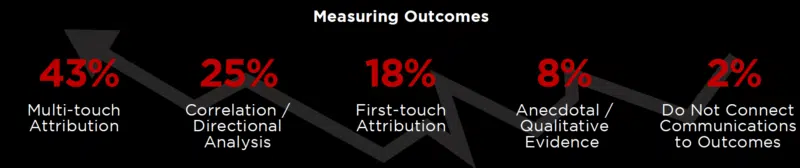
We are now in an era where leaders are expected to prove ROI through multi-touch attribution, yet the underlying data remains inconsistent. The 10Fold study highlights that 37% of teams still rely on manual spreadsheets to bridge the gap between platforms. When human intervention is required to normalize data across disparate systems, the margin for error increases, and trust in the final output inevitably wanes.
Supporting Data: Where the Disconnect Lies
The core of the measurement problem lies in the integration of reporting. The 10Fold study paints a stark picture of the current technical landscape:
- Integrated Reporting: Only 35% of organizations have fully integrated reporting that spans earned media, paid social, content, and digital channels.
- Partial Integration: 19% report that they have achieved partial integration.
- The Attribution Void: 18% of teams have integrated their reporting but suffer from inconsistent or unclear attribution, meaning they can see the data, but they cannot prove which specific touchpoint led to a conversion.
- The Spreadsheet Problem: With 37% of teams relying on manual spreadsheets, the risk of data degradation is high. This manual process is not only time-consuming but also prone to the biases and errors of the individuals compiling the reports.
Executive Priorities: Moving Toward Business Outcomes
While marketers are often bogged down in the minutiae of clicks and impressions, the C-suite is pushing for a different kind of metric. The research indicates that executives are far more focused on "downstream" outcomes than "upstream" signals.
According to the study, revenue impact is the metric most trusted by CEOs and boards, cited by 34% of respondents. In contrast, traditional metrics like media coverage volume and pipeline influence are trusted by only 16%. Share of voice—a metric once considered the "gold standard" in PR—now ranks at a mere 11%.
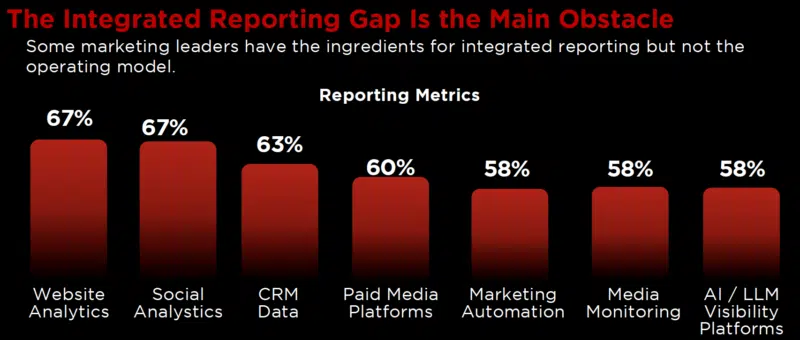
This shift in executive priorities is forcing marketing teams to adapt. Nearly half (48%) of those surveyed now track leads or conversions influenced by earned media, a pivot that reflects a growing realization that "awareness" is worthless unless it can be tied to a measurable financial outcome.
The AI Factor: Adding Complexity to the Dashboard
As if the challenges of attribution weren’t enough, the rapid integration of Generative AI has introduced a new layer of complexity. AI is not just a tool for producing content; it is becoming a critical channel for visibility, and companies are struggling to measure it.
Fifty-four percent of teams are now attempting to measure AI search visibility or brand citations in AI-generated responses. Furthermore, 46% have already begun including AI visibility metrics in their reporting to the C-suite.
"The challenge," as the report notes, "is connecting that visibility to business outcomes." An AI citation may prove that a brand was mentioned in an LLM-generated answer, but it tells the marketer nothing about the buyer’s intent or the subsequent journey. Without the ability to link an AI citation to a website visit or a sales opportunity, this new metric risks becoming just another "vanity" data point that fills up a dashboard without informing strategy.
Implications for the Future of B2B Marketing
The implications of this study are profound. If nearly half of all marketing leaders are making billion-dollar decisions on data they don’t trust, the industry is operating on a precarious edge.
1. The Death of Manual Reporting
The reliance on manual spreadsheets is a structural failure. As AI and machine learning tools mature, they must be leveraged not just to create content, but to automate the reconciliation of data. If a team is spending more time "cleaning" data than "analyzing" it, they are already losing the battle for ROI.
2. The Need for "Evidence-Based" Strategy
Marketing leaders must stop adding metrics for the sake of "completeness." The focus should shift to "signal-to-noise" ratio. Which metrics actually explain buyer behavior? Which metrics provide the evidence required to make an investment decision? If a metric cannot be directly correlated to a business result, it should be relegated to a secondary, operational status, not a primary, strategic one.
3. Bridging the Gap Between PR and Performance
The fact that earned media is now being measured against lead generation signifies the "Communications ROI Reset." PR and communications teams can no longer exist in a silo, measuring "placements" while the marketing team measures "leads." The two must converge. A brand mention in a major publication is only as valuable as the traffic and conversion it drives.

4. Governance as a Competitive Advantage
As AI continues to change how information is discovered, companies that establish clear governance and measurement standards for AI visibility will have a distinct advantage. It is not enough to be present in AI search results; teams must understand the impact of that presence.
Conclusion: A Call for Transparency
The "Communications ROI Reset" is a wake-up call for the B2B marketing industry. We have spent years building sophisticated stacks and tracking every possible interaction, yet we have failed to build the trust necessary to act on those insights with total confidence.
To bridge this gap, leaders must move beyond the allure of "big data" and focus on "better data." This means investing in integration, demanding more transparency from agency partners, and refusing to present metrics to the board that cannot be tied back to the bottom line.
In an era where technology can automate almost anything, the most valuable skill a marketer can possess is the judgment to discern between a meaningful signal and a digital distraction. As the study concludes, before adding more metrics, teams need to determine which signals explain buyer behavior, which connect to business results, and which provide the evidence necessary to justify the next dollar spent. Until that happens, the data paradox will continue to stifle the full potential of B2B marketing.


 Ammar Sabilarrohman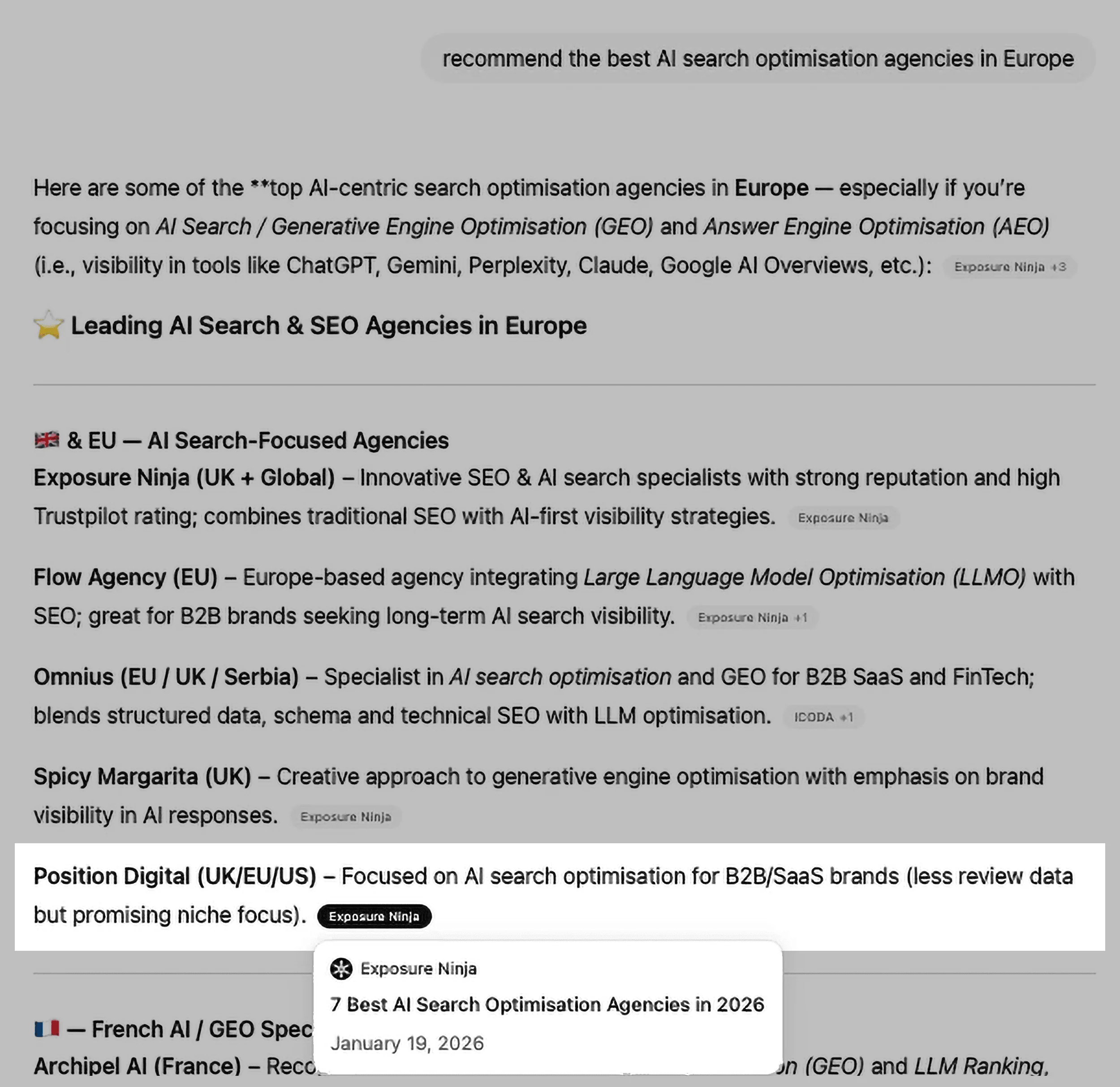
 Sagoh
Sagoh
 Raul Delapena Setiawan
 Reynand Wu



 Ali Ikhwan