
 Laily UPN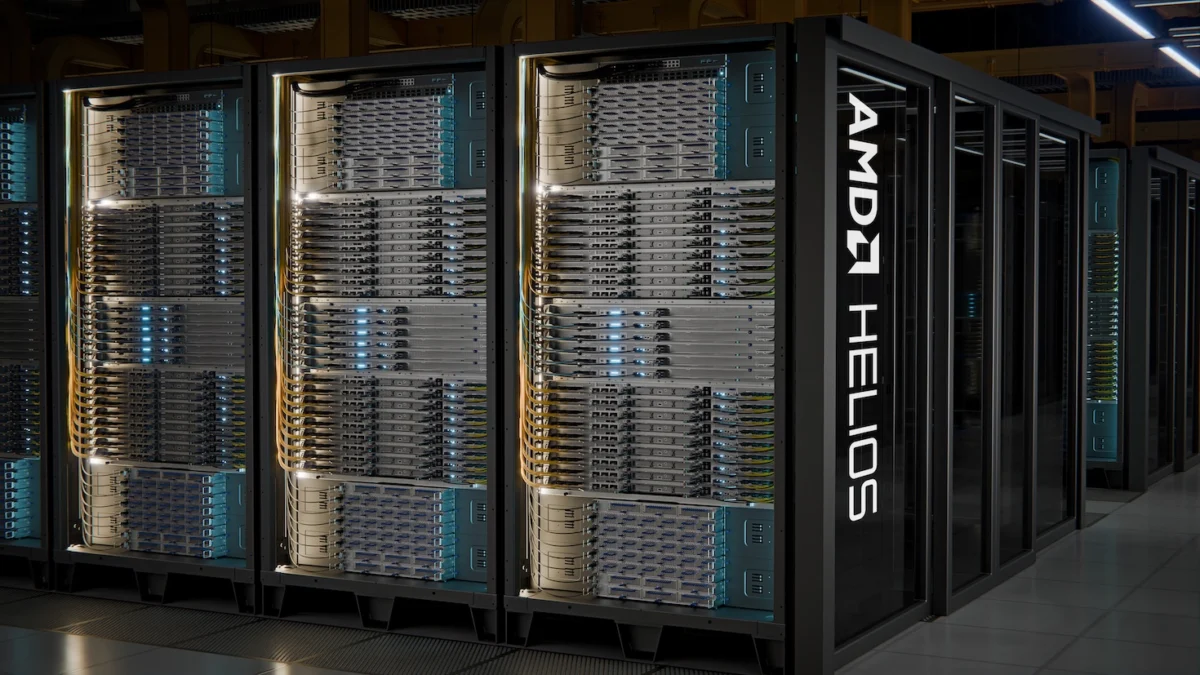
As the world grapples with the explosive demand for artificial intelligence, the physical infrastructure supporting this digital revolution has become a primary focal point for climate advocacy and corporate sustainability. Advanced Micro Devices (AMD) has emerged as a central player in this debate, unveiling an ambitious strategy to fundamentally reshape the energy efficiency of AI data centers. By 2030, the company aims to achieve a 20-fold increase in rack-scale efficiency, a goal that represents a radical departure from historical industry performance metrics.
The Core Mandate: Efficiency at Scale
The challenge facing the AI sector is immense. Training large language models and managing massive inference tasks requires enormous computational power, leading to a surge in electricity demand that threatens to undo progress made by grid decarbonization efforts. AMD’s strategy centers on a bold prediction: by 2030, tasks that required 570 server racks in 2024 will be accomplished by just two AMD-configured racks.
According to a company blog post released on August 18, this leap in performance will result in infrastructure that uses 20 times less electricity and operates with 28 times less carbon intensity. This is not merely a hardware upgrade; it is a fundamental redesign of how AI systems interact with power, memory, and cooling.
Sam Naffziger, senior vice president and corporate fellow at AMD, explains that the "next wave of AI efficiency" depends on a holistic philosophy. "It will depend on tighter co-optimization across compute silicon, memory, interconnects, software, and rack-scale system design," Naffziger noted. By treating the entire server rack as a single, integrated unit, AMD believes it can eliminate the bottlenecks that have historically plagued fragmented system designs.
Chronology of an Efficiency Drive
AMD’s push toward these 2030 targets is not an abstract future ambition; it is grounded in a proven, if brief, track record.
- 2022–2024: AMD solidified its position as a market leader in AI infrastructure, driven by the rapid adoption of its data center products. During this period, the company shifted its focus toward the "Helios" integrated rack system—a platform now utilized by industry titans such as Meta, Microsoft, OpenAI, and Oracle.
- 2024 (Base Year): This year serves as the baseline for AMD’s efficiency goals. The company recorded an impressive fourfold increase in energy efficiency between 2024 and 2026, a milestone that underscores the efficacy of their co-optimization approach.
- August 18, 2025: AMD released its latest corporate responsibility report alongside a blog post detailing its trajectory toward 2030. The data confirms that the company is currently on track to exceed historical industry energy-efficiency improvement averages by a factor of three.
- 2025–2030: The company’s roadmap involves iterative updates to its silicon architecture and rack-scale cooling technologies, with every internal team held accountable to strict energy-per-watt targets.
Supporting Data and Technical Nuance
The scale of AMD’s ambition is matched by its transparency, a trait noted by industry experts. Jonathan Koomey, a leading analyst in data center energy and water consumption research, suggests that AMD’s "systems-level view" is a necessary evolution for the industry.
"AMD is being very transparent about what it will take, and it is known for being rigorous," Koomey said. "The systems-level view is very appropriate."
However, the data comes with caveats. AMD’s efficiency calculations account for rack-level cooling technologies but do not factor in the total electricity or water consumption required to cool the entire facility. Despite this, the economic incentive for efficiency is clear: 85% of AMD’s greenhouse gas (GHG) emissions stem from the use phase of its products.
As Justin Murrill, AMD’s Chief Sustainability Officer, told Trellis, the company has taken the unusual step of tying progress toward these efficiency targets to company-wide bonuses. This aligns the financial incentives of every employee with the corporate sustainability goal, ensuring that efficiency is not treated as a secondary concern but as a core product requirement.
The Competitive Landscape: AMD vs. NVIDIA
The battle for AI dominance is increasingly being fought on the terrain of energy consumption. With customers facing pressure to meet their own Scope 3 emissions targets, both AMD and NVIDIA have positioned energy efficiency as a key selling point.
NVIDIA, the dominant incumbent, has its own set of public pledges. The company has committed to reducing the emissions intensity of its products by 75% per PetaFLOP by fiscal year 2030. In its most recent sustainability report, NVIDIA highlighted a 10-fold improvement in energy efficiency for its latest "Vera Rubin" architecture compared to the previous "Blackwell" generation.
While NVIDIA remains a formidable competitor, the disparity in disclosure styles is evident. AMD has been more explicit about its rack-scale efficiency metrics, while NVIDIA’s sustainability reporting has faced scrutiny from investors for omitting certain emission categories, particularly those related to the usage of its products—a significant oversight given the carbon-intensive nature of AI model training.
Implications for Climate and Corporate Responsibility
While the competition to build more efficient chips is a positive development, industry observers caution that efficiency is not a silver bullet. Giovanna Eichner, a shareholder advocate at Green Century, argues that technological efficiency can be undermined by the sheer volume of production.
"Energy efficiency doesn’t always translate to emissions reduction if you’re continuing to crank out products at a higher rate," Eichner stated. "Transparency is really important."
The "Scope" Dilemma
The debate highlights the complexities of corporate environmental reporting:
- Scope 1 & 2 Emissions: These represent the company’s direct emissions and purchased electricity. AMD has achieved a 30% reduction, while NVIDIA saw a 13% increase in its market-based emissions inventory between 2025 and 2026, despite a significant cumulative reduction since 2024.
- Scope 3 Emissions: This is the most critical area for semiconductor firms. Because they are "fabless," they rely on third-party manufacturers. AMD’s Scope 3 emissions decreased by approximately 2% in the last year, largely due to its efforts to push suppliers toward renewable energy. Conversely, NVIDIA’s Scope 3 emissions grew by 54% in the same period.
The lack of standardized reporting for Scope 3 emissions—specifically the energy used by customers running AI models—remains a "glaring omission," according to investor groups. Green Century, along with Mercy Investment Services, has actively filed shareholder resolutions demanding that NVIDIA provide more granular data.
Conclusion: A Paradigm Shift?
AMD’s commitment to a 20-fold increase in efficiency by 2030 is arguably one of the most aggressive climate goals in the technology sector. By integrating software, silicon, and rack-level design, the company is attempting to outpace the exponential growth of AI energy demand.
However, as the industry moves toward 2030, the real test will be whether these technological gains can keep pace with the massive expansion of global data center capacity. Efficiency improvements provide a necessary buffer, but as analysts like Eichner point out, the industry’s long-term environmental impact will be determined by a combination of engineering prowess and corporate accountability.
For now, AMD’s strategy offers a blueprint for how hardware manufacturers can take responsibility for the downstream impact of their products. As the "Helios" rack system and future generations of chips come online, the industry will be watching closely to see if these promises translate into a tangible, measurable reduction in the world’s carbon footprint. The race is no longer just about who can build the fastest AI; it is about who can build the most sustainable one.


 Raul Delapena Setiawan

 Reynand Wu
 Sagoh
Sagoh

 Azzam Bilal Chamdy
 Ali Ikhwan