
 Nana Wu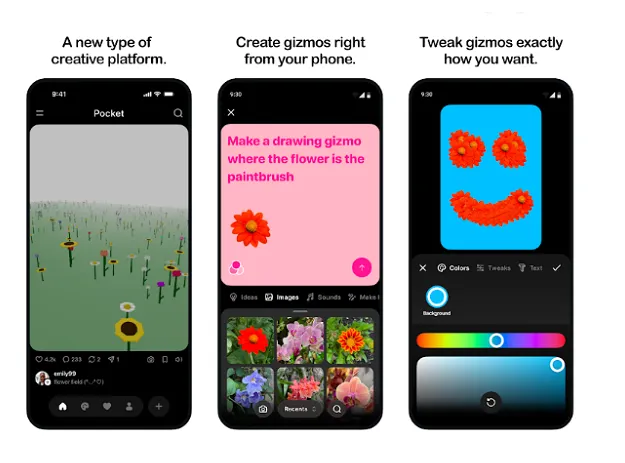
In a move that signals a significant shift in how everyday users interact with software development, Meta has officially expanded its generative AI creation platform, Pocket, to users across the United States. Following a successful pilot launch in Brazil last month, the app—which empowers users to transform conversational prompts into functional, interactive experiences known as "gizmos"—is now positioned as a cornerstone of Meta’s broader strategy to democratize app creation through artificial intelligence.
By leveraging the "vibe coding" paradigm, Meta is betting that the future of digital interaction lies not in complex syntax or traditional programming, but in the intuitive power of natural language. As the company continues to integrate generative AI across its vast ecosystem, Pocket represents a unique experiment: a social-first creative laboratory where the barrier to entry for game and app development is essentially reduced to the ability to describe an idea.
The Core Concept: What is Pocket?
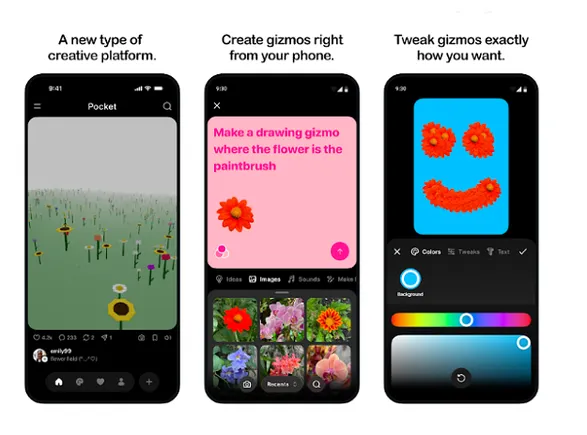
At its simplest, Pocket is a creative sandbox that strips away the traditional technical requirements of software engineering. The platform allows users to design, test, and publish "gizmos"—small, interactive, touch-enabled experiences—by simply typing a prompt into the interface.
According to the official Google Play Store description, the platform is designed for accessibility: "Pocket is a creative platform for making and sharing gizmos. A gizmo is a small interactive experience you can tap and touch… and you can make a gizmo just by describing it."
Unlike professional development environments that require knowledge of C++, Python, or React, Pocket utilizes Meta’s internal generative AI models to translate linguistic concepts into functional code structures. Whether a user wants to build a simple trivia game, a habit tracker, or an interactive story, the AI handles the heavy lifting of backend logic and interface design.
Beyond creation, Pocket functions as a social network. Users can scroll through a dedicated feed of community-generated gizmos, engaging with projects through likes and comments. This social layer is crucial; it fosters a "remix" culture where successful ideas can be discovered, tested, and potentially iterated upon by others, turning the platform into a living library of user-generated utility.
Chronology: From Gizmo Acquisition to U.S. Expansion
The genesis of Pocket is rooted in Meta’s aggressive pursuit of top-tier AI talent and innovative software frameworks.
- 2024: The original "Gizmo" app is launched by a team of former Snapchat engineers. The platform gains early traction for its ability to allow users to "vibe code"—a term coined to describe the process of using AI to generate functional software through informal conversation rather than rigid coding practices.
- March 2026: Meta officially acquires Gizmo. The acquisition is widely viewed as a "talent hire," with the Gizmo engineering team joining Meta’s internal Superintelligence labs. The goal was clear: integrate the startup’s proprietary AI-driven development tools into Meta’s existing social infrastructure.
- July 2026: Meta launches the rebranded platform, now titled "Pocket," in Brazil. This limited regional rollout served as a testing ground for infrastructure stability and user engagement patterns.
- August 2026: Following a successful month in the Brazilian market, Meta announces the expansion of Pocket to all U.S. users, marking the first major step in scaling the technology for a global audience.
Supporting Data: The Rise of the ‘Vibe Coding’ Trend
The term "vibe coding" has become a buzzword in the tech industry, reflecting a fundamental change in how software is conceptualized. Data from the broader generative AI market supports the pivot Meta is making.
According to various industry reports, there has been a 300% increase in interest regarding "no-code" and "AI-assisted development" tools over the past 24 months. Users are increasingly turning to Large Language Models (LLMs) to write snippets of code, troubleshoot bugs, and even generate entire application frameworks.
Meta’s decision to move into this space is backed by the success of similar interactive platforms. By turning software development into a social feed, Meta is attempting to apply the same growth metrics that made Instagram and Facebook successful. If users can spend as much time "playing" and "building" in Pocket as they do scrolling through Reels, Meta secures another high-engagement pillar within its app family.
Official Responses and Strategic Intent
Meta has remained relatively quiet regarding the specific technical specifications of the models powering Pocket, but company insiders have hinted at the platform’s role in the "Meta AI" ecosystem. By embedding these capabilities into a standalone app, Meta is not only testing its generative capabilities but also training its models on a massive scale. Every prompt entered into Pocket provides invaluable feedback data, allowing Meta to refine how its AI interprets creative intent.
Industry analysts, such as those at TechCrunch, note that this is part of a "push-to-AI" strategy. Meta is eager to move beyond being a mere social media company, aiming to become an indispensable utility provider for the next generation of digital creators. By lowering the barrier to entry, Meta is effectively expanding the pool of "developers" from a few million professionals to potentially hundreds of millions of casual users.
Implications: The Democratization of Development
The implications of a tool like Pocket are vast, touching upon labor markets, digital literacy, and the future of social media.
1. The Death of the "Blank Page"
The most significant hurdle for any creator is the "blank page" problem. Pocket solves this by providing an AI interface that acts as a collaborator. By removing the need to learn syntax, Meta is shifting the emphasis of development from technical proficiency to conceptual ingenuity. The success of a gizmo now depends entirely on the quality of the user’s idea.

2. A New Paradigm for Social Media
Social media has traditionally been a consumption-first environment. Pocket turns this on its head by making the consumption experience interactive. If this succeeds, we may see a transition where social feeds are no longer just static images or videos, but a collection of mini-applications that users interact with for entertainment, utility, or productivity.
3. Challenges and Quality Control
Despite the excitement, the platform faces significant challenges. The democratization of app creation inherently brings a flood of low-quality, derivative, or broken content. Meta will need to implement sophisticated moderation and recommendation algorithms to ensure that the "best" gizmos rise to the top of the feed, rather than being buried by the sheer volume of experimental, poorly conceived projects.
4. Intellectual Property and Attribution
A lingering question for the industry is how Meta will handle intellectual property. If a user prompts an AI to build a game that closely mimics an existing intellectual property, who is responsible? Furthermore, as users iterate on each other’s gizmos, the lines of creative ownership become blurred. Establishing a fair attribution system will be critical if Meta intends to keep the community vibrant and motivated.
Conclusion: The Long Road Ahead
Pocket is, at its core, a high-stakes experiment. While the ability to "vibe code" a functioning app in seconds is undeniably impressive, the long-term viability of the platform depends on user retention. Can a simple game generation tool hold the attention of a generation accustomed to high-fidelity, professional-grade gaming and media?
Meta’s strategy is clear: they are banking on the idea that people want to be creators, not just consumers. By lowering the entry bar, they are betting that a hidden reserve of creativity exists in the general population, waiting for the right tool to unlock it. Whether Pocket becomes a transformative force in the social landscape or another experimental project that fades into the background remains to be seen. However, one thing is certain: the era of conversational app creation has officially begun, and with the full weight of Meta behind it, the landscape of digital development will never be the same.


 Reynand Wu
 Iffa Jayyana
 Raul Delapena Setiawan

 Sagoh
Sagoh

 Azzam Bilal Chamdy
 Ali Ikhwan