
 Nana Muazin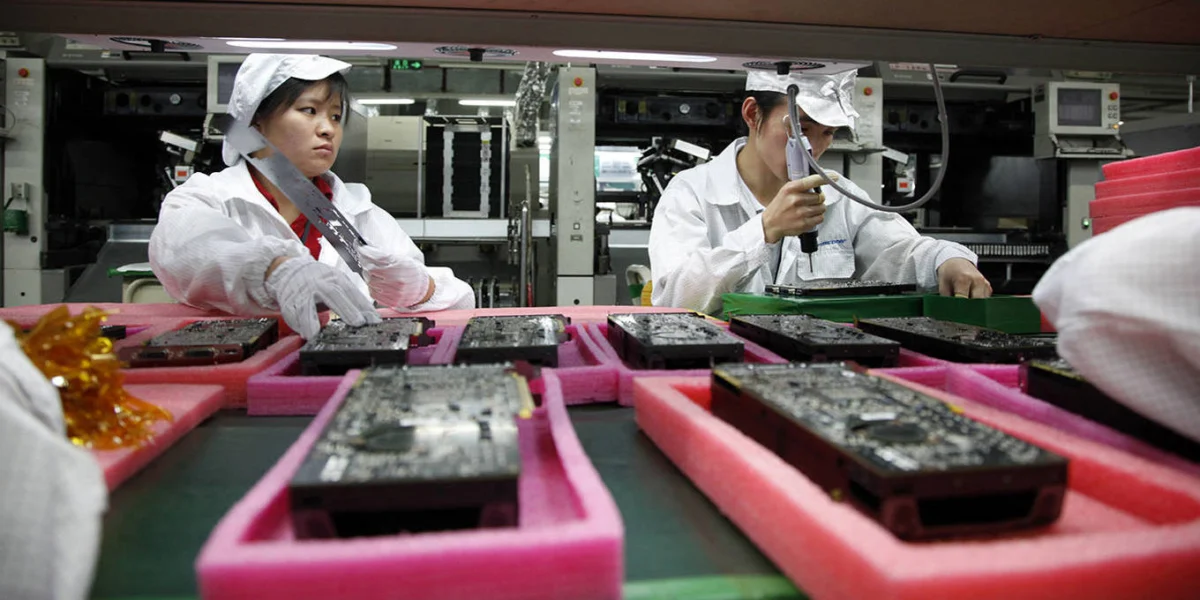
By Hinh T. Dinh and Karim El Aynaoui
July 30, 2026
In the landscape of modern economic development, the "East Asian Miracle" has long served as the gold standard for emerging nations. For decades, policymakers in the Global South have looked toward the rapid industrialization of China and the service-led expansion of India as blueprints for their own prosperity. However, as the global economy faces unprecedented fragmentation, protectionist shifts, and the rapid encroachment of automation, the viability of these models is increasingly in question.
New data emerging from a comparative analysis of China and India’s industrial trajectories suggests a sobering reality: neither country’s development path is truly accessible to the rest of the world. Their success stories, while remarkable, were products of specific historical windows, massive internal markets, and unique geopolitical circumstances that cannot be simply replicated. For other nations, the lesson is not to copy, but to understand the structural limitations and coordination failures that necessitate homegrown, context-specific solutions.
The Main Facts: Two Giants, Two Divergent Paths
China and India represent the two most significant economic case studies of the 21st century, yet they reached their current positions through fundamentally different mechanisms.
China’s rise was predicated on a state-led, export-oriented manufacturing strategy. Beginning in the late 1970s, Beijing leveraged its massive, low-cost labor force to become the "world’s factory." This model was supported by aggressive infrastructure investment, the creation of Special Economic Zones (SEZs), and a highly disciplined approach to global value chain integration.
India, conversely, bypassed the traditional manufacturing-led industrialization route, opting instead for a service-led growth model. By investing heavily in higher education and technical training, India carved out a dominant position in the global information technology and business process outsourcing (BPO) sectors.
While both have lifted hundreds of millions out of poverty, the replicability of these models is hampered by the shifting global environment. Global trade in goods is cooling, and the "ladder" of manufacturing-led growth that China climbed is being retracted as automation and "reshoring" become the new norms for developed economies.
Chronology of Economic Evolution
To understand why these paths are unique, one must look at the historical context in which they were forged.
The Chinese Trajectory: 1978–Present
- 1978–1990: The "Reform and Opening-up" era. China pivots toward market-oriented reforms and begins attracting Foreign Direct Investment (FDI) into coastal provinces.
- 2001: China joins the World Trade Organization (WTO). This event acts as a catalyst, integrating China into the global trade architecture and supercharging its export capacity.
- 2008–2015: The "New Normal." China shifts from infrastructure-heavy, investment-led growth toward a consumption-based model, attempting to move up the value chain into high-tech manufacturing.
- 2020–Present: Pivot toward "Dual Circulation." Faced with global geopolitical friction, China attempts to balance domestic consumption with international trade, signaling a potential closing of the "export-at-all-costs" era.
The Indian Trajectory: 1991–Present
- 1991: The Balance of Payments crisis forces India to liberalize its economy, ending the "License Raj" and opening the door for private enterprise.
- 1995–2005: The IT Boom. India leverages its demographic dividend and English-speaking workforce to dominate global back-office services.
- 2014–Present: "Make in India." The government attempts to pivot back toward manufacturing to absorb the millions of youth entering the workforce annually, with mixed results compared to the service sector’s dominance.
Supporting Data: The Structural Divide
The data reveals why other nations struggle to replicate these models. China’s manufacturing success relied on a specific ratio of labor costs to infrastructure efficiency. As global shipping costs fluctuate and geopolitical blocs emerge, the "China Model" faces a narrowing window of feasibility.
For India, the service-led model has proven highly resilient but is inherently "job-light." While the service sector contributes significantly to GDP, it has failed to absorb the massive surplus of low-skilled labor residing in the rural agricultural sector.
Key Comparative Metrics:
- Manufacturing Value Added (MVA): China’s MVA as a percentage of GDP peaked at nearly 32% in 2011, a level rarely reached by any nation. In contrast, India’s MVA has remained stagnant at roughly 15-17%, highlighting the difficulty of shifting from an agrarian-service hybrid to an industrial powerhouse.
- Infrastructure Spend: China’s infrastructure-to-GDP ratio has consistently hovered between 8% and 10% for over two decades. Most emerging markets, constrained by debt and fiscal discipline, struggle to maintain a ratio above 3-4%.
- Urbanization Rates: China’s rapid urbanization—a prerequisite for its factory model—was managed through state-led hukou systems and massive migration. Many developing nations lack the administrative or fiscal capacity to replicate this level of managed migration.
Official Responses and Policy Shifts
In recent international forums, including the G20 and various development summits, policymakers have acknowledged that the "one-size-fits-all" development advice of the past is failing.
Representatives from the World Bank and the IMF have increasingly emphasized "structural transformation" over simple growth. The consensus is shifting toward the idea that industrial policy is no longer just about subsidies; it is about coordination.
In Rabat, discussions have centered on the need for "local content requirements" that do not trigger trade wars, and the importance of digital infrastructure as a shortcut to economic participation. However, there is a palpable tension between the desire for industrial autonomy and the realities of global supply chain interdependencies. The official response from many emerging nations has been to look toward "regional value chains"—focusing on trade with neighbors rather than attempting to capture the entirety of global manufacturing.
Implications: The Need for Homegrown Solutions
The implications of this analysis are profound. If China and India’s paths are not replicable, the "development ladder" is essentially missing for the next wave of emerging economies, particularly in Sub-Saharan Africa and parts of Latin America.
1. The Death of the Export-Led Model
Developing countries can no longer rely on low-cost labor to drive growth. With the rise of AI and robotics, the comparative advantage of cheap labor is being eroded. Emerging economies must now compete on quality, logistics, and digital integration rather than just wages.
2. The Coordination Problem
The success of both giants was driven by intense coordination between the state and the private sector. For many nations, the problem is not a lack of capital, but a lack of institutional coordination. Government agencies often work in silos, failing to link education systems with the actual needs of the labor market or infrastructure projects with industrial zones.
3. Homegrown Innovation
Countries must identify their own niche. Whether it is green energy, eco-tourism, or high-value agriculture, the next generation of development will be defined by identifying internal competitive advantages rather than mimicking the industrialization of the 20th century.
4. The Geopolitical Constraint
We are entering an era of "friend-shoring." Development strategies that rely on global access to markets may be derailed by political alliances. Nations must build more resilient, self-sustaining economies that can thrive even if global trade flows are disrupted.
Conclusion
The experience of China and India is an inspiration, but it is not a manual. Their development was an artifact of a specific time—an era of hyper-globalization that is currently receding. For the rest of the world, the goal should not be to emulate the giants, but to learn from their structural discipline while avoiding the specific traps of their growth models.
True economic maturity will come from recognizing that the next "miracle" will not be imported. It will be built upon the unique resources, cultural strengths, and institutional reforms of each individual nation. Policymakers must move beyond the allure of the Chinese and Indian blueprints and begin the difficult, iterative work of building solutions tailored to the fragmented reality of the 2020s and beyond. The era of the "universal model" has ended; the era of the "bespoke economy" has begun.


 Nana Wu
 Reynand Wu
 Raul Delapena Setiawan

 Sagoh
Sagoh

 Azzam Bilal Chamdy
 Ali Ikhwan