
 Lina Irawan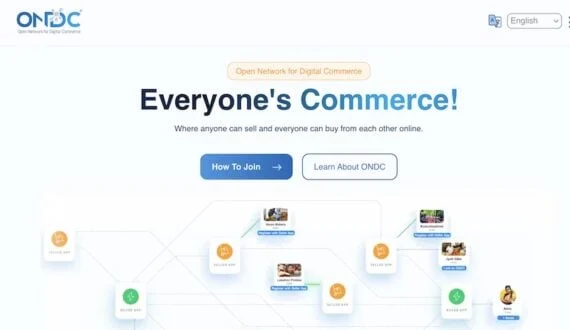
India stands at a unique economic crossroads. As the world’s most populous nation, it holds an untapped reservoir of consumer demand, yet its digital commerce penetration remains surprisingly modest compared to the mature ecosystems of the United States or China. With a demographic profile defined by youth—half of the country’s population is under 25—and a massive base of 840 million smartphone users, the stage is set for an unprecedented ecommerce explosion.
However, India’s path to digital transformation is not a copy-paste of Western or Chinese models. It is a carefully calibrated balancing act: policymakers are tasked with accelerating digital adoption while simultaneously shielding millions of kiranas—the neighborhood mom-and-pop stores that anchor the Indian economy and account for 75% of all consumer goods sales. The centerpiece of this strategy is the Open Network for Digital Commerce (ONDC), a government-backed infrastructure initiative that promises to democratize online retail.
The Core Facts: A Paradigm Shift in Retail
At its essence, the ONDC is not a marketplace; it is a protocol. Unlike traditional walled-garden platforms like Amazon India or Flipkart, which dictate the terms of trade, logistics, and payments, ONDC acts as a digital "common carrier." Launched in 2021, it is an open-source framework designed to connect apps, payment gateways, and logistics providers through standardized rules.
The fundamental goal is to decouple the buyer and seller experiences. On a traditional marketplace, a seller must be on the platform to reach the buyer. On ONDC, a merchant registers with a seller app, and their products become discoverable across the entire network. A shopper using a buyer app—such as Paytm or Magicpin—can purchase goods from a merchant who is listed on an entirely different platform, like Mystore or GoFrugal.
This interoperability represents a massive departure from the status quo, effectively ending the platform-dependency trap that many small businesses fear.
Chronology: From UPI to ONDC
The journey toward a democratized digital economy in India did not begin with retail; it began with payments.
- 2016: The Indian government launches the Unified Payments Interface (UPI). This real-time, peer-to-peer payment infrastructure becomes a global phenomenon, processing billions of transactions monthly and proving that massive, government-backed open protocols could achieve rapid, widespread adoption.
- 2021: The government formalizes the Open Network for Digital Commerce (ONDC) initiative. The goal is to provide a "network" rather than a "platform," ensuring that digital commerce becomes as accessible as sending an email or making a UPI payment.
- 2022: Initial pilot programs are rolled out in select cities, focusing on grocery and food delivery, where order frequency is highest.
- 2023-2024: The network begins scaling. Integration with major logistics players and high-profile consumer brands begins to gain momentum.
- 2025 and Beyond: ONDC shifts its focus toward deeper category penetration, including fashion, pharmaceuticals, and hospitality, while refining the seller-side user experience to attract more SMBs.
Supporting Data: Why the Model Matters
The economic incentive for shifting to ONDC is stark. For a small merchant, selling on traditional marketplaces often comes with a hefty commission fee ranging from 18% to 40%, depending on the category and the level of fulfillment services used. ONDC, by contrast, operates on a much leaner fee structure, typically ranging from 3% to 10%.
The platform’s design also emphasizes transparency. Unlike private marketplaces where opaque algorithms can favor certain sellers (or the platform’s own private labels), ONDC utilizes a transparent, non-discriminatory sorting mechanism. Furthermore, a merchant’s ratings are "portable"—if a seller decides to switch their seller-side app, their hard-earned reputation and customer feedback move with them, preventing the platform lock-in that plagues most ecommerce ecosystems.
The category breakdown of the network reveals a clear trend:
- Grocery and Food: These dominate early adoption due to the high frequency of purchases.
- Home and Kitchen: Seeing steady growth as logistics integration matures.
- Emerging Categories: Fashion, pharmaceuticals, and hospitality are currently in the growth phase, requiring more complex compliance and inventory management.
Official Responses and Strategic Implications
The Indian government views ONDC as the "fourth pillar" of its digital infrastructure, following the Aadhaar identity system, the UPI payments network, and the data-sharing framework known as the Account Aggregator system.
For foreign brands, the implications are profound. Global giants such as Unilever, Nestle, PepsiCo, Procter & Gamble, L’Oréal, and Johnson & Johnson are already engaging with the network. For these companies, ONDC serves as an additional distribution channel rather than a replacement for their existing D2C (Direct-to-Consumer) sites or traditional distributor networks. By accessing the ONDC seller app ecosystem, these brands can reach customers in tier-2 and tier-3 cities who might not be regular users of traditional e-tailer platforms but are comfortable using local apps like Paytm or Bajaj Finserv.
However, there are challenges. The regulatory landscape for foreign sellers in India remains complex. The government has enacted specific laws to limit the market power of foreign-owned ecommerce entities to ensure the survival of local kiranas. Any foreign company entering the Indian market must navigate a web of regulations concerning FDI (Foreign Direct Investment), inventory ownership, and platform neutrality. ONDC offers a compliant path forward, but it requires a strategic shift in how companies handle their supply chain and data integration.
The Future of Digital Commerce in India
As ONDC continues to mature, it is poised to become the bedrock of the "Digital India" vision. By lowering the barrier to entry, it invites millions of independent merchants into the formal digital economy, effectively bridging the gap between the traditional street-side shop and the smartphone-wielding consumer.
For multinational corporations, the "wait and see" approach is becoming increasingly risky. The network is growing, and its influence on consumer behavior is beginning to take hold. While the sheer scale of the Indian market offers immense potential, success requires a nuanced understanding of the ONDC protocol. Companies that prioritize integration, maintain regulatory compliance, and leverage the network’s low-cost, high-reach capabilities will likely be the ones to define the next decade of retail growth in India.
Ultimately, the ONDC is a bold social and economic experiment. It challenges the global status quo of digital monopoly and offers a glimpse into a future where commerce is not a private asset controlled by a single tech behemoth, but a public utility accessible to all. Whether it succeeds in fully replacing or merely augmenting existing market giants remains to be seen, but the trajectory of Indian digital commerce is clearly moving toward openness, interoperability, and local empowerment.


 Jia Lissa
 Basiran
 Nila Kartika Wati
 Sagoh
Sagoh
 Lina Hope