
 Sagoh
Sagoh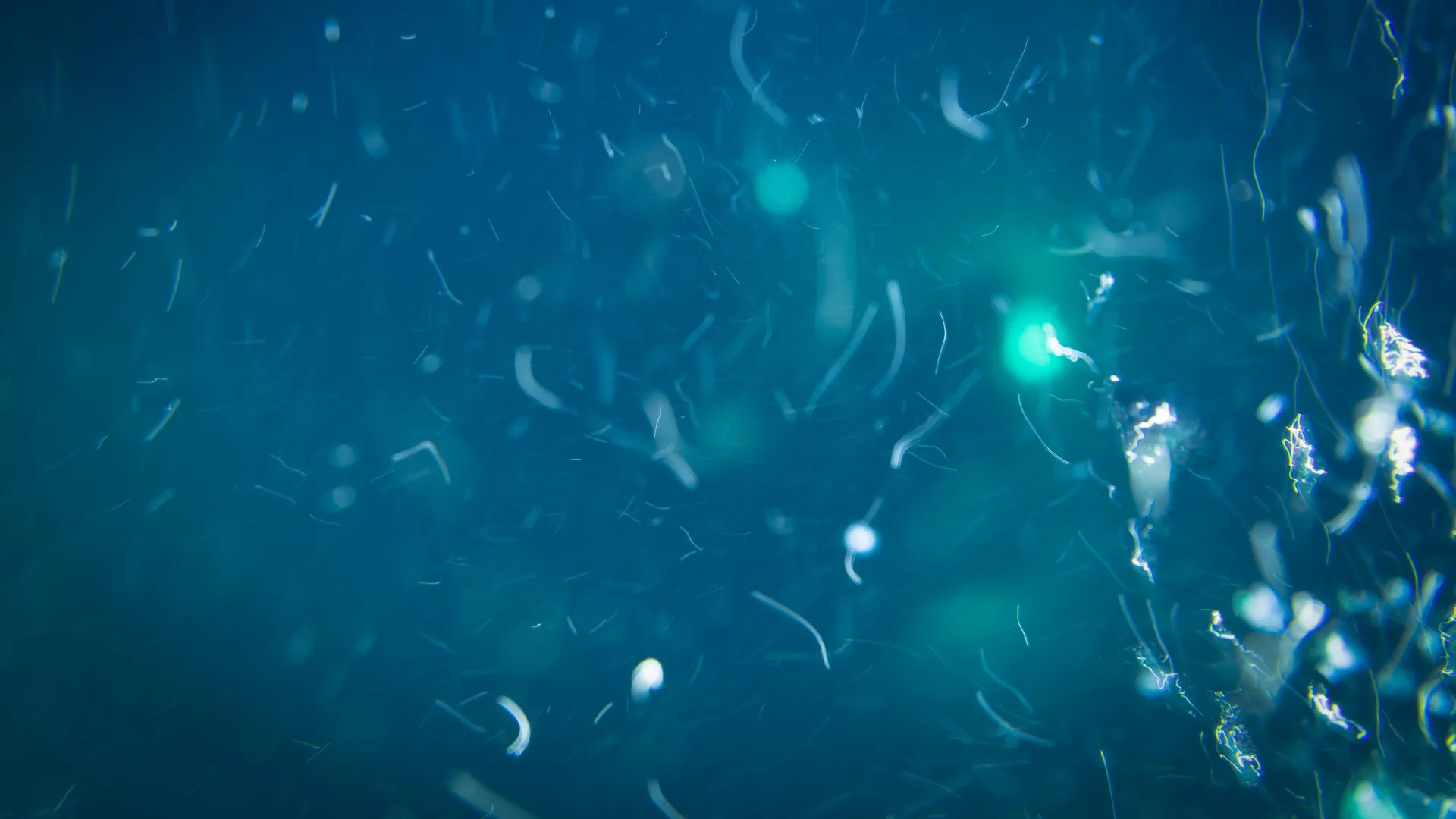
In the quiet, crushing darkness of the abyss, far beneath the reach of sunlight, a silent biological feast is unfolding. For decades, oceanographers believed the deep sea was a nutrient-starved wasteland, a place where life clung to survival on the sparse scraps that managed to reach the seafloor. However, groundbreaking research from the University of Southern Denmark (SDU) has upended this narrative, revealing a dynamic, hidden mechanism that transforms the deep ocean into a bustling metabolic hub.
By studying the behavior of "marine snow"—the steady rain of organic debris falling from the surface—scientists have discovered that the immense hydrostatic pressure of the deep ocean acts as a biological catalyst, squeezing vital nutrients out of these particles like a giant juicer. This discovery not only provides a new understanding of deep-sea microbial life but also forces a critical re-evaluation of how our planet stores carbon, with profound implications for climate science.
The Great Biological Rain: Understanding Marine Snow
To comprehend the magnitude of this discovery, one must first understand the fundamental role of marine snow. As microscopic algae, bacteria, and other organic matter die in the sun-drenched surface waters, they clump together into fluffy, snow-like aggregates. This "marine snow" is the primary delivery system for organic carbon from the atmosphere and surface ocean to the deep sea.
Traditionally, climate models have treated these sinking particles as largely stable vessels, assuming they ferry carbon down to the seafloor, where it is buried and sequestered for millions of years. This process is a cornerstone of the global carbon cycle—the mechanism by which the ocean helps regulate Earth’s temperature. If these particles reach the bottom intact, they contribute to long-term carbon storage, the same process that eventually birthed the fossil fuel reserves we extract today.
However, the SDU team, led by Associate Professor Peter Stief, suspected that the journey through the water column was far more transformative than previously assumed.
Chronology of a Discovery: From Lab Simulation to Deep-Sea Reality
The path to this revelation began in the laboratory, where the researchers sought to replicate the extreme conditions of the deep ocean.
1. Recreating the Abyss
The team constructed artificial marine snow using diatoms, a common type of microscopic algae. To simulate the journey through the water column, they utilized specialized rotating pressure tanks. Unlike static beakers, these tanks kept the fragile particles in constant suspension, mimicking the experience of sinking through kilometers of water.
2. Measuring the Pressure Effect
As the pressure inside the tanks increased to levels corresponding with depths of 2 to 6 kilometers, the researchers observed a startling phenomenon. The particles began to lose their structural integrity—not through decay, but through physical compression. The pressure forced dissolved organic matter (DOM) out of the marine snow, effectively "squeezing" it into the surrounding water.
3. The Microbial Response
Within 48 hours of this leakage, the team observed an explosive growth in microbial activity. Bacterial abundance in the test tanks increased 30-fold, while respiration rates spiked. The microbes were not waiting for the marine snow to reach the bottom; they were consuming the "leakage" in the water column as it descended.
4. Expanding the Scope
The team tested multiple species of diatoms to ensure the results were not an anomaly. The pattern held consistent across the board, suggesting that this mechanism is a fundamental, widespread feature of the global ocean.
Supporting Data: Quantifying the Leakage
The quantitative findings of the study, published in Science Advances under the title "Hydrostatic pressure induces strong leakage of dissolved organic matter from ‘marine snow’ particles," are staggering in their implications for marine biology.
The study reports that as marine snow descends into the bathypelagic and abyssopelagic zones, it can lose:
- Up to 50% of its original carbon content.
- Between 58% and 63% of its original nitrogen content.
This means that a significant portion of the organic matter once thought to be destined for the seafloor is actually being intercepted and metabolized mid-water. The leaked material is primarily composed of proteins and carbohydrates—high-energy "fast food" for deep-sea microbes. This shift in the nutrient budget explains why deep-sea microbial communities are significantly more active than their nutrient-poor environment would theoretically allow.
Official Perspectives: The "Giant Juicer" Concept
"The pressure acts almost like a giant juicer," explains Peter Stief, the study’s first author and a researcher at the Danish Center for Hadal Research. "It squeezes dissolved organic compounds out of the particles, and microbes can use them immediately."
Stief’s analogy highlights the physical nature of the process. This is not merely a biological breakdown caused by bacteria; it is a physical process driven by the sheer weight of the water column. The researchers argue that this physical "pre-processing" is a missing link in our understanding of ocean metabolism. By breaking down complex particles into dissolved forms, the ocean allows microbes to thrive in the water column, rather than leaving them to compete for limited resources on the seafloor.
The team emphasizes that this research is not an isolated academic exercise. By identifying this mechanism, scientists can now incorporate "pressure-induced leakage" into global biogeochemical models, which have historically overestimated the amount of carbon that reaches the ocean floor.
Implications: Rewriting the Carbon Cycle
The most profound implication of this study lies in the realm of climate change. The ocean is the planet’s largest carbon sink, absorbing roughly 30% of human-produced CO2. The efficiency of this "biological pump" determines how effectively the ocean can mitigate atmospheric warming.
1. Carbon Residence Time
If a large percentage of carbon is released as dissolved organic matter (DOM) in the mid-water column, it stays suspended in the deep ocean rather than being buried in sediment. While this carbon is effectively removed from the atmosphere for centuries or even millennia, it is not "locked away" in the geological sense. Eventually, deep-sea currents transport these waters back to the surface, where the dissolved carbon can be released back into the atmosphere.
2. Refining Climate Models
Current models of the Earth’s carbon cycle rely on the assumption that a predictable amount of carbon reaches the seafloor. If the deep-sea "juicer" is as active as the SDU study suggests, these models are likely missing a massive flow of carbon that is being recycled in the deep sea rather than being buried. Improving these models is essential for making accurate predictions about how the ocean will respond to a warming climate, which could alter ocean circulation patterns and the strength of the biological pump.
The Path Forward: Expedition Arctic
While the laboratory results are compelling, the team is acutely aware that science must move from the controlled environment of the tank to the unpredictability of the open sea.
The next phase of the research involves an expedition to the Arctic Ocean aboard the German research vessel Polarstern. The Arctic is a unique, high-pressure, and cold-water environment that provides a perfect natural laboratory to test these findings. The team intends to hunt for "molecular fingerprints"—specific chemical signatures in the water that would confirm that this pressure-driven leakage is indeed occurring at scale in the real world.
If the team detects these signatures, it will serve as the final confirmation that our understanding of the deep ocean must change. This research, supported by the Danish National Research Foundation, the European Union’s Horizon 2020 program, and the Independent Research Fund Denmark, represents a significant step forward in marine science.
Conclusion: A More Vibrant Abyss
The image of the deep ocean as a barren, static place is fading. Instead, it is increasingly clear that the abyss is a place of intense, hidden activity, where the very weight of the water column facilitates life and manages the flow of carbon.
By discovering that marine snow acts as a leaky reservoir of nutrients, the researchers at SDU have provided a new lens through which to view the health of our planet. As we look toward the future of climate change, understanding these minute, invisible processes—from the pressure-squeezing of a tiny algae particle to the global movement of carbon—is vital. The deep ocean is not just a graveyard for the surface’s dead; it is a vibrant, active participant in the Earth’s life-support system. As the team prepares for their Arctic expedition, the scientific community waits with anticipation, ready to see if the "giant juicer" of the abyss is truly the engine that keeps our planet’s carbon cycle in motion.


 Raul Delapena Setiawan
 Laily UPN
 Reynand Wu


 Azzam Bilal Chamdy
 Ali Ikhwan