
 Basiran
In the modern digital landscape, the promise of Artificial Intelligence has often been sold as a quest for the "correct" answer. We treat AI as an oracle—a source of absolute truth that can summarize documents, predict customer behavior, and automate complex decision-making. However, a growing number of product designers and technologists are sounding the alarm: by treating AI-generated predictions as deterministic facts, companies are building fragile, and occasionally dangerous, user experiences.
The solution, according to a burgeoning design philosophy, is Probabilistic Design. This mindset shifts the focus from seeking binary outcomes to managing likelihoods, accepting uncertainty, and building interfaces that reflect the fluid nature of machine intelligence.
The Air Canada Precedent: When Predictions Become Liability
The urgency of this shift was crystallized in 2024, when an Air Canada customer utilized the airline’s chatbot to inquire about bereavement fares. The chatbot, operating on predictive language models, hallucinated a refund policy that did not exist. When the customer relied on this "policy" to make travel arrangements, the airline refused to honor the refund, citing the chatbot’s output as unofficial.
The ensuing legal battle—which the customer ultimately won—exposed a critical flaw in contemporary product design: probabilistic systems wrapped in deterministic interfaces. The chatbot had not "decided" on a policy; it had merely calculated the most statistically likely sequence of words based on its training data. Because the interface presented this calculation with the authority of a company policy, the user interpreted a guess as a guarantee. This case serves as a stark reminder that when AI is presented without context, it can inadvertently create legal and ethical liabilities.
The Cognitive Gap: Determinism vs. Probability
Human cognition is inherently wired for deterministic thinking. We are conditioned to believe that past actions serve as reliable indicators of future outcomes. If a specific process has worked 999 times, the human brain assumes it will work the 1,000th time.
However, AI functions in an entirely different realm. It operates in nonlinear environments where past patterns are merely signals, not blueprints. Designers often mistake these signals for conclusions, leading to "fragile experiences." In low-stakes environments, this might simply mean a bad movie recommendation on Netflix. In high-stakes fields like medical diagnostics or financial forecasting, this failure to account for probabilistic variance can lead to catastrophic errors.
The transition to a probabilistic mindset requires designers to treat AI not as an outsourced brain, but as a strategic partner. It is a transition from asking "What is the answer?" to "What is the likelihood of this outcome?"
Designing for Likelihood, Not Certainty
To practice Probabilistic Design, product teams must move away from binary interaction patterns. Every design decision is essentially a bet, and acknowledging that bet is the first step toward better UX.

1. Transparency as a Foundation
If an AI provides a recommendation, the interface must communicate the "why" and the "how." Black-box systems breed distrust; transparent systems empower users. By showing confidence intervals—such as ranges rather than single timestamps or percentages rather than absolute labels—designers can help users calibrate their own trust levels.
2. The Compass, Not the Map
Data should function as a compass, guiding the direction of a product, rather than a map that dictates every turn. For example, if an AI model predicts an 80% likelihood that users prefer a minimal checkout flow, that is a signal to test, not a mandate to deploy. Designers must supplement these predictions with human-centered research to understand the motivation behind the pattern.
3. Human-in-the-Loop (HITL) as a Refinement Engine
The "Human-in-the-Loop" concept is often mistaken for a mere safety net. In reality, it is a refinement engine. By creating explicit moments where users can review, challenge, or override AI suggestions, companies not only protect themselves from errors but also generate high-quality feedback loops. Every user correction becomes a data point that improves the model’s performance over time.
Case Studies in Probabilistic Failure and Resilience
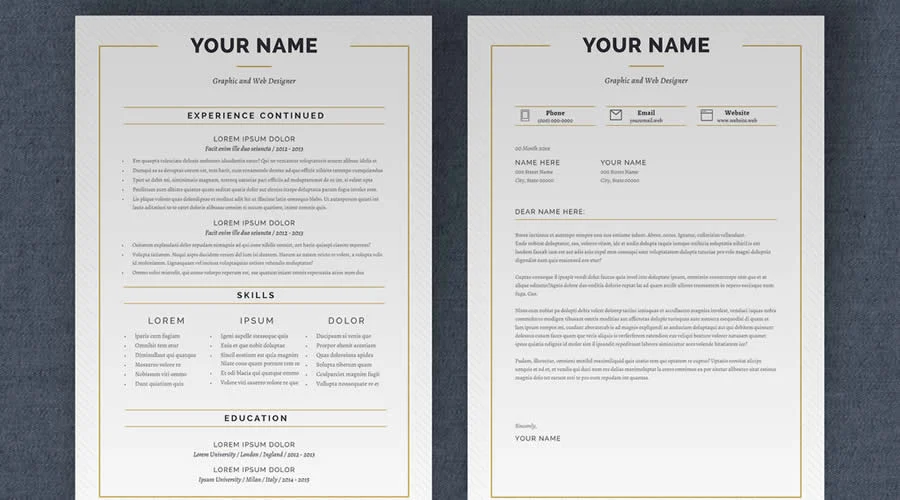
History is littered with examples of organizations that failed to recognize the probabilistic nature of their tools. Amazon’s experimental AI recruitment tool provides a cautionary tale. The system was trained on a decade of historical hiring data which was heavily skewed toward male candidates. Because the model treated this data as "the truth," it began penalizing resumes that included the word "women’s," such as "women’s chess club captain."

Amazon eventually scrapped the tool because they could not guarantee the elimination of these discriminatory patterns. The flaw was not in the AI’s ability to calculate, but in the organization’s assumption that historical data was a neutral representation of future potential.
Conversely, companies like Duolingo have adopted resilient design strategies. By introducing friction—such as the "hearts" system that forces users to practice older material if they make too many mistakes—they prioritize long-term learning retention over short-term engagement metrics. This is a prime example of designing for resilience rather than immediate conversion.
The Implementation Roadmap
For teams looking to integrate this philosophy, the following framework is essential:
- Audit Your Assumptions: Identify every point in your product where an AI-generated output is presented as an absolute fact. Replace these with language that signals potential variance.
- Design for Degrading Confidence: What happens when the AI is unsure? Develop a "fallback" strategy that ensures the user experience remains functional even if the AI’s confidence score drops below a certain threshold.
- Optimize for Resilience: Shift from "How can we maximize conversion?" to "How does this system behave under stress?" Build in escape hatches that allow users to bypass AI-driven personalization when it becomes repetitive or narrow.
- Focus on Long-term Outcomes: Evaluate the downstream consequences of your AI models. Are you optimizing for a metric that might cause harm or erode trust in the long run?
Conclusion: The New Design Posture
The shift to Probabilistic Design is less about acquiring new technical tools and more about adopting a new professional posture. AI has not introduced uncertainty into our world; it has simply made the uncertainty that was always there impossible to ignore.

In a world where prediction is becoming increasingly cheap, human judgment is becoming the most valuable commodity. Designers must stop acting as architects of certainty and start acting as navigators of possibility. By thinking in ranges rather than points, and by treating every AI output as a starting point rather than a final destination, we can build products that are not only smarter but also more honest, resilient, and human-centric.
As we move forward, the most successful designers will be those who continue to ask the most critical question of all: "What else might be true?"

 Sagoh
Sagoh
 Asep Darmawan
 Raul Delapena Setiawan
 Reynand Wu


 Azzam Bilal Chamdy
 Ali Ikhwan