
 Pevita Pearce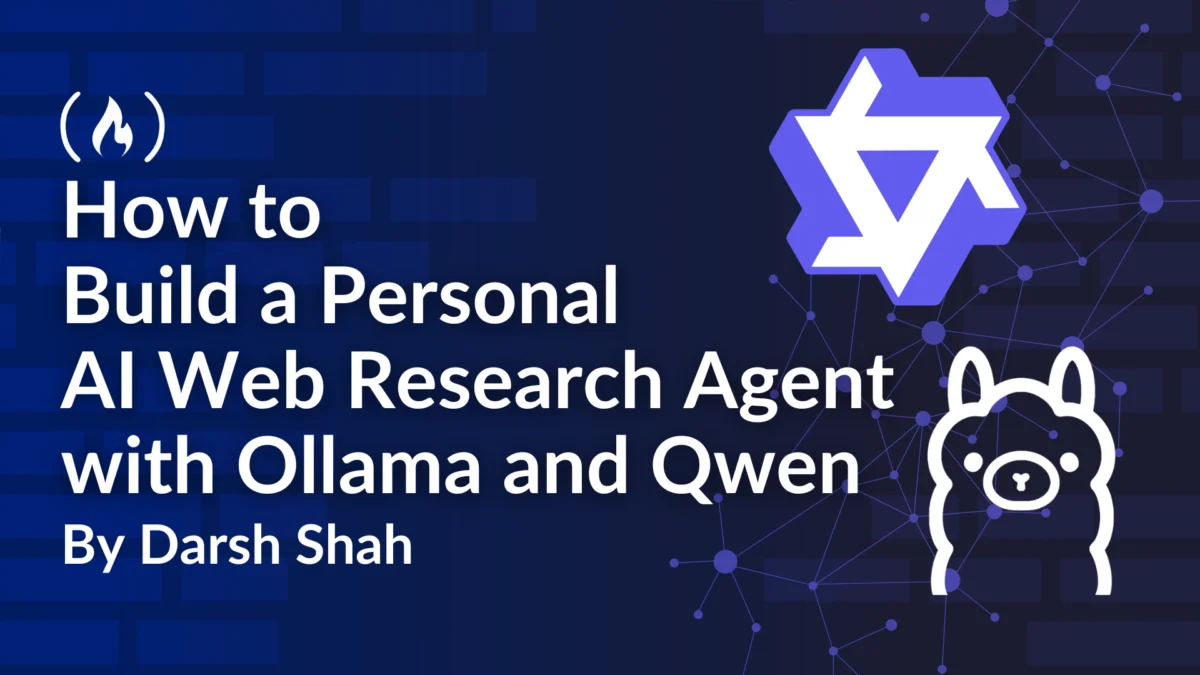
In the rapidly evolving landscape of artificial intelligence, the reliance on centralized, cloud-based LLM services has become the industry standard. However, this convenience often comes at the cost of data privacy, recurring API expenses, and a dependency on external servers. As developers seek more autonomy, the emergence of high-performance, open-weight models—such as the Qwen series—has paved the way for a new paradigm: the local AI research agent.
This article explores the architecture and implementation of a personal web research agent that operates entirely on local hardware. By leveraging Ollama for local model hosting and Python for data orchestration, users can build a system that performs autonomous web research, synthesizes findings, and generates structured reports—all while keeping sensitive queries within the local machine.
Main Facts: The Architecture of Sovereignty
The core philosophy behind a local research agent is to reclaim control over the research lifecycle. Unlike traditional chatbots that rely on proprietary web-browsing integrations, this local agent acts as an autonomous pipeline.
The Components
- Ollama Engine: Serves as the backbone for running local LLMs (e.g., Qwen 3.5:4b). It provides the inference capabilities necessary to process retrieved data without a GPU-heavy infrastructure.
- Web Retrieval Layer: Utilizes the Ollama Web Search API to bridge the gap between static LLMs and real-time information.
- Data Processing (Python): Employs
RequestsandBeautifulSoupto strip away the "noise" of modern websites—such as scripts, navigation bars, and footers—leaving only the raw, readable text for the model to analyze. - Local Synthesis: The agent aggregates the cleaned text from multiple sources and provides it to the local Qwen model, which then constructs a coherent, Markdown-formatted digest.
This architecture ensures that no user search history is logged on external servers, effectively eliminating the risk of data leakage and removing the financial barrier of per-token API billing.
Chronology: Implementing the System
Building a local agent is a systematic process that can be broken down into five distinct phases.
Phase 1: Preparation and Environment Setup
The journey begins with the installation of the Ollama application. Users must create an Ollama account to obtain an API key, which acts as the gateway to the search tools. Once installed, setting the environment variable OLLAMA_API_KEY is the critical first step in authenticating the system.
Phase 2: Model Acquisition
Choosing the right model is vital for balancing speed and performance. The Qwen 3.5:4b variant is currently favored for its ability to follow structured prompts on consumer-grade hardware. To pull the model, the terminal command ollama pull qwen3.5:4b is executed. For users with limited RAM, the 0.8b variant offers a lightweight alternative without sacrificing core logic.
Phase 3: Dependency Integration
Python remains the language of choice for this automation. By setting up a virtual environment (venv), developers ensure that dependencies like ollama, requests, and beautifulsoup4 remain isolated and manageable.

Phase 4: Script Development
The automation script functions as the "brain" of the operation. It follows a linear workflow:
- Prompting: Captures the user’s research topic.
- Searching: Queries the Ollama search endpoint for the top five most relevant URLs.
- Fetching: Navigates to each URL, parses the HTML, and cleans the content.
- Synthesis: Sends the compiled text to the local Qwen instance with a specific directive to format the output as a Markdown report.
Phase 5: Execution and Output
Once the script is triggered, the agent provides real-time feedback on which URLs it is currently scraping. Upon completion, it generates a timestamped .md file, providing a permanent, offline record of the research.
Supporting Data: Why Local Models Are Winning
The shift toward local models is supported by several quantitative and qualitative trends in the AI industry.
- Model Efficiency: The Qwen 3.5:4b model manages to provide high-quality reasoning despite its relatively small footprint. Tests indicate that it can synthesize complex technical topics—such as the evolution of LLM memory architectures—with a high degree of fidelity.
- Cost Efficiency: By shifting from a per-query subscription model (such as ChatGPT Plus or Claude Pro) to an "on-device" model, users save significant costs over time. The only "cost" is the electricity consumed by the machine during inference.
- Privacy: In an era of data-harvesting, keeping research queries local ensures that proprietary or sensitive information is never indexed by third-party providers. This is a critical feature for researchers working in legal, medical, or corporate fields.
Official Perspectives and Expert Consensus
The consensus among open-source advocates is that local agents represent the next logical step in the "democratization of AI." Experts note that while frontier models (like GPT-4o or Claude 3.5 Opus) still hold the edge in creative writing and nuance, the gap is rapidly closing for factual retrieval and summarization tasks.
However, developers warn about the phenomenon of hallucination. Because local models have a smaller parameter count, they may occasionally misinterpret data or invent connections. The current industry best practice is to treat the output of a local agent as a "draft" or "digest" rather than a final source of truth. Implementing a "human-in-the-loop" step, where the user spot-checks the generated Markdown against the source URLs, is highly recommended to ensure accuracy.
Implications: The Future of Personal Research
The implications of this technology are profound. As we look toward the future, the integration of local agents into everyday workflows will likely change how we interact with the web.
- Personalized Intelligence: Eventually, these agents will move beyond simple summaries. They will evolve into "always-on" teammates that monitor professional fields, track industry trends, and curate information based on the user’s specific, long-term interests.
- Edge Computing: The move toward running agents on laptops, tablets, and eventually mobile devices suggests a future where AI does not reside in the cloud, but rather on the device itself, functioning as a seamless extension of human cognition.
- The End of Information Overload: By automating the mundane tasks of opening browser tabs and scanning articles, these agents allow researchers to focus on high-level analysis rather than the tedious collection of information.
In conclusion, the ability to build a private, free, and highly effective research agent is no longer a privilege reserved for AI engineers. Through tools like Ollama and the Qwen model family, anyone with a laptop can now wield the power of an automated research assistant. As we continue to refine these agents, the line between "searching for information" and "having information synthesized for us" will continue to blur, ushering in a new era of digital productivity.
For those looking to get started, the provided Python architecture serves as a foundational blueprint. By experimenting with different prompts, models, and scraping techniques, you can tailor your agent to your specific research needs, effectively turning your computer into an autonomous intelligence hub.


 Jia Lissa
 Nila Kartika Wati
 Raul Delapena Setiawan
 Reynand Wu
 Sagoh
Sagoh

 Azzam Bilal Chamdy
 Ali Ikhwan